Are Walking Safaris Safe in Tanzania?
the short answer
how safety is built into the walk
what actually happens near big game
if you're nervous about trying it
the honest limits of what we can promise
what the walk actually feels like
The Short Answer
They're a Carefully Managed Activity, Not a Free-For-All
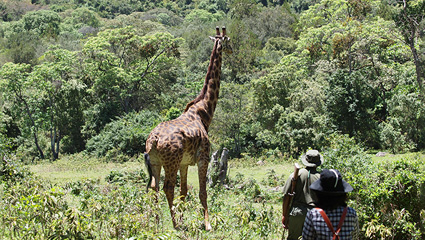
Walking safaris in Tanzania are a carefully managed activity: small groups, a safety briefing, an armed ranger where required, and safe distances from big game.
A walking safari is a carefully managed, guided activity — not a wander into the wilderness hoping for the best. Here's the honest picture of how safety works:
- Walks run in small groups under park regulations, led by an authorised walking guide, with an armed park ranger present where the park requires it.
- Every walk starts with a safety briefing, and guests follow the guide's instructions throughout — usually walking single file behind the guide.
- It is not about approaching big animals. Wildlife is observed responsibly, at safe distances, and much of the walk is about tracks, plants and signs rather than the animals themselves.
- If larger animals are encountered, the guide and ranger manage the situation according to park regulations and the circumstances at the time.
- The structure exists precisely to keep the activity safe and lawful — the rules aren't red tape, they're the whole point.
We won't quote you safety statistics or make guarantees — the technical and safety specifics belong to the parks authority and the professionals running the walk, not to us, and we won't invent them. What we can tell you honestly is how a walking safari is structured to be safe, and what to genuinely expect. That's what this page is for. For most guests, understanding the structure is what turns nervousness into confidence within the first few minutes.
How Safety Is Built Into the Walk
Small Group, Briefing, Guide, Ranger
Tanzania walking safaris are kept safe through small groups, briefings, an authorised guide, and an armed ranger where the park requires.
Safety on a walking safari isn't luck — it's structure. The way a walk is run is designed, at every stage, to keep it safe, and each element has a clear purpose.
The core of how it works:
- Small groups — a walk isn't a large crowd; smaller numbers stay quiet, controlled and manageable.
- A safety briefing before you set off — how to move, when to stay quiet, how to behave around wildlife, what the guide expects of you.
- An authorised walking guide leading — someone specifically qualified and permitted to run walks in that park, reading the terrain and controlling pace and route.
- An armed TANAPA ranger where the park requires one — a mandatory safety presence under park regulations.
- Single file behind the guide, following instructions throughout — so the group moves as one, with the guide always ahead.
None of this is arbitrary. Each piece removes a bit of risk and keeps the walk within the rules that make it lawful. The briefing matters more than guests expect — it's the foundation everything else rests on, and a guest who listens and follows it has a safe, absorbing walk.
We're careful not to overstate what we can promise: exact procedures and rules are set by the parks authority and the ranger on the day, and they vary by park. What's honest and reassuring to know is the shape of it — managed group, professional guide, armed ranger, clear briefing. That's how safety is built into a walking safari from the start.
What Actually Happens Near Big Game
Distance and Management, Never Approach
On Tanzania walking safaris, big animals are kept at safe distances. Guides and rangers manage encounters per park rules—never approach.
The question every nervous first-timer really wants answered: what happens if we come across an elephant or a lion on foot?
First, the framing matters. A walking safari is not built around approaching big game — the opposite. Wildlife is experienced at safe distances, and the walk's real focus is tracks, signs, plants and the smaller life of the bush, not closing in on dangerous animals. The guide's whole approach is about reading where big game is and giving it appropriate room, not seeking a close encounter.
If larger animals are encountered, the guide and ranger manage the situation according to park regulations and the circumstances at the time. That's the honest, responsible answer — and it's deliberately not a dramatic step-by-step "protocol," because the right response depends entirely on the animal, the terrain, the distance and the moment. The professionals leading your walk are trained and authorised to make that judgement; we won't reduce it to a fabricated script that sounds reassuring but isn't real.
What we can say plainly: your job in that moment is simple — stay calm, stay together, and follow the guide's instructions exactly. That's what the briefing prepares you for, and it's why following instructions throughout the walk is non-negotiable. The management of wildlife encounters is exactly what the authorised guide and armed ranger are there for. Trusting them, and doing as they say, is the whole of your responsibility.
If You're Nervous About Trying It
Nerves Are Normal — Structure Is Reassuring
Feeling nervous before a first walking safari is normal. The managed structure — briefing, guide, ranger, safe distances — is what puts most guests at ease.
It's completely normal to feel uncertain before a first walking safari. Being on foot in the African bush sounds daunting if you've only ever pictured it from a vehicle — and we'd never dismiss that feeling.
Here's what usually settles it, and it's not empty reassurance — it's the structure itself. You're not being sent out alone; you're in a small group, behind an authorised guide, with an armed ranger where the park requires one, after a briefing that tells you exactly what to do. The walk is managed from the first step to the last, and it isn't about putting you near danger — big game stays at a distance, and the day is really about the bush up close.
Most guests find the nerves fade quickly once the walk begins and they realise how controlled and absorbing it is. The moment the guide crouches at a track and starts reading it, the fear tends to give way to fascination — the mind fills with what's around you rather than what might go wrong.
We'll be honest rather than pushy: if being on foot genuinely doesn't appeal, you never have to do it — a game-drive safari is complete on its own, and we won't press a walk on a guest who'd rather stay in the vehicle. But for most people, the gap between how frightening a walk sounds and how calm it actually feels is large, and it closes fast. Nervous beforehand, absorbed within minutes — that's the usual arc.
The Honest Limits of What We Can Promise
Managed Carefully — But It's Still Wild Africa
No responsible operator guarantees a walking safari is risk-free. It is carefully managed, but takes place in genuinely wild country.
We'll say something here that a sales-first operator might dodge, because you deserve the honest version.
No responsible operator claims a wildlife activity in wild Africa is completely without risk. A walking safari is carefully managed — small groups, authorised guides, armed rangers, briefings, safe distances — and that management is real and serious. But it takes place in genuinely wild country, with genuinely wild animals, and pretending otherwise would be dishonest. The whole reason for the structure — the ranger, the briefing, the single file, following instructions — is precisely that this is real wilderness, not a controlled attraction.
What that means for you is simple and not alarming: the activity is managed to be safe, and your part in keeping it that way is to follow the guide's instructions completely. The overwhelming majority of guests walk, are absorbed, and come back describing it as a highlight. The management works. But it works partly because everyone respects that it's real, takes the briefing seriously, and does as the guide says.
We'd rather tell you that plainly than sell you a fantasy of zero risk and have you treat the walk casually. Respect the bush, trust the professionals leading you, follow instructions — and a walking safari is a safe, extraordinary experience. That honesty is part of what a real ground operator owes you, and part of why the walks we arrange are run properly rather than casually
What the Walk Actually Feels Like
Calmer and More Absorbing Than It Sounds
A Tanzania walking safari feels calmer and more absorbing than nervous first-timers expect — quiet, immersive, and focused on the detail of the bush.
Set the safety questions aside for a moment, because guests are often surprised by how the walk actually *feels* once they're on it — and it's rarely what the nerves predicted.
It's calm. It's quiet. Without an engine, the bush comes alive with sound — birds, insects, distant movement — and your attention shifts from scanning for danger to noticing everything around you. The guide reads tracks and signs, points out plants and small wildlife, and the morning becomes absorbing rather than tense. The heightened awareness of being on foot turns into fascination, not fear.
That shift — from braced to absorbed — is the near-universal experience. Guests who set out gripping their nerves usually relax within the first stretch, once they feel how managed and unhurried it is, and once the bush starts revealing the detail a vehicle races past.
By the end, the thing most people remember isn't the fear they arrived with — it's how much they noticed, and how different the bush felt at walking pace. The safety structure fades into the background exactly as it should: present, professional, and quietly doing its job while you get lost in the experience. That's a walking safari done properly — safe enough that you stop thinking about safety, and free to simply be in the bush.
If you'd like a walk built into your trip, in a park where it's genuinely permitted and run by the authorised team, tell us — we'll place it where it works and make sure it's done right.
- Request a tailor-made quote (fastest, best for a real plan)
- WhatsApp: +255 740 666 662
- Email: info@safari-tz.com