Best Place to See Rhinos in Tanzania
best place to see rhinos in tanzania
Best Place to See Rhinos in Tanzania
Find the best place to see rhinos in Tanzania, with Ngorongoro and Mkomazi tips, timing, photography advice, packing help, and conservation facts.
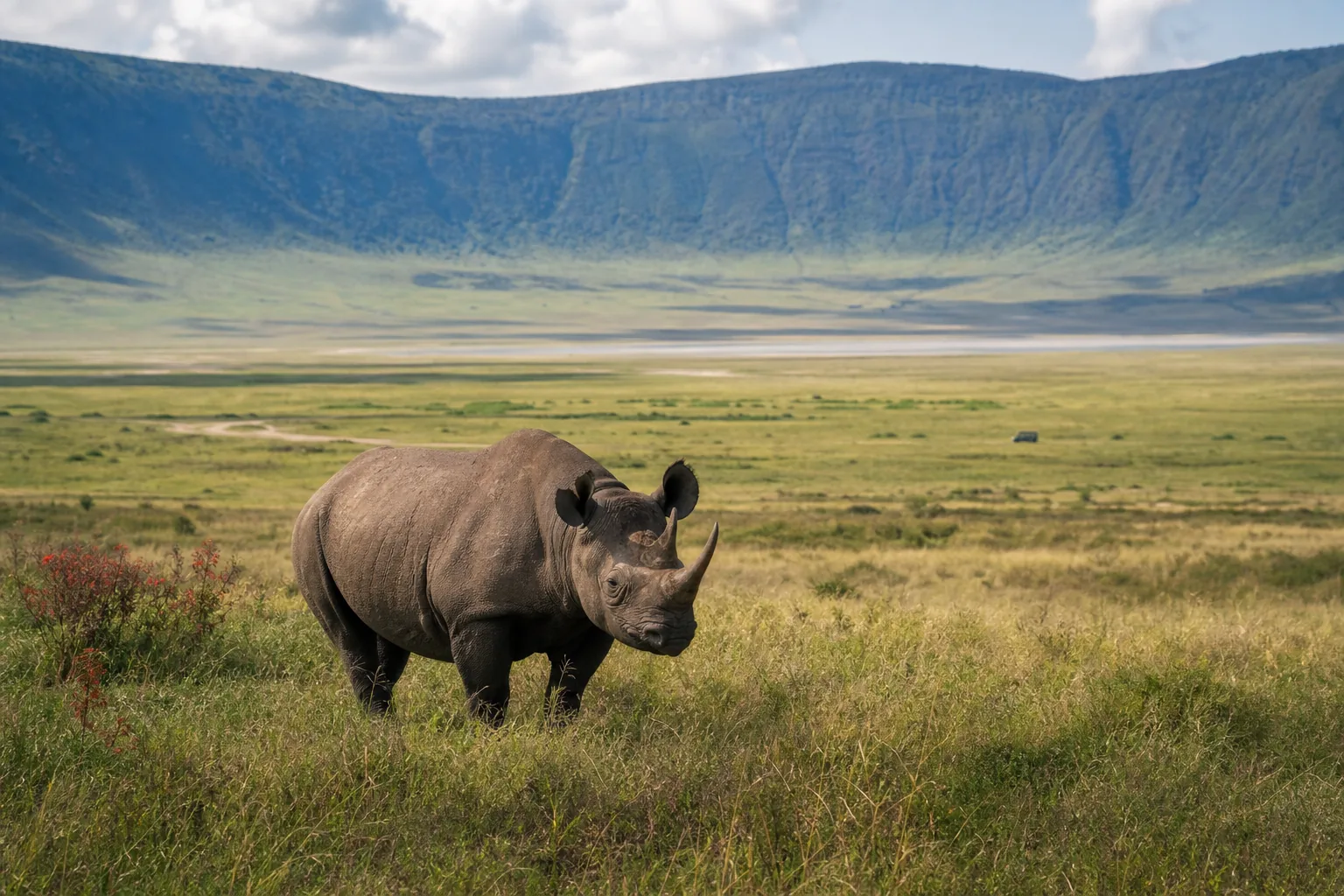
Want to see a wild rhino in Tanzania? Start with Ngorongoro Crater, where black rhinos live on a compact crater floor and sightings are more likely than elsewhere on the northern circuit. Mkomazi adds an important conservation story, while Serengeti and Ruvuma remain possible locations for black rhinos. The catch is simple: Ngorongoro is the best-known site, but strict access rules can make it harder to enter.
Ngorongoro Crater: Tanzania's Premier Rhino-Watching Destination
For most travelers, Ngorongoro Crater is the best place to see rhinos in Tanzania. Its crater floor packs many habitats into a small area, so your guide can search open grassland without driving long distances between sightings.
The rhinos here are black rhinos. Research compiled for this topic places the Ngorongoro population at about 55 animals. That figure gives the crater something the other sites lack: a clear population estimate. It doesn't promise a sighting, though. Rhinos can stay far from the track or blend into broken ground.
Ngorongoro also has active monitoring linked with the Frankfurt Zoological Society, the International Rhino Foundation, and WWF. That protection helps explain why the crater remains the main focus for visitors who want a realistic chance to see this rare animal.
There is a tradeoff. The crater limits vehicles to 50 per day and charges higher per-vehicle fees. Access can feel tight, especially when many vehicles gather around a distant animal. The crater floor also has a set permit window, so a driver can't keep searching all afternoon.
We plan Ngorongoro with an early descent whenever possible. The morning air can be cold, and wildlife is often easier to search for before the heat builds. A local guide also reads radio updates, tracks, and the behavior of nearby animals before choosing where to wait.
The crater has cultural value too. Maasai communities live in the wider conservation area, and a carefully arranged village visit can add context beyond wildlife. It should be done with respect, fair payment, and no pressure to photograph people.
Our 7-Day Tanzania Safari Itinerary places the crater within a wider route, rather than treating it as a rushed stop. That gives you time for other parks even if the rhino stays hidden.
Ngorongoro is the strongest choice when rhino is your top wildlife goal. Just accept that certainty of habitat is not the same as certainty of a sighting.
Mkomazi and Other Tanzanian Parks: Where Else Can You Look?
Mkomazi is the main alternative for travelers who want to connect rhino viewing with a strong conservation story. It is known for black rhinos and for work to bring them back to northern Tanzania after severe historic losses.
The Mkomazi story includes conservationist Tony Fitzjohn and a rhino relocation program. A film about the project describes black rhinos moved from South Africa to a protected home in Mkomazi. That history matters because a visit here is about more than ticking an animal off a list. It supports interest in a landscape where reintroduction took major effort.
But Mkomazi is not the same kind of viewing experience as Ngorongoro. The area is larger and less tightly concentrated, so sightings may depend more on current animal movement, guide knowledge, and the time available. We would not sell it as a guaranteed substitute for the crater.
Serengeti and Ruvuma also appear in conservation research as areas connected with black rhinos. Both are identified as distinct evolutionary groups that need separate management. That is useful conservation information, but it does not provide the same public population figure or monitoring detail available for Ngorongoro.
For a first safari, we usually suggest Ngorongoro when rhino is the main goal. Choose Mkomazi when the conservation story matters as much as the sighting. Add Serengeti for its wider wildlife value, not because a rhino encounter is assured.
When Is the Best Time to See Rhinos in Tanzania?
Many safari calendars focus on migration, rain, and general wildlife, but those patterns don't prove when rhinos will be easiest to find.
In practice, we focus less on a magic month and more on daily conditions. An early drive gives your guide cooler air and better light. It also leaves more time to search before the crater becomes busy.
Dry periods can make open wildlife easier to scan in many safari areas, but we won't promise that every rhino moves into view during a dry month. Rain can change road conditions and animal movement. It can also bring fresh grass that spreads animals across a wider area.
Ngorongoro's altitude adds another planning issue. Mist can sit on the rim, and the crater floor may stay cool in the morning. A clear afternoon may give better visibility, but your permit time still limits the drive.
Ask for a current view before you book. Our Safari TZ team can check the route, likely road conditions, and the time available in each park. That advice is more useful than choosing a date based on a broad claim that rhinos are always best in one season.
If you have only one crater day, protect the morning. A late start can mean less search time, colder light, and more vehicles already gathered at known wildlife spots.
How to Improve Your Rhino Sighting and Photography Chances
The best way to improve your odds is to book a guide who knows how to search, not one who only drives between famous viewpoints. Rhinos often sit low in grass or appear as a small gray shape against a gray slope.
Tell your guide before the drive that rhino is your main goal. That helps shape the route. You may still stop for lions or elephants, but the guide can give more time to open plains and known rhino habitat.
Use binoculars before reaching for a camera. A guide may point to an ear, horn, or back before you can see the whole animal. Once you find it, take a moment to watch its behavior. A rhino walking, feeding, or turning its head often makes a better image than a rushed burst of shots.
For photography, pack a lens that works at distance. A long zoom helps when park rules keep your vehicle away from the animal. Keep your shutter speed high enough for movement, and use a beanbag or stable rest if your vehicle has one.
- Keep the camera ready during slow searches.
- Use a wider view when the rhino's habitat adds scale.
- Don't ask the driver to move closer than park rules allow.
- Take a few frames, then watch without the camera.
Light changes fast near the crater rim. Cloud can soften the scene, while bright midday sun can flatten detail. A guide who positions the vehicle with the light behind you can save more than a costly lens.
Radio calls between guides may help locate wildlife, but they don't replace judgment. If several vehicles crowd one sighting, we may wait back or leave. A calm view from farther away is better for the rhino and often better for your photo.
Families should set a simple goal: see how the animal lives, not only how close it looks. Children can help scan with binoculars and learn to stay quiet when the guide signals. That turns a distant sighting into a useful wildlife lesson.
Packing, Camps, and Usable Logistics for Ngorongoro
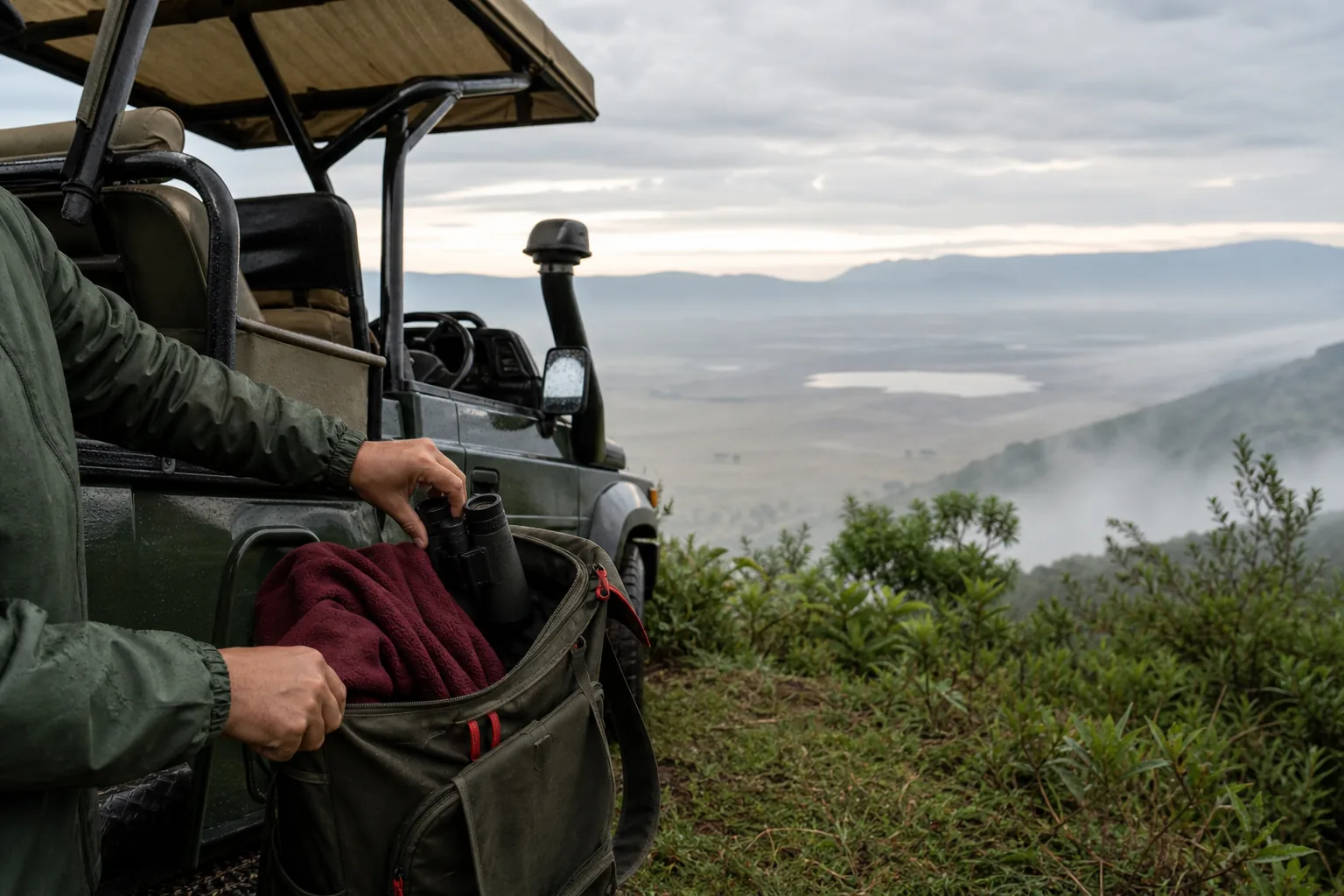
Pack for cold weather when visiting Ngorongoro. The crater sits high above many northern safari areas, and an open vehicle makes the wind feel sharper before sunrise.
Bring a warm fleece, light jacket, long trousers, and a hat. Layers work best because the day can warm up after the descent. Add sunglasses and sunscreen for the brighter hours on the crater floor.
Good shoes matter at viewpoints and rest stops. You may walk on uneven ground, even if most wildlife viewing happens from the vehicle. Keep rain protection close during wet weather because a short shower can arrive before you reach shelter.
- Warm layer for the rim and early drive
- Binoculars for distant rhino sightings
- Camera batteries and memory cards
- Water bottle and small day bag
- Dust cover or soft cloth for camera gear
Where you sleep affects the morning. Camps near the crater can shorten the drive to the descent point. One travel account described a camp about 15 minutes from the crater, compared with a longer drive from Karatu. Exact times depend on the camp, gate, road, and departure point.
We plan the night before with your guide. That means checking breakfast timing, vehicle readiness, permits, and the descent route. A packed breakfast can help when an early start matters more than a slow meal.
Safari TZ runs trips with our own 4x4 vehicles and driver-guides from Arusha. That direct setup lets us match the vehicle, route, and pace to your group instead of passing the booking to an unknown crew.
Expect a bumpy descent. The crater road is rough in places, and the return climb can be tiring after several hours of wildlife viewing. If you have back or mobility concerns, tell us early so we can shape the day around your needs.
Rhino Conservation, Reintroduction, and Responsible Visits
Rhino tourism only helps conservation when visitors follow rules and spend money through legal local channels. Stay in the vehicle unless your guide gives clear permission. Never feed wildlife, call an animal closer, or pressure a driver to leave the track.
Black rhinos face pressure from habitat loss and poaching, so every sighting should be treated as a privilege. A quiet vehicle protects the animal's space. It also lets the rhino continue feeding or resting without repeated disturbance.
It also has active monitoring connected with major conservation groups. Those facts make the crater a strong place to learn how protection and tourism meet.
Mkomazi adds another side of the story. Its rhino work involved relocation and the return of animals to a protected landscape. Reintroduction is slow work. Animals need security, suitable habitat, and close watch after release.
Plans to restore or reintroduce white rhinos in Ngorongoro have also received attention, but travelers should ask for current project updates before treating future plans as completed. Conservation projects change with permits, funding, animal welfare needs, and government decisions.
The study of Tanzanian black rhino groups notes that Serengeti and Ruvuma need separate management as distinct evolutionary groups. That point reminds us that a rhino is part of a local population, not a generic safari attraction.
Our guides at Safari TZ keep distance and follow park rules even when a close photo would be tempting. Please support that choice. A responsible sighting may feel less dramatic, but it leaves the animal with space to behave naturally.
Ask your operator how your visit supports the area. Clear answers about permits, guide employment, vehicle rules, and conservation partners are better signs than broad claims about being eco-friendly.
Rhino Safari FAQ
What is the best place to see rhinos in Tanzania?
Ngorongoro Crater is the best place to see rhinos in Tanzania for most first-time visitors. It has the country's clearest documented black rhino population, estimated at about 55 animals, plus active monitoring. Sightings are never guaranteed, and vehicle limits can make access tighter than expected.
Are there black rhinos in Mkomazi?
Yes, Mkomazi is linked with black rhino conservation and reintroduction work. It can suit travelers who want a quieter, conservation-led experience. However, Mkomazi does not offer the same documented population figure as Ngorongoro, so we would not promise better sighting odds there.
What month is best for seeing rhinos in Tanzania?
We focus on an early drive, current road conditions, and guide knowledge instead. If you visit Ngorongoro, pack warm layers because the high altitude can make mornings cold.
How close can you get to a rhino in Ngorongoro?
You may see a rhino at a distance from the vehicle, but the exact range depends on the animal, road, and park rules. Drivers should never force a closer approach. Binoculars and a long camera lens help you enjoy a distant sighting without adding pressure.
Is Ngorongoro Crater good for a family safari?
Yes, Ngorongoro can work well for families because many animals live within a compact area. Children can scan with binoculars and learn to spot small clues. Plan for a bumpy road, a cold early start, limited toilets, and a long vehicle day.
How can I book a rhino safari in Tanzania?
Start by telling a Tanzanian operator that rhino is your main wildlife goal. Safari TZ can shape a private or group route around Ngorongoro, Mkomazi, or a wider northern circuit. Ask about drive times, permit limits, vehicle type, and what happens if the rhino stays out of sight.
Conclusion
Choose Ngorongoro Crater if seeing a black rhino is your main goal, but plan with realistic expectations because access is regulated and sightings remain wild. For a route built around your dates and travel style, send Safari TZ your trip details and let our Arusha-based team shape the plan.