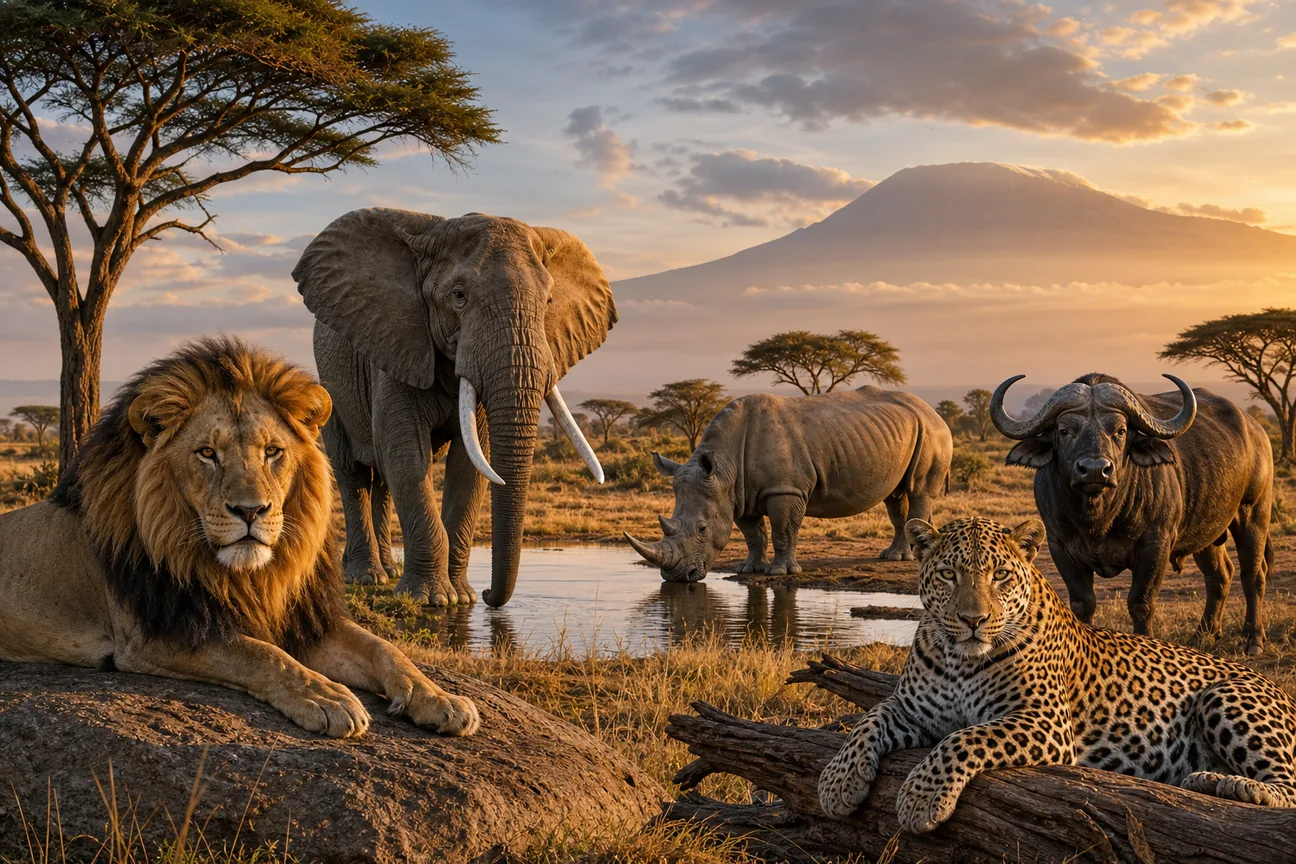
Best Places to See Tanzania’s Big Five
best places to see tanzania’s big five
Best Places to See Tanzania’s Big Five
Compare the best places to see the Big Five in Tanzania, including Serengeti, Ngorongoro, Tarangire, Ruaha, and more.
Want lions, elephants, buffalo, leopards, and rhinos on one Tanzania safari? The famous Serengeti is a strong start, but it doesn't promise every animal on every drive. Our team at Safari TZ compares the parks that fit different goals, seasons, budgets, and travel styles.
1. Serengeti National Park: Tanzania’s flagship Big Five destination
For many travelers, Serengeti is the first answer when they ask about the best places to see the Big Five in Tanzania. Its open plains make game drives and photography easier, while the Great Migration brings huge herds into focus at different times of year.
The southern plains are linked with calving from December through March. The western corridor becomes more interesting around the Grumeti River between May and July, while the northern area can bring dramatic river-crossing scenes later in the migration cycle. These are patterns, not bookings you can guarantee.
One research record available to us lists lion and buffalo in Serengeti but gives no proof for the other three animals. That narrow finding is a useful warning. A park can be famous for the Big Five without every visitor seeing all five.
The park is huge, so location matters. A private 4x4 with a guide can spend more time near a sighting instead of following a fixed group route. Simple camps, mobile camps, and higher-comfort lodges suit different budgets. For background reading, the Serengeti National Park reference is available.
We recommend Serengeti for travelers who want broad plains, predator action, and migration drama. Allow enough time for the long distances. A rushed visit can turn a great park into a chain of road transfers.
2. Ngorongoro Crater: High-density wildlife in one natural arena
Ngorongoro Crater is one of the strongest choices for travelers who want many wildlife habitats in a compact setting. The crater is a large volcanic caldera with steep walls, grassland, water, and cover for animals.
That shape changes the feel of a safari. You spend less time crossing a vast plain and more time watching how animals use the crater floor. Lions are a major draw. Black rhino is also a key reason many visitors include Ngorongoro when they hope to see all five.
The best viewing period depends on your wider route and tolerance for crowds. Dry conditions can make animals easier to find near water, while greener months bring fresh growth and strong scenery. Your guide should weigh wildlife goals against road conditions before setting the date.
Game drives begin early because the crater floor gets busy later in the day. A private vehicle gives our guides room to adjust the pace, though park rules still control where vehicles can go. Crater rim camps can feel cold before sunrise, so a warm layer matters even when the lowlands feel hot.
Choose Ngorongoro when your main goal is wildlife density and a serious rhino chance. It works well beside Serengeti, but it shouldn't replace time on the open plains if the migration is your main reason for coming.
The crater sits within a wider setting that includes more than the crater itself; background on that setting is available here.
3. Tarangire National Park: Massive elephant herds and dry-season viewing
Tarangire is a smart pick for elephant lovers and for a first safari day near Arusha. The Tarangire River draws thirsty wildlife during the dry season, so animals can gather around a smaller number of water sources.
That concentration can make sightings feel rewarding without the long drives found in Serengeti. Elephants are the park's headline draw. Baobab trees give the landscape a look of its own, and the mix of woodland and open ground creates varied views from the vehicle.
Dry-season viewing is often the clearest fit for people who want animals near water. The trade-off is heat and dust. In greener months, the park can feel fresh and photogenic, but animals may spread out after rain.
Tarangire also works well as the first or last park on a northern circuit. We can pair it with a nearby northern park, Ngorongoro, and Serengeti without making the route feel like one long drive. A good guide will watch animal behavior rather than chase a checklist.
Pick Tarangire when elephants matter most or when you have limited time. It is less suited to anyone who expects a full Big Five result in one short game drive.
4. A wildlife area for lion and buffalo sightings
For travelers comparing the best places to see the Big Five in Tanzania, this option can focus on two grounded parts of the experience: looking for lions and buffalo in their natural setting.
Lions and buffalo are among the species present here. Our guides keep the search focused on careful observation, while remembering that no guide can promise a particular sighting on a specific day.
This choice suits travelers who want to include lion and buffalo in a broader Big Five plan. Seeing these animals is an opportunity rather than a guarantee, and conditions in the field can influence what is visible.
When we plan a safari, our team discusses the wildlife priorities before departure and builds the route around the parks already included in the itinerary. That helps set realistic expectations for each drive.
Choose this type of wildlife area when lion and buffalo are priorities. Treat the Big Five list as a goal, not a promise, and rely on our guides to make the most of the sightings available.
5. Wildlife safari planning: Choosing the right setting
Choosing a quieter safari setting is often about matching the journey to your time and priorities. You may spend longer between sightings, but the drive itself becomes part of the experience.
Our guides help plan each day around conditions and the pace that suits your group. Early starts can make the most of cooler hours, while a flexible route keeps the experience comfortable and unhurried.
A remote setting makes more sense when you can give the journey enough time. Adding it to a short circuit can create too many travel hours, so we compare road and flight connections with you before confirming the plan.
Accommodation ranges from tented stays to lodges, with comfort and remoteness varying by camp. Ask what transfer plan is included before you compare quotes. Park access, vehicle days, and internal travel can shape the final cost more than the room itself.
We recommend confirming current conditions, available routes, and included services directly with Safari TZ before you travel. Our team can then match the itinerary to your time, interests, and preferred pace.
6. Southern Tanzania safari with boat and vehicle options
This type of safari is a good match for travelers who want to mix land-based game drives with time on the water. That change of view can make a southern safari feel less repetitive, especially for guests who enjoy landscapes as much as animal checklists.
Vehicle safaris remain the main way to search for large land animals. Boat outings give you another angle on river life and the wider wetland setting. They should complement game drives, not replace them, if the Big Five are your main target.
Season matters because water levels affect both access and the feel of boat activities. Ask your operator which areas are open during your dates. A dry period may make animals easier to track near water, while wetter conditions can change road access.
This type of itinerary suits repeat Tanzania visitors and travelers who want a less conventional route. It can pair well with another southern safari area, though that combination needs careful planning. Safari TZ can build the route around private 4x4 travel rather than selling a fixed departure from another company.
Choose this option for variety and a slower southern itinerary. Choose a northern circuit instead if your first priority is the migration.
7. Wildlife planning by route and season
Big Five planning works best when we look beyond a simple species list. Our team considers the route, travel pace, time in the field, and the conditions that can shape wildlife viewing.
Our guides help match the itinerary to your total holiday length and priorities. A shorter plan can be worthwhile when the route fits, while a longer safari gives more time to explore and respond to changing conditions.
We discuss expectations before departure rather than promising sightings. Wildlife encounters depend on weather, water, guide skill, and time in the area, so a carefully paced itinerary is more useful than a guarantee.
For travelers choosing between routes, we explain the practical trade-offs directly. Safari TZ runs its own trips with our vehicles and guides, giving you one team to consult when planning the experience.
8. Arusha National Park: A convenient wildlife and landscape add-on
Arusha National Park is a useful add-on for travelers starting near Arusha. It combines wildlife viewing with varied scenery, which can make it a good first taste of Tanzania before longer drives.
The park works well when you want a shorter outing or have time before a flight. It is also a natural fit for guests linking a Kilimanjaro climb with a safari. We can adjust the day around arrival time, energy levels, and road conditions.
Don't choose Arusha as your only park if seeing all five is the central goal. Its strength is convenience and landscape variety. A longer northern route gives you better room to search across different habitats.
Choose it for a gentle start, a spare day, or a scenic break near town. It earns its place through fit, not through a promise of a complete species list.
9. Remote safari planning: Considerations for dedicated travelers
Remote safari routes are aimed at travelers who value wilderness over a simple transfer plan. They take more commitment, so they work best as part of a carefully built itinerary.
The appeal is the feeling of distance from busy routes. Game drives can feel less scheduled, but that also means you need patience. Wildlife may not appear on cue, and poor planning can turn the journey into a costly use of time.
A remote route can be a poor fit for a first-time visitor with only a few safari days. It can be a strong choice for a repeat traveler who has already seen the northern highlights and wants a quieter experience.
Talk through flights, road transfers, and camp dates before choosing it. The route should be the reason for the itinerary, not an afterthought added to a crowded plan.
10. A lesser-known wildlife stop
A lesser-known wildlife stop can suit travelers who want to consider a different setting beyond the main safari choices.
Treat this type of stop as a focused addition rather than a guaranteed Big Five base. Wildlife viewing depends on time, season, and the exact area your guide can reach.
It may fit travelers combining safari with mountain or coastal plans. We would compare the extra driving with the value of adding a quieter stop to the plan.
Choose a different route when that fits your wider itinerary, and keep expectations honest about wildlife viewing.
Which Tanzania Big Five destination is right for your safari?
The right park depends on the animal you care about most, the season you can travel, and how much time you have. No park can promise every sighting. A good plan spreads the risk across habitats instead of betting the whole trip on one famous name.
For a first trip, we usually favor a route that joins Tarangire, Ngorongoro, and Serengeti. A longer journey can add another northern park or a southern park. Safari TZ runs its own trips with its own 4x4 vehicles and driver-guides, so we can adjust the route when conditions change instead of passing you to an unknown departure.
FAQ
What is the best place to see the Big Five in Tanzania?
Ngorongoro Crater is often the strongest single choice for concentrated wildlife, while Serengeti gives the widest range of habitats and migration action. The best place depends on your dates and main target. Combining two or three parks gives you better odds than relying on one short game drive.
Can you see all Big Five animals in the Serengeti?
You can see all five in the wider Serengeti safari experience, but sightings are never guaranteed. Lion and buffalo are commonly discussed in the available research, while elephant, leopard, and rhino require time and luck. A guide should set a search plan without promising a fixed result.
What is the best time to see the Big Five in Tanzania?
The best time depends on the park and your target. Dry periods can make animals easier to track near water, while green periods bring fresh scenery and different movement patterns. For the Serengeti migration, southern calving is linked with December through March, and the western corridor is linked with May through July.
How many days do you need for a Tanzania Big Five safari?
You need several full safari days for a fair Big Five search, especially if Serengeti is included. Short trips can work for one compact park, but long transfers reduce time outside the vehicle. We plan the route around full game-drive days rather than counting travel nights as wildlife time.
Is a private 4x4 better for seeing the Big Five?
A private 4x4 usually gives you more control over pace, stops, and route choices. Your guide can spend longer at a sighting or change direction when fresh tracks appear. Group safaris can cost less, but they may limit those choices. The vehicle matters, yet the guide's judgment matters just as much.
How does Safari TZ plan a Big Five safari?
Safari TZ starts with your dates, budget, preferred pace, and main animal goals. Our Arusha-based team then matches parks and travel time instead of forcing one preset route. We run our own trips with our own vehicles and guides, which keeps the handoff direct from planning through the safari.
Conclusion
For a first Tanzania safari, start with Tarangire, Ngorongoro, and Serengeti, then add a southern park if you have more time. Ask Safari TZ for a route built around your dates and priority animal, with enough full game-drive days to let wildlife set the pace.