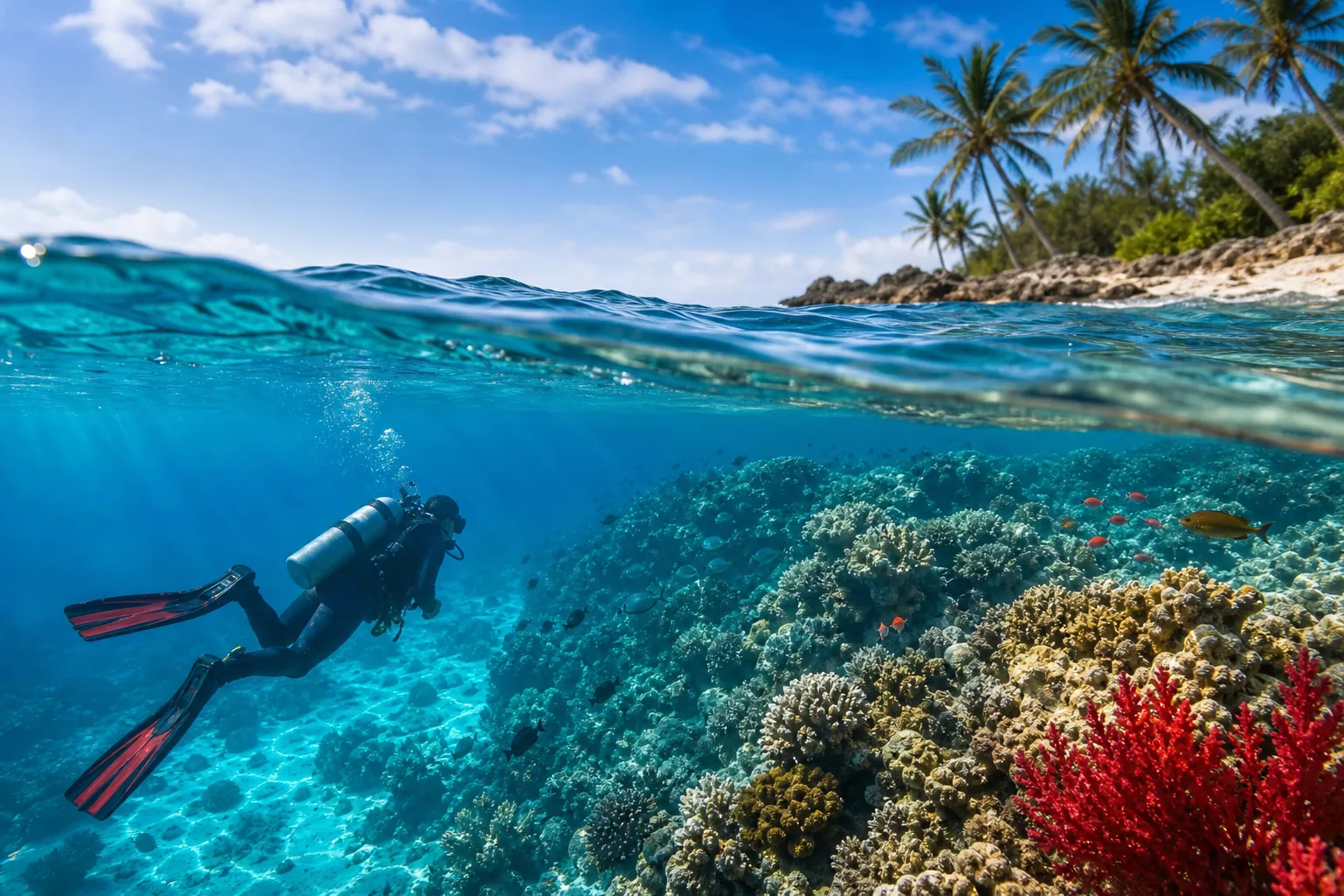
Best Time for Diving in Zanzibar
best time for diving in zanzibar
Best Time for Diving in Zanzibar
Find the best time for diving in Zanzibar, with water temperature, visibility, marine life, top sites, gear, and trip-planning tips.
Zanzibar’s water stays near 27°C all year, so the warmest month isn’t the main question. The bigger choice is what you want to see below the surface. Here are the two strongest planning windows, plus the sites, gear, and safety tips that can shape your trip.
1. Safari TZ
Safari TZ is best for travelers who want a Zanzibar dive holiday planned by a Tanzanian operator, not a faceless booking site. Our team can link island time with a mainland safari or a Kilimanjaro climb, then shape the beach stay around your dive goals.
Safari TZ runs trips on the ground with its own driver-guides and 4x4 fleet. That matters when your plans include more than a boat trip. Our team can coordinate transfers, hotel nights, safari timing, and a Zanzibar extension through one direct conversation. You won’t need to piece together separate bookings across several companies.
For divers, the key question is your target. If you want flexible warm-water dives, most dates can work. If whale sharks are the main draw, aim for September through December and ask us to build the island stay around that window. Mnemba Atoll is the clearest flagship choice in the research available for peak marine activity.
We also plan for the parts visitors often miss. A dive day needs time for boat transfers, surface intervals, gear checks, and weather changes. If you’re joining a safari before or after Zanzibar, we can keep the travel pace sensible instead of placing a dive right after a long road transfer.
Our limitation is simple: no operator can promise a whale shark, dolphin, or perfect sea state on a set date. Wildlife moves on its own terms. We can choose the strongest season and site plan, but the final sighting remains wild.
See Safari TZ when you want one local team to handle the wider Tanzania journey as well as the island stay.
2. All Year Round, Warm Water for Flexible Dive Plans
All-year diving is best for travelers whose dates are fixed or who care more about warm water than one special animal. Zanzibar’s water is reported at about 27°C throughout the year, and visibility often exceeds 30 meters in the all-year entry used for this comparison.

That steady temperature changes how you should plan. You don’t need to chase a hotter month. Instead, look at the weather pattern, the site you want, and the marine life linked to your dates. Beginners and experienced divers can both find suitable conditions, so skill level alone doesn’t decide the calendar.
Dry periods can make boat days easier to manage, while rainy or windy spells may affect sea conditions and access to some sites. Conditions can also change by coast and by day. A local dive team should confirm the plan shortly before departure rather than treating a seasonal chart as a guarantee.
For a first trip, an all-year plan works well when diving is one part of a larger holiday. You might spend a morning underwater, then use the afternoon for Stone Town, a spice tour, or quiet beach time. Snorkeling can also suit family members who don’t want to scuba dive, and our Zanzibar snorkeling tour guide can help compare that option.
The trade-off is wildlife focus. The all-year listing gives strong visibility guidance, but it doesn’t name a peak marine-life event. Pick this window for flexibility, not because it offers the same whale-shark focus as September through December.
How the Two Best Zanzibar Diving Windows Compare
The best time for diving in Zanzibar depends on your main reason for going underwater. The research compares an all-year option with September through December. Both show the same water temperature, while the later window adds a clearer wildlife case.
The September to December window is the stronger pick for wildlife-first divers. It is linked with peak whale shark season, excellent visibility, and Mnemba Atoll. The data set is small, with two seasonal entries from one source, so we treat it as useful planning guidance rather than a promise.
For broad background, the island’s position in the Indian Ocean and its connection with Tanzania help explain why the island works well as a beach, culture, and diving stop in one itinerary.
If your dates fall outside September through December, don’t cancel the dive plan. Keep the trip flexible, ask about current conditions, and choose your site after the local team checks the sea.
Zanzibar Dive Sites and Marine Life to Match With Your Dates
Site choice should follow your marine-life goal. Mnemba Atoll is the clearest named site for the September to December window, when whale sharks are the main seasonal draw. The same period also lists turtles and dolphins.
Reef dives can reward slow divers who watch the small spaces. Look beneath coral ledges for octopuses or moray eels. Nudibranchs and seahorses are easy to miss if you swim too fast, so good buoyancy control matters more than covering a large area.
Other sites often discussed in Zanzibar dive planning include Blue Lagoon, Bar Island, and Leven Bank. Ask the dive operator which site fits the day’s wind, tide, experience level, and visibility.
Blue Lagoon is often treated as a gentle snorkeling choice, while Bar Island is known in dive footage for coral scenes and smaller reef life. That doesn’t mean either site will look the same on every visit. Rain, current, boat traffic, and recent sea conditions can change the experience.
Wildlife ethics should guide every encounter. Don’t chase dolphins or touch turtles. Keep a calm distance, avoid blocking an animal’s path, and never feed wildlife to force a close view. A good guide should end the encounter when the animal shows stress.
We also ask divers to protect the reef with their body position. Keep your fins up, avoid resting on coral, and secure dangling camera straps. Small habits prevent damage while improving your own view.
Usable Planning, Gear, Dive-Day Logistics, and Responsible Travel
Good planning starts before you reach the beach. Share your recent dive history, and say if you haven’t been underwater for a while. A refresher can help you regain buoyancy control before a boat trip.
Pack a mask that fits your face, a swimsuit, reef-safe sun cover, and a light layer for the boat. The operator normally explains what gear is included, so confirm the list before you travel. If you use a personal computer, camera, or prescription mask, tell the dive team early.
A typical day begins with a gear check and a boat transfer. Divers then complete the first dive, return for a surface interval, drink water, and review the next site before going back in. Some trips run two dives, but the exact shape depends on the site and sea state.
Currents deserve respect. If you’re returning after a long break, practice mask clearing and controlled breathing in shallow water first. Add weight only after checking your trim. Too much weight can make it harder to stay calm and protect the reef.
Travel logistics also shape the dive day. Zanzibar is reached by air or by ferry from mainland Tanzania, then transfers continue to your beach area or Stone Town base. Travel time varies by route. We plan the transfer around the first dive instead of assuming every arrival day can also be a full dive day.
Rain and monsoon winds can affect visibility, boat comfort, and site access. A shower doesn’t always cancel a dive, but strong wind or rough water may change the plan. Keep one land-based activity available, such as Stone Town or a cultural tour, so a weather change doesn’t spoil the whole day.
Zanzibar is a Muslim-majority destination, so dress with care away from resort beaches. During Ramadan, avoid eating or drinking openly in public during daylight hours. Ask before photographing people, and follow local guidance at villages and cultural sites. Respect makes the trip better for everyone.
Our team at Safari TZ can combine a dive stay with a mainland safari, a Kilimanjaro climb, or a slower beach holiday. The right plan depends on your dates, experience, and wildlife target. We recommend leaving room for sea conditions rather than packing every day with fixed activities.
FAQ
What is the best time for diving in Zanzibar?
September through December is the strongest choice for wildlife-focused diving in Zanzibar. This period is linked with peak whale shark season, excellent visibility, and sightings that can include turtles and dolphins. All-year diving still works well for flexible travelers because the water stays near 27°C, but it has less specific seasonal wildlife detail.
Is Zanzibar good for diving all year?
Yes, Zanzibar can work for diving all year because the water remains near 27°C. Visibility is often reported above 30 meters in the all-year planning window. Rain, wind, and sea conditions can still affect boat trips, so confirm the site shortly before diving instead of relying only on the month.
What marine life can you see while diving in Zanzibar?
Zanzibar diving can include reef fish, coral life, turtles, dolphins, and smaller animals such as octopuses, nudibranchs, and seahorses. September through December has the clearest link with whale sharks. Sightings are never guaranteed, so choose a responsible operator that lets wildlife set the pace.
Is Mnemba Atoll the best dive site in Zanzibar?
Mnemba Atoll is the clearest named choice for peak marine activity in the available seasonal research. It is tied to the September through December window and whale shark season. “Best” still depends on your goal, current tolerance, and the sea state on the day.
What should I pack for diving in Zanzibar?
Pack a well-fitting mask, swimwear, sun protection, and a light layer for boat travel. Tell the operator about any long break from diving. Confirm which equipment is supplied. A refresher session is wise if your buoyancy skills feel rusty.
Conclusion
Choose September through December if whale sharks and strong marine-life encounters are your priority. Choose another month if your dates are fixed, since Zanzibar’s warm 27°C water supports flexible diving year-round. Send Safari TZ your travel dates and dive goals, and we’ll help match the island stay with the rest of your Tanzania trip.