Best Time to See the Migration in Ndutu
best time to see the migration in ndutu
Best Time to See the Migration in Ndutu
Find the best time to see the migration in Ndutu, from November’s arrival to January-February calving, with weather and safari planning tips.
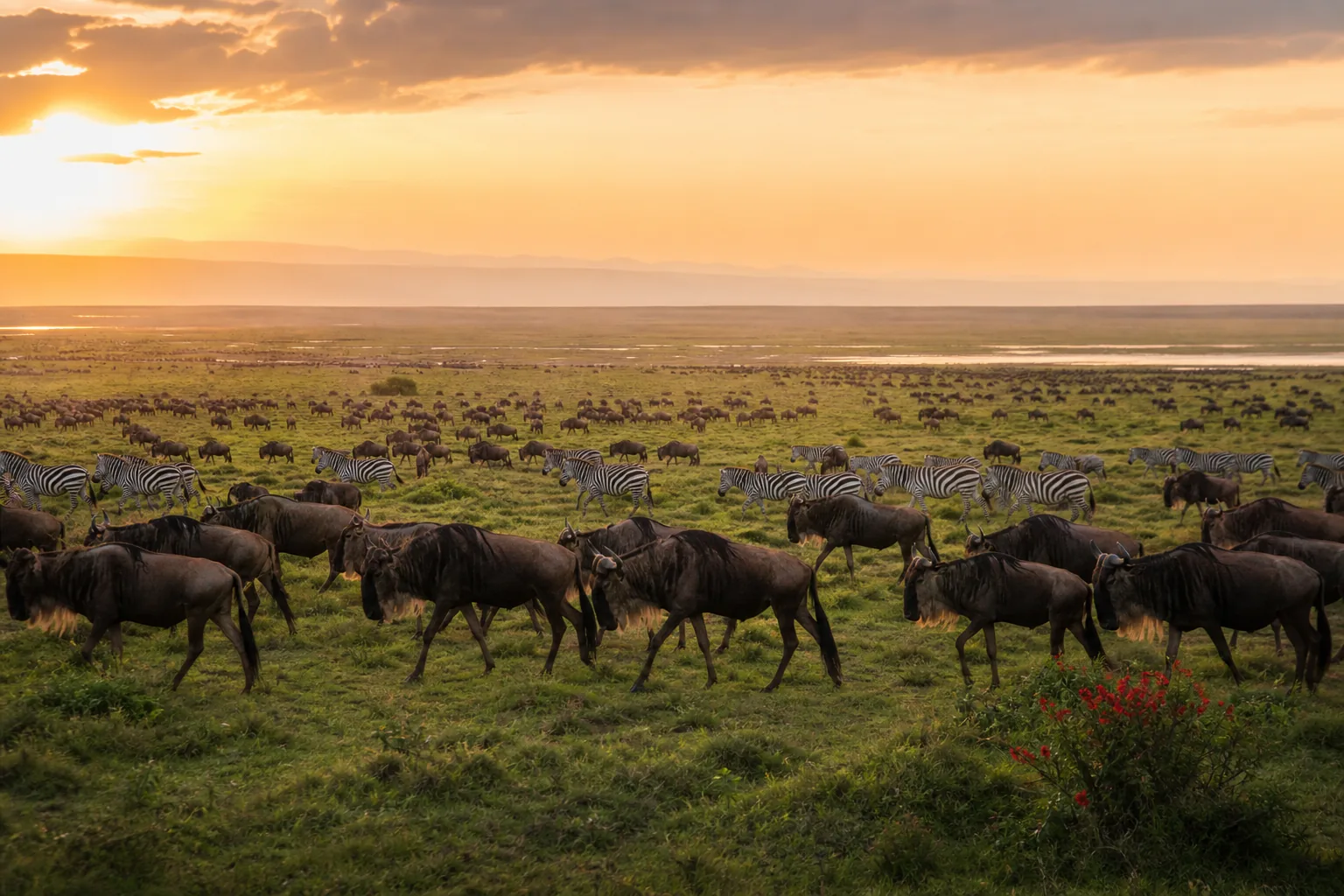
Ndutu is at its busiest when the herds settle in to give birth, not when they race north. For the highest chance of seeing newborn wildebeest, zebra foals, and predator action, plan for December through March, with January and February as the clearest calving window.
November brings the first return of the herds. By March, the calves are stronger and the grass begins to change. Here’s how each period works, what the weather feels like, and how we’d plan the trip from Arusha.
1. Safari TZ
Safari TZ runs its own Tanzania trips from Arusha with our own 4x4 vehicles and driver-guides. For travelers asking about the best time to see the migration in Ndutu, our first choice is a private or small-group safari timed around the December to March calving season.
We plan around the herd’s likely position rather than treating a calendar as a promise. Our team can build a route through the southern Serengeti and nearby conservation areas, then adjust game drives when rain shifts the animals toward fresh grass or water.
That matters in Ndutu. The area sits between two administrative zones, even though the animals move through both without noticing the boundary. Driving rules can differ too. In some nearby conservation areas, off-road driving may be allowed under local rules, while Serengeti National Park has stricter limits. Your guide needs to know which area the vehicle is in before choosing a position.
The wider Serengeti ecosystem is a moving system, not one fixed viewing point. We use that idea when planning each day. A sunrise drive may focus on the marshes near Ndutu Lake, while an afternoon drive may follow breeding herds across the short grass plains.
We’ve run Tanzania safaris since 1991, and our advice is simple: tell us whether births, predators, photography, or lower visitor numbers matter most. Then we can shape the route around that goal.
How Rain, Grass and Weather Shape the Herds’ Movement
The best time to see the migration in Ndutu follows rainfall because rain controls the grass. The short rains around November wake up the southern plains. Fresh, short grass then draws wildebeest and zebra south from the northern Serengeti and Kenya.
The herds don’t follow a neat timetable. They respond to local rain. One part of Ndutu can look dry while a nearby marsh still has green feed. That’s why a good guide checks the ground each morning instead of relying only on a printed migration chart.
December through March is the green-season calving period. The plains can look bright and soft after rain, with clear light between showers. Roads may become wet or muddy. A capable 4x4 and a guide who knows alternate tracks make a big difference.
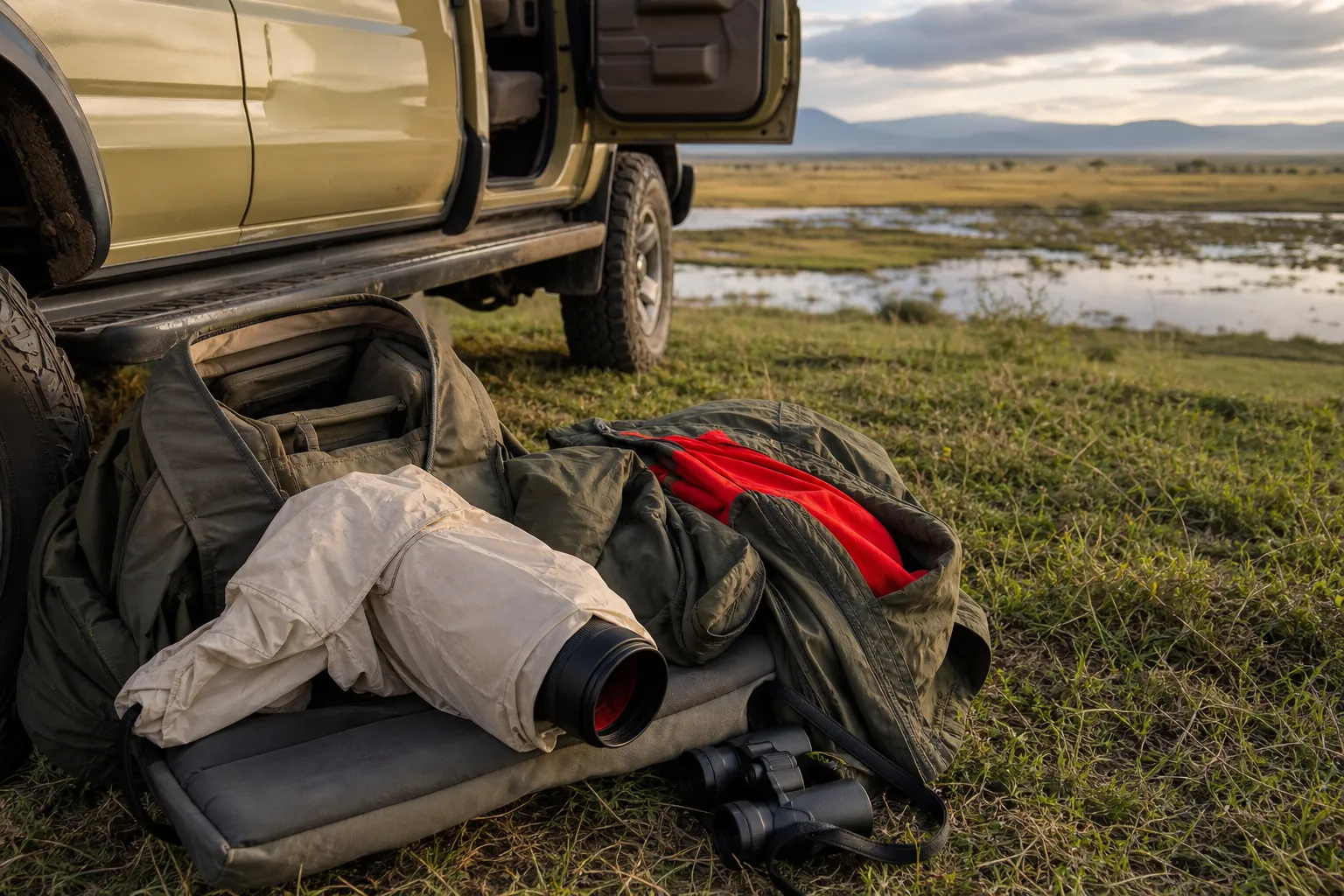
Ndutu’s volcanic soil adds another detail. When it dries, fine dust can rise behind each vehicle. The dust gets into camera bags, shoes, and clothing. Flies can also be a nuisance, especially near animals and wet ground.
Pack a light scarf or neck cover, closed shoes, a rain shell, and a cover for your camera or binoculars. Keep spare memory cards in a sealed pouch. A closed pop-up-roof vehicle is useful during rain and dust, while still giving you a clear view once the roof opens.
Days can feel warm, but mornings and nights may be cool after rain. The right clothing is light layers, not one heavy jacket. For photographers, early light gives shape to dust and makes wet grass glow. Use a lens cloth often, and don’t change lenses in a dusty vehicle.
The Wildlife Experiences to Expect in Each Ndutu Period
Each part of the Ndutu season gives you a different answer to the question of when to visit.
November and December: the herds return
November is the month of movement. Early groups may return as the short rains bring new grass. You may see zebra and wildebeest spread across fresh plains, with fewer vehicles than during the main calving rush.
By December, the herds are more settled. Expect large grazing groups, green views, and predators beginning to focus on the breeding herds. Rain can make the sky dramatic, but it can also slow a road transfer.
January and February: the calving heart
January brings dense herds and the first strong run of newborn sightings. Great Migration calendars commonly describe January as peak wildebeest calving, with thousands of calves. February brings late births, growing calves, and more predator activity.
This is the time to watch behavior. A mother may call for a calf. A young zebra may stay close to its dam. Lions, cheetahs, hyenas, and jackals work the edges of the herds. Sightings are never guaranteed, but the open plains make it easier to scan wide ground.
Ndutu also gives photographers more than a sea of animals. Wet pans may attract flamingos. Woodlands can hold giraffes and leopards. You may see hyenas moving through a breeding herd or lions using trees to escape thick clouds of flies.
March and April: growing calves and changing ground
March can be an excellent compromise. Many calves are still young, predators remain active, and visitor numbers may ease. The grass can stay green, though the herds may spread as food and rain patterns change.
April brings the long rains in many forecasts. Some animals begin moving north and west toward the central Serengeti. Game drives still work when roads allow, but heavy rain can affect access. Resident lions, cheetahs, giraffes, and other wildlife remain worth the trip.
If births are your main goal, choose January or February. If you want green scenery with a little more breathing room, March is a strong option.
Ndutu Compared With the Central Serengeti and Mara
Ndutu is the right place for calving, while the central Serengeti and Mara fit different parts of the migration. The answer depends on the scene you want, not on which area sounds most famous.
Ndutu
Ndutu has short grass plains, marshes, wet pans, and pockets of woodland. During the calving season, the herds gather in the south. The open ground helps with viewing newborns, while the marshes can add birds and different light to a game drive.
The Ngorongoro side may allow off-road positioning under its rules, which can help photographers find a better angle. That freedom still comes with a duty to give animals space and follow guide instructions.
Central Serengeti
The central area is useful when the herds move north or when you want a broader year-round safari. It can work well as part of a route that begins in Ndutu, then follows the animals as the season changes.
Northern Serengeti and the Mara
The northern Serengeti and Kenya’s Maasai Mara are linked with river-crossing drama, often during the dry-season months. Crossings depend on herd position, water levels, and animal behavior. They can’t be booked like a show.
The Great Migration in Africa is a year-long cycle. Ndutu gives you births and early survival. The Mara gives you a chance at crossings. Central Serengeti can help connect the two stories.
At Safari TZ, we often recommend choosing the event first. If you want calves, start with Ndutu. If you want crossings, plan farther north and keep your dates flexible.
Choosing Your Dates and Preparing for Ndutu Conditions
Choose dates by the wildlife scene you want, then leave room for nature to change the plan. For most first-time visitors, January through February gives the clearest focus on calving. December and March widen the season and may give you a calmer feel.
November suits travelers who like the return of the herds and fresh green scenery. April can suit photographers who value rain clouds and quiet plains, but roads may be harder. If you’re watching your budget, ask about shoulder dates rather than assuming the peak window is your only choice.
Build in at least two or three nights near the southern plains if migration is the main reason for your trip. A single night can work, but it gives rain or a long transfer too much power over your game viewing.
Mobile camps can help because they stay close to the herds during seasonal movements. Ask what “mobile” means in the actual plan. You want to know the camp’s location, transfer time, bathroom setup, and how the team handles rain.
Our 7-Day Safari from Arusha places the southern Serengeti into the route during the calving period, then allows the wider Northern Circuit to fit around it. That can make sense for travelers who want Ndutu plus Ngorongoro or another park.
Bring layers for cool starts. Pack a rain shell, sun protection, insect repellent, and dust covers for cameras. Keep luggage soft and easy to load. Hard cases can be awkward when space is shared.
For photos, use early and late light when animals stand out against the plains. A slow shutter can show movement in a passing herd, while a faster shutter helps with running calves. Ask the guide to position the vehicle with the sun behind you when possible. Don’t chase a sighting just to get closer. A calm vehicle often produces the better frame.
Frequently Asked Questions
What is the best month to see the migration in Ndutu?
February is usually the strongest month for peak calving and predator activity in Ndutu. January also gives excellent newborn sightings, while December catches the herds as they settle. March can be quieter and still productive. Since rainfall shifts the herds, no month guarantees a specific sighting.
Can you see the Great Migration in Ndutu in November?
Yes, November can bring the first returning wildebeest and zebra to Ndutu. The short rains often refresh the southern grasslands, but the main calving surge may not have begun. It’s a good choice for greener scenery, early migration movement, and a quieter safari.
Is Ndutu good for predator sightings?
Yes, Ndutu is well suited to predator viewing during calving season because many young animals gather on open plains. Lions, cheetahs, hyenas, and jackals may follow the herds. Predator behavior is wild and unpredictable, so sightings vary by rainfall, herd position, and the skill of the guide.
What is the weather like in Ndutu during calving season?
Calving season is warm and green, with showers that can affect roads. Mornings may feel cool, while afternoons can be warm. Fine volcanic dust appears when tracks dry. Pack layers, rain protection, closed shoes, and covers for cameras and binoculars.
Should I choose Ndutu or the Mara for migration viewing?
Choose Ndutu for calving and predator activity, especially from January through February. Choose the northern Serengeti or Mara if river crossings are your main goal. Both events depend on rain and animal movement. A longer route can include more than one region, but it needs extra travel time.
For the clearest calving experience, we recommend booking two or more nights in Ndutu between January and February, with March as a strong lower-pressure alternative. Send Safari TZ your preferred wildlife experience and travel dates, and our Arusha team can shape the route around current conditions.