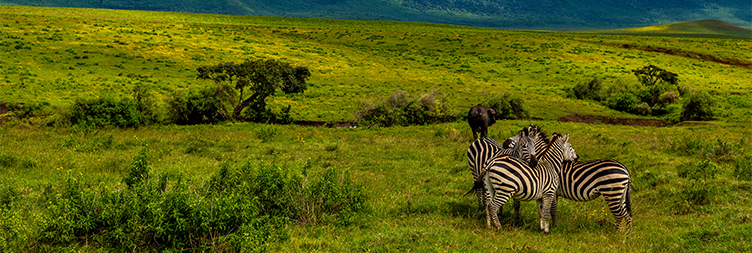
Combining Big Game & Birdwatching in Tanzania
the short answer
how birding weaves into a big-game day
the routing that does both
start at arusha np: the birding warm-up
the bird that hooks beginners
families: kids notice birds first
when 'both' should become private
one shoots birds, one shoots mammals
what you give up — honestly
The Short Answer
Absolutely — That's How Most of Our Guests Travel
You don't have to choose between birds and big game in Tanzania. Most Safari-TZ guests enjoy both on one trip. Here's how it actually works.
When guests ask us "can we do both?", our answer has been the same for years: absolutely. In fact, that's how most of our guests experience Tanzania. You don't have to choose between birds and big game — we build the safari so you enjoy both.
The essentials:
- On a standard Northern Circuit safari, birdwatching happens naturally throughout the day. No separate "birding sessions" required.
- Most visitors arrive for lions, elephants and giraffes — and discover the birdlife is every bit as colourful and memorable. Birdwatching often becomes the unexpected highlight, not the reason they travelled.
- The classic Tarangire–Manyara–Ngorongoro–Serengeti routing is already an outstanding combined trip.
- Families and complete beginners do this well. No experience or equipment needed to start.
- Only when birds become a genuine priority — long photography sessions, particular habitats — does the trip need restructuring toward a private, birding-paced safari.
The rest of this page covers how the combination works day to day, which routing we recommend, and where the honest limits are.
How Birding Weaves Into a Big-Game Day
No Separate Sessions — The Birds Are Already There
Our guides don't schedule birding sessions on combined safaris. The birds appear during the big-game day — at wetlands, leopard stops and lunch.
Here's the part that surprises people: on most Northern Circuit safaris, we don't schedule separate birding time at all.
Our guides work with the opportunities a normal safari day already produces. While you're searching for elephants near a wetland, there are waterbirds in front of you. While the vehicle sits quietly under a leopard in a tree, the woodland around you is busy. While you eat lunch overlooking a lake, some of the day's best bird sightings are happening around the picnic site — often at arm's length.
The birding doesn't compete with the big-game viewing because it happens inside it. You never feel you're sacrificing mammal time, because you aren't; the vehicle was stopping anyway.
What changes with a Safari-TZ guide is simply that those moments get named and noticed. The flash of colour crossing the road stops being "some bird" and becomes a species with a story — and once that starts, most guests can't switch it off. Nor do they want to
The Routing That Does Both
Tarangire, Manyara, Ngorongoro, Serengeti
The classic Northern Circuit — Tarangire, Lake Manyara, Ngorongoro and Serengeti — delivers exceptional mammals and bird habitat in one route
For travellers wanting genuine balance between classic wildlife and birdlife, our usual recommendation is a Northern Circuit safari built around four anchors:
- Tarangire National Park — big elephant country, and its swamps and baobab woodland are among the most rewarding bird habitats on the circuit.
- Lake Manyara National Park — a compact park where the groundwater forest, lakeshore and escarpment stack different bird communities within minutes of each other, alongside the classic game viewing.
- Ngorongoro Conservation Area — the crater floor concentrates big game famously; the habitat run from highland forest on the rim down to the soda lake keeps the bird list turning over the whole descent.
- Serengeti National Park — the mammal spectacle needs no introduction, and its river systems and woodland patches keep the birding strong between the big sightings.
The reason this routing works for mixed-interest couples and families is structural: every leg of it serves both audiences at once. Nobody's day is being spent on somebody else's interest. That's not something we engineered — it's what northern Tanzania is — but knowing how to pace it is where the operator earns their place
Start at Arusha NP: The Birding Warm-Up
Learn to Notice Before the Big Parks Begin
Arusha National Park works as the ideal gentle first day: guests meet Tanzania's common birds, slow down and notice more for the whole safari.
If your itinerary has room for it, we like to open a longer Northern Circuit safari with a gentle first day in Arusha National Park — and not primarily for the reason you'd expect.
Yes, the Momella Lakes area is excellent birding in its own right. But the real value of the warm-up day is what it does to the rest of your trip. It gives first-time visitors the chance to slow down, get familiar with some of Tanzania's common bird species, and start looking beyond the famous mammals before the big parks begin.
Guests who've had that first day arrive in Tarangire already noticing things. The bird at the picnic site gets identified instead of ignored. The movement in the reeds gets a second look. The whole safari gets richer because the habit of noticing was installed on day one, in a quiet park close to town, before the Big Five pressure kicked in.
We don't present Arusha NP as a specialist birding destination. We present it as the warm-up that makes everything after it better — and it conveniently sits right where most itineraries start anyway.
The Bird That Hooks Beginners
It's Almost Always the Colour
The Lilac-breasted Roller and Superb Starling convert more non-birders than any lecture. What usually sparks a beginner's interest on safari.
For most first-time visitors, the hook is colour.
A Lilac-breasted Roller perched beside the road stops people in their tracks — the kind of bird that makes guests ask whether it's real. The Superb Starling does the same work at closer range: strikingly coloured, confident, and commonly seen around picnic sites and lodges, which means it introduces itself whether you were interested or not.
The pattern we've watched for decades: many guests begin their safari saying, quite firmly, that they aren't interested in birds. By the end of the trip they're asking the guide what the next colourful species is called. Nobody lectured them into it. A roller did it in about four seconds.
That's why we tell nervous beginners not to prepare anything. No field guide homework, no binocular anxiety. Tanzania's birds recruit their own audience — our guides just make the introductions.
Families: Kids Notice Birds First
A Spotting Game, Not a Lesson
Children often notice birds before adults. How our guides turn birdwatching into a family spotting game that keeps kids engaged all day.
A field observation from years of family safaris: children often notice birds before adults do. Their eyes are drawn to movement and colour, and they haven't yet learned to filter out everything that isn't a lion.
Our guides work with that instead of against it. They'll ask children to help spot colourful species, compare shapes and colours between birds, and — the reliable favourite — see who can notice something before the guide does. Finding the brightest or strangest bird of the day becomes a running game rather than a lesson.
This solves a real family-safari problem, too. Big game viewing involves stretches of driving and waiting that test young patience. Birds fill those stretches — there is almost always a bird to find, which means there is almost always a game running.
The goal isn't to produce young ornithologists. It's to help families notice more of the wildlife around them — and to keep the vehicle a happy place between elephant sightings, which every parent on safari understands is worth a great deal.
When 'Both' Should Become Private
The Line Is Where Birds Become a Priority
A shared safari suits casual bird interest. Once birding becomes a genuine priority — photography, habitats — we recommend going private.
There's a line, and we'll help you find which side of it you're on.
If birdwatching is something you'd like to enjoy alongside the traditional safari, a shared itinerary works well. The opportunistic approach on this page is exactly built for that: the birds come to the safari you were taking anyway, and nobody's schedule bends.
Once birdwatching becomes a genuine priority — you want extended time photographing, or you're hoping to search particular habitats for particular species — we generally recommend a private safari. The flexibility is the whole point: the guide can stop whenever something interesting appears without weighing the interests and patience of strangers in the same vehicle.
The honest test we give guests: if another vehicle's passengers wanting to leave a sighting after five minutes would genuinely frustrate you, you're a private-safari birder. If you'd shrug and enjoy whatever comes next, shared is fine and cheaper.
Our full comparison of how a dedicated birding safari differs is on the regular vs birding safari page — worth reading before you decide.
One Shoots Birds, One Shoots Mammals
Brief the Guide Before Day One — Then It Works
One partner photographs birds, the other wants the Big Five. How pre-safari guide briefing balances a mixed-interest couple's trip.
One partner photographs birds; the other is here almost exclusively for the Big Five. This is more common than you'd think, and it works — provided the balancing happens before the safari, not during it.
Before departure, we brief the guide on everyone's priorities. An experienced guide can then shape each day to spend real time at rewarding birding locations while making sure the itinerary delivers the classic wildlife moments the other traveller came for. The balance is planned, so in the vehicle it feels effortless rather than negotiated.
One couple joined us exactly like this: a keen bird photographer and a partner interested only in big game. By the end of the safari, the Big Five enthusiast had developed a genuine appreciation for Tanzania's birdlife — and the bird photographer admitted that watching a pride of lions was every bit as exciting as they'd imagined. Neither felt they had compromised. Both discovered a side of Tanzania they hadn't expected to enjoy.
That outcome isn't luck. It's what good communication before a safari buys you. Tell us who wants what, and briefing the guide is our job
What You Give Up — Honestly
For Most Guests, Almost Nothing
Adding birdwatching to a Tanzania safari costs most guests almost nothing. The trade-off only appears when birds become the specialist focus
Let's finish with the question underneath this whole page: what does the big-game guest actually give up by adding birds?
For most guests — honestly, not much. If your goal is appreciating birds whenever the opportunity arises, birdwatching fits inside a standard safari without displacing anything. The stops were happening anyway; the birds were already there.
The trade-off only becomes noticeable at the specialist end: long periods searching for particular species, or detailed bird photography sessions. At that point you'll naturally spend less time covering distance in search of predators. That's not a compromise between good and bad — it's a different emphasis, and it belongs on a private, birding-paced trip rather than squeezed into a combined one.
Tell us where your interest sits — passing curiosity, family game, serious lens — and we'll build the version that fits. We've been reading that spectrum in guests since 1991, usually before they've finished describing it.
- Request a tailor-made quote (fastest, best for a real plan)
- WhatsApp: +255 740 666 662
- Email: info@safari-tz.com