How to Avoid Blurry Safari Photos in Tanzania
the short answer
engine off, vibration gone
the completely still vehicle
support
shooting from a moving vehicle
dust, heat haze and sharpness
the shared-vehicle problem
how guides build a stable platform
the leopard that looked up
The Short Answer
Astill vehicle beats any piece of gear
The biggest cause of blurry safari photos is a moving vehicle. Engine off, everyone still, and patience — the operator answer before any gear talk.
Most blurry safari photos aren't a camera problem. They're a vehicle problem. Here's the field answer:
- A completely stationary vehicle is the single biggest thing that sharpens your images — more than any lens or setting.
- Where it's safe, our guides switch the engine off during photography stops, which cuts vibration through the vehicle.
- Most good wildlife photography happens after the vehicle has stopped, not while it's moving.
- Bring support you already know — handheld, a compact beanbag, whatever. Large tripods are of limited use in a shared, cramped vehicle.
- In a shared vehicle, one person's sudden movement shakes everyone's shot. For serious photographers, that's a real argument for going private.
None of this requires expensive equipment. It requires a still vehicle, good communication, and the patience to settle before you press the shutter. The rest of this page is the practical detail behind each of those — the things that actually happen in the vehicle.
Engine Off, Vibration Gone
Where It's Safe — and It Genuinely Helps
The biggest cause of blurry safari photos is a moving vehicle. Engine off, everyone still, and patience—the operator answer before gear talk.
Where it's safe and appropriate, yes — our guides switch off the engine during photography stops, and it matters more than most guests expect.
A running engine transmits a low, constant vibration through the whole vehicle. You may not feel it in your seat, but a long lens does, and it shows up as softness in images that should be sharp. Cutting the engine removes that vibration at the source. It also quiets the whole scene, which makes for a calmer wildlife encounter as a bonus.When settled wildlife allows it and the situation is right, that's our guides' instinct on a photography stop. There are honest exceptions. Sometimes the engine has to stay running — if the vehicle may need to move quickly for safety, if conditions demand it, or if park circumstances make switching off impractical. Our guides balance the photograph against the safety of the situation around them every time, and safety wins when the two conflict. But in the ordinary case of a relaxed sighting, engine off is the default a photographer wants, and it's the first thing that separates a sharp frame from a soft one.
The Completely Still Vehicle
The Simplest Fix Nobody Talks About
Keeping the vehicle completely still while everyone shoots is one of the simplest ways to sharpen safari photos. How guides manage it.
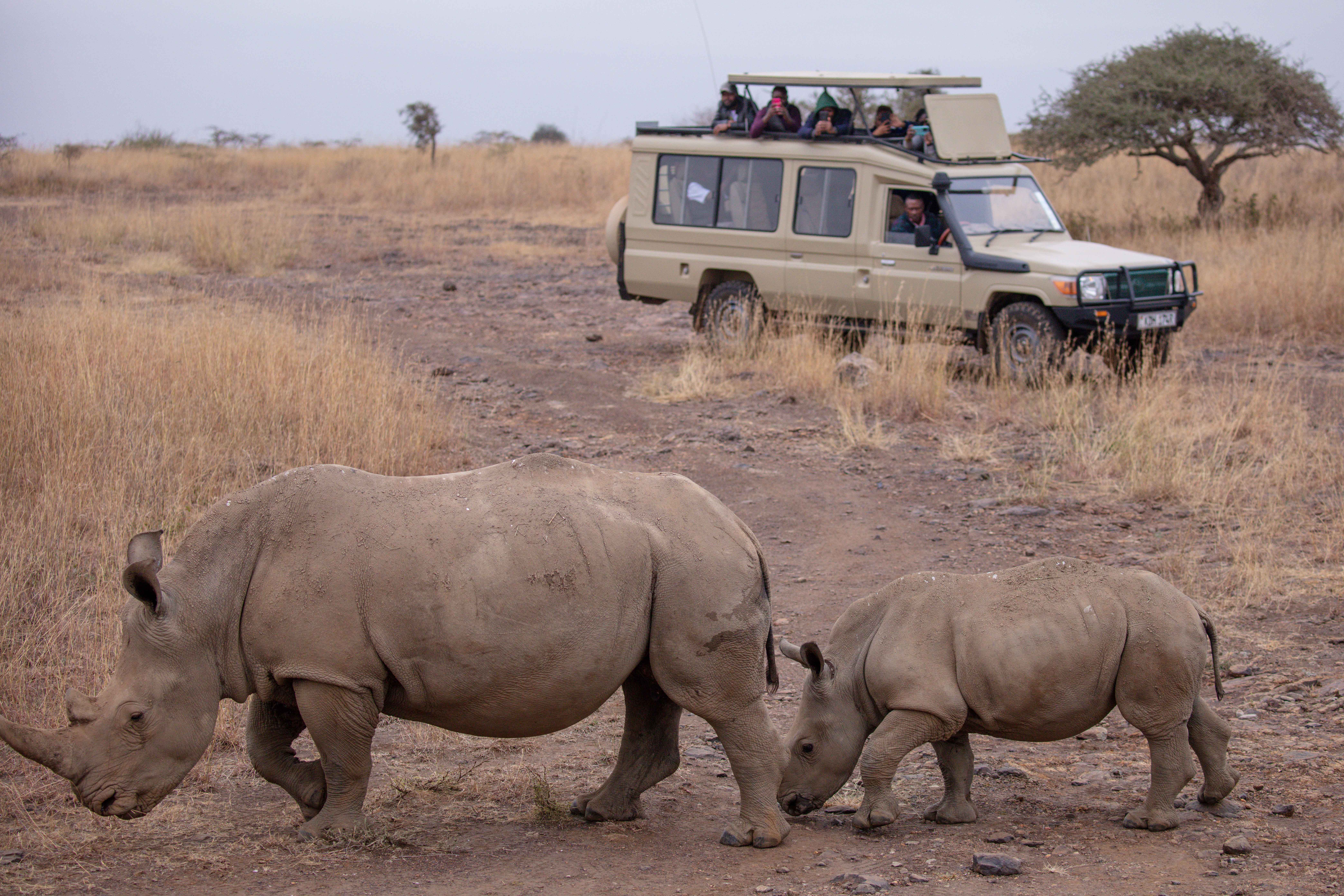
If engine-off is the first fix, a genuinely motionless vehicle is the second — and together they solve most sharpness problems before a single setting is touched. The principle is almost embarrassingly simple: while guests are actively photographing, the vehicle stays completely still. Our guides avoid unnecessary movement wherever possible, and — this is the part that takes experience — they communicate before repositioning. If a better angle means moving the vehicle, they say so first, so photographers have time to lower cameras, brace, and prepare rather than being caught mid-frame by a lurch. That communication is often as important as any equipment. A guide who announces "moving forward" before rolling saves more shots than an expensive lens does, because the ruined frame on a shared safari is almost always the one taken the instant the vehicle unexpectedly moved. It sounds obvious written down. In a busy vehicle with several people shooting different subjects, keeping everything still and coordinated is a genuine skill — and it's one of the quiet things that separates a guide who works with photographers from one who simply drives them to animals.
Support
Usually Not — Keep It Simple
Large tripods are of limited use in a safari vehicle. What works for support in Tanzania: handheld, a compact beanbag, gear you already trust.
The tripod question comes up constantly, so here's the honest answer: for most guests, keep it simple.A camera you can comfortably hand-hold or lightly support inside the vehicle is usually the most practical setup. Large tripods are of limited use during game drives — wildlife sightings change fast, and the space inside a safari vehicle is shared and cramped. A full tripod is more likely to become an obstacle than an asset.
Some photographers travel with their own beanbag or a compact support and shoot resting on the window frame or roof edge; others prefer to shoot handheld and rely on the still vehicle. Both work. What we won't do is claim beanbags or specialist supports are provided as standard — if they're not confirmed for your specific departure, we won't imply otherwise. So the practical rule is the one we give every photographer: bring equipment you already know how to use confidently. The person who's rehearsed their handheld technique at home will out-shoot the one fumbling with an unfamiliar support on a moving sighting, every time. A familiar setup and a still vehicle beat unfamiliar gear and perfect intentions.
Shooting From a Moving Vehicle
Occasionally — But It's Not the Plan
Photographing from a moving vehicle is possible but rarely the approach. Most sharp wildlife photos in Tanzania happen after the vehicle stops.
Occasionally, yes — but it's not something we treat as the normal approach, and honesty about that saves a lot of disappointment.
Most successful wildlife photography happens after the vehicle has stopped. If wildlife is on the move, our guide will usually look for a suitable place to stop again and let you photograph from stillness, rather than expecting you to shoot continuously through the bumps and vibration of a moving vehicle. A stable vehicle almost always gives you a far better chance of a sharp image than trying to pan from a driving one on a rough track.There are moments — following action, a fast sequence — where a shot from a moving vehicle is the only shot available, and a skilled photographer can pull it off. We don't pretend it's impossible. We just won't build your expectations around it, because the keeper rate is low and the frustration is high.The realistic mental model: the vehicle moves to reposition you, then stops so you can shoot. Movement is transport between photographs, not the platform for them. Photographers who internalise that come home with sharper libraries and fewer deleted frames.
Dust, Heat Haze and Sharpness
Real Problems the Guide Reads, Not Fixes
Dry-season dust and midday heat shimmer soften safari images in Tanzania. How experienced guides work around conditions they can't change.
Two conditions genuinely soften safari images, and neither is your camera's fault — so it's worth knowing them before you blame your gear.
In the dry season, dust hangs on busy roads and drifts across sightings, reducing clarity. And heat shimmer over open plains — that visible wobble of hot air — reduces sharpness noticeably, especially around midday and over longer distances. A distant lion across shimmering grass at noon simply will not render crisp, no matter how good your lens is. The atmosphere is between you and the subject, and no setting fixes that. Our guides can't change the weather. What they can do is read how conditions evolve through the day and naturally work the times and places where visibility is best — shooting the clear early hours hard, easing off distant subjects when the plains start to shimmer, moving closer where the wildlife allows so there's less haze-filled air in the way.
Sometimes the honest solution is simply patience: the same subject that's a soft, wobbling blur across the plains at noon may be sharp and clean in the cooler, stiller air of late afternoon. Knowing that — and planning around it — is fieldcraft, not equipment.
How Guides Build a Stable Platform
Choosing the Stop Is Half the Craft
Tanzania guides don't stop at the first spot—they position for a stable, clear view and hold it steady until the photo opportunity passes.
Experienced guides don't simply stop at the first opportunity. Where and how they stop is half the craft of getting you a sharp image.A good guide looks for a place where the vehicle can sit safely and comfortably while giving you the best possible view — level ground where practical, a clear line to the subject, the right side of the light. If a better angle is available nearby and moving there won't disturb the wildlife, they'll reposition before you start shooting, not in the middle of it. Getting the platform right first means fewer disruptive adjustments later. Once everyone's happy with the view, the guide's whole job becomes keeping the vehicle as steady as practical until the opportunity passes. Engine off if safe, no unnecessary movement, clear warning before any change. It's a small detail that experienced photographers notice immediately and inexperienced ones never think about — which is exactly why it's worth naming. The guide who chooses the stop well and then holds it dead still is doing quiet, invisible work that shows up directly in the sharpness of your files. It's guiding, not luck, and it's the kind of thing a foreign reseller booking you a seat can't provide.
The Leopard That Looked Up
Knowing When to Stop Moving
A guest kept edging toward a leopard; the guide said wait. The leopard looked up, and the still frame became the trip's best shot. Since 1991.
One safari sums up this whole page better than any technique list.
A guest was desperate to photograph a resting leopard and kept instinctively asking the guide to edge the vehicle forward — a little closer, a little closer, each small movement another chance for a soft frame. After the final adjustment, the guide made a different suggestion: wait, rather than move again.A few moments later, the leopard lifted its head and looked directly toward the vehicle. From a completely still platform, that image became the guest's favourite photograph of the entire safari.
The lesson had nothing to do with expensive equipment. It was about knowing when to stop moving and simply let the moment unfold from a steady vehicle. Every sharp safari image is some version of that: the engine off, the vehicle still, everyone settled, and the patience to wait for the animal to do something worth the wait.And the honest closing point, not a sales claim but a practical fact: if photography is one of the main reasons for your safari, travelling privately gives you and your guide far more control over positioning, timing and stability than a shared game drive ever can. Tell us photography matters, and we'll build the safari around exactly that kind of control.
- Request a tailor-made quote (fastest, best for a real plan)
- WhatsApp: +255 740 666 662
- Email: info@safari-tz.com