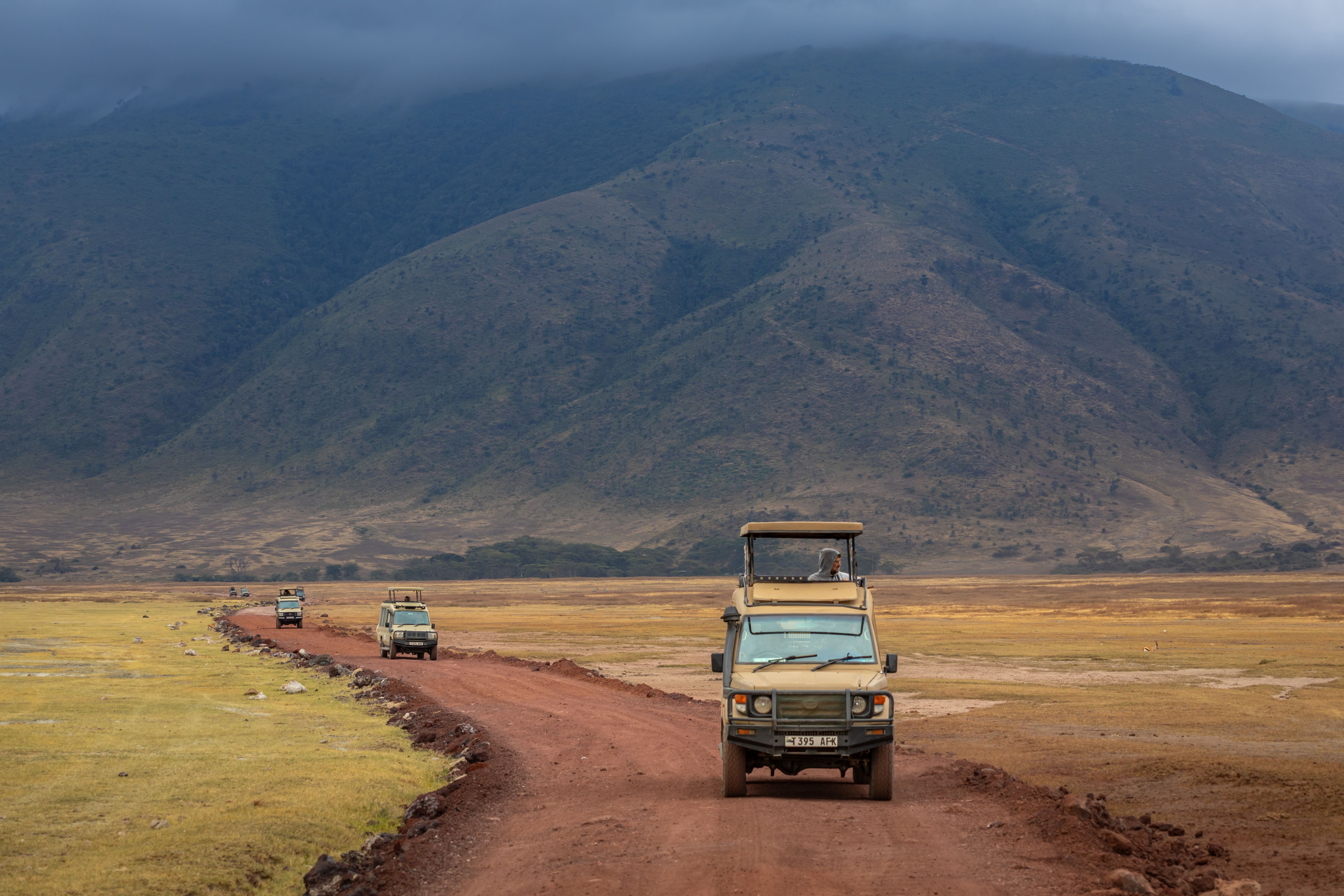
How to Avoid Crowds at Ngorongoro
the short answer
why it gets busy
descend early
time your movements
season & crowds
where you stay
at busy sightings
the honest limit
plan a quieter day + talk
The Short Answer
Not Entirely, but Largely
Can you avoid crowds at Ngorongoro? Not entirely. But an early descent, smart timing, and a sharp guide genuinely reduce noticing other vehicles.
Let's be honest: you can't have Ngorongoro to yourself. It's one of the most reliable wildlife spectacles in Africa, contained in a compact caldera, so it draws visitors, and always will. Anyone promising an empty crater is overselling. What you can do is significantly reduce how much the crowds affect your day. Descending early, timing your movements well, and travelling with a guide who knows the floor make a real difference between a day that feels shared-but-wonderful and one that feels like a traffic jam. Here's how.
Why It Gets Busy
Reliable Wildlife, Compact Space
The crater is busy for a simple reason: reliable, concentrated wildlife in a small area draws everyone. What makes it special makes it popular.
The crater gets busy for a straightforward reason: it packs a remarkable concentration of wildlife into a compact, contained floor, so sightings are more reliable than in vast open parks. That reliability is exactly why everyone wants to come, and why they cluster in the same limited space.
Understanding this helps you plan around it rather than resent it. The crowds aren't a failure of the place; they're a symptom of how good it is. The trick is working with the pattern instead of against it.
Descend Early
Beat the Late Starters
The best way to dodge crowds is an early descent, before vehicles from afar arrive. Early also lines up with top wildlife activity—a double win.
If you take one thing from this page, take this: descend early. The single most effective way to enjoy a quieter crater is to be down on the floor before the wave of vehicles arriving from farther afield.It's a genuine double win, because early is also when wildlife is most active. So the same tactic that thins the crowds also improves your sightings. This is why your starting base matters so much: descend from a lodge near the rim or from Karatu and an early start is easy; try it from Arusha and you'll arrive with everyone else. Our day-trip guide covers the base-and-timing logic in full.
Time Your Movements
Move Against the Flow
A sharp guide reads the vehicle flow and moves against it, timing popular spots for quieter windows—a quiet advantage of local knowledge.
Beyond the early start, a skilled guide manages your day against the crowd's rhythm. Vehicles tend to cluster at the same sightings and move in loose patterns across the floor, and a guide who knows Ngorongoro reads that flow and works against it.That might mean heading to a productive area others haven't reached yet, or timing a popular spot for a quieter window. It's not dramatic, but over a day it noticeably changes how busy your experience feels. This is one of the quiet, real advantages of a genuinely knowledgeable local guide over a driver just following the pack.
Season & Crowds
Peak Draws People Too
Peak season brings top conditions and top crowds. Traveling a shoulder period means fewer vehicles, trading some conditions for a quieter day.
Crowds also track the season. Peak safari periods bring the best conditions and, inevitably, the most visitors, everyone's chasing the same good weather. Travelling in a shoulder period can mean noticeably fewer vehicles on the floor. There's a trade-off, of course: quieter times may come with less ideal conditions. Whether that trade is worth it depends on what you value, a quieter crater or peak-season conditions. We'll talk it through honestly rather than pushing you toward the busiest, most obvious window. Our best-time-to-visit guide covers the seasonal picture.
Where You Stay
Proximity Buys Early Access
Staying near the rim or Karatu lets you descend before the crowds arrive. The closer you start, the earlier you are on the floor. Proximity buys quiet.
Where you stay is a crowd-avoidance tool in itself. A base near the rim or in Karatu lets you be at the descent road early, ahead of vehicles travelling in from farther away. Proximity effectively buys you the quiet early hours. This is another reason we steer guests away from trying to do the crater from too far off. It's not just about saving driving time, it's about being able to descend before the crowd does. Our Karatu guide covers staying in the area below the highlands.
At Busy Sightings
A Good Guide Reads the Scene
At busy sightings, a sharp guide positions well, waits out the rush, or returns later. How they handle busy moments shapes your day entirely.
Even with good timing, you'll hit popular sightings, a big cat, especially, draws vehicles fast. Here, how your guide behaves matters. A good one positions sensibly, waits out the initial rush, or quietly moves on to return when it's calmer, rather than jostling into a scrum.This is partly about your experience and partly about respect, for the wildlife and other visitors. A guide who reads a busy scene well can turn a crowded sighting into a patient, rewarding one. It's another reason the guide, not just the tour, makes the day.
The Honest Limit
Quieter, Not Empty
These tactics make the crater quieter, not empty. Come expecting a shared, spectacular experience, timed to feel less crowded than a poor day.
We'll close honestly: these tactics make the crater quieter and far more enjoyable, they don't make it deserted. It's a popular, protected wonder, and part of accepting that is coming with realistic expectations.
The difference between a well-planned crater day and a poorly planned one isn't crowds versus no crowds, it's a shared-but-spectacular day versus a frustrating, traffic-heavy one. Get the timing, base and guide right and you'll barely notice you're sharing one of the world's great wildlife sites. That's a realistic, achievable goal, and one we plan for.
Plan a Quieter Day + Talk
Timing, Base and a Good Guide
Tell us your dates and we'll plan a quieter crater day: the right base, early descent, and a guide working against crowds. Better for wildlife.
Avoiding the worst of the crowds comes down to three things we plan for by default: the right base, an early descent, and a guide who knows how to work the floor against the flow. Tell us your dates and priorities and we'll build a crater day that feels far quieter than a poorly timed one.
A real example: a photographer specifically wanted quiet time at sightings, not a line of vehicles in every frame. We arranged an early descent from a nearby base and briefed the guide on their priorities. By being down first and moving smartly through the morning, they had long, calm stretches at several sightings before the floor filled up, and came away with exactly the uncluttered shots they'd hoped for. Good planning genuinely changes how crowded the crater feels.
- Request a tailor-made quote (fastest, best for a real plan)
- WhatsApp: +255 740 666 662
- Email: info@safari-tz.com