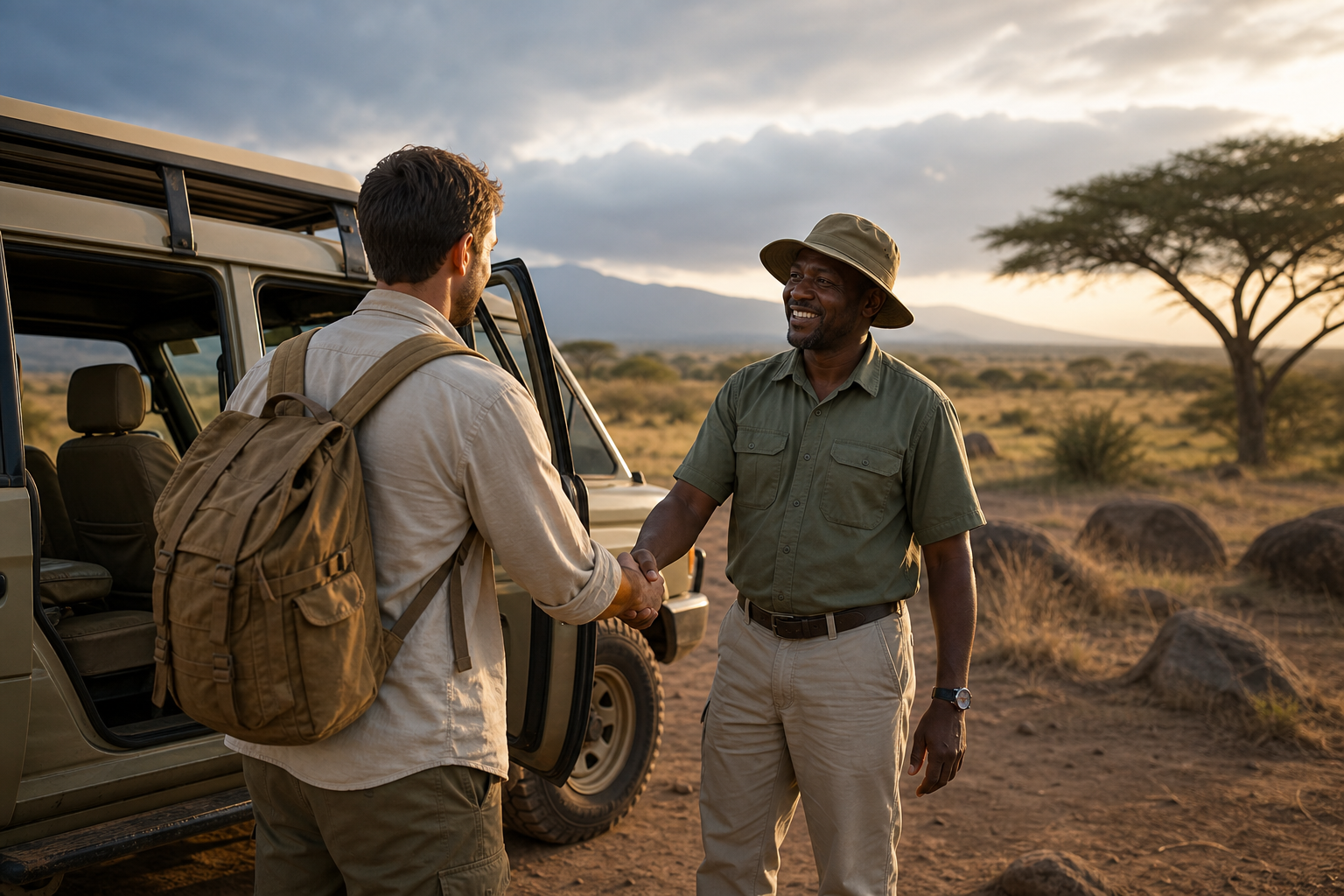
Kiswahili for Travellers: Tanzania Phrase Guide
kiswahili for travellers: tanzania phrase guide
Kiswahili for Travellers: Tanzania Phrase Guide
Learn Kiswahili for travellers with useful Tanzania phrases, pronunciation tips, cultural etiquette, and offline resources for safaris and Zanzibar.
A few Kiswahili words can change the tone of a whole journey. In Tanzania, a warm greeting often opens a better chat than a perfect accent. This resource gives you the phrases, sounds, manners, and trip words you'll use at the airport, in lodges, on safari, in Zanzibar, and on Kilimanjaro.
Essential Kiswahili Phrase Resources for Arrivals, Hotels, and Dining
Kiswahili for travellers starts with a small set of phrases you can say without checking a screen. Kiswahili is Tanzania's national and official language, and it is also spoken across much of East Africa. Many people speak it as a second, third, or fourth language.
That means your effort will often be understood even when your grammar is basic. Start with a greeting. Then add one useful request. Don't try to learn a whole phrasebook before your flight.
At a hotel, try “Chumba kiko tayari?” if you want to ask whether the room is ready. You can also say “Nina booking,” using the English word booking inside a Kiswahili sentence. This kind of language mix is normal. Staff in tourist areas may reply in English, but your opening phrase still shows care.
At a restaurant, point first if you need to. Say “Ningependa chai,” for tea, or “Maji tafadhali,” for water. If you have a dietary need, make the request plain and repeat it to the server. Our team at Safari TZ can also help guests pass clear food requests to camps and lodges before a safari begins.
Pronunciation and Spelling Resources for First-Time Kiswahili Speakers
Good pronunciation makes Kiswahili for travellers much easier because the spelling is fairly kind to beginners. Say each vowel clearly. Don't swallow the end of a word as you might in English.
Use these rough sound cues:
- a sounds like the “a” in father.
- e sounds like the “e” in they, but shorter.
- i sounds like the “ee” in see.
- o sounds like the “o” in open.
- u sounds like the “oo” in food.
So asante sounds close to ah-SAHN-teh. Tafadhali sounds close to tah-fah-DHAH-lee. The “dh” can be hard at first. A soft “z” or “th” sound may still be understood when you are learning.
Keep the stress even, with a little more weight often near the next-to-last syllable. Say “ha-ba-ri” rather than rushing it into one sound. The same method works with “ta-fa-dha-li” and “ki-li-ma-nja-ro.”
Spelling patterns worth knowing
The letter combination ch sounds like the start of “chair.” “Chakula” means food. The combination sh sounds like the start of “shop.” “Shilingi” refers to shillings.
Don't worry about copying a local accent. Aim for clean vowels and a calm pace. If someone doesn't understand, repeat the phrase with fewer words. Pointing can fill the gap.
Write the phrase in large type on one card, with the meaning below it. A compact card is easier to use at a busy ferry terminal than a full page of notes. You can also ask your Safari TZ guide to correct a sound on your first day. A quick correction in context tends to stick.
Cultural Etiquette Resources: Greetings, Politeness, and Respect
Cultural etiquette is a key part of Kiswahili for travellers. In Tanzania, a greeting is often more than a quick hello. It gives people a moment to recognize each other before the request begins.
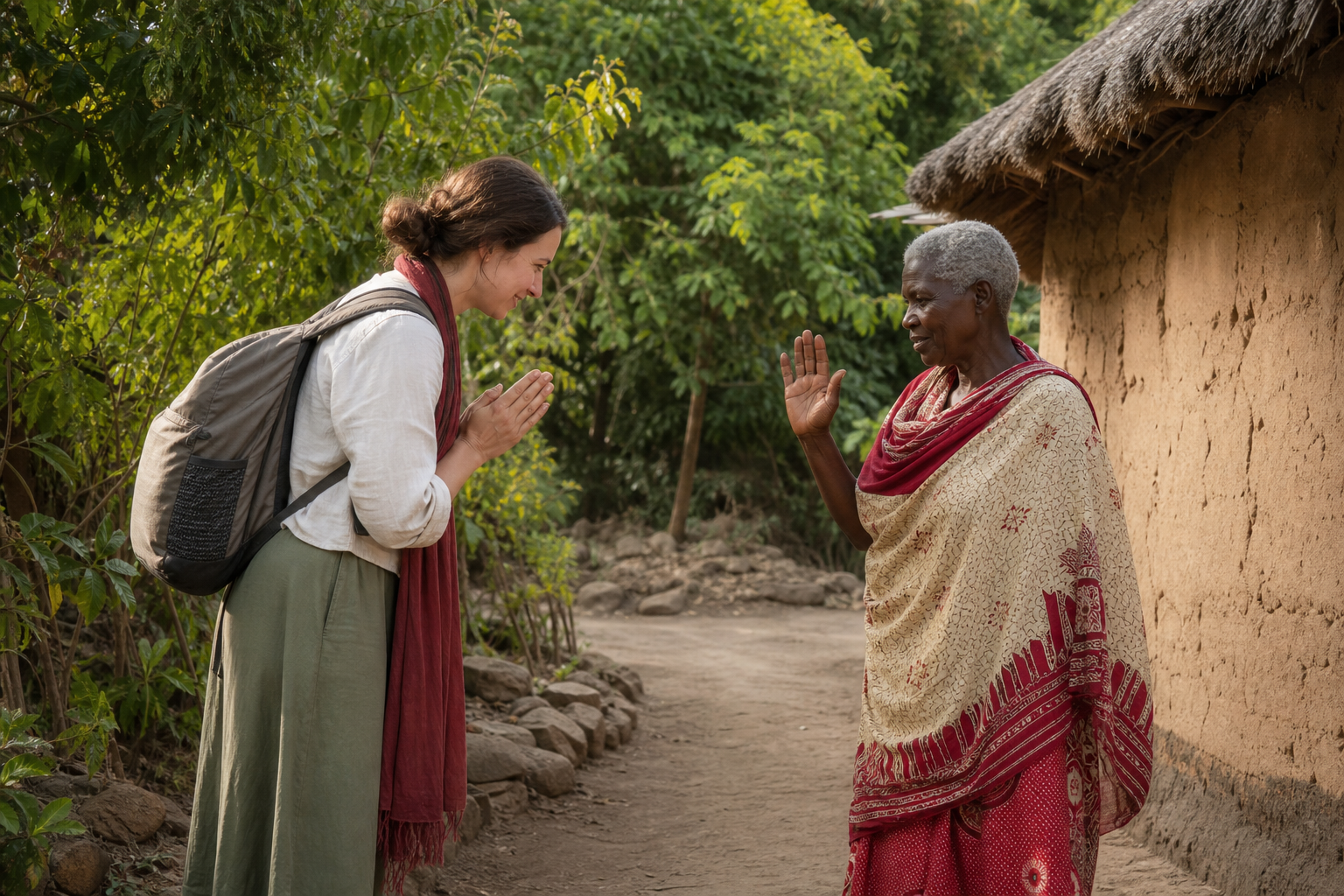
When you meet someone, make eye contact if it feels natural and greet them before asking a question. “Habari?” works in many everyday settings. “Shikamoo” is a respectful greeting for an older person. The usual reply is “Marahaba.” You don't need to use it with every person, but it is useful when speaking to an elder.
Words such as babu, meaning grandfather or older man, and bibi, meaning grandmother or older woman, can be used respectfully in the right setting. Listen to how local people address one another first. Respect comes from tone and attention, not from forcing a title into every exchange.
Polite words that prevent awkward moments
- Asante, thank you.
- Tafadhali, please.
- Samahani, excuse me or sorry.
- Pole, a word of sympathy or concern.
- Ndiyo, yes.
- Hapana, no.
“Pole” is not only for accidents. Someone may say it when you are tired, delayed, or dealing with a small problem. A simple “asante” is a good reply.
You may hear “Mambo?” among friends or younger people. “Poa” means cool or fine. “Hakuna matata” means there is no problem, but it is best used lightly. It is a familiar phrase, not a substitute for a greeting in every situation.
On a market visit, ask the price before you bargain. “Punguza bei, tafadhali” means “lower the price, please.” “Bei rahisi” means “a cheaper price.” Bargain with a smile, and accept a clear no. If the item is sold in a shop with fixed prices, don't treat the exchange like a market.
We tell Safari TZ guests to watch the room before they speak. A phrase that feels casual with a guide may sound too informal in a formal setting. Your guide can explain the local tone without making the moment awkward.
Safari, Zanzibar, and Kilimanjaro Kiswahili Vocabulary Resources
Trip-specific words make Kiswahili for travellers more useful than a long list of random nouns. Learn the words tied to the day ahead, then use them during the activity.
Safari words
- Simba, lion.
- Twiga, giraffe.
- Duma, cheetah.
- Mamba, crocodile.
- Kifaru, rhinoceros.
- Ndege, bird.
- Maji, water.
- Chakula, food.
When you spot an animal, you can ask “Ni nini?” meaning “What is it?” For location, try “Iko wapi?” Your driver-guide will usually give the fuller explanation in English, but the Kiswahili question can start the exchange.
Zanzibar and the coast
On Zanzibar, you may hear Kiswahili alongside English and other languages. “Bahari” means sea. “Pwani” means coast. “Samaki” means fish, while “mchele” means rice. For a beach day, “Nataka kwenda ufukweni” means “I want to go to the beach.”
Kilimanjaro terms
For a climb, learn mlima, mountain, and kilele, summit. “Pole pole” means slowly, slowly. You will hear it often on the mountain because a measured pace helps climbers manage the long days. “Nina baridi” means “I am cold.” “Ninaumwa” means “I am feeling unwell.”
Safety words should be ready before you need them. “Nisaidie” means “help me.” “Nitahitaji daktari” means “I will need a doctor.” Tell your guide at once if you feel ill. Language supports good communication, but it never replaces a clear health report.
Offline, Audio, and Practice Resources to Use During Your Trip
The best offline plan for Kiswahili for travellers is small enough to use when your hands are full. Save a note with the phrases you need most. Add a sound guide beside each phrase, then keep a second copy in your luggage.
Split your notes into four screens:
- Greetings and polite words.
- Food, water, and dietary requests.
- Directions, transport, and prices.
- Health and urgent help.
Download the note before leaving a place with reliable internet. A remote camp may have weak service, and a ferry crossing is a poor time to discover that a translation page won't load.
Audio practice works best when it is short. Listen to one phrase. Pause. Repeat it twice. Then use it in a real exchange that day. Don't collect dozens of clips and never speak them.
Use code-switching with care. Start in Kiswahili, then shift to English if needed: “Samahani, hoteli iko wapi? Where is the hotel?” This is clearer than speaking fast in words you don't know. It also gives the other person a simple way to answer.
Our Safari TZ guides can help you practice during the drive between parks. A guide may teach you a local version of a phrase, explain a joke, or tell you when a word sounds too formal. We run our own trips from Arusha with our own driver-guides and 4x4 vehicles, so the same team stays close to the trip rather than handing you to an unknown local contact.
Keep a paper backup for your passport details, lodge name, and key health phrases. Do not display private information in public. For price talks or taxi rides, agree on the fare before setting off. Our advice on avoiding tourist traps in Tanzania covers that habit in more detail because clear terms prevent many small disputes.
FAQ
What is the most useful Kiswahili phrase for travellers?
The most useful phrase is “Asante,” meaning thank you. Pair it with “tafadhali,” meaning please, and “samahani,” meaning excuse me or sorry. These words fit many daily exchanges. A warm “Habari?” also helps you begin a conversation before asking for directions, food, or help.
Is Kiswahili hard for English speakers to pronounce?
Kiswahili is manageable for English speakers because its vowels are usually clear and consistent. Say each syllable instead of rushing the word. Start with “a-san-te” and “ta-fa-dha-li.” If your accent isn't perfect, slow down and let the listener respond. Clear effort matters more than a flawless sound.
Should I say Swahili or Kiswahili in Tanzania?
Both terms refer to the language, but Kiswahili is the local name. You can say “Ninajifunza Kiswahili,” meaning “I am learning Kiswahili.” That phrase often gets a friendly response. English is common in many tourism settings, so you won't be stuck if a phrase doesn't come out right.
What Kiswahili words should I learn for a Tanzania safari?
Learn “simba” for lion, “twiga” for giraffe, “duma” for cheetah, and “kifaru” for rhinoceros. Add “maji” for water and “chakula” for food. “Iko wapi?” means “Where is it?” These words let you join the conversation while your guide explains the animal or the next stop.
How do I ask for help in Kiswahili?
Say “Nisaidie,” meaning “Help me.” For medical care, say “Nitahitaji daktari,” meaning “I will need a doctor.” Add “samahani” first if you need to get someone's attention politely. On safari, at a lodge, or on Kilimanjaro, tell your guide directly as well as using the phrase.
Conclusion
Learn a short set of phrases, practice them aloud, and use them with a calm smile. Start with “Habari?”, “tafadhali,” and “asante,” then add words for your own route. Before your trip, save your offline phrase card and ask Safari TZ to help you shape the list around your safari, Zanzibar stay, or Kilimanjaro climb.