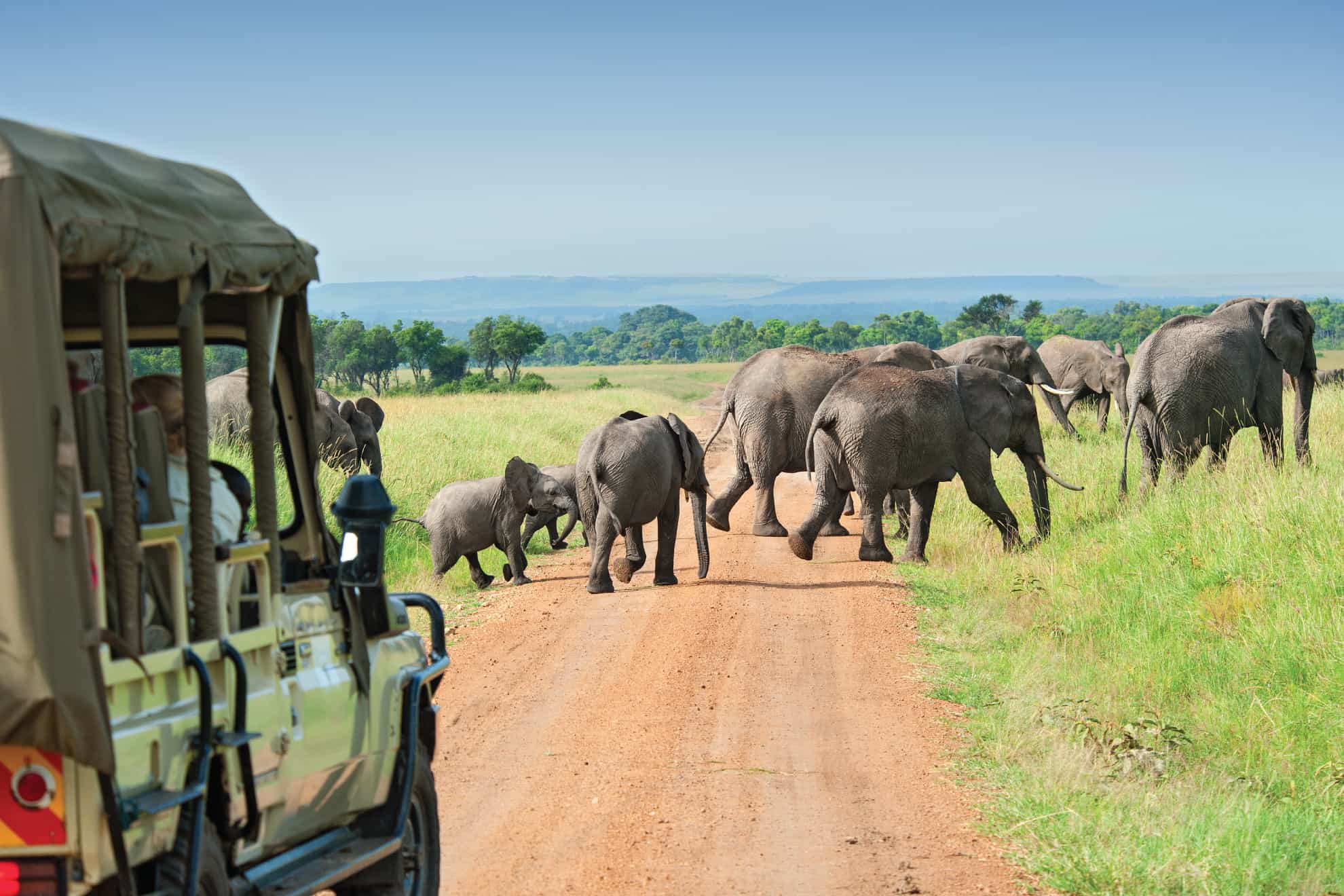
Tanzania Safari Over US Summer Break: A Family Guide
the short answer
the late-june sweet spot
a safari your kids will actually enjoy
the sector call — and the crossing conversation
peak-season friction, pre-empted
the price conversation, straight
summer safari questions, answered
The Short Answer
Don't fight the calendar. Go.
If school gives you July–August, go — it's one of Tanzania's strongest windows. Check late June first, book 6–10 months out, and plan sectors, not promises.
If your children's school calendar gives you only July and August — don't fight the calendar. Go. Summer is one of Tanzania's strongest safari periods: the June–September dry season(TMA), excellent game viewing, and the migration moving north through crossing country. Three things make a family summer trip work: first, if you have any flexibility, investigate late June–early July (roughly June 25–July 10) before defaulting to late July or August — June is already dry season, and at several properties it still sits in lower pre-peak rate bands before high season begins July 1. Second, book 6–10+ months ahead — the scarce thing isn't a safari, it's your preferred camp, family-room configuration and Serengeti sector. Third, once you're travelling in July–August, the decision that matters isn't "July or August?" — it's which Serengeti sector and camp location fit the herd position on your actual dates. We can maximise your chances of the famous scenes. We cannot schedule the wildebeest — and no honest operator will tell you otherwise. The full US timing picture is in when should Americans go on safari.
The Late-June Sweet Spot
Same dry season, softer demand
School's out mid-June — and June is already dry season, with several camps still on pre-peak rates until July 1. The window flexible families should check first
Most US schools break by mid-June, yet most American families default to late July. That gap is the opportunity. June is climatologically part of the same dry season as July–September (TMA) — conditions are tightening, the herds are on the move north — but the demand wave hasn't fully arrived. And the market prices that difference: several 2026 rate sheets place June in lower "Secret Season" bands, with high season starting July 1 (Asilia published rates). It isn't universal — some flagship camps (Dunia, for one) already charge their high-season rate in June — which is exactly why the play is investigate, don't assume: for your specific camps, the June saving may be real money or nothing at all.
So our honest advice to a family that can move: look at roughly June 25–July 10 before you book August. You enter the dry-season migration window, potentially ahead of the steepest demand. What we won't promise is that those dates mean fewer vehicles everywhere or a particular herd location — the migration follows rainfall and pasture, not school holidays. For families locked to August: skip to Section 4, the sector call matters even more for you.
A Safari Your Kids Will Actually Enjoy
Rhythm beats mileage, every time
Eight-hour drive days lose the kids. The daily rhythm that works for ages 8–16, the age rules lodges actually set, and why private vehicles win for families.
Ages 8–16 are a sweet spot for a conventional summer safari — old enough for early starts and real engagement, young enough for wonder. What loses them is itinerary design: six straight days of eight-hour drives is how a dream trip becomes a back-seat argument. The rhythm that works:
Early morning: a shorter game drive while the wildlife is most active. Late morning: back for brunch and pool/rest time. Afternoon: a second drive. Evening: dinner and downtime. Then vary the days — cultural visits, walking activities where appropriate, picnic lunches in the park, photography challenges and spotting games with the guide (our guides are good at turning a checklist of birds into a competition).
Two honesty notes. Individual lodges and activities set their own age rules — walking safaris, for instance, commonly carry minimums (one current camp specifies age 12) — so we confirm every activity against your children's ages at booking rather than promising a uniform policy. And younger-than-8 is absolutely possible; it just makes itinerary design more important, not less.
The single best family decision: a private vehicle. When your ten-year-old is done for the day — or transfixed by a lion kill — you adjust the pace for your family, not for six strangers. The wider practicalities are in our family safari guide.
The Sector Call — and the Crossing Conversation
We can't schedule the wildebeest
July trips look west and north; August focuses the Mara River country. But migration present ≠ crossing happening — the honest talk every family deserves first.
"The Serengeti" is nearly 15,000 km², and in summer its story differs by sector week to week. Broadly: for a July trip, we're weighing the western corridor and the northern migration route against current rainfall and recent sightings; by August, attention concentrates on the northern Serengeti and Mara River country if that's where the herds have positioned (TTB describes the northward movement through the Grumeti and western corridor toward the north). The exact call is made close to your dates, on current information — which is precisely the value of booking with a ground operator rather than a brochure.
Now the conversation every documentary-raised family deserves before booking, not after: migration present ≠ crossing happening, and crossing season ≠ a crossing on your game-drive day. Thousands of wildebeest can stand on the riverbank all afternoon and not cross while your vehicle waits. So we don't sell "the crossing." We sell this: we will put you in the strongest area for your dates based on where the herds are actually moving. We can maximise your chances. We cannot schedule the wildebeest. Families who arrive with that framing have wonderful summers; families promised a scheduled spectacle are being set up by whoever promised it. Timing detail: Great Migration guide.
Peak-Season Friction, Pre-Empted
What bites, and the fixes
Exact-room scarcity, crater crowds, busy JRO evenings — summer's real friction points for US families, and how sensible planning routes around each one.
Four friction points define peak season, and all four are manageable if pre-empted:
- Accommodation scarcity is specific, not general. The problem is rarely "no lodge available" — it's your lodge, your family-room configuration, your sector, your dates. That's what the 6–10-month booking lead time actually protects.
- Ngorongoro gets busy. We won't tell you to skip the crater — we'll tell you timing beats avoidance: sensible entry timing, well-planned game-drive sequencing and picnic arrangements keep you ahead of the mid-morning wave rather than inside it.
- JRO is livelier in summer. More safari traffic means fuller evening arrivals. Allow proper time for formalities, and don't schedule a demanding first day after a 20-hour journey — the arrival-day advice applies double in peak season.
- Late booking squeezes more than beds. The later a peak booking lands, the harder the preferred vehicle and guide configuration becomes — another reason the family that books in winter beats the family that books in May.
None of this is a reason to avoid summer. It's the case for planning summer like the peak event it is.
The Price Conversation, Straight
Demand pricing, and when to move dates
You pay more in July–August because demand peaks — not because Tanzania improves on July 1. The market rate evidence, and when moving one week is worth it.
The honest answer to "why is summer so expensive?": you're paying a premium because you're travelling when demand is highest — not because Tanzania suddenly becomes a better safari on July 1. The premium buys real things — high-demand dates at high-demand camps, prime migration positioning, finite rooms and vehicles at international peak — but it is demand pricing, and you deserve to see it plainly.
The market structure is publicly visible: current 2026 rate sheets show properties holding high-season rates through July–September (Dunia at $1,200 pp/night, for example) before dropping to $920 in the October–mid-December "Secret Season" — with The Highlands running $1,390 across June–October against $1,080 in November–early December (Asilia published rates — market evidence, not Safari-TZ pricing; your quote states your actual numbers).
When would we tell a family to move a week? By this principle: move when the change materially improves price or availability without sacrificing the wildlife experience you're actually travelling for. "June 28 vs July 12" — we'd absolutely investigate the June date. "August 8 vs August 22" — we'd compare actual camp availability and herd positioning rather than moving you on principle. Where summer sits against every other US window is in the timing hub; the full budget picture is in Tanzania safari from the USA.pl;pp
Summer Safari Questions, Answered
Quick answers
Is July or August better, is June cheaper, will we see a crossing, what ages work — the summer-break questions US families ask, answered.
Is July or August better for a Tanzania safari? Both sit in the same excellent dry-season window. July trips weigh the western corridor and northern route; August focuses the northern Serengeti and Mara River country. The better question is which sector fits the herd position on your exact dates — that's an operator call made close to travel.
Is June cheaper than July for a safari? Often, not always. Several properties price June in lower pre-peak bands with high season starting July 1, while some flagship camps already charge high-season rates in June. If your school calendar allows late June–early July, have your operator price both before defaulting to August.
Will my family see a river crossing in summer? Maybe — and no honest operator promises it. Crossing season means the herds are in crossing country, not that they'll cross while your vehicle waits. Good planning maximises your chances; nobody schedules the wildebeest.
What age should kids be for a summer safari? Around 8+ is a sweet spot for conventional safaris. Younger children can travel with careful itinerary design, and individual lodges and activities set their own minimums — walking safaris commonly require 12+.
How far ahead should we book a summer safari? 6–10+ months. The scarce resources are specific camps, family-room configurations and preferred Serengeti sectors — not "a safari" in general.
How do we avoid the crowds in peak season? You manage them rather than avoid them: early crater timing, sensible drive sequencing, camps positioned away from the densest corridors, and a private vehicle so your family sets its own pace.