Best Walking Safaris in Tanzania
best walking safaris in tanzania
Best Walking Safaris in Tanzania
Discover the best walking safaris in Tanzania. Explore Serengeti, Ngorongoro & more on foot with expert guides. Plan your adventure with Safari TZ.
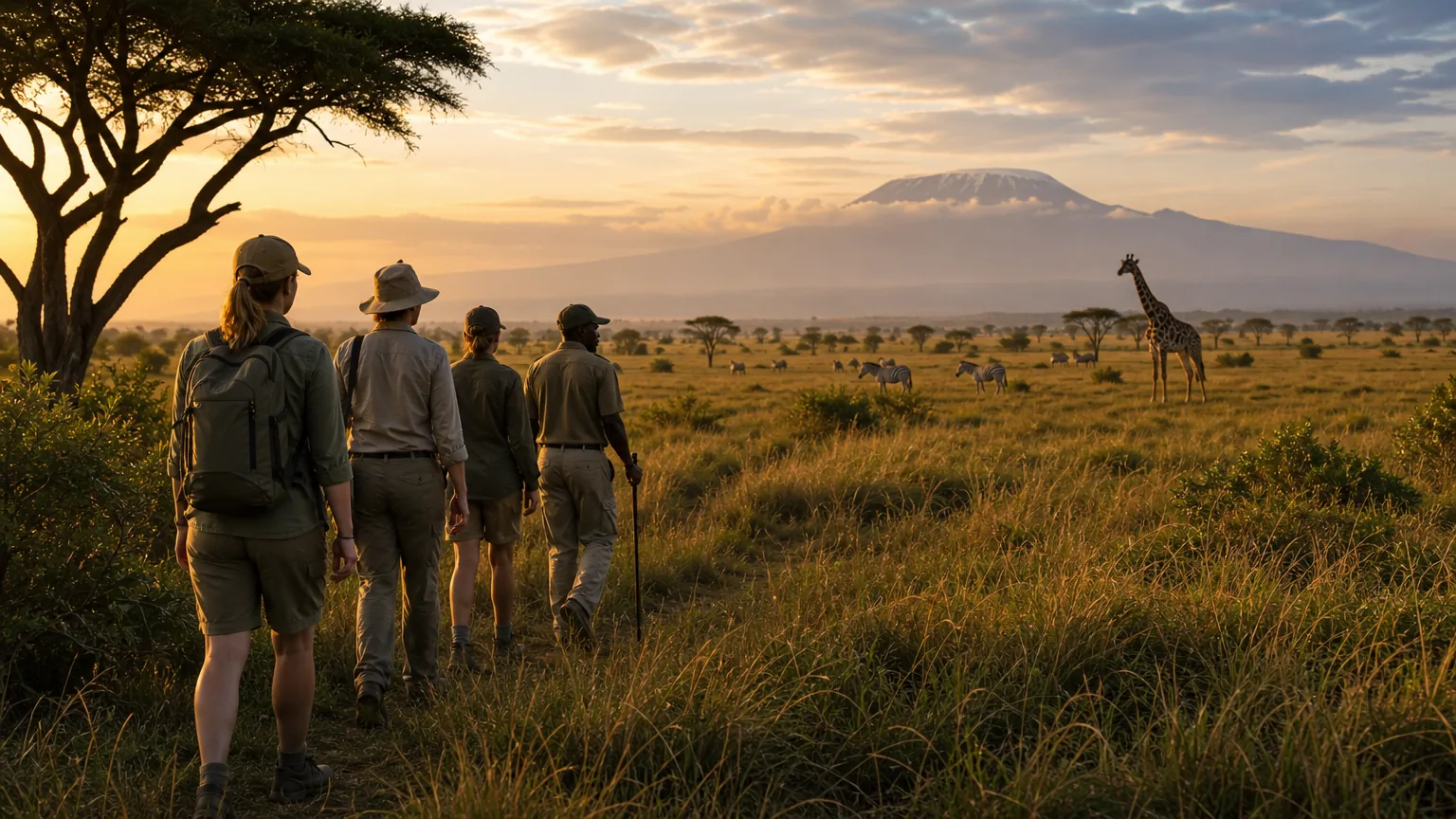
A walking safari is completely different from a game drive. On foot, you feel the earth, smell the bush, and become part of the wilderness. Here are the best walking safaris in Tanzania, each with its own character. We run our own trips on the ground with our own driver-guides and 4x4 fleet, so you're dealing directly with the operator.
1. Safari TZ (Our Top Pick)
We're a Tanzanian-owned safari operator based in Arusha. Since 1991 we've been running safaris across Tanzania, including walking safaris in several parks. We use our own vehicles, our own guides, and we plan every walk to match your fitness and interests. No middlemen.
Our walking safaris take you into wilderness zones where few others go. You'll be accompanied by an armed ranger and our specially trained walking guides. We offer both day walks and multi-day treks with lightweight mobile camps. Everything from the food to the bucket showers is handled by our crew.
With Safari TZ you get a real ground operator. We handle everything from airport pickup to the walk itself. You can combine walking with game drives or add a Kilimanjaro climb or Zanzibar beach stay.
2. Serengeti Walking Safari – Best for Wildlife
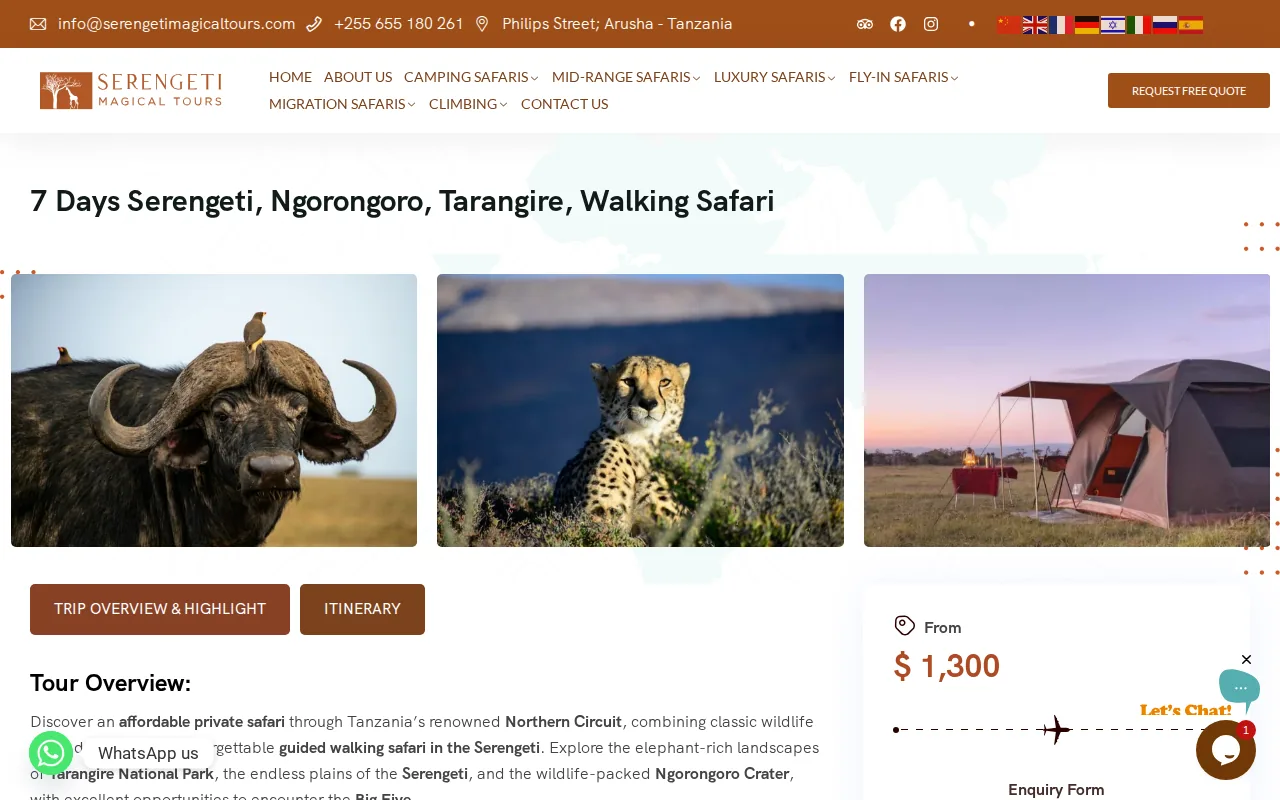
The Serengeti is the crown jewel of Tanzania's parks. On a walking safari here you leave the vehicle behind and step into the heart of the migration. According to Wayo Africa, a pioneer in Serengeti walking safaris, you walk through wilderness zones where days pass without seeing another vehicle. You'll follow animal paths, cross open plains, and climb rocky kopjes for panoramic views.
Walks start early, around 6:30am, when the animals are most active. You'll stop for a packed breakfast in the bush, then return to camp as the heat builds. Afternoons are for resting in the shade, then a short evening walk to watch the sunset.
The Serengeti is best for seeing the Great Migration on foot , wildebeest, zebras, and the predators that follow. But there's resident game year-round. A typical multi-day walk lasts 3, 7 days, with your camp moving every other day.
3. Ngorongoro Crater Rim Walking Safari – Best for Scenery
Walking on the rim of the Ngorongoro Crater offers views that few visitors ever see. The Ngorongoro Conservation Area is a UNESCO World Heritage site, and the crater itself is the largest unbroken caldera on Earth. On foot you explore extinct volcanoes like Olmoto and Empakai, remote Maasai communities, and acacia woodlands far from the crowded crater floor.
You cannot walk inside the crater itself , that's forbidden. Instead, your walk circles the rim and descends into lesser-known cones. The terrain is cooler, so you'll need warm layers. Most trips last 2, 4 days, with overnight camps set up in secluded spots. The silence and vastness are unforgettable.
This walk suits people who have already seen the crater from a vehicle and want a deeper connection. It's also a great way to meet Maasai herders and see how they live alongside wildlife.
4. Tarangire Walking Safari – Best for Elephant Encounters
Tarangire National Park is famous for its huge elephant herds. During the dry season (June to October), hundreds of elephants gather around the Tarangile River. A walking safari here puts you on the same ground as these gentle giants , at a safe distance, of course.
The park's landscape is varied: baobab-studded savanna, dense woodland, and seasonal swamps. Walks are gentle, not strenuous, and often combined with game drives. You might track lions, see giraffes nibbling acacia tops, and watch elephants dig for water in dry riverbeds.
Tarangle is less crowded than Serengeti, so you'll have a more private experience. Half-day and full-day walks are available from several camps. The best time for walking is the dry season when the bush is more open and animals concentrate near water.
5. Lake Manyara Walking Safari – Best for Birding
Lake Manyara National Park is small but incredibly rich in birdlife. Over 400 species have been recorded here, including flamingos, pelicans, storks, and the rare African fish eagle. A walking safari along the lake shore and through groundwater forest brings you close to the birds without the noise of a vehicle.
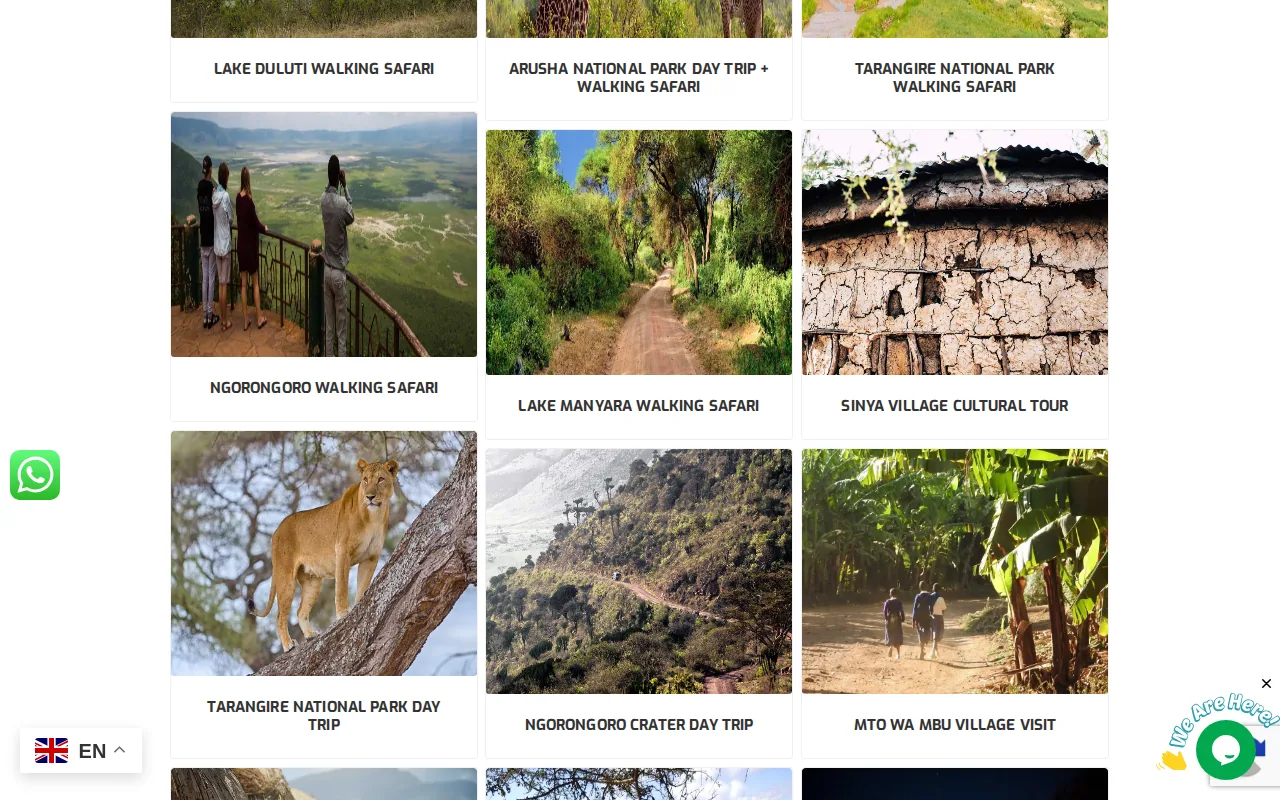
The park also supports tree-climbing lions, elephants, and large troops of baboons. The walking trails wind through mahogany and fig trees, past hot springs, and along the lake's edge. Walks are typically half-day, making it an easy addition to a Northern Circuit itinerary.
Birders will love the diversity. Bring binoculars and a field guide. The best season for birding is November to April when migratory species are present. We can arrange a dedicated birding guide for serious enthusiasts.
6. Selous Game Reserve Walking Safari – Best for Remote Safari
The Selous Game Reserve (now part of Nyerere National Park) is one of Africa's largest protected areas. It's remote, wild, and sees very few visitors. Walking here gives you a true sense of exploration. You'll follow the Rufiji River, cross sand rivers, and sleep in fly camps under the stars.
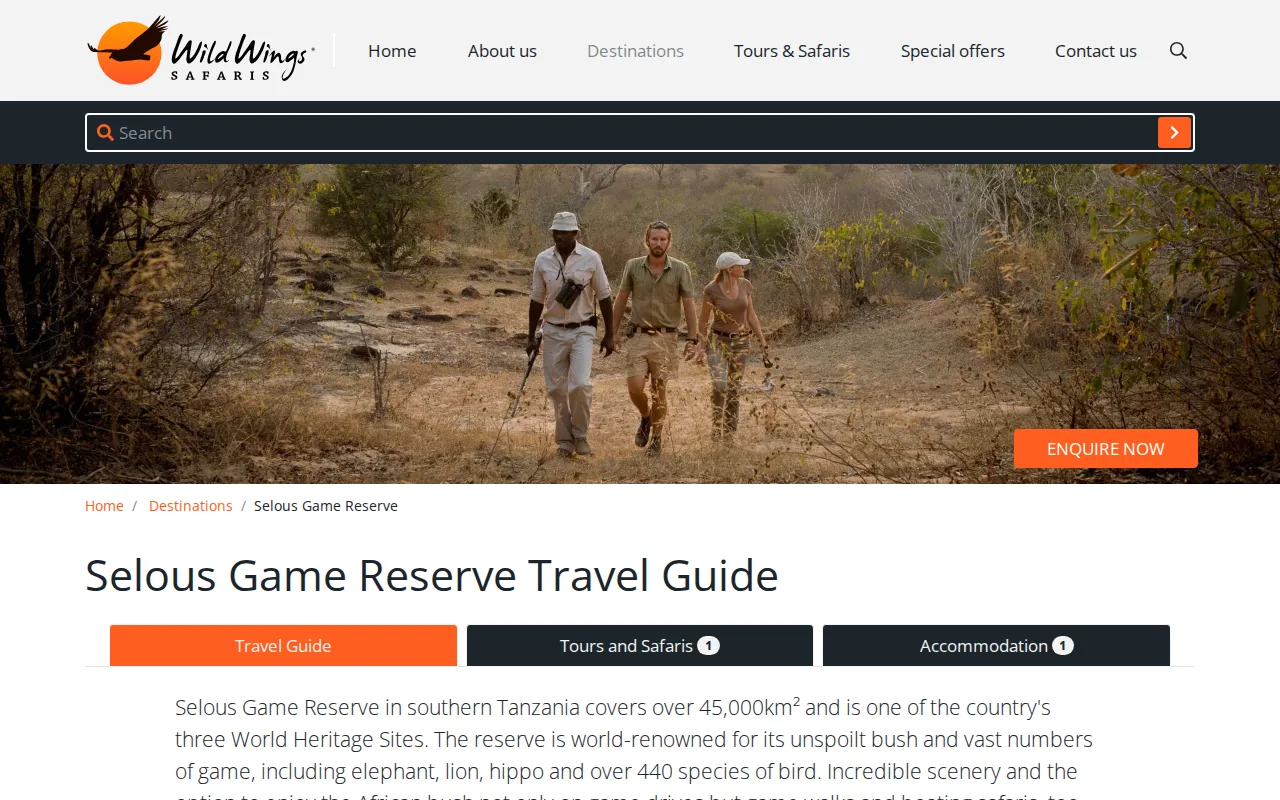
Days are relaxed: walk in the cool morning, rest in the shade during the heat, and take short evening walks. You might see elephants, buffalo, hippos, and if you're lucky, wild dogs. The guides are experts in tracking and bush survival.
Selous is accessible by flight from Dar es Salaam or Arusha. The dry season (June to October) offers the best walking conditions. Multi-day walks with lightweight camps are the norm. It's perfect for adventurers who want to get off the grid.
"A walking safari in Selous is not a hike; it's a slow immersion into the wild. You learn to see, hear, and smell Africa in a way that stays with you forever."
Frequently Asked Questions
Is a walking safari in Tanzania safe?
Yes, walking safaris are safe when done with experienced guides and armed rangers. Wildlife typically avoids humans on foot. Your guide will brief you on safety rules before every walk.
What do I need to pack for a walking safari?
Pack lightweight, neutral-colored clothing, a hat, sunscreen, sturdy walking shoes, a water bottle, and binoculars. A light rain jacket is useful in the wet season. Your operator will provide a detailed packing list.
How long should a walking safari be?
Most visitors choose 2, 4 days. This gives enough time to settle into the rhythm of walking, explore different habitats, and spend a night in a mobile camp. Shorter day walks can be added to any safari.
When is the best time for a walking safari?
The dry season (June to October) is best for most parks. Vegetation is lower, animals gather at water sources, and trails are firmer. However, walking safaris operate year-round with seasonal adjustments.
Can I combine a walking safari with game drives?
Absolutely. Many itineraries mix walking and driving. You might spend mornings on foot and afternoons in a vehicle, or alternate days. This gives you the best of both worlds.
What is the fitness level required?
You need to be comfortable walking 3, 6 hours a day on uneven terrain. No extreme fitness is required, but regular walking before your trip will make it more enjoyable. Our guides adjust the pace to your group.
Conclusion
Walking safaris in Tanzania offer a raw, intimate connection with nature that game drives just can't match. Whether you want to follow the Great Migration on foot, trek the Ngorongoro rim, or explore remote Selous, the right walk is out there. We'd love to help you plan it. Contact our team to start building your perfect walking safari.