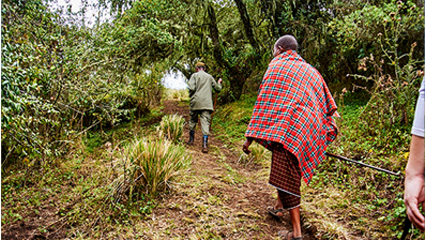
What to Wear on a Walking Safari in Tanzania
the short answer
why neutral colours matter
footwear: the one thing worth getting right
layers, sun and the morning chill
what to carry
keep it simple — and ask us
The Short Answer
Neutral Colours, Closed Shoes, Cover From the Sun
On a Tanzania walking safari, wear neutral colours, comfortable closed shoes and long, light layers, and bring sun cover and water. No specialist kit needed.
You don't need specialist gear for a walking safari — the outfit you'd wear on a morning game drive is most of the way there. The short version:
- Neutral, muted colours — browns, khaki, olive, grey. Avoid bright colours and stark white, and skip dark blue and black, which can attract certain insects.
- Comfortable closed walking shoes or light boots you've already broken in — never brand-new footwear, never sandals.
- Long, light layers — a long-sleeved top and long trousers protect against sun, scratchy bush and insects, and layers handle the cool morning warming into a hot day.
- Sun cover: a hat, sunglasses, sunscreen — the morning sun builds fast once you're out.
- A small daypack with water, and whatever your guide advises for the specific walk.
Two principles run through all of it: blend in and cover up. Muted colours help you stay unobtrusive in the bush; long, light clothing protects you from sun and scrub without overheating. Beyond that, keep it simple — this isn't an expedition requiring a kit list as long as your arm. The rest of this page explains the why behind each choice, so you pack right the first time.
Why Neutral Colours Matter
Blend In — Muted Tones, Not Bright or Stark
Wear muted, neutral colours on a Tanzania walking safari. Avoid brights, white, and dark blue or black, which can attract insects.
Colour matters more on foot than it does in a vehicle, and it's the thing first-timers most often get wrong.
The principle is simple: you want to blend into the bush, not stand out from it. On a walk you're on the animals' level, without a vehicle around you, so muted, natural tones — khaki, olive, brown, soft grey — help you stay unobtrusive and keep the bush relaxed around you.
A few specific things to avoid, and the honest reasons:
- Bright colours (reds, oranges, bright anything) stand out sharply in natural surroundings.
- Stark white is highly visible and shows dust and dirt instantly.
- Dark blue and black are worth avoiding because, in parts of Africa, they can attract certain biting insects.
None of this requires a special safari wardrobe from an outdoor shop. Ordinary clothes in the right colours do the job perfectly — a plain khaki shirt and olive trousers you already own are ideal. The goal is muted and natural, not expensive or technical.
This is one of those small pieces of local knowledge that separates a well-briefed guest from an unprepared one. It costs nothing to get right, and getting it right means you spend the walk noticing the bush rather than being the most noticeable thing in it.
Footwear: the One Thing Worth Getting Right
Closed, Comfortable, and Already Broken In
Wear comfortable closed walking shoes or light boots on a Tanzania walking safari — broken in beforehand, never brand-new, and never open sandals.
If there's one item worth thinking about properly, it's your shoes — because a walking safari is, unsurprisingly, spent on your feet.
What works: comfortable closed walking shoes or light boots with a decent grip. They protect your feet from thorns, rough ground, and whatever the bush has underfoot, and closed shoes are simply sensible where you're walking.
What to avoid, and why it matters:
- Brand-new footwear — the single most common mistake. New shoes and boots cause blisters, and a blister on the first morning can quietly spoil the walks that follow. Break them in at home, on ordinary walks, well before you travel.
- Open sandals or flip-flops — no protection from thorns, insects or uneven ground. Not appropriate for a bush walk.
You don't need heavy mountaineering boots. This isn't a Kilimanjaro climb — it's a bush walk, usually over a couple of gentle hours in the morning. Light, comfortable, closed, broken-in shoes with reasonable grip are exactly right, and something many guests already own.
The rule to remember: comfortable and familiar beats new and impressive every time. The best walking shoe for your safari is the comfortable closed one you've already worn enough to trust — not the pristine pair bought the week before you fly.
Layers, Sun and the Morning Chill
Long, Light Layers for Cool Mornings and Hot Sun
Bring long, light layers for a Tanzania walking safari: long sleeves and trousers protect from sun and scrub through cool-to-hot mornings.
Because walks happen in the morning, you're dressing for a temperature swing — cool at the start, hot by the time you finish — and for protection from sun, scratchy bush and insects along the way.
The layering logic:
- A long-sleeved top and long trousers, both light and breathable, are the sensible base. Long sleeves and legs protect against the sun, against scrub and thorns brushing past, and against insects — more useful on foot than shorts and a t-shirt, even when it's warm.
- Light layers you can add or remove: the early start can be genuinely cool, and two hours later you're in strong sun. Something you can peel off and stuff in a daypack beats a single heavy jacket or a single thin shirt.
- Sun cover is not optional: a hat, sunglasses and sunscreen. The morning sun builds quickly once you're exposed and walking.
The instinct to wear as little as possible when it's hot is the wrong one here. Light long clothing keeps the sun off, keeps the scrub off, and keeps insects at bay — and breathable fabric means you stay cool enough anyway. Guests who dress in shorts and short sleeves often regret it once the sun is up and the bush is brushing their legs.
Keep it light, keep it covering, and keep it layered. That combination handles everything a morning walk throws at you without turning packing into a production.
What to Carry
Water, Sun Protection, and What Your Guide Advises
Bring water, sun protection and a small daypack on a Tanzania walking safari — plus whatever your walking guide advises for the specific walk and park.
Beyond what you're wearing, keep what you carry minimal — a walk is not the time for a heavy bag. The essentials:
- Water — walking, even gently, in a warm climate means you need to drink. A bottle or two in a small daypack.
- Sun protection — sunscreen, and reapplication if the walk runs on.
- A small daypack to carry it all, hands-free.
- Anything specific your walking guide advises for that particular walk.
That last point matters more than a generic list, and it's where local knowledge beats a checklist off the internet. The right things to bring vary with the park, the season, the length of the walk and the conditions on the day — and your authorised walking guide will tell you what's genuinely worth carrying for your specific walk. We'd rather point you to that real, situation-specific advice than pad this page with a fabricated "ultimate walking safari kit list" of things you may not need.
Binoculars and a camera are personal choices — many walkers love having them, though on a walk you're often noticing things close at hand rather than scanning the distance. Keep both light and secure if you bring them.
The honest principle: carry water, sun protection and little else, and lean on your guide's advice for the specifics. A walk is about moving quietly and noticing the bush — the less you're weighed down, the more you'll get from it.
Keep It Simple — and Ask Us
No Expedition Kit Required — Just the Right Basics
Packing for a Tanzania walking safari is simple: neutral colours, closed shoes, light layers, sun cover, and water. Safari-TZ advice since 1991.
The reassuring truth to finish on: packing for a walking safari is genuinely simple, and doesn't require a shopping trip or an expedition kit list.
Pull it together and it's just a handful of sensible choices:
- Neutral, muted colours — blend in, avoid bright, white, dark blue and black.
- Comfortable closed shoes, broken in before you travel — never brand-new, never sandals.
- Long, light layers for sun, scrub, insects and the cool-to-hot morning swing.
- Sun cover — hat, sunglasses, sunscreen.
- Water and a small daypack, plus whatever your guide advises.
Most guests already own most of this. A walking safari isn't a mountain climb or a wilderness expedition — for the majority of trips it's a guided morning walk, and dressing sensibly for sun, bush and comfort is the whole of it.
Where the specifics matter — a particular park, a longer or more remote walk, an unusual season — that's exactly what we're here to advise on. When we build a walk into your trip, we'll tell you honestly what's worth packing for the walk you're actually doing, rather than leaving you guessing from a generic list. And on the walk itself, your authorised walking guide fills in anything park-specific.
Tell us where and when you'd like to walk, and we'll make sure you arrive prepared for the walk that's genuinely on your itinerary.
- Request a tailor-made quote (fastest, best for a real plan)
- WhatsApp: +255 740 666 662
- Email: info@safari-tz.com