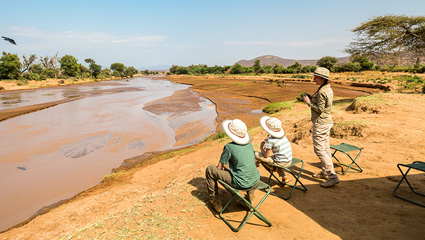
Where to Do a Walking Safari in Tanzania
the short answer
the northern circuit parks
the southern and western parks
mahale, gombe and chimpanzee trekking
udzungwa: the hiking park
which parks suit which traveller
where walking comes with caveats
planning your walk into the right park
The Short Answer
Certain Parks, Certain Zones — Not Everywhere
Walking safaris are permitted in around eleven Tanzania parks, from Tarangire to Nyerere and Katavi — always in designated zones under park rules.
Walking safaris are permitted in a number of Tanzania's national parks — but only in certain parks and designated zones, always subject to park regulations, ranger availability and the areas each park sets aside for walking. It isn't a given everywhere you go.
The parks that permit guided walking, at a glance:
- Northern circuit: Arusha, Tarangire, Lake Manyara, and designated areas of the Serengeti.
- Southern and western: Nyerere, Ruaha, Mikumi (designated areas), and Katavi.
- Forest and chimp parks: Mahale Mountains and Gombe (where chimpanzee trekking is guided walking), plus Udzungwa Mountains, which is primarily a hiking and walking park.
One clarification guests often need: the Ngorongoro Crater floor is not a walking area — game viewing there is by vehicle only. Walking in the wider Ngorongoro Conservation Area is possible in designated zones, but never on the crater floor.
Which park suits you depends entirely on your route and the kind of walk you want. A short morning walk on the northern circuit is a very different experience from the wilder, more remote walking in the south and west. The rest of this page goes region by region so you can see where a walk fits your trip.
The Northern Circuit Parks
Yes — the Easiest Walks to Add to a Classic Trip
Arusha, Tarangire, Lake Manyara and designated Serengeti areas all permit guided walking — the simplest walks to fold into a classic northern Tanzania safari.
If you're doing a classic northern Tanzania safari, the good news is that walking fits in easily — several northern parks permit guided walks, so you don't have to reroute the whole trip to get one.
The northern walking parks:
- Arusha National Park — one of the most accessible places to add a guided walk, and a gentle introduction to being on foot in the bush.
- Tarangire National Park — walking among the park's landscapes and famous baobab country, in designated areas.
- Lake Manyara National Park — guided walking in permitted zones, alongside the park's varied habitats.
- Serengeti National Park — walking is available in designated areas only, always with authorised guides and rangers.
The northern circuit is where most first-time walkers get their introduction, precisely because a walk slots so naturally into an itinerary already built around these parks. You're likely staying near them anyway, so a morning walk becomes a change of pace rather than a detour.
The one honest point to hold onto: even within these parks, walking happens only in designated zones and depends on ranger availability and conditions on the day. It isn't a walk-anywhere arrangement. When we plan a northern trip, we build the walk into a park and area where it genuinely operates, coordinated with the authorised walking team — rather than promising you can set off on foot wherever the vehicle happens to stop.
The Southern and Western Parks
Wilder, More Remote, and Often More Serious Walking
Southern and western parks like Ruaha, Nyerere and Katavi offer wilder walking safaris — a bigger part of the experience than on the northern circuit.
For guests who want walking to be a real feature of the trip rather than a single morning, the southern and western parks are where it comes into its own.
The walking parks of the south and west:
- Nyerere National Park — walking in one of Africa's largest protected areas, remote and wild.
- Ruaha National Park — rugged, less-visited country where being on foot suits the landscape.
- Mikumi National Park — guided walking in designated areas.
- Katavi National Park — one of Tanzania's most remote parks, deep in the west, where walking fits the wilderness feel.
These parks are generally wilder and far less crowded than the northern circuit, and walking tends to be a bigger, more serious part of what draws people there. The sense of remoteness is the point — fewer vehicles, bigger wilderness, and a walk that feels genuinely off the beaten track.
Honesty matters here too. These parks take more time and planning to reach, and walking is still governed by the same realities everywhere in Tanzania: designated zones, authorised walking guides, armed rangers where required, and conditions on the day. The wildness is real, and so are the rules that keep a walk there safe. For the right guest — someone who values remoteness over convenience — the south and west are where a Tanzania walking safari feels most like true wilderness. We'll tell you honestly what reaching them involves before you commit.
Mahale, Gombe and Chimpanzee Trekking
Guided Walking of a Very Different Kind
At Mahale Mountains and Gombe, chimpanzee trekking is guided walking through forest, focused on primates rather than plains wildlife.
Two of Tanzania's walking experiences aren't about the plains at all — they're about forest and chimpanzees, and they count as guided walking of a very particular kind.
At Mahale Mountains National Park and Gombe National Park, chimpanzee trekking involves guided walking through forested terrain to find and observe chimpanzee communities. It's walking, unquestionably — often uphill, through dense forest, following guides and trackers — but it's a different proposition from a bush walk on the plains. The focus is the primates and the forest, not tracks and open-country wildlife.
Because these parks sit on the remote shores of Lake Tanganyika in Tanzania's far west, they take real planning to reach and are usually a deliberate, specialist part of a trip rather than a casual add-on.
We treat chimpanzee trekking as its own experience, and our dedicated chimpanzee content covers it properly — the trekking, the parks, and what to expect. We mention it here simply so the picture of "where you can walk in Tanzania" is complete: if forest walking to see chimpanzees is what you're after, Mahale and Gombe are where it happens. If it's classic bush walking you want, the northern, southern and western parks above are the better fit. Both are walking; they're just walking toward very different things.
Udzungwa: the Hiking Park
Tanzania's Walking-and-Hiking Park
Udzungwa Mountains National Park is primarily a hiking and walking park — forest trails and mountain scenery rather than vehicle-based game drives.
Udzungwa Mountains National Park is the odd one out on this list, in the best way: it's primarily a hiking and walking park rather than a vehicle game-viewing park.
Where most Tanzanian parks are built around game drives with walking as an added activity, Udzungwa flips that — it's a place you go specifically to walk and hike, through forest trails and mountain scenery. The appeal is the landscape, the forest, and the experience of being on foot in a mountainous, green environment that looks nothing like the open savannah most people picture when they think "Tanzania safari."
That makes it a genuinely different kind of destination, and one for a specific kind of traveller — someone drawn to forest, trails and scenery as much as to wildlife. It's not a substitute for a classic safari; it's a complement to one, or a specialist addition for guests who love walking landscapes.
We keep the specifics of individual trails and routes qualitative here, because those depend on the park, conditions and what you're up for — and we won't invent trail details we can't stand behind. What's honest and useful to know is simply that Udzungwa is Tanzania's walking-and-hiking park by nature, and if that kind of experience appeals, it's worth telling us so we can consider how it might fit a wider trip.
Which Parks Suit Which Traveller
It Depends on the Trip You're Building
The best walking-safari park in Tanzania depends on your trip: northern parks for easy add-on walks, southern and western parks for wilder, more remote walking.
There's no single "best" walking park in Tanzania — the right one depends entirely on the trip you're building and the kind of walk you're after. Rather than rank them, here's how they honestly sort.
- If you want a walk woven into a classic northern safari, without rerouting the trip: the northern parks — Arusha, Tarangire, Manyara, or designated Serengeti areas — are the natural fit.
- If you want walking to be a real, wild feature of the trip and you don't mind the extra travel to reach remote country: the southern and western parks — Ruaha, Nyerere, Katavi, Mikumi — are where it comes into its own.
- If forest and chimpanzees are the draw: Mahale or Gombe, as a specialist part of the trip.
- If hiking and mountain scenery are what you love: Udzungwa.
We won't tell you one park is objectively the best walking experience, because it isn't true— the best walk is the one that fits your route, your time, and what you personally want from being on foot. A first-timer on a ten-day northern trip and a wilderness-seeker with three weeks are pointed at completely different parks, and both are right.
Tell us what your trip looks like and what you want the walking to be, and we'll match you to the park where it genuinely delivers. That matching is exactly the judgement a Tanzania ground operator brings that a park list on a foreign website can't.
Where Walking Comes With Caveats
Available Doesn't Mean Anywhere, Anytime
Even in parks that permit walking, it's limited to designated zones and depends on ranger availability, season and conditions. Why planning ahead matters.
One honest thread runs through every park on this page, and it's worth stating plainly so nobody arrives with the wrong picture: "walking is permitted here" does not mean "you can walk anywhere in this park, any time you like."
Across all of these parks, walking is subject to the same real-world limits:
- It happens in designated zones, not park-wide.
- It depends on an armed ranger being available where the park requires one.
- It's affected by season, weather and conditions on the day.
- It's led by the authorised walking team for that park, not simply by your safari driver-guide.
None of this is red tape for its own sake — it's what keeps a walk safe and lawful, and it's exactly why walking has to be planned rather than improvised. A guest who assumes they can hop out and walk wherever the vehicle stops is going to be disappointed; a guest whose walk was built into the itinerary in a permitted zone, with the authorised team arranged, gets the real thing.
This is where planning through a ground operator earns its place. We know which parks permit walking, which zones, and how to coordinate the authorised guides and rangers — so the walk we build into your trip actually happens, in a place it's genuinely allowed. That's the difference between a walk that's promised and a walk that's delivered.
Planning Your Walk Into the Right Park
Tell Us Your Trip — We'll Place the Walk
Safari-TZ matches your walking safari to the right Tanzania park and zone for your route and style, coordinated with the authorised walking team. Since 1991.
By now the theme is clear: where you walk should follow the trip you're building, not the other way round. So the most useful thing you can do is tell us what your safari looks like and where walking sits on your wishlist.
From there we place it. A northern-circuit traveller gets a walk built into Arusha, Tarangire, Manyara or a designated Serengeti area, timed for the cooler morning and coordinated with the authorised walking team. A guest chasing real wilderness gets pointed south or west, to Ruaha, Nyerere or Katavi, with honest advice about the extra travel involved. A forest-and-primate enthusiast gets Mahale or Gombe as a specialist leg. Someone who loves hiking gets Udzungwa considered as part of the picture.
We arrange walking across different travel styles — budget, mid-range and luxury — always in parks and zones where it's genuinely permitted, and always coordinated with the authorised walking guides and rangers for that park. What we won't do is list a park as a walking destination for your trip if it doesn't actually fit your route, or if walking there isn't practical when you're travelling.
That's the honest version of "where can you do a walking safari in Tanzania" — not just a list of parks, but the judgement to put the walk in the right one for you.
Tell us your route and we'll place the walk where it works.
- Request a tailor-made quote (fastest, best for a real plan)
- WhatsApp: +255 740 666 662
- Email: info@safari-tz.com