Kalambo Falls Travel Guide
kalambo falls overview
kalambo falls at a glance (quick facts)
what is kalambo falls famous for?
where is kalambo falls located?
why should i visit kalambo falls?
what wildlife can i see at kalambo?
when is the best time to visit kalambo falls?
is kalambo suitable for first-time visitors?
is kalambo falls safe to visit?
how many days do i need for kalambo falls?
what activities are available at kalambo falls?
where do i stay for kalambo falls?
is kalambo suitable for families?
what should i pack for kalambo falls?
how much does a kalambo falls trip cost?
how do i get to kalambo falls?
can kalambo be combined with other destinations?
kalambo vs tanzania's other waterfalls?
why book kalambo with safari-tz.com?
Kalambo Falls Overview
A 200-Metre Plunge on the Zambia Border
Kalambo Falls overview from Safari-tz.com: a giant single-drop waterfall above Lake Tanganyika in Tanzania's far south-west, reached via Sumbawanga.
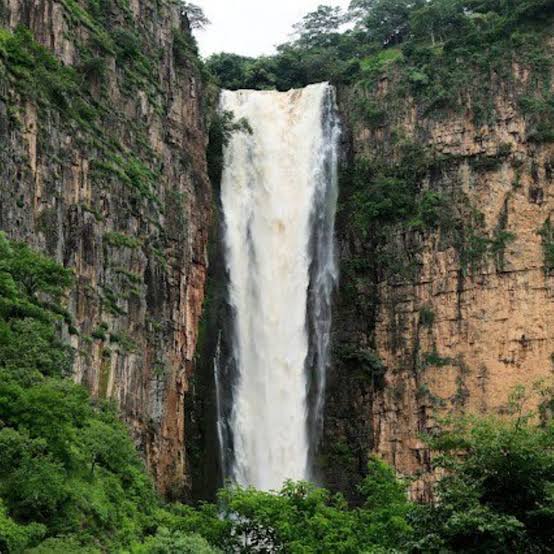
Kalambo Falls throws the Kalambo River off the edge of the Ufipa plateau in one uninterrupted drop of well over 200 metres, into a gorge that carries the water down toward the southern tip of Lake Tanganyika. By the common ranking it is the second-tallest single-drop waterfall in Africa. By any ranking of visitor numbers it barely registers, because the falls sit on the Tanzania–Zambia border in the far south-west, a corner of the country that even ambitious itineraries rarely reach, past Katavi, past Sumbawanga, at the end of roads that reward commitment.
Two things beyond the drop itself make this page worth writing. The first lives in the gorge: sheer walls that hold a breeding colony of marabou storks, huge birds riding the spray-fed thermals below your feet, one of the odder wildlife spectacles in Tanzania. The second lives in the ground. The riverbanks beside Kalambo rank among Africa's most important Stone Age archaeological sites, worked by scientists for decades, and in 2023 excavations here produced the oldest known wooden structure on Earth, shaped logs dated to roughly half a million years ago, a find that put this remote gorge into news bulletins worldwide while changing what we know about early humans.
Safari-tz.com builds Kalambo into western itineraries from the Katavi side, because the geography stacks: the wildest park in Tanzania and Africa's forgotten giant waterfall share the same long road, and travellers who commit to one have already paid most of the price of both.
Kalambo Falls at a Glance (Quick Facts)
Key Facts Before You Plan the Far West
Quick Kalambo Falls facts from Safari-tz.com: a 200-metre-plus single drop, marabou colony, Stone Age site and rough access via Sumbawanga.
The short version: a giant single-drop waterfall on the Zambia border, a world-class archaeological site beside it, and a journey that is most of the story.
-The drop:Well over 200 metres in a single uninterrupted plunge, commonly ranked Africa's second-tallest single-drop falls.
-The setting:The Kalambo River leaving the Ufipa plateau for Lake Tanganyika, on the Tanzania–Zambia border in Rukwa's far south-west.
-The residents:A marabou stork breeding colony on the gorge walls, plus raptors working the spray thermals.
-The history:One of Africa's premier Stone Age sites. The oldest known wooden structure on Earth was excavated here, announced in 2023.
-Access:Via Sumbawanga and rough district roads, or from the Kasanga side on Lake Tanganyika. Committed 4x4 country either way.
-The season trade:Fullest flow at the end of the rains, when access is hardest; reliable access in the dry months, when the flow thins. The seasons section prices this honestly.
-Format:Realistically one full day at the falls inside a multi-day western routing. Nobody day-trips Kalambo from anywhere.
-The combination:Katavi National Park shares the road. That pairing is the itinerary.
-Fitness:Modest for the viewpoints, more for the gorge paths. The edges demand respect rather than fitness.
What Is Kalambo Falls Famous For?
A Ranking, a Colony, and Half a Million Years
Kalambo Falls is famous for Africa's second-tallest single drop, its marabou stork colony, and the world's oldest known wooden structure, found here.
Kalambo carries three fames, and the newest one is half a million years old.
The ranking first, stated the defensible way: Kalambo is commonly ranked the second-tallest uninterrupted single-drop waterfall in Africa, the qualifier mattering because taller falls exist that break their descent into tiers, and waterfall rankings argue the way mountain rankings do. What no ranking argument touches is the visual fact: a river stepping off a plateau edge and falling free for more than 200 metres into a gorge, a single white column against dark rock, with the volume rising and falling by season in the way the honesty section below prices out.
The colony is the connoisseur's fame. Marabou storks, birds most travellers meet scavenging around towns, breed on Kalambo's gorge walls, and watching these enormous birds soar the spray thermals below the viewpoint inverts everything a safari has taught you about them. Birders travel for it; everyone else discovers it and talks about it afterwards.
The third fame arrived in 2023 and outranks the other two by several hundred thousand years. Kalambo's riverbanks have been an archaeological landmark for decades, but the recent excavations produced shaped and interlocked logs dated to roughly half a million years ago, announced as the oldest known wooden structure on Earth, evidence that early humans here were building long before our own species existed. You stand at the viewpoint watching the river fall, and the ground under your boots is one of the places humanity's story starts. Few destinations anywhere carry that sentence.
Where Is Kalambo Falls Located?
Finding Kalambo on the Tanzania Map
Kalambo Falls sits on the Tanzania–Zambia border near Lake Tanganyika's southern tip, reached via Sumbawanga in Rukwa or Kasanga on the lakeshore.
Kalambo sits about as far into Tanzania's south-western corner as geography allows: on the border river with Zambia, near the point where Lake Tanganyika ends, in the country beyond Katavi that even the western circuit's few travellers usually turn back before reaching.
The regional anchor is Sumbawanga, Rukwa's highland capital, sitting on the Ufipa plateau whose edge the falls pour off. From Sumbawanga, district roads run toward the border and the falls, rough in the committed-4x4 sense this website's western pages keep describing, with the final approaches earning the description honestly. The alternative anchor is Kasanga, the small port on Lake Tanganyika's southern shore, from which the falls are reached from the lake side; lake transport arrangements to Kasanga exist in forms that change enough that we confirm them per trip rather than describe them here. Both approaches are covered properly in the access section.
The border itself is a planning fact rather than a complication: the falls straddle the line, Zambia maintains its own access on the far bank, and the river is the boundary. Visits from the Tanzanian side are exactly that, and travellers with cross-border ambitions should raise them at planning stage, because border formalities in remote country run on their own logic.
The map summary that shapes everything: Kalambo shares its long road with Katavi, Tanzania's emptiest great park, and sits a lake away from Mahale's chimpanzees. The far west is one itinerary, and the falls are its southern full stop.
Why Should I Visit Kalambo Falls?
The Case for the Far West's Full Stop
Why visit Kalambo Falls: a giant drop almost nobody sees, the oldest wooden structure on Earth, marabou thermals and the Katavi pairing en route.
Because Kalambo offers a combination that exists nowhere else on this website or, frankly, anywhere: a continental-ranking natural spectacle, a world-changing archaeological site, and total solitude, all in one gorge.
The spectacle argument is simple arithmetic. Africa's famous falls draw crowds proportional to their fame; Kalambo, carrying a top-two continental ranking in its category, draws essentially none, because the far south-west filters visitors the way the frontier mountains on our climbing pages do. Travellers who stand at the viewpoint typically share it with the marabous and nobody else, and the contrast with what a comparable spectacle costs in queue-time elsewhere in Africa is the whole modern luxury conversation in one scene.
The history argument got its section above and needs only its practical footnote: the archaeological site is not a museum reconstruction somewhere else, it is the riverbank beside the falls, and standing on ground where humans built things half a million years ago does something to a visit that no viewpoint alone achieves. Guests report it as the fact they retell first.
The routing argument closes it, and it is the honest one: nobody flies across the world for Kalambo alone, and this page never pretends otherwise. Kalambo is the reason to finish the western circuit properly, the southern full stop after Katavi's empty game drives, the extra two days that convert Tanzania's wildest itinerary into its most complete. Committed travellers were coming west anyway. This is what waits at the end of the road.
What Wildlife Can I See at Kalambo?
Marabous on the Thermals, Honestly Framed
Kalambo wildlife is led by its marabou stork breeding colony on the gorge walls, with raptors, gorge birdlife and Lake Tanganyika's shore nearby.
The honest register, waterfall edition: Kalambo is a spectacle-and-history destination whose wildlife is one strange, superb specialty rather than a spread, and travellers briefed that way arrive delighted.
The specialty is the colony. Marabou storks breed on ledges in Kalambo's gorge, and the viewing geometry is what makes it singular: you stand at the rim and watch birds with near three-metre wingspans soaring below you, riding the thermals the falls and the gorge manufacture, commuting between ledges with the drop as their backdrop. Most travellers know marabous as the hunched scavengers of town rubbish and safari kills; meeting them here, airborne, enormous and in their own wild context, rewires the species' reputation on the spot. The colony's rhythms are seasonal, breeding activity concentrating in its own calendar, and we frame sightings the standing way: the gorge is their home ground, the birds decide the show, and the spectacle at its peak is a matter of timing and luck rather than promise.
Around the specialty, the supporting register: raptors working the same thermals, gorge and miombo birdlife for carried binoculars, and the small dry-country cast along the approach roads. Travellers continuing to the lake add Tanganyika's shoreline life at Kasanga, and those arriving from Katavi have already banked the big game this corner of the page happily defers to, hippo herds and dry-season concentrations two days up the road, covered on the park's own page.
The redirect, western edition: Kalambo is what you see after Katavi, not instead of it.
When Is the Best Time to Visit Kalambo Falls?
The Flow-Versus-Access Trade, Priced
Visit Kalambo Falls from May to July for the best balance of full flow and passable roads; deep dry season trades water volume for easy access.
Every waterfall page this series will publish carries the same honest trade at its centre, so the first page states it plainly: the water and the roads want opposite seasons, and choosing your dates is choosing your compromise.
The flow peaks as the rains end. Kalambo pours at full continental-ranking volume in roughly April and May, the white column at its widest and the gorge at its loudest, and precisely then the district roads of the far south-west are at their worst, some approaches genuinely closed, all of them slow. The access peaks in the deep dry season, August through October, when the roads run at their reliable best and the falls, fed by a plateau river with no glacier behind it, thin toward their modest minimum, still a 200-metre drop, still worth the road, honestly less of a spectacle than the photographs from May.
The window we actually recommend sits between: May into July, when the flow is still strong off the rains' account, the roads have dried into workability, and the western circuit's own calendar cooperates, Katavi's game beginning its dry-season concentration up the road. December to February offers the short-rains version of the same balance, greener, less reliable, occasionally superb.
The scheduling law travels from the climbing cluster intact: the viewpoint's light and the marabous' activity both favour mornings, the staging night near the falls earns its keep, and the far west rewards exactly one planning style, which by now this website has named often enough.
Is Kalambo Suitable for First-Time Visitors?
The Visit Is Easy. The Journey Is Not.
Kalambo Falls suits any reasonably mobile traveller once there; the test is the far west's long, rough journey, priced honestly on this page.
Split the question the way this destination splits itself and it answers cleanly: the visit asks little, the journey asks plenty, and the honest filter is temperament rather than fitness.
The visit first. The main viewpoints are reached on short paths from the access point, walkable by any reasonably mobile traveller, and the falls deliver their spectacle without demanding a trek for it. Gorge-edge paths extend the visit for the surer-footed, descending viewpoints and longer walks exist in forms the activities section covers, and the archaeological ground is riverbank rather than excavation-site assault course. A traveller who can manage uneven paths and respect unfenced edges, the safety section's whole subject, can visit Kalambo fully.
The journey is the actual application form. Reaching the falls means the far west's full syllabus: long road days from anywhere, committed 4x4 stretches, simple staging accommodation in the Sumbawanga register, and the flexibility of spirit that district roads demand of schedules. None of it is dangerous done properly; all of it filters for travellers who read "the journey is the first day of it," the line our frontier pages retired into cluster law, as description rather than warning.
Who this suits: western-circuit travellers already committed to Katavi, for whom Kalambo adds two days of journey they have already proven they enjoy; and the small tribe of spectacle-collectors who will cross a country for a top-two continental ranking with nobody at the railing. Both know themselves. The standing request applies gently here: your real appetite for rough roads, stated at planning.
Is Kalambo Falls Safe to Visit?
How Risk Is Managed at a Giant Drop
Kalambo Falls safety centres on unfenced gorge edges: local guidance, planted feet, children in hand, plus far-west remoteness margins throughout.
Kalambo's risk conversation has one item that towers over the rest the way the falls tower over their gorge, and this page gives it the Usambara treatment at double strength: the edges.
The viewpoints stand at the rim of a gorge more than 200 metres deep, they are unfenced in the way remote Tanzania is unfenced, and the rules this website wrote for Irente and Mtae apply here with the volume turned up. Positioning follows the local guides' word. Photographs are taken from feet planted well back, never stepping backward toward a drop for a better frame, the single behaviour that produces most edge incidents anywhere on Earth. Spray zones make rock slick in ways dry rock beside them does not advertise. Wind at a plateau edge arrives in gusts. Children stay in hand, literally, per the family section's law. None of this subtracts from the visit; the falls are fully seen from safe ground, and the discipline costs nothing but attention.
The remaining ledger is the far west's standing one: remoteness margins doing the work of infrastructure, the long-road realities managed by vehicle, driver and schedule rather than luck, heat and sun on exposed viewpoint ground, and the ordinary uneven-path arithmetic answered by decent footwear. Local guidance at the falls, arranged through the site's own structures, carries the ground knowledge, path conditions, spray zones, the colony's viewing spots, that turns a careful visit into a confident one, and we engage it as standing practice.
The site-wide close, unamended: medical questions belong with your doctor before travel, and the far west is declared-at-planning country in the way every western page has said.
How Many Days Do I Need for Kalambo Falls?
One Day at the Falls, a Week Out West
Kalambo Falls needs one full day on site inside a western itinerary of five days or more; the far west's roads set the arithmetic, honestly.
One full day at the falls is the honest on-site answer, and the arithmetic around it is the far west's, which means the real question is the itinerary's total, and the real answer starts at five days and prefers seven.
The day itself fills properly. A morning arrival at the viewpoints in the light and the marabou activity the scheduling law favours, the rim walks and the gorge-edge paths taken at respect pace, the archaeological ground given the unhurried hour its half-million years have earned, and, for itineraries routing via the lake side, Kasanga's shoreline as the afternoon's decompression. Travellers who allot Kalambo a drive-past hour have misread the far west entirely, and this website's standing counsel against the squeezed version applies at full strength: the staging night near the falls, the morning on site, the departure after lunch is the minimum honest shape.
The surrounding arithmetic is the western circuit's. Sumbawanga sits a long day from Katavi's country, Katavi sits a long day or a flight from everywhere else, and the Kalambo extension therefore prices at roughly two days added to a Katavi itinerary, journey included, which is exactly how Section 17 packages it. Standalone Kalambo trips exist for the spectacle-collectors Section 8 identified, and we build them honestly as journey-heavy expeditions in the frontier manner.
The counsel this series will repeat at every waterfall, stated first here: waterfalls are morning-and-light destinations wrapped in journey logistics, and the day on site is bought entirely by the planning around it. We sell the planning.
What Activities Are Available at Kalambo Falls?
Rim, Gorge, Riverbank and Lakeshore
At Kalambo Falls: rim viewpoints, gorge-edge walks, the Stone Age riverbank site, marabou watching, and Lake Tanganyika's quiet southern shore.
The falls organise a compact menu, and its four items fill the honest day Section 10 built.
The rim viewpoints lead: the classic angles on the full drop, morning-lit, spray-signed, with the colony commuting below, and the local guidance pointing out the vantage each season's flow favours, because a waterfall's best viewpoint moves with its volume in a way first-time visitors never expect. The gorge-edge walks extend the rim for surer feet, longer paths along the plateau edge trading distance for angles, taken entirely inside the safety section's edge law and the guides' path knowledge.
The riverbank is the item no other waterfall in this series will match. The archaeological ground beside the falls, the Stone Age site whose 2023 announcement Section 3 carried, is visited as landscape rather than museum, working excavations appearing seasonally on the researchers' own calendars, and the local guidance framing what the unmarked ground means. We brief the visit honestly: there is no interpretation centre out here, the site's power is knowing where you stand, and travellers for whom that lands, and they know who they are, rank the riverbank above the falls.
The lakeshore closes the menu for itineraries routing via Kasanga: Tanganyika's quiet southern end, the port's small-town rhythm, swimming and shoreline birding on the lake's own terms, and the western water this website's Mahale pages have already taught readers to love, met here at its emptiest corner.
Where Do I Stay for Kalambo Falls?
Simple Beds at the End of the Road
Kalambo visitors stay in simple Sumbawanga and Kasanga guesthouses or camp near the falls, in the far west's honest frontier register.
The far west's calibration speech arrives at its plainest, and readers of this website's frontier pages can recite it along with us: simple everywhere, warm-hearted throughout, and the best night is probably the one under canvas.
Sumbawanga, the staging city, carries the widest range, functional guesthouses and modest hotels in the highland-town register, early breakfasts arrangeable, and the practical virtues of a real regional capital, fuel, supplies, phone signal, that the district beyond it thins out quickly. Kasanga, for lake-side routings, runs simpler again, small guesthouses in the port-village register with Tanganyika as compensation. Neither town is aiming at tourism, both receive it kindly, and the expectations paragraph writes itself for the thirteenth time on this website.
Camping near the falls is the option we recommend when arrangements and ground allow, confirmed per trip through the local structures: the staging-night-at-the-destination law this website holds everywhere, wearing waterfall colours, buying the morning light and the colony's active hours, and adding the far west's signature night, the gorge's white noise below, the plateau's stars above, to a series that will spend many pages chasing nights half this good.
Capacity everywhere is small and platform-free in the standing way, arrangements run through people who know people, and we hold the beds and the camp ground when the route locks, describing every one of them, per the standing promise, exactly as it is.
Is Kalambo Suitable for Families?
The Family Answer: Edges Set the Terms
Kalambo suits adventurous families with older, rule-holding children; unfenced gorge edges and far-west journeys set the honest terms.
A conditional yes, and the conditions are the two facts this page has been honest about throughout: the edges and the journey.
The edges set the hard term. Kalambo's rim is an unfenced drop of more than 200 metres, the Usambara family law applies at its strongest setting, children in hand at the viewpoints, literally and without exception, feet-planted photography modelled by the adults, the guides' positioning word as house law, and families whose children cannot yet be relied on to hold those rules should hold the destination for a later year, a sentence this website has written before and stands behind. For families whose children can, the falls deliver the kind of scale that recalibrates a child's sense of what the world contains, and the marabous below the rim are a spectacle pitched perfectly at young attention.
The journey sets the soft term. The far west's road days are long, the accommodation is simple, and the family that thrives out here is the family that already knows it thrives on rough travel, the standing honest-history request applying at family strength. The archaeological riverbank, for the right child, is a secret weapon: half a million years is an idea children handle better than adults, and more than one young visitor has left Kalambo planning a career.
The combination that works: Kalambo as the family's far-west finale after Katavi, where the park's own family calculus, covered on its page, has already filtered for exactly the travellers this gorge suits.
What Should I Pack for Kalambo Falls?
Packing for Spray, Sun and Long Roads
Kalambo packing list: grippy footwear for spray-slick rock, sun cover, dust-proofed kit for district roads, binoculars and dry bags throughout.
Pack for a spray zone at the end of dusty roads, and let that contradiction organise the bag, because it is the waterfall series' signature packing problem and Kalambo states it first.
The falls kit: footwear with genuine grip, the single item that matters most, because spray-slick rock at an unfenced rim is where waterfall visits go wrong and decent tread is the cheap insurance; a light rain shell doubling as spray protection for the closer viewpoints in the big-flow months; sun cover at plateau seriousness for the exposed rim between spray zones, the far west's sun negotiating with nobody; and dry bags for everything electronic, spray and district dust being twin enemies that share a solution. Binoculars are promoted to essential on this page, the colony below the rim being half the visit, and the long lens earns its carry for the same reason.
The journey kit runs the far west's standing list: water at road-day volumes, snacks that survive heat, medication at margin, a headlamp for staging nights where power is a rumour, cash in small denominations for country the card networks never reached, and everything soft-packed and dust-proofed for the district roads. The camping variant adds the frontier annex, warm layers included, plateau nights running cooler than the latitude suggests, equipment confirmed through the standing Arusha arrangements.
The subtraction rule closes the series' first packing section as it closed the climbing cluster's: the far west audits luggage personally, and your rim-morning self, holding binoculars in the spray-cooled air, signs the final bag.
How Much Does a Kalambo Falls Trip Cost?
What You Are Paying For in the Far West
Kalambo costs are journey costs: long 4x4 days, staging nights and local site arrangements, with modest fees. Safari-tz.com itemises every quote.
Kalambo prices like the frontier it belongs to, and readers of this website's western pages already know the shape: the fees are the smallest line, the journey is the invoice, and the honest quote shows exactly that.
The build: local site and district arrangements at the modest register, entrance and guiding components confirmed per trip because nothing in the far south-west runs on a published schedule this page would trust to stay current; the staging layer, Sumbawanga or Kasanga nights plus the camping arrangements where taken, priced in the simple registers Section 12 described; and the transport layer that dominates everything, committed 4x4s and drivers for road days measured in most-of-a-day units, the far west's standing signature and the line no honest Kalambo quote can shrink.
The arithmetic that actually decides bookings is the marginal one, and we state it plainly: as a standalone destination, Kalambo carries the full weight of the western roads and prices accordingly, a journey-heavy expedition for the committed few; as the extension to a Katavi itinerary, it adds roughly two days of road and staging to a trip already paying the west's fixed costs, and at that margin it becomes one of the best value-per-astonishment purchases this website sells. Section 17 packages the second version, which is the one most guests should buy.
Figures stay off the page at standing strength, quotes arrive current and itemised, journey, staging, site arrangements on separate lines, and the functioning-structure defence travels west intact: what keeps the far corner reachable is the local arrangements being paid properly, and we price the reachable version.
How Do I Get to Kalambo Falls?
The Longest Approach on This Site
Reach Kalambo Falls via Sumbawanga's district roads or the Kasanga lakeshore, long committed-4x4 country planned as part of the trip itself.
By the far west's roads, at the far west's pace, and this access section takes the title its predecessors have been trading: the longest approach on this website, and the one that most completely proves the family's oldest sentence.
The land route runs through Sumbawanga. Travellers arrive at the plateau capital from the Katavi side, the long day south from the park's country that makes the pairing itinerary work, or from Mbeya's direction on the southern highlands' own long roads, and from Sumbawanga the district roads run out toward the border and the falls, committed 4x4 country in the standing description, with conditions that the seasons section priced and that we confirm at planning rather than assume. The lake route runs through Kasanga: Tanganyika transport to the southern port in arrangements that exist, change, and get confirmed per trip in the standing frontier way, then the short overland leg to the falls, a routing that suits itineraries already on the water and adds the lake's own logistics to the plan.
Fly-in components shorten the west for those who want them, the Katavi airstrips carrying the standing charter options this website's western pages describe, with Kalambo then reached overland from the park's side.
The scheduling law closes the series' first access section in the traditional place: the staging night near the falls buys the morning, no version exists where the road day and the rim share their best hours, and the far west rewards, in the phrase this website has now earned, exactly one planning style. It remains ours.
Can Kalambo Be Combined With Other Destinations?
The Western Full Stop, Properly Placed
Combine Kalambo Falls with Katavi's wild game drives, Lake Tanganyika's shore, or the full western circuit through Mahale, the far west made whole.
Kalambo's combinations were decided by geography before this page existed, and the headline pairing has been waiting in every section above it.
Katavi plus Kalambo is the itinerary. The park's page holds the game-drive case, the no-other-vehicles sentence this website is proudest of, and the falls add the far west's other superlative two road days south: wilderness game at Katavi's dry-season rivers, then the continent's forgotten giant drop and its half-million-year riverbank as the southern full stop. Seven to nine days end to end depending on the flying-versus-driving choices, and in our judgement the most complete expedition itinerary in Tanzania that never meets a crowd. The marginal arithmetic of Section 15 is the commercial engine: travellers already west for Katavi buy Kalambo at two days' journey cost, and almost all of them should.
The full western line extends it for the ambitious: Mahale's chimpanzees and the Nkungwe climb of our western pages at the lake's northern reach, the lake itself as the connecting thread, Katavi in the middle, Kalambo as the final punctuation, the complete far west in ten to fourteen days, flight-and-boat logistics per the Mahale pages' laws. It is the biggest itinerary this website describes, built per party in the standing frontier way.
The southern connection serves overlanders: Sumbawanga links toward Mbeya and the southern highlands, letting the truly committed join the far west to the Kitulo-Rungwe-Livingstones country of our southern pages in one enormous road story, an itinerary we will build the day someone asks in the steady voice the frontier pages require.
The caution closes at far-west strength: nothing here bolts on. Scheduled, staged, margined, or saved for the trip that deserves it.
Kalambo vs Tanzania's Other Waterfalls?
The Giant, Measured Against the Rest
Kalambo vs Tanzania's other waterfalls: compare the far west's giant with Sanje's swimmable forest falls and the accessible favourites, honestly.
This page opens a waterfall series, so its comparison section sets the series' honest frame: Tanzania's falls sort by what they ask and what they pay, and Kalambo anchors one extreme of both scales.
Kalambo is the pilgrimage: the biggest single drop, the deepest history, the emptiest viewpoint, and the longest road, a falls you build a western expedition around rather than add to an afternoon. Nothing else in the country, and little else on the continent, occupies its category, and nothing else demands its journey. Sanje, in Udzungwa, covered on our hiking pages, is the accessible masterpiece at the other pole: a forest climb of hours rather than a road trip of days, endemic monkeys en route, swimmable pools at the base, and a southern-circuit position that folds into itineraries Kalambo could never join. Between the poles sit the falls this series will publish page by page, the Kilimanjaro-country favourites where coffee villages and half-day visits meet, the southern highlands' rain-fed drops in the Tukuyu country our Rungwe page walks past, each with its own ask-and-pay position the comparison will place as the series grows.
The honest matching, series edition one: want a waterfall inside your existing itinerary, wait for the accessible pages or take Sanje now; want the waterfall to be the expedition, Kalambo has no rival and this page is its application form. The completist's answer will assemble as the series does, and we suspect, on current evidence, that it ends where this page began: in the far west, at the railing, alone.
Why Book Kalambo With Safari-Tz.Com?
The Far Corner, Reached the Working Way
Book Kalambo Falls with Safari-tz.com: far-west routing craft, staging and site arrangements, honest seasonal counsel and itemised expedition quotes.
Kalambo is where an operator's western capability either exists or gets discovered not existing, three road days from the nearest place to hide the difference. Everything this destination requires, the routing judgement between the Sumbawanga and Kasanga approaches, the seasonal call on the flow-versus-roads trade, the staging and camp arrangements through local structures no platform lists, the site guidance that knows the spray zones and the colony's ledges, the Katavi pairing's sequencing, and the margins that turn a district road's bad afternoon into a story instead of a crisis, is built in advance or not at all, and the far west, in this website's now-standing phrase, rewards exactly one planning style.
Booking with us buys the built version: the western craft this site has documented across Katavi, Mahale and the frontier mountains applied to its southern full stop, the honest seasonal counsel given at quoting with the flow-versus-access trade priced for your actual dates, the edges briefed the way the safety section wrote them, and the trip integrated into whatever it crowns, the Katavi pairing, the full western line, the family finale. Lead guides Geoffrey Komba, William Mwasimba, and Isaac Munuo oversee our operations, and the standing sentence opens the waterfall series carrying its full record: guests do not experience our logistics in proportion to their size, thirteen pages and counting.
We will also tell you honestly whether Kalambo belongs in your trip, and when the answer is that Sanje or the coming accessible pages serve you better, we will say so and route you there, the matching having been the family business all along.
Ready to plan your Kalambo Falls trip?
- Request a tailor-made quote (fastest, best for a real plan)
- WhatsApp: +255 740 666 662
- Email: info@safari-tz.com
Tell us your dates, your appetite for long roads stated plainly, and whether Katavi anchors the plan. You will get honest seasonal counsel, a far-west routing built properly and an itemised quote.