Kisasa Waterfalls Travel Guide
kisasa waterfalls overview
kisasa falls at a glance (quick facts)
what is kisasa falls famous for?
where is kisasa falls located?
why should i visit kisasa falls?
what wildlife can i see at kisasa?
when is the best time to visit kisasa falls?
is kisasa suitable for first-time visitors?
is kisasa falls safe to visit?
how many days do i need for kisasa falls?
what activities are available at kisasa falls?
where do i stay for kisasa falls?
is kisasa suitable for families?
what should i pack for kisasa falls?
how much does a kisasa falls visit cost?
how do i get to kisasa falls?
can kisasa be combined with other destinations?
kisasa vs soni: which usambara falls?
why book kisasa with safari-tz.com?
Kisasa Waterfalls Overview
A Tiered Drop at the End of a Farm Path
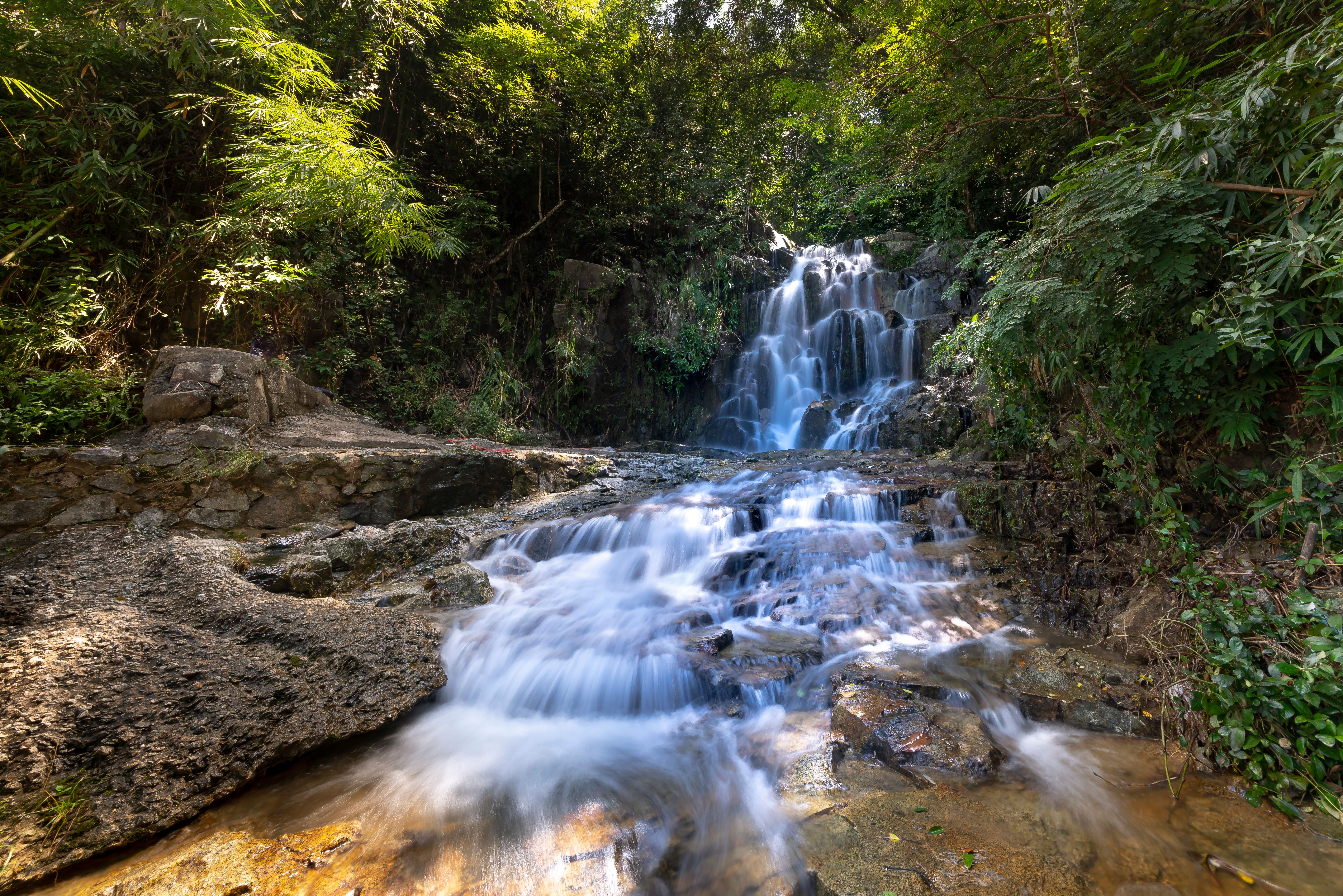
Kisasa Waterfalls overview from Safari-tz.com: a tiered falls near Lushoto reached on foot through Usambara farm country, with a stepped descent.
Kisasa Waterfalls hides in a green fold of the West Usambaras a walkable distance from Lushoto, and everything about how you reach it defines what it is: not a roadside stop, not a park trail with a gate, but the destination at the end of a genuine Usambara walk, farm paths, village greetings, ridgeline views, and then a valley that suddenly drops away and a waterfall stepping down its far wall in tiers.
The visit's structure is the drama. The walk out from the Lushoto side crosses the rolling farm country the parent Usambara page describes, and arrives above the falls rather than below them; the final act is a steep, stepped descent into the amphitheatre, switchbacking down the valley wall with a rock viewpoint partway that frames the tiers, to a base area with picnic ground where the spray keeps the air cool and, most days, the visitor count is your own party. The climb back out is the walk's honest bill, paid in calves, and the difficulty section grades it plainly.
One housekeeping note this page carries for search's sake: the falls answer to several spellings locally, Kisasa most commonly, Izasa and Kizasa depending on who you ask, and all of them mean this valley.
Safari-tz.com builds Kisasa into Lushoto walking days through the established local guiding structure, paired most often with Irente's viewpoint, and the reasons for arranging it properly rather than improvising it get their own honest treatment further down this page.
Kisasa Falls at a Glance (Quick Facts)
Key Facts Before Your Kisasa Walk
Quick Kisasa Waterfalls facts from Safari-tz.com: a tiered Usambara falls near Lushoto, farm-path walking, a steep stair descent and quiet base.
The short version: Lushoto's walk-to waterfall, reached through farm country, entered down a steep stair descent, and enjoyed, on most days, alone.
-The falls:A tiered drop into a green valley amphitheatre. We print no height figure, the published ones disagree, and the tiers make any single number a judgement call anyway.
-The walk:A half-day round trip from the Lushoto side on farm and village paths, distances flexing with the route chosen. Boda-boda and vehicle transfers shorten it for those who want the falls without the full walk.
-The descent:The defining test. A steep stepped path drops into the amphitheatre, a viewing rock partway frames the tiers, and the climb back out is the day's real exercise. Knees are consulted in the difficulty section.
-The swim:Marginal, and this page says so plainly. The pool at the base is small, and Kisasa's reward is the amphitheatre, not the water. Sanje keeps the series' swimming crown.
-The arrangements:Local fees and guiding at Kisasa have historically run informally and inconsistently, and arranging the day through the established Lushoto structure is not a formality here, it is the difference. Section 15 is honest about it.
-Base:Lushoto or Irente, per the parent page's accommodation picture.
-Best months:June to October, then December to February, the Usambara standard.
-The pairing:Irente Viewpoint, the classic same-day combination.
What Is Kisasa Falls Famous For?
The Amphitheatre, the Walk, the Silence
Kisasa Falls is known for its tiered amphitheatre setting, the classic Usambara farm-path walk that reaches it, and having the base to yourself.
Kisasa's fame is a walker's fame, passed along the Usambara grapevine rather than printed on posters, and it rests on three things the grapevine gets exactly right.
The amphitheatre first. Kisasa does not announce itself across a valley the way roadside falls do; the country hides it until the path arrives almost on top of it, and the reveal, a green bowl opening below your feet with the falls stepping down its far wall, lands with the force of things you were not shown in advance. The stepped descent then changes your relationship with the falls twice: the viewing rock partway down frames the tiers at their most photogenic, and the base puts you inside the bowl with the spray, the picnic ground and the sound, a sequence of three distinct falls experiences that most single viewpoints never offer.
The walk second, because at Kisasa the journey is half the product in the gentlest version of this series' oldest sentence: the farm-path approach from the Lushoto side is the Usambaras in miniature, terraces, villages, ridgeline views, the parent page's whole walking case compressed into a half-day, with the falls as its earned punctuation.
The silence third, and this is the fame the grapevine repeats most: on most days the base is empty. A tiered waterfall, a green amphitheatre, picnic tables in the spray-cooled air, and nobody, a combination this series has taught readers to price properly, and at Kisasa it costs a walk rather than an expedition.
Where Is Kisasa Falls Located?
Finding Kisasa on the Usambara Map
Kisasa Waterfalls sits in the West Usambaras near Lushoto and Yogoi, a walkable half-day from town and the Irente side through farm country.
Kisasa sits in the folded farm country of the West Usambaras, near the village of Yogoi, within genuine walking range of both Lushoto town and the Irente side, the geography that defines its category in this series: close enough to walk to, hidden enough to feel found.
The parent Usambara page owns the range's full map, Mombo junction, the climb road, Lushoto's valley, and this page adds only Kisasa's own coordinates on it. From Lushoto, the falls lie a country-path walk away, routes braiding through the farm and village land so that the distance flexes with the route chosen, the direct versions making a comfortable half-day round trip and the scenic versions, threading viewpoints en route, stretching it toward a full walking day for those who want one. From the Irente side, where the parent page's cliff-edge viewpoint draws every Lushoto itinerary anyway, Kisasa is close enough that the two combine into the classic circuit, which Section 17 assembles. Boda-boda and vehicle transfers reach the falls' access point for travellers who want the amphitheatre without the full approach, an honest option this page grades rather than hides.
The valley's own geography explains the falls: a mountain stream leaving the farmed plateau country, dropping into one of the tight green folds the Usambaras specialise in, tiered because the rock steps rather than plunges. The result is a falls that belongs to its valley completely, invisible until earned, and the earning is the point.
Why Should I Visit Kisasa Falls?
The Case for the Walker's Waterfall
Why visit Kisasa Falls: the Usambaras' best falls walk, a three-act reveal, an empty amphitheatre and the perfect pairing with Irente Viewpoint.
Because Kisasa is the waterfall the Usambaras were always going to produce: the range that invented Tanzanian village trekking, covered in full on its parent page, expressing itself as a falls day, and doing it with the walking-first values this website sells everywhere.
The case for the walk is the parent page's case in half-day form. Travellers come to the Usambaras for guesthouse-to-guesthouse trekking, and plenty arrive with only a day or two around Lushoto; Kisasa converts one of those days into the trek in miniature, farm paths, village country, ridgeline views, an earned destination, without committing to the multi-day routes. For the travellers auditing themselves for the bigger Usambara trek, this website's standing practice on every mountain page, Kisasa is the audition: enjoy this day and the Mtae route will suit you; find the return climb from the base a hostile act and the guesthouse network's gentler circuits are your honest match.
The case for the falls themselves is Section 3's, compressed: the three-act reveal, amphitheatre, viewing rock, base, and the emptiness that turns a modest-sized falls into a private one. Kisasa will not out-drop Kalambo or out-swim Sanje, and this page, per the series' honesty spine, never claims it will. What it out-does both at is intimacy per effort: no other falls in this series delivers this much having-it-to-yourself for the price of a half-day walk from a comfortable bed.
And the pairing seals the buying case: Kisasa plus Irente is the best single walking day the Lushoto side offers, and Section 17 builds it.
What Wildlife Can I See at Kisasa?
The Usambara Small Register, Walking Pace
Kisasa Falls wildlife runs the Usambara register: forest and farm birdlife, chameleons for sharp-eyed guides, and the valley's butterfly margins.
The honest register, Usambara edition, carried whole from the parent page and applied at walking pace: no big game, rarity in place of drama, and a falls day whose wildlife rewards the slow.
The birds lead, as they lead everywhere in these mountains. The walk out crosses the farm-and-forest mosaic that keeps Usambara bird lists long, hedgerow and woodlot species along the paths, forest-edge specialists where the route touches the wooded folds, and the valley itself adding the waterside register at the base, where the spray margins and the stream's green corridor concentrate the small life. Declared birders get the standing pacing change, and the parent page's Amani chapter remains the range's true pilgrimage for them; Kisasa is the pleasant parish church, visited on the way.
The chameleons carry the children's register and everyone else's secret delight, produced from hedges by sharp-eyed local guides with the sleight of hand this website has now documented across four mountain ranges, and the farm paths' domestic parade, the goats, the produce traffic, the working land, does its usual quiet work of keeping a walk entertaining between sightings.
The base adds the series' small signature: butterflies at the spray margins, drinking where the mist settles, the detail Sanje's page recorded and Kisasa repeats at its own scale. Nobody plans for it. Everybody photographs it. And the amphitheatre's emptiness means the photographs, for once, have no one else's elbows in them.
When Is the Best Time to Visit Kisasa Falls?
The Flow Trade at Walking Distance
Visit Kisasa Falls June to October or December to February; the rains fill the tiers but grease the farm paths and the steep stair descent.
June to October first, December to February second, the Usambara standard the parent page set, and the series' flow-versus-access trade arrives at Kisasa in its most local form: here the access is not a road that closes but a stair that greases, and the trade is priced in footing rather than kilometres.
The dry windows deliver the walk at its best: firm farm paths, the descent's steps at their most trustworthy, clear ridgeline views on the approach routes, and the falls carrying honest volume in the windows' early halves off the rains' account. The highland-cool walking climate, the range's standing gift, keeps even the return climb from the base civil in most dry-season hours, and the December-to-February window adds the green-terraces version of the approach that photographers favour.
The rains fill the tiers to their theatrical best and charge their standard Usambara fee: the farm paths turn to the polished clay this website's boots have described on four ranges, the stepped descent becomes slow, careful, two-hands work in the wet, and the base's spray zone expands to meet you earlier. The falls stay visitable for the sure-footed and the patient, the viewing rock earning its keep as the wet-season compromise vantage for parties who decline the greasy lower stairs, and we grade every wet-season Kisasa day exactly that way at booking.
The daily law closes as it closes everywhere in this series: mornings own the visit, for light in the amphitheatre, for the walk's cool hours, and for the near-certainty of having the base to yourselves before any other party's day has organised itself.
Is Kisasa Suitable for First-Time Visitors?
The Walk Welcomes. The Stairs Audit.
Kisasa Falls suits most active walkers; the farm-path approach is friendly and the steep stair descent to the base is the day's honest test.
Split the day the way the day splits itself: the walk welcomes almost everyone, and the stairs conduct the audit.
The approach is the Usambaras at their friendliest, the parent page's gentlest grading applied to a half-day: rolling farm paths at conversational gradients, distances that flex with the chosen route, rest stops that entertain themselves in country this inhabited, and the standing option of shortening the walking with a transfer for parties who want the amphitheatre without the full approach. Reasonably active first-timers handle the walk comfortably, families per the family section's warm terms, and the highland climate does everyone the favour it always does.
The descent is the honest test, and this page grades it without decoration: a steep stepped path into the amphitheatre, twenty to thirty minutes of switchbacking stairs each way in the reports of every walker who has counted, a genuine calf-and-knee bill on the climb back out, and greasy in the wet per the seasons section. Fit walkers find it invigorating; travellers with genuinely troublesome knees should weigh the viewing rock's halfway vantage as their honest destination, a compromise this page endorses rather than apologises for, because the rock's framing of the tiers is a legitimate version of the visit and pretending everyone must reach the base is how easy days injure people.
The standing request, at half-day strength: your party's real knees and real walking appetite at planning, and we will build the route, the full circuit, the shortened approach, or the rock-vantage version, that matches the truth.
Is Kisasa Falls Safe to Visit?
How Risk Is Managed in the Amphitheatre
Kisasa Falls safety centres on the steep stair descent, wet-rock footing at the base and proper local guiding arranged through Lushoto's structure.
Kisasa runs a friendly risk profile with one dominant item, and for once in this series it is not an unfenced rim: it is the stairs, and the ordinary physics of steep steps in a spray-fed valley.
The descent leads the ledger. Steep stepped paths concentrate exactly the slips and knee-strains that this series' footwear commandment exists for, the wet multiplies them per the seasons section, and the countermeasures are the standing unglamorous set: genuine tread, unhurried pacing, hands free for the steeper flights, poles for those whose knees vote for them, and the guides' judgement on wet days about whether the base or the viewing rock is the day's honest destination. The base itself adds the spray-slick margins every falls in this series carries, walked with planted feet, and the pool's small scale keeps the water register modest: this is not a swimming destination, the family section repeats it, and entries beyond a cooling paddle are a conditions-and-guide conversation, not a default.
The second item is organisational rather than physical, and this page treats it as the safety matter it partly is: arrangements at Kisasa have historically run informally, fees and guiding improvised at the trailhead with a pushiness that visitor reports document and that sours days. Our answer is structural, the day arranged in advance through the established Lushoto guiding structure, fees proper, the local guide engaged before you arrive, and the improvisation removed from the experience entirely. Section 15 prices this honestly, because it is part of what booking properly buys.
The site-wide medical close stands, unamended, as always.
How Many Days Do I Need for Kisasa Falls?
Half a Day, Inside a Lushoto Stay
Kisasa Falls fills a half-day walk inside any Lushoto stay, pairing with Irente Viewpoint into the classic full Usambara walking day.
Half a day for the falls, a full day for the classic circuit, and both live inside the Lushoto stay your Usambara itinerary already holds, which makes Kisasa the cheapest scheduling decision this series has yet published.
The half-day version is the direct walk: out through the farm country in the morning per the series' daily law, the descent, the amphitheatre hour with the picnic the base's tables were built for, the climb out while legs are freshest, and Lushoto again by early afternoon with the day's second half intact for the market, the town, or the veranda the parent page's accommodation section promised. The shortened-transfer variant compresses further for parties spending their walking budget elsewhere.
The full-day version is the pairing, and it is the version we build most: Kisasa's amphitheatre and Irente's cliff edge threaded into one circuit with the farm country between them, the two poles of Lushoto's day-walking, the falls' enclosure and the viewpoint's enormous opening, experienced hours apart, with lunch positioned at whichever the route's direction favours. Section 17 owns the assembly; this section owns the counsel: travellers with one Lushoto day take the pairing, travellers with two give Kisasa its own unhurried morning and Irente another, and the multi-day trekkers of the parent page treat Kisasa as their arrival-day audit or departure-day farewell, both roles it fills with distinction.
What Kisasa never needs is padding, and this series' standing counsel against the squeezed version inverts here into its mirror: do not inflate the easy day either. Half a day, honestly walked, is the whole product.
What Activities Are Available at Kisasa Falls?
Amphitheatre, Rock, Paths and Picnic
At Kisasa Falls: the three-act visit of rim, viewing rock and base, farm-path walking routes, the picnic ground in the spray and Yogoi's country.
Kisasa's menu is the walker's menu, and its four items are really one day examined closely.
The three-act visit structures everything, and Section 3 named it: the rim arrival where the amphitheatre reveals itself, the viewing rock partway down the stairs where the tiers frame at their most photogenic, and the base where the falls become weather, spray-cooled air, the sound at full volume, the small pool working at your feet. The practiced visit spends time at all three rather than rushing to the bottom, the rock especially rewarding the pause both ways, and photographers should treat the three stations as three different assignments, the light in an enclosed amphitheatre moving faster than open-country instincts expect.
The picnic is the base's own institution, tables in the spray margin, the packed lunch from your Lushoto lodging earning its carry, and the emptiness turning an ordinary picnic into the private-waterfall version very few destinations anywhere can sell at any price.
The walking routes are the menu's flexible item: direct paths for the falls-focused, scenic braids threading ridgeline viewpoints for the full-day builders, and the Yogoi-side country adding its village texture, all of it chosen with the local guide per your party's legs and the standing route-menu honesty this website applies from the Usambaras to the far west.
And the pairing waits one section of this page and one stretch of farm country away: Irente, the circuit's other pole, assembled in Section 17.
Where Do I Stay for Kisasa Falls?
The Parent Page's Beds, Confirmed
Kisasa Falls visitors stay in Lushoto or on the Irente side, the parent Usambara page's accommodation picture, with the falls a walk from bed.
Kisasa adds no accommodation of its own and needs none: the falls sit a walk from the best bed network in this website's entire trekking coverage, and this section simply confirms the parent page's picture from the falls' perspective.
Lushoto town carries the range the parent page described, established lodges with gardens and fireplaces down through solid mid-range to simple guesthouses, and for Kisasa purposes the town works perfectly: the walk out starts from the streets you slept on, the morning law costs only an alarm clock, and the return delivers you to tea, the market, or the veranda with the afternoon intact. The Irente side positions travellers at the circuit's other pole, the farm-lodge register with its celebrated homegrown table, and for parties building the full Kisasa-Irente day the Irente base lets the circuit run in whichever direction the light and lunch argue for, a small routing pleasure the guides exercise well.
The falls-specific note this page adds is the packed-lunch institution: whichever bed you choose, the Kisasa picnic is part of the visit's architecture, the base's tables were built for it, and the better Lushoto and Irente kitchens pack a walker's lunch as practiced routine, the farm-lodge versions turning it into a highlight in its own right. We arrange it with the booking as standard, because the amphitheatre hour without the picnic is the visit at ninety per cent, and this series does not sell ninety per cent on purpose.
Booking pressure runs the parent page's mild Usambara pattern, and we hold the beds when the route locks, per standing practice.
Is Kisasa Suitable for Families?
The Family Answer: Stairs Set the Pace
Kisasa Falls suits walking families well: farm paths children enjoy, a stair descent that sets the pace, and a picnic finale in the amphitheatre.
A warm yes for walking families, with the day's one honest condition sitting exactly where the difficulty section put it: the stairs set the pace, and the family that respects them collects one of the Usambaras' best child-scale adventures.
The case for: the farm-path approach runs the continuous parade this website's family sections have documented across the inhabited ranges, villages, chameleons on demand, produce traffic, ridgeline moments, and the falls day adds the three-act structure children process as a story, the hidden valley's reveal, the rock's halfway drama, the descent into the spray, and the picnic at the bottom as the earned feast. The amphitheatre's emptiness gives families the run of the base, the small pool invites paddling at the margins under the standing arm's-reach law, and the return climb, briefed in advance as the day's mountain, becomes a challenge children own rather than a surprise they resent, the difference being entirely in the telling and the telling being our job at booking.
The conditions, honestly: the stairs are steep, real and doubled for small legs on the way back up, families own the schedule and shorten the approach by transfer without embarrassment, the viewing rock stands as the honest destination for parties whose youngest members' legs or nerves vote against the lower flights, and the wet-season version belongs to sure-footed families only, per the seasons section's grading. The swim is briefed as the modest paddle it is, never as Sanje, the series' pool law travelling here in its gentlest form.
The pairing counsel: families take Kisasa's morning and Irente's late afternoon as separate outings rather than one circuit, the full-day version out-walking most children, and the two-day Lushoto family stay absorbs both perfectly.
What Should I Pack for Kisasa Falls?
Packing for Farm Paths and Steep Stairs
Kisasa packing list: real tread for the stair descent, the packed picnic, water for the climb out, a light rain layer and binoculars as always.
Pack the Usambara day-walk standard, then pack for the stairs, and the list stays half-day honest.
The core: footwear with genuine tread, the series' first commandment at its most literal application, because the stepped descent is where smooth soles meet consequences and the spray-slick base forgives nothing; water at per-person volumes with the climb out in mind, the return stairs being where the day's thirst actually lives; a light rain layer year-round in mountains that manufacture their own weather, doubling as spray cover at the base on strong-flow days; sun cover for the open farm-path stretches, highland air disguising equatorial arithmetic per the parent page's standing warning; and the packed picnic, elevated by Section 12 from option to architecture, carried in with the party and carried out as wrappers, the leave-nothing law travelling with every lunch this website packs.
The falls-day additions: a dry bag for phone and camera, the base's spray reaching electronics before it reaches enthusiasm; binoculars per the standing Usambara register; poles for knees the stairs concern, endorsed without embarrassment by the difficulty section; and swimwear only if the modest paddle appeals, packed with expectations set at paddle.
The village-country wardrobe rule holds on every path, practical and modest, small cash for the fees and the farm-stall purchases that make the walking economy work, photography through the guide's brokerage as standing law.
The subtraction rule closes at its lightest setting in the series: it is a half-day, the daypack does the stairs twice, and your climb-out self, halfway up the switchbacks with the amphitheatre falling away below, signs the final bag.
How Much Does a Kisasa Falls Visit Cost?
What You Are Paying For, and Why Properly
Kisasa Falls costs are modest: local fees, Lushoto-structure guiding and the half-day's logistics, arranged properly to remove trailhead friction.
Kisasa's costs are among the smallest this series will print a section about, and the section exists anyway because how the small money moves at this falls matters more than how much it is.
The build, briefly: local entrance fees at the modest village register, the guide's fee through the Lushoto structure, the packed lunch, and a transfer line only where the shortened approach is taken, all of it rounding to a fraction of a park day and folding invisibly into any Usambara itinerary's total. Figures stay off the page at standing strength, local fees revise informally by their nature, which is precisely the point this section is really about.
The honest paragraph, delivered with respect for everyone involved: arrangements at Kisasa have historically run informally, fees quoted variably at the trailhead, guiding pressed on arriving visitors with an insistence that visitor reports document and that has soured days at a falls that deserves better. The structural cause is simple, a superb local asset without a settled structure around it yet, and the structural answer is the one this website applies everywhere: we arrange the day in advance through the established Lushoto guiding framework, the fees agreed and proper, the local guide engaged before you arrive, the improvisation removed. What you pay through us is the settled version of the same small money, flowing to the same community, minus the friction, and the functioning-structure defence this website has carried across sixteen pages applies here at its smallest and, in its way, most important scale: paying local structures properly is how quiet places stay good, and Kisasa is exactly the kind of place the principle exists for.
Quotes arrive itemised per standing practice, the falls day usually as a line inside a larger Usambara total.
How Do I Get to Kisasa Falls?
On Foot, Mostly, and That Is the Point
Reach Kisasa Falls on foot from Lushoto or Irente through farm country, or shorten the approach by transfer; the Usambara access rules apply.
On foot from the Lushoto side, mostly, and this access section is the shortest in the series because the parent page already carried the heavy freight: Mombo junction, the climb road, Lushoto's valley, all of it stands as written, and Kisasa begins where that page's access ends, at your Lushoto or Irente front door.
From town, the walking routes braid out through the farm country toward the Yogoi side, direct versions and scenic versions per Section 11's menu, the local guide choosing the braid that matches your legs and the day's light. From Irente, the approach joins the circuit geometry that the pairing section assembles. The final common act, whichever approach, is the descent: the path arrives above the amphitheatre, the stairs take over, and the access story hands over to the visit.
The shortened variant is honest and honestly graded: boda-boda and vehicle transfers reach the falls' access point for parties spending their walking elsewhere, converting Kisasa into a stairs-and-amphitheatre outing of a couple of hours, a legitimate version of the visit that loses the walk's half of the product and keeps the falls' half whole. Families, tight schedules and post-trek legs take it without apology; first-time Usambara visitors with a free morning should take the walk, because the walk is the range introducing itself.
The daily law closes in its gentlest form yet: the morning start costs an alarm clock and a packed lunch, buys the light, the cool and the empty base, and remains, sixteen pages into this website's coverage, the cheapest consistently excellent decision in Tanzanian travel.
Can Kisasa Be Combined With Other Destinations?
The Lushoto Circuit, and the Range
Combine Kisasa Falls with Irente Viewpoint into Lushoto's classic walking day, with Soni on the climb road, or into the full Usambara trek.
Kisasa's combinations begin one valley over and build outward through everything the parent page mapped, and the first one is the reason most travellers will meet this falls at all.
Kisasa plus Irente is the Lushoto circuit: the amphitheatre's enclosure and the cliff edge's enormous opening, the two opposite experiences the town's walking country offers, threaded into one farm-path day with lunch at whichever pole the route's direction favours. It is the best single walking day on the Lushoto side, the version we build for every one-day visitor, and the two-outing family variant per the family section's counsel. The parent page's Irente coverage supplies the viewpoint's own rules, the edge law included, and this page supplies the falls'.
Soni joins from the climb road: the series' waypoint falls, met on the drive in per its own page, and the Soni-then-Kisasa sequence gives a Lushoto stay both of the range's falls categories inside its first day and a half, the met and the earned, a pairing this series built its Usambara chapter around. The full range beyond runs the parent page's menu, the Mtae trek with Kisasa as its arrival audit, Amani's rainforest for the birders, the Pare Mountains up the highway for the two-range itineraries our trekking pages assemble.
And the series placement stands per the standing frame: Kisasa slots between the poles as the walker's falls, Sanje for the swim, Kalambo for the pilgrimage, Soni for the waypoint, and the comparison section next door prices the family's newest sibling against the one it will most often be weighed against.
Kisasa vs Soni: Which Usambara Falls?
The Met and the Earned, Priced
Kisasa or Soni? Compare the Usambaras' two waterfalls, the roadside waypoint and the walk-to amphitheatre, and see why most Lushoto stays take both.
The series' first intra-range comparison, and the cleanest one it may ever publish, because the Usambaras' two falls divide the family's categories between them with almost suspicious tidiness: Soni is the met, Kisasa is the earned.
Soni's page holds its case whole: the waypoint falls, seen from the climb road, anchored by its market town, the stop that starts a Lushoto trip an hour early and repays the hour in valley charm and produce. Its ask is minutes; its reward is warmth out of proportion to its size; and its honest limit, stated on its own page with this series' standing candour, is that you meet it rather than achieve it. Kisasa inverts every term: hidden rather than roadside, walked-to rather than met, the three-act amphitheatre rather than the valley glimpse, the stairs' honest bill rather than the roadside's none, and the private base rather than the junction town's bustle. Its ask is a half-day and a pair of calves; its reward is the most having-it-to-yourself per effort in the series.
The matching, stated and then immediately overruled: schedule-squeezed or stair-averse, Soni; walkers wanting the range in miniature, Kisasa. Overruled because the honest answer for nearly every Lushoto stay is both, in their natural order, Soni on the way in, Kisasa on the first full day, the met and the earned inside twenty-four hours, at a combined cost that rounds to a packed lunch and an alarm clock. Ranges rarely hand a series two falls this complementary. The Usambaras, being the Usambaras, filed them a valley apart and waited for someone to write it down.
Why Book Kisasa With Safari-Tz.Com?
The Friction Removed, the Walk Kept
Book Kisasa Falls with Safari-tz.com: proper local arrangements, honest stair grading, the Irente pairing built right and itemised quotes.
Kisasa is the page where this series' quiet argument about arrangements becomes concrete, because here the difference between the improvised visit and the arranged one is documented in other people's bad days. The improvised version walks into the friction the safety and cost sections described, fees negotiated on a path with a party already committed, guiding pressed rather than provided, the day's warmth spent on a dispute, and it is nobody's fault so much as a structure's absence, which is exactly the kind of gap an operator exists to close. The arranged version, ours, settles everything before you arrive: the local guide engaged through the Lushoto framework, the fees agreed and proper, the route braided to your party's real legs per the difficulty section's audit, the picnic packed, the stairs briefed as the day's mountain, and the Irente pairing or the family split-day built in whichever form Section 17 and your children's knees recommend.
Booking with us therefore buys the smallest and most characteristic version of what this website sells everywhere: the day before the day, done properly, at a falls where that preparation is nearly the entire difference between a story about a waterfall and a story about an argument. Lead guides Geoffrey Komba, William Mwasimba, and Isaac Munuo oversee our operations, and the standing sentence carries into the series' fourth page with its record intact: guests do not experience our logistics in proportion to their size, sixteen pages and counting.
We will also tell you plainly when Kisasa fits your trip, which, if your trip includes Lushoto and a free morning, it almost certainly does.
Ready to plan your Kisasa Falls walk?
- Request a tailor-made quote (fastest, best for a real plan)
- WhatsApp: +255 740 666 662
- Email: info@safari-tz.com
Tell us your dates, your party's real knees, and whether Irente joins the day. You will get a properly arranged walk, a packed lunch and an itemised quote.