Livingstone Mountains Climbing Guide
livingstone mountains overview
livingstone mountains at a glance (quick facts)
what are the livingstone mountains famous for?
where are the livingstone mountains located?
why should i visit the livingstone mountains?
what wildlife can i see in the livingstone mountains?
when is the best time to visit the livingstones?
are the livingstones good for first-time trekkers?
are the livingstone mountains safe?
how many days do i need in the livingstone mountains?
what activities are available around lake nyasa?
where do i stay in the livingstone mountains?
are the livingstone mountains good for families?
what should i pack for a livingstone mountains trek?
how much does a livingstone mountains trek cost?
how do i get to the livingstone mountains?
can the livingstones be combined with other trips?
how do the livingstones compare to other treks?
why book the livingstones with safari-tz.com?
Livingstone Mountains Overview
Trekking the Escarpment Above Lake Nyasa
Livingstone Mountains overview from Safari-tz.com: highland trekking above Lake Nyasa in southern Tanzania, with villages, waterfalls and beaches
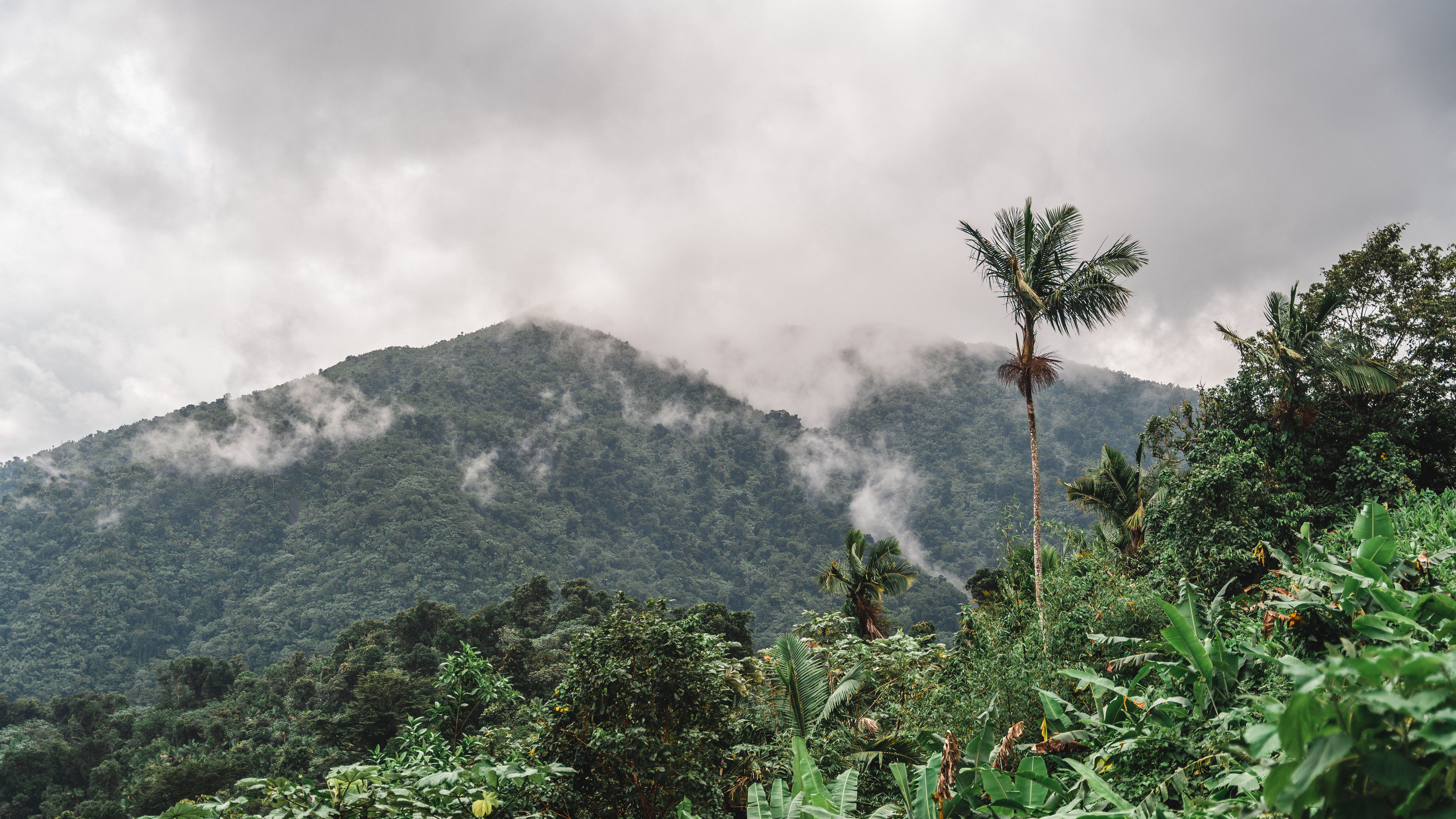
The Livingstone Mountains form the steep eastern wall of Lake Nyasa in Tanzania's far south, where the Rift Valley makes its final, most dramatic drop. Ridges climb from the lakeshore into cool highland grassland, streams cut down through forest patches, and waterfalls spill off the escarpment toward the water. Scattered across all of it are farming villages that see so few visitors that your arrival is an event.
Be clear about what this destination is. There are no lions here, no safari vehicles, no lodges with infinity pools. The Livingstones are a walking destination: multi-day treks from village to village on footpaths that have carried local traffic for generations, with local guides who grew up on them. Days end at Matema Beach, where the mountains meet a lakeshore of clear water and slow fishing canoes.
This corner of Tanzania takes effort to reach, and the reward is proportional. The trekking is genuine, the culture is unstaged, and the lake below holds more fish species than any other lake on Earth.
Safari-tz.com builds Livingstone Mountains itineraries from the Mbeya side, coordinating the local guides, village stops and lakeshore logistics that a trip in country this remote depends on.
Livingstone Mountains at a Glance (Quick Facts)
Key Facts Before You Plan the South
Quick Livingstone Mountains facts from Safari-tz.com: location on Lake Nyasa, trekking style, Matema Beach base, seasons and access realities
The short version: highland trekking above Lake Nyasa, based out of Matema Beach, reached via Mbeya, and best walked in the dry season.
- What it is: A mountain range on the northeastern shore of Lake Nyasa (Lake Malawi), in Tanzania's far south.
- The experience: Village-to-village trekking on local footpaths, waterfall hikes, and lakeshore time at Matema Beach. Cultural walking, not game viewing.
- Wildlife honesty: No big game. Monkeys, forest birdlife, highland flowers, and a lake famous for its endemic cichlid fish.
- Base: Matema Beach at the northern tip of the lake, with simple lakeshore lodging.
- Guides: Local guides from the villages lead the walking. We coordinate the full itinerary from the Mbeya side.
- Access: By road via Mbeya and Tukuyu. Remote, and the last stretches are slow. We treat the access as part of the plan, not a footnote.
- Best months: June to October for dry trails and clear ridge views. The rains bring the waterfalls to full power but make the paths hard work.
- Fitness: Moderate. The escarpment is steep in sections, but daily distances are set to village spacing, not to punishment.
What Are the Livingstone Mountains Famous For?
Waterfalls, Villages and a Record-Book Lake
The Livingstone Mountains are known for escarpment waterfalls, unstaged village trekking, Matema Beach and Lake Nyasa's unmatched cichlid diversity.
Among the few travellers who know them, three things: the escarpment scenery, the villages, and the lake at the bottom.
The scenery first. The Livingstones drop toward Lake Nyasa in one of the steepest sustained descents in the Rift system, and the trekking routes ride that edge. On clear dry-season days you walk highland ridges with the lake glittering far below and, on the far shore, the hills of Malawi. Waterfalls come off the escarpment wherever streams meet the drop, and after the rains some of them are heard long before they are seen.
The villages are the part guests talk about afterwards. Trekking here means passing through working farm communities, sleeping near them, buying bananas from the people who grew them. On the lakeshore, the Kisi villages keep a pottery tradition alive, shaping and firing clay pots that trade up and down the lake by canoe, and a visit there is commerce and culture at the same time, not a performance.
Then the lake. Lake Nyasa holds more fish species than any lake on the planet, most of them cichlids found nowhere else, and at Matema the water is clear enough to watch them from a canoe. Nobody builds an aquarium this good.
Where Are the Livingstone Mountains Located?
Finding the Livingstones on the Map
The Livingstone Mountains run along Lake Nyasa's northeastern shore in southern Tanzania, reached by road from Mbeya via Tukuyu and Kyela.
The far south. The range runs along the northeastern shore of Lake Nyasa, the lake the rest of the world maps as Lake Malawi, down where Tanzania meets Malawi in the closing act of the Rift Valley.
The practical gateway is Mbeya, the largest city in Tanzania's southern highlands. From Mbeya the road climbs through Tukuyu's tea country, one of the greenest drives in Tanzania, then descends toward the lake plain around Kyela before the final approach to Matema Beach. The tarmac ends before the journey does; the last stretch is rough, seasonal in quality, and slow enough that we schedule it honestly rather than optimistically. Guests who arrive expecting a quick hop from Mbeya have been sold the wrong idea, so we do not sell it.
That geography explains everything about the destination. The Livingstones sit far from the northern safari circuit, on no standard route, past the point where mass tourism turns back. It is why the trails are empty and the villages unjaded, and it is why we insist the journey be planned as part of the experience: the highland-to-lakeshore descent through Tukuyu is a highlight in its own right, provided your itinerary treats it as one rather than racing it.
Why Should I Visit the Livingstone Mountains?
The Case for Tanzania's Quietest Corner
Why visit the Livingstone Mountains: empty trails, genuine village culture, escarpment waterfalls and a lakeshore beach with no crowds at all.
Because this is the least-touristed trekking country in Tanzania, and that changes the nature of every single day you spend in it.
On the northern circuit, even the best experiences happen with other visitors present. In the Livingstones you can trek for days and meet no traveller who is not in your own group. The people you do meet are farmers, herders, schoolchildren, and fishermen going about a normal Tuesday, and the interactions carry none of the transactional weight that heavy tourism creates. Guests consistently rank those encounters above the scenery, which is saying something, because the scenery is a Rift escarpment falling into a lake.
The trek-to-beach structure is the other argument. Very few walking destinations anywhere end at warm, clear, swimmable water. Here the mountains and Matema Beach are the same trip: you finish the ridges and descend to sand, canoes and a horizon of lake. It is the rare itinerary where the recovery is as memorable as the effort.
And there is a timing argument we make openly. Southern Tanzania is changing as roads improve. The Livingstones today feel the way the famous places felt decades ago. That version has a shelf life, and travellers who want it should not wait a decade to collect it.
What Wildlife Can I See in the Livingstone Mountains?
Small Wildlife, Big Lake: an Honest Account
The Livingstone Mountains offer monkeys, forest birds and highland flora rather than big game, with Lake Nyasa's endemic cichlid fish as the star.
Here is the honest account, because arriving with safari expectations would ruin a superb destination: the Livingstones are not big-game country.
What the mountains offer instead is the smaller register. Monkeys work the forest patches along the streams, and you hear them crossing the canopy before you spot them. Forest and highland birdlife rewards anyone carrying binoculars, particularly along the waterfall ravines where the vegetation stays thick year-round. In the wet months the high grasslands flower in a way that connects this range botanically to the Kitulo Plateau nearby, whose flower spectacle we cover on its own page. Along the trails, the most reliable sightings of all are agricultural: coffee, bananas, and impossibly green tea country on the Tukuyu approach.
The headline species swim. Lake Nyasa's cichlids number in the hundreds of species, the overwhelming majority endemic, and their colours in clear shallow water look invented. At Matema, a canoe over a rocky patch of lakebed is this destination's version of a game drive, and snorkelling here is watching evolution's most famous fish laboratory from inside it.
We put this section high on the page deliberately. Travellers who want lions should be routed to Ruaha, and we do exactly that. Travellers who understand what this place is never leave disappointed.
When Is the Best Time to Visit the Livingstones?
Livingstone Seasons, Month by Month
Trek the Livingstone Mountains from June to October for dry trails and clear views. The rains swell the waterfalls but make paths and roads hard work.
June to October. That is the dry-season window when the trails firm up, the ridge views stretch across the lake to Malawi, and the access roads behave.
Within that window, the early dry months carry a bonus: the land is still green from the rains and the waterfalls still run strong, so you get the scenery at its fullest with the footing at its safest. By late in the dry season the falls thin out and the hills brown off, though the walking stays excellent and the lake does not care what month it is.
The rains, roughly November into April in this region, are a genuine trade-off rather than a simple no. On the plus side, this is when the escarpment waterfalls reach full power and the highlands flower. Against that: the footpaths turn slick and heavy, the streams you step across in September become obstacles, and the unpaved final stretch to Matema can deteriorate badly. We run wet-season trips only for travellers who understand and want that specific version, with itineraries built around shorter walking days and flexible timing.
One planning note from the operations desk: this region's weather is its own system, driven by the lake and the highlands, and it does not follow the northern circuit's calendar. Ask us about your specific dates rather than applying Serengeti logic here.
Are the Livingstones Good for First-Time Trekkers?
What This Trekking Asks of Your Legs
The Livingstone Mountains suit fit first-time trekkers: moderate village-to-village days, steep escarpment sections and no technical terrain at all.
Yes, and for many first-timers they are a better introduction to African trekking than the famous mountains are.
The reasons are structural. There is no serious altitude here, so the invisible factor that dominates Kilimanjaro and Meru is largely absent; what you can do on a long hill walk at home is what you can do here. Daily stages are set by village spacing rather than by summit ambition, which keeps them humane. The paths are working local routes, not engineered tourist trails, which means real gradients and uneven footing but nothing technical: no scrambling, no exposure, no equipment beyond good boots and poles if your knees vote for them.
The honest demands: the escarpment sections are steep and sustained, both up and down, and the descents punish untrained knees more than the climbs punish lungs. Heat builds as you drop toward the lake, so the lower days ask for early starts and serious water discipline. And this is remote country; a trekker who arrives with a nagging injury has fewer bail-out options than on a roaded circuit, which is a reason to be honest with us about fitness before we build the route, not after.
Tell us your walking history plainly and we will match the route to it. There are gentler and harder versions of this range, and choosing correctly is most of the job.
Are the Livingstone Mountains Safe?
How Safety Works in Remote Country
Livingstone Mountains safety rests on local guides, sensible route planning, weather awareness and honest preparation for a remote trekking region
The Livingstones are welcoming, low-risk country in human terms, and their real safety questions are the practical ones any remote trekking region poses.
The human side first, because travellers ask. These are settled farming communities with long traditions of hospitality, and trekking here happens with local guides who are known in every village you pass through. That local connection is the security system, and it is a good one. Guests routinely describe feeling safer walking here than in any city they flew through to arrive.
The practical side deserves more attention. This is remote terrain with limited infrastructure, so prevention carries the weight that rescue services carry elsewhere. In practice that means routes matched honestly to fitness, weather calls made by guides who know how fast the escarpment streams rise, firm rules about swimming spots on the lake, and first-aid basics travelling with the group. Sun and heat on the lower sections are the most common problems we actually treat, and both are managed by pacing and water rather than heroics.
On health generally, our standing rule applies here as everywhere on this site: pre-existing medical conditions, malaria prophylaxis and vaccination questions belong with your doctor or a travel clinic before you fly. We are a ground operator, not a medical provider, and we stay firmly on our side of that line.
How Many Days Do I Need in the Livingstone Mountains?
The Realistic Five-to-Seven-Day Shape
Plan five to seven days for the Livingstone Mountains: travel from Mbeya, three or four trekking days and lakeshore time at Matema Beach to finish.
Five to seven days, counted from Mbeya and back. Less than that and the travel time eats the destination.
The shape that works: a day travelling in from Mbeya through the Tukuyu highlands, three to four days of village-to-village trekking along the escarpment, then one to two nights at Matema Beach at the end, because finishing this trek without lake time is leaving the dessert on the table. That structure gives the walking room to breathe, builds in a weather buffer, and puts the beach where it belongs, after the effort.
Shorter versions exist and we build them honestly. A traveller already in the south can do Matema plus day-hikes into the lower mountains in three days, and it is a fine trip, but it samples the destination rather than experiencing it; the deep village country only opens up on the multi-day routes. We label the difference clearly so nobody buys one expecting the other.
The most common planning error we see is treating the Livingstones as an add-on squeezed between flights. The access does not compress. Two travel days are simply part of the price of a place this untouched, and itineraries that respect that come home glowing, while itineraries that fight it come home tired. We only build the first kind.
What Activities Are Available Around Lake Nyasa?
Trek, Paddle, Swim, and Watch the Fire
Beyond trekking: Matema Beach swimming, canoe trips over cichlid reefs, Kisi pottery village visits, waterfall hikes and lakeshore village life.
The trekking is the spine, and the lakeshore days around it hold their own program.
Matema Beach is the anchor. The water here is clear, warm and swimmable, the sand is genuine, and the sunset behind the lake earns its daily audience. Local canoes take guests out over the rocky patches where cichlids concentrate, and drifting above those fish is the single activity guests most often extend. Visits to the Kisi pottery villages along the shore run by canoe as well, and watching pots shaped by hand and fired in open pits, using methods the lake trade has relied on for generations, is worth the paddle on its own.
Day hikes from Matema reach waterfalls on the lower escarpment without requiring the full trek, which is how shorter itineraries taste the mountains. Village markets in the area run on their own weekly rhythms; when the dates align we route around them deliberately, because a lakeshore market morning is southern Tanzania at full volume.
What is not here matters too: no motorised watersports, no beach bars, no resort animation team. Evenings are fishing lamps coming out on the water and not much else. We say that with pride, and the guests this destination fits hear it exactly the way we mean it.
Where Do I Stay in the Livingstone Mountains?
Simple Beds in Spectacular Places
Livingstone Mountains lodging is simple: lakeshore guesthouses and lodges at Matema Beach, with village stays or camping on multi-day trek routes.
Calibrate expectations to the map. This is one of the least-developed corners of Tanzania, and the lodging is simple everywhere, which is both the trade-off and, in its way, the point.
At Matema Beach the options are lakeshore guesthouses and modest lodges: clean rooms, local food done well, and positions on the sand that far more expensive properties elsewhere would envy. Nothing here markets itself with a star rating, and the honest description is comfortable rather than luxurious. On the trekking routes, nights are village stays or camping arranged through the local guides, and the accurate expectation is a mattress, a mosquito net, hot food and a bucket shower, hosted with a warmth that repeatedly ambushes guests who thought they were roughing it.
Two practical notes from running trips here. First, capacity is small everywhere, so travel in the dry peak needs booking ahead; there is no overflow hotel in country like this. Second, cash economy: guests should arrive with what they need, because the conveniences of the northern circuit stop at Mbeya.
We match accommodation to each traveller's stated threshold and we describe every property as it actually is, because a guest surprised by simplicity was briefed badly, and that is an operator failure, not a lodging failure.
Are the Livingstone Mountains Good for Families?
Families Who Fit This Trip, and Not
The Livingstone Mountains suit adventurous families with school-age walkers: short trek options, safe swimming at Matema and real village life
For the right family, this is one of the best-kept family secrets in Tanzania. The filter is honesty about what your family enjoys.
The case for: children are natural ambassadors in village country, and families consistently report that their kids unlocked interactions adult groups never get. The activity mix is genuinely child-friendly at the lakeshore end: safe supervised swimming, canoe rides, pottery villages where children are welcome to try their hands, and short waterfall walks that feel like expeditions at child scale. Trek stages can be shortened, and a Matema-based version with day hikes removes the multi-day commitment entirely.
The case against, stated plainly: the journey is long and rough, the accommodation is simple, there is no kids' club and no backup entertainment when it rains, and the full village-to-village trek asks more than most children under the early teens can give cheerfully. Malaria precautions apply in the lowlands, and as always, dosing and medical questions for children go to your doctor, not to us.
Our practical rule of thumb from trips that worked: families whose children already hike, camp or travel rough do brilliantly here. Families whose holidays are built around facilities should be steered to Zanzibar or the northern lodges, and we will do that steering without embarrassment on either side.
What Should I Pack for a Livingstone Mountains Trek?
Packing for Ridges, Rain and a Lakeshore
Livingstone Mountains packing list: broken-in boots, rain shell in any season, sun protection, swimwear, cash for villages and a soft duffel bag.
Pack for three environments in one trip: cool highland ridges, hot lakeshore, and paths that can be wet in any month.
The core kit: broken-in walking boots with real tread, because village paths polish smooth on steep clay sections; a waterproof shell year-round, since the escarpment makes weather the forecast never mentioned; a warm layer for highland evenings, which surprise people this close to a tropical lake; strong sun protection for the exposed descents; and swimwear, because arriving at Matema without it would be a planning tragedy. Poles help on the long descents even if you never use them at home.
The Livingstone-specific items: cash in small denominations, because everything from sodas to pottery is bought in villages that have never seen a card machine; a headlamp, since electricity is a sometimes-thing outside Matema; any personal medication in full supply plus margin, because there is no pharmacy on the route; and a soft duffel rather than a hard suitcase, which matters when bags travel by canoe or on someone's shoulder for a stretch.
Leave behind the safari fantasy wardrobe. This is walking country among farming communities; practical, modest, hard-wearing clothing is correct, and the khaki costume department can stay home. Your bag should close with room to spare, because pottery has a way of coming back with people.
How Much Does a Livingstone Mountains Trek Cost?
What You Are Paying For in the South
Livingstone Mountains costs come from long transfers, local guides, village and community payments and simple lodging. Safari-tz.com itemises quotes.
The cost structure here is the reverse of the famous parks, and understanding it explains the quote.
There are no premium park gate fees dominating the invoice in this region. What drives cost instead is distance and logistics: the long transfer legs from Mbeya, a vehicle and driver committed to the itinerary, and the time everything takes in country where the roads set the schedule. The human layer sits on top: local trekking guides paid properly, village accommodation and meal arrangements, community payments where routes cross them, and the canoe and activity arrangements on the lake. Every one of those lines is modest individually; the distances are what add up.
We keep figures off this page as a matter of policy. Costs in a developing region shift as roads, fuel and local arrangements change, and a printed number ages into misinformation. When you enquire, you receive a current, itemised quote for your dates and group size, with transport, guiding, lodging and community payments shown separately.
The comparison worth making: a Livingstones trip typically costs a fraction of an equivalent number of days on the northern circuit, because the underlying cost base is transport and people rather than premium park fees and high-season lodges. In value-per-memorable-day terms, the south is the best arithmetic in Tanzania.
How Do I Get to the Livingstone Mountains?
The Road South, Planned Honestly
Reach the Livingstone Mountains via Mbeya, then by road through Tukuyu's tea country toward Kyela and Matema Beach. Remote, slow and worth it.
Through Mbeya, and then patiently.
Mbeya is the hub of the southern highlands and the staging point for this trip. Travellers reach it from Dar es Salaam by air or by a long overland leg that some itineraries fold into a southern circuit; we confirm the current flight options for your dates when we quote, because schedules on domestic routes change and we refuse to print one here that might be stale by the time you read it. From Mbeya the road runs south through Tukuyu, climbing through tea estates and banana country that rank among the most beautiful road scenery in Tanzania, then drops toward the lake plain near Kyela before the final unpaved approach to Matema.
Budget most of a day for the Mbeya-to-Matema leg and treat it as a touring day rather than a transfer: there are viewpoints, markets and crater lakes en route that deserve stops, and an itinerary that races past them has misunderstood the assignment. In the rains, the final stretch can degrade seriously, which is one more reason the dry season carries our recommendation and why the vehicle on this route is a proper 4x4 with a driver who knows it.
The honest summary: getting here is a commitment. We plan it as a feature. Travellers who accept that arrive already charmed.
Can the Livingstones Be Combined With Other Trips?
Where the Livingstones Fit an Itinerary
Combine the Livingstone Mountains with Kitulo National Park's flower plateau, the Mbeya highlands, or Ruaha and the southern safari circuit.
The natural partners are all southern, and the pairing that makes the most sense is sitting right next door.
Kitulo National Park, the flower plateau Tanzanians call the Garden of God, occupies the highlands adjoining this range, and combining the two builds the definitive southern highlands trip: Kitulo's montane blooms and open plateau walking, then the Livingstones' escarpment trek down to the lake. The two share the Mbeya gateway, so the logistics stack instead of multiplying. Note the seasonal tension, which we plan around honestly: Kitulo's famous flowering peaks in the rains, while the Livingstones walk best in the dry, so the ideal combined window sits at the seasonal shoulders and depends on which experience leads your priorities.
The other classic combination is the southern safari circuit. Ruaha, Tanzania's giant of a park for big game, and Mikumi both connect through the same side of the country, so a south-only itinerary can run safari first and finish with mountains and lake, wildlife then culture then beach, with no flight north ever required. For overlanders, the lake itself continues the story: Nyasa's shore leads onward into Malawi for travellers on longer African routes.
What we do not recommend is bolting the Livingstones onto a northern circuit trip as an afterthought. The geography punishes it. The south rewards travellers who give it the whole trip.
How Do the Livingstones Compare to Other Treks?
Choosing the Right Tanzanian Trek
The Livingstones offer culture-rich, low-altitude trekking unlike Kilimanjaro's summit push, with emptier trails than Usambara and a beach finish.
Tanzania sells several completely different walking holidays under the one word "trekking," and picking the right one matters more than picking the famous one.
Kilimanjaro and Meru are summit projects: altitude, cold, a defined top, and the satisfaction of standing on it. The Livingstones are the opposite proposition, a journey through inhabited country where the point is the passage itself, villages, ridgelines, waterfalls, and a lake at the end instead of a certificate. No altitude drama, no summit-night suffering, and evenings spent in communities rather than camps. Travellers who need a summit should climb; travellers who found their summit day the least interesting part of a previous climb are exactly who this range was made for.
Against the Usambara Mountains, Tanzania's other village-trekking destination in the northeast, the honest comparison runs: Usambara is easier to reach and better established, with more organised guesthouse infrastructure; the Livingstones are wilder, steeper, emptier, and finish on a lakeshore, which Usambara cannot offer. Usambara suits a first taste of Tanzanian village trekking bolted to a northern itinerary. The Livingstones reward the traveller making the south the destination.
The clarifying question we ask clients: do you want to conquer a mountain, or travel through one? Answer that, and the choice makes itself.
Why Book the Livingstones With Safari-Tz.Com?
Ground Knowledge Where It Matters Most
Book the Livingstone Mountains with Safari-tz.com: local guide networks, honest route planning, realistic scheduling and direct WhatsApp contact.
Remote destinations expose operators. On the northern circuit, an average company can hide behind good infrastructure. Out here there is no infrastructure to hide behind: the trip is only as good as the local relationships, the route knowledge, and the honesty of the planning, and that is the ground we choose to compete on.
Booking the Livingstones with us means the local trekking guides are engaged through relationships, not cold calls; the vehicle and driver are matched to roads we actually know; the schedule carries the buffers this region demands instead of the optimism that strands people; and every expectation on this page, the simple lodging, the long access, the absence of big game, is repeated to you in plain terms before money changes hands. Lead guides Geoffrey Komba, William Mwasimba, and Isaac Munuo oversee our operations, and southern itineraries get the same planning rigour as our flagship northern trips, because a guest in Matema is as much our responsibility as a guest in the Serengeti.
We will also tell you if this is the wrong trip for you. It is a specific destination for a specific traveller, and matching those correctly is the entire craft.
Ready to plan your Livingstone Mountains trek?
- Browse our tours: Our Tours
- WhatsApp us directly: +255 740 666 662
- Email: info@safari-tz.com
Tell us your dates, your walking experience, and how much simplicity you are happy with. You will get a straight answer, a realistic route, and an itemised quote.