Maziwe Island Marine Reserve Guide
maziwe island reserve overview
maziwe at a glance (quick facts)
what is maziwe island famous for?
where is maziwe island located?
why should i visit maziwe island?
what marine life can i see at maziwe?
when is the best time to visit maziwe?
is maziwe good for first-time snorkellers?
is maziwe island safe to visit?
how many days do i need for maziwe island?
what activities are available at maziwe?
where do i stay for maziwe island?
is maziwe island good for families?
what should i pack for maziwe island?
how much does a maziwe island visit cost?
how do i get to maziwe island?
can maziwe be combined with other trips?
which marine reserve?
why book maziwe island with safari-tz.com?
Maziwe Island Reserve Overview
An Island That Appears at Low Tide
Maziwe Island Marine Reserve overview from Safari-tz.com: the vanishing sandbank off Pangani, coral snorkelling and the turtle conservation story.
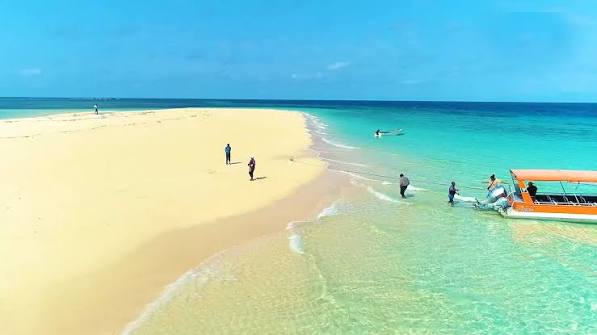
Maziwe Island Marine Reserve protects a coral-ringed sandbank about eight kilometres off Pangani on Tanzania's northern coast, and its first fact is the one that makes it unlike anywhere else in this series: the island is only there part of the day. At low tide Maziwe surfaces as a bright bar of clean white sand, a private-feeling scrap of the tropics ringed by reef; as the tide returns the sand goes back under, and the island becomes sea again until the water next falls. You do not visit Maziwe so much as catch it.
It was not always this way, and the history is the reserve's quiet heartbreak. Within the last century Maziwe was a genuine forested island, trees dense enough, the elders say, that you could not walk through them to the far side; through the middle of the twentieth century the trees were cut, for firewood, for building, in a period whose full reasons the sources tell differently, and without roots to hold it the island eroded into the sea, the last tree gone by the early 1980s. What is left is the sandbank, and, more importantly, the reef and the turtle grounds the reserve was created to protect.
That protection is the reserve's living story: gazetted as one of Tanzania's oldest marine reserves specifically to guard the region's most important turtle-nesting ground and its surrounding reef, and today run in partnership with the Pangani and Ushongo communities whose turtle-conservation programme, covered below, is the reason the eggs still hatch at all. The reef carries nearly four hundred fish species and dozens of coral types; the sandbank carries a picnic and a story; and the tide carries the schedule.
Safari-tz.com builds Maziwe from the Pangani and Ushongo beaches, into Tanga-coast stays and the northern mountains-to-sea itinerary, exactly as the sections below map.
Maziwe at a Glance (Quick Facts)
Key Facts Before You Catch the Tide
Quick Maziwe Island facts from Safari-tz.com: a vanishing sandbank off Pangani, low-tide only, coral snorkelling, turtles and a picnic day.
The short version: a coral-ringed sandbank off Pangani that only appears at low tide, reached by dhow or boat, snorkelled on the reef and remembered for the turtles.
-The reserve: One of Tanzania's oldest marine reserves and Tanga region's first, protecting the sandbank, its reef and the turtle-nesting grounds around it.
-The vanishing island: Maziwe shows only at low tide, a sand bar ringed by coral; the tide decides whether there is an island to land on at all, which makes the tide this visit's absolute master.
-The reef: Nearly 400 fish species (some counts higher), around 35 coral genera, sponges, seagrass and an endemic shrimp found nowhere else. Snorkelling is the headline; scuba is available through the coast's dive operators.
-The turtles: The most important nesting ground in East Africa historically; green and olive ridley records. Rising tides now flood the nests, so a community programme relocates them to a mainland hatchery, the story that defines the visit.
-No shade, no shop: The sandbank has no vegetation, no facilities and no fresh water; operators bring umbrellas, lunch and everything else. You bring sun cover seriously.
-Access: Boats from Ushongo village and Pangani, roughly an hour, tide-timed.
-Base: The Ushongo and Pangani beach lodges; about an hour south of Tanga city.
-Best months: June to October and December to February for calm seas and clear water.
What Is Maziwe Island Famous For?
The Sandbank, the Reef, the Turtles
Maziwe is famous as the vanishing sandbank, for coral reefs among Tanzania's oldest protected waters, and for a turtle programme that saves the nests.
Maziwe's fame runs on three things, and the order matters because the third one is why the first two still exist.
The vanishing sandbank first, because it is the image that sells the place and delivers on the sell. A coral-ringed bar of white sand that surfaces from the open sea at low tide and sinks again as the water rises is a genuinely rare thing to stand on, and the experience of a boat crew nosing up to a sand island that was not there yesterday and will not be there tonight is the kind of tropical postcard that turns out, unusually, to be true. Reviewers who catch it on a quiet day use the word paradise and mean it literally: a private scrap of sand in the middle of the Indian Ocean, yours for a tide.
The reef second, because the sandbank alone would be a photograph rather than a day. The waters around Maziwe hold nearly four hundred fish species, dozens of coral types across hard and soft gardens, sponges, seagrass, and an endemic shrimp that lives nowhere else on Earth, protected here since the 1970s in one of the country's earliest marine reserves. The snorkelling is the coast's easy classic, shallow reef a short swim from the sand; the diving, arranged through the coast's operators, runs from gentle inner reef to the Pemba-channel drop-offs.
The turtles third, and this is the fame that matters most, because it comes with a wound and a repair. Maziwe was East Africa's most important turtle-nesting ground, but the same tides that reveal the island now flood the nests that green and olive ridley turtles still try to lay on it, drowning the eggs. The response is the reserve's living heart: the community turtle programme that relocates threatened nests to a protected mainland hatchery and has released tens of thousands of hatchlings, the conservation story told on-site by the people who run it, and the reason a Maziwe day is remembered as more than a swim.
Where Is Maziwe Island Located?
Finding the Sandbank on the Coast
Maziwe Island sits about eight kilometres off Pangani in the Pemba Channel, on Tanzania's northern coast, an hour's boat trip from Ushongo.
Maziwe sits about eight kilometres off Pangani in the Pemba Channel, on Tanzania's northern coast where the Pangani River meets the Indian Ocean, roughly fifty kilometres south of Tanga city and a boat-hour offshore from the Ushongo and Pangani beaches. The sources measure the distance differently depending on where they start, close off Pangani, further from Tanga, and the honest version is that the reserve is a short open-water crossing from the Ushongo-side lodges that serve it, the base the accommodation section builds around.
The position writes the visit twice. First the offshore geography: Maziwe is a genuine open-sea sandbank, not a lagoon island, exposed to the channel's water and weather, which is why the crossing is tide-and-sea-state dependent and why the reef around it stays healthy, out past the shallows where the water moves and the coral thrives. Second the mainland relationship: the reserve belongs to Pangani and Ushongo, the fishing-and-beach communities whose boats reach it, whose lodges host its visitors, and whose turtle programme, run from the Ushongo hatchery, makes it a living reserve rather than a mere sandbar; the island is offshore but the conservation is onshore, and the two halves are one story.
The orbit note for this marine series: Maziwe is the Tanga page's promised neighbour, the second entry on this coast and its first true offshore reserve. It sits south of the Tanga Coelacanth Marine Park down the same quiet coast, pairs with Pangani's old Swahili port and river, and threads into the same mountains-to-sea itinerary the Tanga page opened, the Usambaras above, the coast below, the sandbank offshore. The combinations section assembles them; the map's point is that Maziwe rewards the traveller already drawn to this unhurried corner.
Why Should I Visit Maziwe Island?
The Case for the Vanishing Island
Why visit Maziwe: a private sandbank you catch at low tide, near-empty coral reefs, real turtle conservation, and a coast without the crowds.
Because a sandbank that appears from the open sea for a few hours and then vanishes is a genuinely singular thing to stand on, and Maziwe surrounds that novelty with a reef worth the swim and a story worth the trip.
The singularity argument leads and it needs little help. Most tropical-island days are variations on a theme; a vanishing island is not, and the specific magic of a low-tide bar of clean sand in the middle of protected water, often, on this quiet coast, with nobody else on it, is the kind of experience travellers describe for years afterward. Reviewers who had the sandbank to themselves use the word paradise without irony, and the word fits because scarcity is built into the geography: the island is small, the tide window is finite, and the coast is uncrowded, three things that together produce the near-private day the famous islands cannot sell at any price.
The substance argument follows this series' standing pattern. Maziwe is not just a photogenic sandbar; it is a working marine reserve with a four-hundred-species reef, an endemic species that exists nowhere else, and a turtle-conservation programme you can hear about from the people who run it, the kind of genuine content that separates a destination from a backdrop. The snorkelling is excellent and beginner-friendly; the diving rewards the certified; and the turtle story gives the day a spine.
And the quiet-coast argument closes it, shared with the Tanga page and worth restating: this is the northern coast that Zanzibar stopped being, uncrowded reefs, honest prices, an emerging rather than polished infrastructure, and a sense of a place still found. Maziwe is the offshore jewel of that coast, and the traveller who values the near-private sandbank over the guaranteed resort day knows exactly who this page is written for.
What Marine Life Can I See at Maziwe?
Reef Fish, Turtles and the Endemic One
Maziwe marine life: nearly 400 reef-fish species, green and hawksbill turtles, dolphins offshore, an endemic shrimp, and vast tern flocks passing.
The honest register, sandbank edition, and Maziwe's is generous: the reserve packs a remarkable amount of life around a very small island, and this page sorts it by where you meet it.
The reef, where the snorkeller spends the day: nearly four hundred fish species by the reserve's own counts, the coral-garden community in full, parrotfish and wrasse and butterflyfish over the hard and soft corals, the barracuda and kingfish schools the divers report on the outer edges, and the occasional reef shark patrolling the drop-off for the certified who go looking; sponges, seagrass and algae filling the reserve's ecological registers; and the endemic shrimp, Tectopontonia maziwiae, a species found nowhere else on the planet, the kind of fact that makes a small reserve suddenly enormous, mentioned to the guests who like their wonder specific.
The turtles, the reserve's flagship: green turtles above all, the historic nesting species, met on the reef and in the seagrass on their own schedule, with hawksbills recorded by divers and the reviews; framed, per this series' honesty, as a genuine and frequent reward rather than a promise, because wild turtles keep their own diaries, and paired with the conservation story that the activities section tells in full.
The offshore water adds the channel register: dolphins, spinner and bottlenose, favouring these waters and frequently seen on the crossings, and the wider Pemba-channel life the Tanga page described.
And the birds close it with Maziwe's own astonishment: the sandbank is a roosting and passage point for terns in numbers that have run into the tens of thousands, a Danish survey once counting flocks that size and logging a national first among them, which means the vanishing island is, at the right season, one of the coast's great seabird spectacles as well as its strangest beach. Binoculars earn their carry on any boat day here twice over.
When Is the Best Time to Visit Maziwe?
The Season Sets the Sea, the Tide the Day
Visit Maziwe June to October or December to February for clear water and calm seas; and always on a low tide, because the tide makes the island.
June to October first, December to February second, the coast's standard the Tanga page set, and Maziwe adds the variable no inland page ever needed and this reserve needs more than any: the tide, which does not just improve the visit but literally provides the island.
The season decides the sea, in the marine series' sea-state-and-clarity terms: the dry windows deliver calm channel crossings, clear water over the reef, the best visibility for the snorkelling and diving that are the day's point, and the settled weather that makes an open-sea sandbank a pleasure rather than a gamble; the two windows split by the monsoon the Tanga page described, both good. The long rains of roughly March to May, with the shorter November spell, cloud the water with runoff, roughen the crossing, and push the guides' judgement toward caution, and while the reserve is technically open year-round and the sources say so, the underwater half is honestly a dry-season reward.
The tide decides the day, and this is Maziwe's governing law, the marine series' tide rule at its most literal application anywhere on this coast: Maziwe is an island only at low tide, so a Maziwe trip is planned around the low-water window, full stop, the boats timed to reach the sandbank while it exists, land the picnic while there is sand to land it on, and snorkel the reef in the low-water hours, then leave as the sea reclaims the island. This is not a preference like the inland dawn rule; it is a precondition. There is no high-tide version of standing on Maziwe, because at high tide there is nothing to stand on. The guides build every trip around the day's specific low tide, and a visitor who ignores the tide table has not booked a difficult day, they have booked a boat ride to open water.
Both variables, one plan: the dry season for the sea, the low tide for the island, and Maziwe performs like the private paradise its reviews promise.
Is Maziwe Good for First-Time Snorkellers?
The Coast's Gentlest Reef Entry
Maziwe suits first-time snorkellers beautifully: a gentle walk-in from the sandbank to shallow reef, calm dry-season water and patient guides.
Yes, and Maziwe is arguably the friendliest first-time snorkel on this whole coast, because the sandbank itself solves the beginner's hardest problem: getting into the water calmly.
The gentle-entry case: with the island exposed at low tide, snorkellers walk in from the sand rather than rolling off a boat into open water, the reef sits a short, shallow swim from the beach, and the operators who run Maziwe explicitly pitch it to beginners, a gentle walk into the ocean and the reef only a short swim away being how one describes it. Calm dry-season water, a guide at your shoulder, and a sand island to stand on between sessions make this the reef where nervous first-timers most often discover they can do it after all, and the reviews are full of exactly that arc, including families with teenagers and second-time-ever divers on their shallow, long-bottom-time dives.
The honest floor is the marine series' standing one: basic swimming comfort, because it is still open-sea reef and the boat still crosses a channel, and we ask honestly at booking rather than at the gunwale. Non-swimmers keep the day's better half anyway, the sandbank, the sun, the picnic, the turtle story, the dhow, none of which requires a mask.
The expectations frame carries the Tanga page's coast-wide honesty, softened by Maziwe's stronger operators: this is still an emerging coast, but the Ushongo-side dive-and-snorkel operations that run Maziwe are genuine, established outfits with real equipment and instruction, the coast's competent end, so the bring-your-own-mask advice stands as prudence rather than necessity, and the scuba the reserve rewards, gentle inner reef to channel drop-off, is properly available for the certified and the learning both. The certified diver's note, per the whole marine series: Maziwe shows reef, not the Tanga coelacanth, which belongs to no recreational depth.
Is Maziwe Island Safe to Visit?
How Risk Is Managed on the Vanishing Island
Maziwe safety centres on the tide and licensed boats, the shadeless sandbank's sun, honest snorkel supervision and the open-channel crossing.
Maziwe visits safely on the sea's terms, and its risk conversation has one item this series has never carried before, the disappearing ground under your feet, plus the coast's standing marine set.
The tide leads, uniquely, because at Maziwe the tide is a safety variable and not merely a scheduling one: the island is temporary, the sea reclaims it on a timetable, and the entire day is built so the boat reaches, lands and leaves the sandbank inside the safe low-water window, the guides reading the tide as the non-negotiable frame the seasons section described. This is not a hazard in the alarming sense, it is a managed certainty, the crews having run these tides for years, but it is why the trip is not improvised and why a visitor who wandered off to snorkel alone on a rising tide would be making the one serious mistake the reserve offers. Stay with the guide, watch the water, and the vanishing is a wonder rather than a worry.
The boat and sea state carry the Tanga page's law unchanged: licensed operators, seaworthy craft, lifejackets, and the crew's judgement on the channel crossing final, the open-water hour to an offshore sandbank being exactly the crossing that rewards a competent boat and punishes a cheap one; we book the competent end as standing practice.
The sun is Maziwe's sharpest ordinary risk, and it earns its own line because the sandbank has no shade at all, no trees, no rock, nothing but the umbrellas and tents the operators bring, and the equatorial sun doubled off white sand and water burns the unprepared badly and fast. Reef-safe cover, a rash vest, a hat and the operators' shade are not comfort items here, they are the day's real safety kit, and the packing section treats them as such.
The reef etiquette and swim register run the coast's standing settings, no touching coral, arm's reach for children, entries where the crew indicate; and the remoteness note is the marine series' honest one, this is offshore on a quiet coast, so the day is a careful pleasure rather than a place to test limits. The site-wide medical close stands, unamended, with the marine coda: declare what swimming and boat travel affect at booking.
How Many Days Do I Need for Maziwe Island?
A Tide-Timed Day From a Coast Stay
Maziwe Island is a single tide-timed day trip, best held inside a two-or-three-night Pangani or Ushongo beach stay on the quiet coast.
One tide-timed day is the Maziwe trip, and it lives inside a coast stay rather than standing alone, which is the honest shape for a day trip to an island that only exists at low water.
The day itself: the boat from Ushongo or Pangani timed to the low tide, roughly an hour across the channel, the sandbank reached while it is above water, two snorkelling sessions on the reef around a picnic lunch on the sand in the pattern the operators have refined, the turtle story told, the sun respected, and the return as the tide turns, a complete marine day governed start to finish by the water's timetable rather than the clock's. Reviewers describe it as a full, unhurried day and mean the compliment; it is not a rushed excursion, it is a day given over to a single tide.
The coast stay is where the day belongs, and this is the itinerary counsel: Maziwe is one day of a two-or-three-night Pangani-and-Ushongo beach stay, not a standalone trip, because the drive to this coast and the tide-dependence of the island both argue for the buffer of days, a beach day and the Pangani town-and-river day the combinations section describes flanking the sandbank trip, and the whole stay running on the unhurried rhythm that is the coast's entire appeal. A one-tide island rewards a several-day patience.
The itinerary frame, marine-series standing: Maziwe is a jewel to set, not a destination to fly to, the offshore highlight of a Pangani coast stay, the sea half of a mountains-to-coast week, the quiet finish to a northern safari, and the combinations section builds each. What it never is, is a day worth crossing the country for alone, and the arithmetic only works, but works beautifully, for the traveller already choosing this coast.
What Activities Are Available at Maziwe?
Snorkel, Sandbank, Dhow and Turtles
At Maziwe: snorkelling and diving the coral reef, the low-tide sandbank picnic, dhow sailing, the turtle conservation story and offshore dolphins.
Maziwe's menu is small, coastal and complete, and it sorts by whether it puts you under the water, on the sand, or inside the story.
Under the water: snorkelling the coral reef is the headline, the shallow gardens a short swim from the sandbank in the low-tide window, reef fish and turtles the rewards, and the two-session rhythm, morning and afternoon around lunch, the operators' refined standard; scuba diving for the certified and the learning runs through the coast's dive operations, the gentle inner reef for the beginners and the channel drop-offs for the experienced, the untouched-coral and macro-photography reputation the divers' reviews describe. All of it under the marine reserve's rules, watch your fins, touch nothing, take nothing.
On the sand: the sandbank itself is an activity, the rare pleasure of a private low-tide island, sunbathing and swimming and simply standing on ground that will be sea by evening; the dhow sail out and back is half the day's romance, the traditional rig across the channel; and the picnic on the sand, the fish-and-lobster spread the Ushongo operators are known for, is the day's civilised centre.
Inside the story: the turtle conservation programme is Maziwe's soul, and the guides carry it, how the rising tides now flood the nests the turtles still lay, how the community programme relocates the threatened eggs to a protected mainland hatchery, how tens of thousands of hatchlings have been released, and, for visitors whose timing and the season align, the genuine possibility of seeing the hatchery or a hatching, the kind of participation reviewers describe as the trip's high point. This is the activity that turns a beautiful swim into a meaningful day, and we build it in wherever the programme and the calendar allow.
Where Do I Stay for Maziwe Island?
The Beaches That Launch the Boats
Maziwe visitors stay at the Ushongo and Pangani beach lodges that run the boats, from eco-camps with dive centres to quiet Swahili-coast retreats.
The reserve is offshore but the beds are on the Ushongo and Pangani beaches that launch its boats, and this section grades them for the sandbank day.
The Ushongo beach lodges are the natural base and the day's launch point: the soft-sand properties along Ushongo, some sixteen kilometres from Pangani town, run the Maziwe trips as their signature excursion, several with their own dive-and-snorkel operations, and staying here turns the sandbank day into a walk-to-the-boat affair on the tide the lodge already tracks. The register runs from beach bandas in the honest, charming, barefoot mode the reviews adore to more comfortable eco-lodges, and the food, the fish-and-seafood the same kitchens pack for the island, is a reason to stay in itself. For a Maziwe-focused visit this is the base, full stop.
The Pangani-town side serves the history-and-river traveller: the lodges around Pangani proper, closer to the old Swahili port, the carved doors and colonial ruins, and the Pangani River trips the combinations section describes, with Maziwe reached by the town's own boats. It suits the visitor who wants the culture and the river as much as the sandbank, and the drive between Pangani and Ushongo is a short coastal leg.
The wider coast, per the Tanga page: the secluded points and eco-lodges scattered north toward Tanga and the border, some with dive centres and house reefs, the register for the traveller making the whole northern coast the holiday rather than Maziwe a day of it.
The marine-specific note stands from the Tanga page: the tide runs the boat day, so the lodges that handle tide-timed departures as routine, which on this coast means the ones that run Maziwe themselves, are worth more than their comfort tier suggests, and we weight for it. Booking pressure is gentle on this quiet coast; we hold beds when the itinerary locks, per standing practice.
Is Maziwe Island Good for Families?
The Family Answer: the Turtle Island
Maziwe suits families wonderfully: a sandbank playground, gentle walk-in snorkelling, a dhow adventure and a turtle-conservation story children love.
A wholehearted yes, and Maziwe may be the best family marine day on this coast, because a vanishing sandbank is a children's fantasy that happens to be real and the turtle story is the conservation lesson no classroom delivers.
The case runs itself at child height. The sandbank is the perfect natural playground, an island of clean sand that arrives from the sea and leaves again, a fact children find genuinely magical and adults find nearly as much; the walk-in snorkelling, per the difficulty section, is the gentlest reef entry on the coast, children wading from the sand to the shallow reef with a guide rather than rolling into open water; the dhow sail is a pirate adventure; and the turtles are the wonder, both the ones met on the reef and, when the season and the programme align, the hatchery and the hatchlings, a child watching relocated eggs become released baby turtles being the kind of day that produces marine biologists. Reviews specifically praise it as a family trip, teenagers included.
The terms are the safety section's at child scale, sharpened by the sandbank: genuine swimming ability for the reef, arm's reach in the water, the tide-and-guide discipline absolute because the ground genuinely disappears, and the sun discipline at its most serious anywhere in this series, because a shadeless sandbank doubled by sand-and-water reflection is the most exposed place a child in this whole website will stand, the operators' shade and the family's reef-safe cover both non-negotiable. Non-swimming children keep the sandbank, the dhow, the picnic and the turtles, losing nothing that matters.
The itinerary note: as the offshore highlight of a Pangani family beach stay, mountains and safari behind, the sea and the sandbank ahead, Maziwe gives families the ocean without Zanzibar's crowds and a genuine conservation story to take home, which is a rarer souvenir than a shell.
What Should I Pack for Maziwe Island?
Packing for a Shadeless Sandbank
Maziwe packing list: serious reef-safe sun cover for the shadeless sandbank, your own mask, a rash vest, a dry bag, water and small cash.
Pack the Tanga marine list with one item promoted above all others, because Maziwe's defining packing fact is the absence of shade, and the sun kit stops being advice and becomes the day's most important luggage.
The sun kit leads, uniquely and urgently: the sandbank has no trees, no rock and no natural shade of any kind, only what the operators bring, and the equatorial sun thrown back up off white sand and clear water makes Maziwe the most exposed place in this entire website. Reef-safe sunscreen in real quantity, the reef-safe part being both reserve rule and increasingly law, a wide hat, proper sunglasses, and above all a rash vest or long-sleeved sun top worn in and out of the water, because the snorkelling itself is where the worst burns happen; a light long layer for the sand hours beyond the umbrella; and the honest mindset that on this sandbank you cannot step into the shade, so you carry your shade on your skin. Underestimating this is the single most common Maziwe regret in the reviews.
The reef kit carries the marine series' commandment: your own mask and snorkel, the Ushongo operators being competent enough that rentals exist but a well-fitting owned mask still winning the day; water shoes for the reef entries; fins if you have them.
The boat-and-coast kit closes it: a dry bag as law for phones and cameras on the open crossing and the wet landing, the spray and the surf both guaranteed; water in boat-day volumes, because the sandbank sells nothing; small cash for the reserve fees, the operators and the turtle-programme contribution the reserve invites; motion-sickness remedies before the channel crossing for those the sea disagrees with; and the modest layer for Pangani town, this being an old Swahili coast.
The subtraction rule closes at sandbank weight: everything rides a small boat and lands wet on an island with no facilities, so you carry your own day entire, and your sunburn-free, well-masked self signs the bag the sandbank respects.
How Much Does a Maziwe Island Visit Cost?
What You Pay, and What It Protects
Maziwe Island costs combine the marine-reserve fee, a turtle-programme contribution, licensed boat hire and guiding, a modest and honest invoice.
Maziwe prices as the modest, purposeful reserve day it is, and its cost structure carries a line no other page in this series has: a contribution that goes straight to saving turtles.
The build: the marine-reserve entrance fee at the per-person register the reserve sets, with the honest note that a children's rate applies and that the reserve invites a small additional per-visitor contribution to the community turtle-conservation programme, money whose destination you can watch working at the Ushongo hatchery; the licensed boat hire that is the day's main line and its central safety purchase, priced by the crossing and the craft; the guiding that carries the reef, the tide and the turtle story; and the picnic-and-lunch the Ushongo operators provide, the fish-and-seafood spread the reviews celebrate. Against the value returned, a near-private sandbank, an excellent reef, and a conservation story you fund directly, the day is one of the coast's clear bargains.
The comparison the coast forces, per the Tanga page: Maziwe prices well below Zanzibar's and Mafia's marine days, the emerging-coast discount real, and the trade the same, less polish, more discovery. The turtle contribution is the honest difference in Maziwe's favour, a marine day where a small part of the cost demonstrably becomes released hatchlings being a rarer thing to buy than a snorkel trip.
The functioning-structure defence lands at its warmest anywhere in this series: the reserve fee and the turtle contribution fund the very programme that keeps Maziwe's turtles hatching, the deforestation that took the island's trees a standing lesson in what happens without protection, and paying properly here is not defending a fragile structure but rebuilding one, hatchling by hatchling. We pay it gladly and quote it plainly.
Figures stay off the page at standing strength, reserve schedules revising on their own; quotes arrive itemised, reserve fee, turtle contribution, boat, guiding, lunch on their lines, for your dates, party and tide.
How Do I Get to Maziwe Island?
To the Beach, Then Onto the Low Tide
Reach Maziwe by boat from Ushongo or Pangani, about an hour across the channel, timed to the low tide that makes the sandbank appear.
In the marine series' two stages, with the second one non-negotiable in a way only Maziwe makes it: to the coast, then onto the low tide.
To the coast: Pangani and Ushongo sit about fifty kilometres south of Tanga city and roughly two hundred north of Dar, reached by the coastal roads the Tanga page mapped, by air into the region's small airports for travellers buying time, and by the short coastal transfers that link the Pangani-Ushongo beaches to the Tanga corridor and the Usambara descent. The mountains-to-sea traveller comes down from the Eastern Arc; the safari-finisher comes across from the northern circuit; and the coast-first traveller flies or drives to the beach that launches the boats.
Onto the low tide: the island trips leave from Ushongo village and Pangani by dhow or fibreglass boat, roughly an hour across the channel depending on wind and craft, and here Maziwe makes the marine series' tide rule absolute, because the boat is not merely timed to the tide for comfort but for existence, leaving to reach the sandbank while it is above water and returning as the sea takes it back. The guides build the departure around the day's specific low tide, the lodges that run the trips track it as routine, and the whole logistic is a single question, when is low water, answered before anything else is planned.
The daily law, Maziwe edition, is simply the tide rule at its purest: there is no beating the tide here and no negotiating it, so the trip is planned around low water and everything else, the weather, the light, the picnic, arranges itself underneath. Learn the tide, trust the licensed boat, and catch the island while it is there. It is the coast's cleanest lesson in letting the sea set the schedule.
Can Maziwe Be Combined With Other Trips?
The Sandbank Inside the Coast Stay
Combine Maziwe with Pangani's town and river, Ushongo's beaches, the Tanga marine park, the Usambara mountains-to-sea route or a safari finish.
Maziwe combines as the offshore jewel of the Pangani coast, and the section threads the pairings from the beach outward.
The Pangani pairing leads and it is the natural stay: the sandbank day set inside a Pangani-and-Ushongo beach holiday, flanked by the town's old Swahili port with its carved doors, colonial ruins and slave-market history, the Pangani River boat safari through the mangroves with its crocodiles and birdlife, and the quiet beaches that are the coast's whole point, a several-day coastal stay in which Maziwe is the highlight rather than the sum. This is the version we build most, the one the coast is designed for.
The Tanga pairing extends up the coast: the Tanga Coelacanth Marine Park this series paged first, an hour or so north, its Toten ruins and coral and coelacanth-conservation story pairing with Maziwe's sandbank and turtle story into a two-reserve northern-coast week, the same quiet coast's two marine faces, and the comparison section prices how they differ.
The mountains-to-sea route is the signature this marine series opened at Tanga and Maziwe completes: the Usambara Mountains three-plus hours above, the Eastern Arc's forest and villages and waterfalls, then the descent to the coast and out to the vanishing sandbank, altitude to ocean in one itinerary, the biodiversity hotspot and the marine reserve on one trip, and almost nobody selling it but us.
The safari finish closes the map, marine-series standing: Maziwe and its coast as the unhurried, uncrowded end of a northern safari, the sea after the game, the honest alternative to Zanzibar, and Saadani's coastal park down the shore for the wildlife-and-ocean version. The caution is the coast's own, the tide and season run the sandbank, so the combinations leaning on Maziwe want the dry windows and the low-water day, and we build to the balance your dates allow.
Which Marine Reserve?
The Sandbank and the Coelacanth Coast
Maziwe or Tanga? Compare the coast's two marine reserves, the vanishing turtle sandbank and the coelacanth coast's reefs and ruins, and take both.
The northern coast's two marine reserves finally share a comparison, and this series' twin-page discipline applies: Maziwe and the Tanga park share a coast, a quiet, a coral-and-turtle-and-dolphin register, and an emerging infrastructure, and they divide cleanly on what makes each singular.
The Tanga Coelacanth Marine Park is the coast's big protected sweep: bays and islands and a hundred kilometres of shore, the layered human history of Toten's ruins, the coral gardens and dugong waters, and the unseeable coelacanth whose deep-water home gives the park its name and its honest limit, the reserve you visit for the reef, the ruins and a conservation story about a fish you will never meet. Maziwe is the coast's single perfect miniature: one vanishing sandbank, one exceptional reef, one turtle programme you can watch working, the reserve you visit for the near-private island, the gentle reef and a conservation story about turtles you might see hatch. Tanga is breadth and history; Maziwe is focus and turtles; both are quiet, both are honest, both run on the tide.
The matching: history, ruins, a larger canvas and a town base, Tanga; the sandbank magic, the best beginner reef, the turtle story and a beach-lodge stay, Maziwe; families lean Maziwe for the playground-and-turtles day, culture travellers lean Tanga for the ruins. And the both answer is the coast's real recommendation, because they are an hour apart on the same quiet shore and a northern coast stay holds them easily: the coelacanth coast and the vanishing sandbank, two marine faces of a Tanzania that almost nobody visits and everybody who does remembers, taken across a Pangani-Tanga week.
Two marine reserves now stand in this series, the coelacanth coast and the vanishing sandbank, and the frame will grow as the coast's further parks publish, Mafia, Mnazi Bay, the Dar reserves, each an ask-and-pay position the comparison will place.
Why Book Maziwe Island With Safari-Tz.Com?
The Tide Caught, the Turtles Supported
Book Maziwe with Safari-tz.com: the low tide caught, licensed boats, the turtle programme supported and the Pangani coast stay built around it.
Maziwe is the page where getting the timing right is the entire trip, because an island that exists for a few hours a day cannot be improvised, and the failures are quiet but total. Book the wrong tide and there is no island. Book the wrong operator and the open channel crossing becomes a worry rather than a pleasure. Book the wrong season and the reef clouds over. Skip the shade and the shadeless sandbank burns the day into a memory of the wrong kind. Miss the turtle programme's calendar and the day's soul goes unmet. Every one of these is preventable, and every one is prevented by the arranging this whole series argues for, brought to a destination that rewards it more literally than any other: the low tide calculated and the day built around it, the licensed Ushongo operators booked for the crossing and the reef, the season steered toward the clear-water windows, the shade and sun-kit briefed before the boat, the turtle-programme timing checked so the hatchery day lands when the season allows, and the whole sandbank trip set inside the Pangani coast stay where it belongs.
That is the day before the day at its most tide-bound, and it opens onto the integrations no boatman sells: the Tanga marine park up the coast, the Usambara mountains-to-sea route, the safari's quiet finish, the two-reserve northern week. Lead guides Geoffrey Komba, William Mwasimba, and Isaac Munuo oversee our operations, the coast is covered with the field honesty this website brought to its mountains, and the standing sentence carries into the marine series' second page intact: guests do not experience our logistics in proportion to their size, and at an island that appears for a single tide, the size of the day rides entirely on catching the water right.
Ready to plan your Maziwe day?
- Request a tailor-made quote (fastest, best for a real plan)
- WhatsApp: +255 740 666 662
- Email: info@safari-tz.com
Tell us your dates, whether the Pangani coast or the Usambara mountains frame the visit, and your honest comfort in the water. You will get the low tide caught, the turtles supported and an itemised quote.