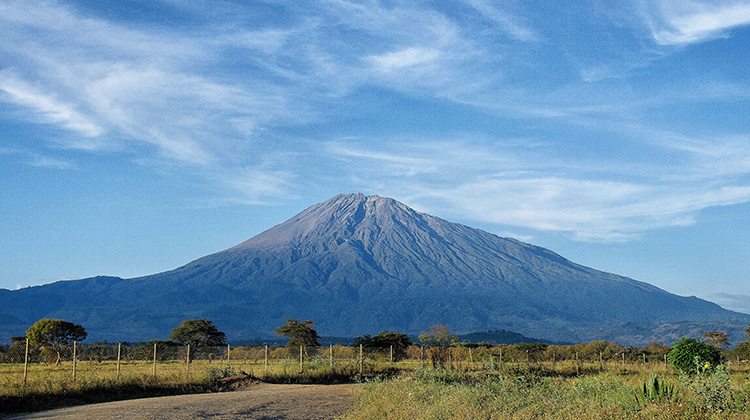
Mount Meru Climbing Guide | Arusha National Park
mount meru overview
mount meru at a glance (quick facts)
what is mount meru famous for?
where is mount meru located?
why should i climb mount meru?
what wildlife can i see on mount meru?
when is the best time to climb mount meru?
is mount meru good for first-time climbers?
is mount meru safe?
how many days do i need to climb mount meru?
what activities are available around mount meru?
where do i sleep on mount meru?
is mount meru suitable for families?
what should i pack for a mount meru climb?
how much does a mount meru climb cost?
how do i get to mount meru?
can mount meru be combined with other destinations?
is mount meru a good kilimanjaro warm-up climb?
why book mount meru with safari-tz.com?
Mount Meru Overview
Climbing Mount Meru With a Local Team
Mount Meru overview from Safari-tz.com in Arusha: a 4,566 m volcano inside Arusha National Park, climbed in 3 to 4 days with hut lodging.
Mount Meru is a 4,566-metre volcano inside Arusha National Park, and it is the climb most visitors only discover after they have already booked Kilimanjaro. That order should probably be reversed. Meru is steeper in places, quieter everywhere, and the summit ridge at dawn looks straight across at Kilimanjaro floating above the cloud layer.
The mountain is a collapsed volcano. An ancient eruption blew out its eastern wall, leaving a horseshoe crater with a bare ash cone sitting inside it. The final ascent follows the rim of that horseshoe, a narrow ridge walk that most climbers rate as more dramatic than anything on the Kilimanjaro routes.
Because the whole climb happens inside a national park with resident buffalo, giraffe, and elephant, every trekking group walks with an armed TANAPA ranger. That is a park requirement, not an optional extra, and it shapes the character of the first day: you are walking through active game country, not just gaining altitude.
Safari-tz.com runs Meru climbs from Arusha town, which sits under an hour from the park. We handle the permits, hut bookings, mountain crew, and the ranger coordination at Momella Gate, so the logistics stay invisible to you.
Mount Meru at a Glance (Quick Facts)
Key Facts Before You Climb Mount Meru
Quick Mount Meru facts from Safari-tz.com in Arusha: height, location, climb length, hut system, ranger requirement, and best months
The short version: Meru is 4,566 m, sits inside Arusha National Park, takes 3 or 4 days, and you sleep in huts, not tents.
- Height: 4,566 m at Socialist Peak, the true summit. Tanzania's second-highest mountain.
- Location: Arusha National Park, entered through Ngongongare Gate. The climb itself starts at Momella Gate.
- Duration: 3 or 4 days. We recommend 4. The 3-day version compresses the descent and leaves people wrecked for their safari.
- Accommodation: Mountain huts (Miriakamba and Saddle Hut). Bunks, mattresses, and a dining area. No tents to carry.
- Escort: An armed TANAPA park ranger accompanies every group. Mandatory, because of the resident big game on the lower slopes.
- Summit day: Starts in the dark. You reach the rim for sunrise, with Kilimanjaro on the eastern horizon.
- Best months: June to October and December to February. The long rains from March to May make the ridge unpleasant and the forest trail muddy.
- Fitness: A hill-walking level of fitness is enough for most people. The altitude is the real variable, and it treats everyone differently.
What Is Mount Meru Famous For?
The Crater Rim, the Ash Cone, the View
Mount Meru is known for its crater rim ridge walk, the ash cone, wildlife on the lower slopes, and sunrise views across to Kilimanjaro
Three things, mainly: the ridge, the wildlife, and the view of Kilimanjaro.
The summit ridge is the signature. After Rhino Point the trail narrows onto the crater rim, with the ash cone below you on one side and the outer slopes falling away on the other. Guides who have done both mountains many times tend to say the same thing: Kilimanjaro is higher, Meru is more interesting underfoot.
The wildlife is the part nobody expects on a mountain climb. The first hours out of Momella Gate cross open glades where giraffe browse and buffalo graze, which is exactly why the armed ranger walks in front. There is also a much-photographed fig tree arch on the lower route, a living tree grown into a tunnel wide enough to walk through. Colobus monkeys work the canopy above the forest section, and you hear them before you see them.
Then the view. From the summit at sunrise, Kilimanjaro sits about 70 kilometres to the east, usually above a sea of cloud. Most climbers say that single image justified the whole climb.
Meru also has a quieter reputation among mountaineers as the honest test before Kilimanjaro. More on that further down.
Where Is Mount Meru Located?
Finding Mount Meru on the Tanzania Map
Mount Meru rises inside Arusha National Park in northern Tanzania, close to Arusha town and Kilimanjaro International Airport (JRO).
Mount Meru stands inside Arusha National Park in northern Tanzania, directly above Arusha town. If you have flown into Kilimanjaro International Airport (JRO), you have almost certainly already seen it: Meru is the large mountain west of the runway, and on clear evenings it dominates the Arusha skyline.
This location changes the economics of the climb. Most Tanzania mountain and safari products involve long transfer days. Meru does not. The drive from Arusha town to Ngongongare Gate is short enough that climb day one starts at a civilised hour, with park formalities and the ranger assignment done at Momella Gate the same morning.
The park around the mountain is worth attention in its own right. The Momella Lakes hold flamingo for much of the year, Ngurdoto Crater is a small, forested caldera often called a miniature Ngorongoro, and the forest zones hold black-and-white colobus in numbers you will not match in the bigger northern parks.
Practically, this means a Meru climb slots into the start or end of a northern circuit safari without wasting a day on the road. That proximity is a large part of why we sell it as the natural first chapter of a Tanzania trip.
Why Should I Climb Mount Meru?
The Case for Meru, From a Ground Operator
Why climb Mount Meru: fewer crowds than Kilimanjaro, hut lodging, wildlife on the trail, a dramatic crater rim, and real acclimatisation value.
The honest answer: because it gives you most of what people want from Kilimanjaro at a fraction of the crowd, the cost, and the time commitment.
Meru gets a small fraction of Kilimanjaro's foot traffic. On many climbs outside peak season your group shares the huts with only one or two other parties, and on some departures you have Saddle Hut nearly to yourselves. Anyone who has queued behind a line of headlamps on Kilimanjaro's summit night will understand the value of that.
You also sleep in huts. Miriakamba on night one, Saddle Hut on night two. Bunks and a roof change the whole experience in the wet shoulder months, and they remove the tent-and-porter weight that inflates Kilimanjaro logistics.
The climb has genuine variety. Day one is a wildlife walk. Day two climbs through giant heather into the alpine zone, with the Little Meru side summit as a sunset acclimatisation hike above Saddle Hut. Summit day is a proper ridge scramble. Very few treks anywhere pack that range into three or four days.
And there is a plain seasonal truth: when Kilimanjaro's summit is buried in weather, Meru's shorter window sometimes still works. Not always. The mountain makes its own weather and we tell clients that plainly.
What Wildlife Can I See on Mount Meru?
Game Viewing on Foot, Day One of the Climb
Mount Meru wildlife: giraffe, buffalo, warthog and colobus monkeys on the lower slopes, walked with a mandatory armed TANAPA ranger escort.
Day one out of Momella Gate is effectively a walking safari that happens to gain altitude.
Giraffe and buffalo are the reliable sightings in the lower glades, often at distances that feel startling when you are on foot rather than in a vehicle. Warthog, bushbuck, and baboon troops are routine. Elephant move through the lower forest, and although sightings on the trail are less common, their sign is everywhere, which is precisely why the armed TANAPA ranger walks at the front of the line. The ranger leads and controls every wildlife encounter. Our role is the mountain crew, the pacing, and the logistics around them, and we never blur that line.
In the montane forest, black-and-white colobus are the stars. They crash between trees in family groups and their white tail plumes are easy to follow against the dark canopy. Turacos and hornbills work the same forest, and birders should keep binoculars accessible on day one rather than buried in the duffel.
Above the heather zone the game thins out and the mountain becomes a mountain. By Saddle Hut you are watching white-necked ravens instead of giraffe. That transition, from big game to alpine silence in a day and a half, is something Kilimanjaro cannot offer at all.
When Is the Best Time to Climb Mount Meru?
Meru Seasons, Month by Honest Month
The best time to climb Mount Meru is June to October or December to February. March to May brings long rains, mud, and poor summit visibility.
June to October and December to February. Those two dry windows give the best trail conditions and the clearest summit mornings.
June to October is the long dry season. The forest trail firms up, the ridge stays mostly dry underfoot, and the dawn view across to Kilimanjaro is at its most reliable. It is also the busiest period, though "busy" on Meru still means quiet by Kilimanjaro standards.
December to February is the short dry window between the two rain seasons. Warm, green, excellent visibility on most mornings, and this is when we place clients who are combining Meru with a calving-season safari in the south Serengeti.
March to May is the long rains, and we are direct about it: the lower trail turns to deep mud, the huts get damp, and summit mornings are frequently clouded out. The mountain stays open and some climbers still go, but we do not recommend it unless your dates leave no choice.
November is the wildcard. The short rains usually arrive as afternoon storms rather than all-day soakings, so morning climbing often works fine. We have had November summits in perfect clear air and November summits in cloud. Book it with that understanding.
Is Mount Meru Good for First-Time Climbers?
What Meru Asks of a First-Time Climber
Mount Meru suits fit first-time trekkers: hut lodging and a short itinerary help, but summit day involves scrambling and serious altitude.
Yes, with one honest caveat about summit day.
The structure of the climb favours beginners. Huts remove the camping learning curve. The daily distances are moderate. The route needs no technical skill or equipment, and the pace our crews set is deliberately slow because the altitude, not the terrain, is what stops people.
Summit day is the caveat. It starts in the dark, gains a lot of height, and the section beyond Rhino Point involves hands-on scrambling along an exposed ridge. Nothing requires ropes, but anyone with a strong fear of heights should discuss the route with us honestly before booking rather than discovering the ridge at 5 a.m. Turning around at Rhino Point is a respectable outcome and people do it; the view from there is already exceptional.
On altitude: 4,566 m is high enough for altitude sickness to be a real factor, and how your body responds has little to do with gym fitness. We keep this site general on medical matters as a firm rule. If you have any heart, lung, or blood pressure condition, or you are simply unsure, talk to your doctor before booking a high-altitude trek. Your doctor's advice outranks anything a tour operator tells you, including us.
Is Mount Meru Safe?
How Safety Works on a Meru Climb
Mount Meru safety explained: mandatory armed ranger escort, hut-based nights, a scrambling ridge on summit day, and honest altitude talk.
Meru is a well-managed climb with a strong safety framework, and it still deserves respect on two specific points.
The framework first. Every group climbs with an armed TANAPA ranger, assigned at Momella Gate. That requirement exists because of the buffalo and elephant on the lower slopes, and the rangers know the mountain's wildlife patterns in a way no visiting climber could. Nights are spent in fixed huts rather than exposed camps, and the route is a single, well-established trail with no navigation ambiguity.
The two points of respect. First, the summit ridge beyond Rhino Point is narrow and exposed in sections, and in wet or icy pre-dawn conditions our crews will slow the pace or, rarely, call a turnaround. When that call comes, it is final. A guide who has watched conditions on this ridge for years is not negotiating with a client's summit ambition.
Second, altitude. Symptoms can develop in anyone regardless of age or fitness, and descending is the treatment that always works. Our crews are trained to watch for it and to act early. Again, and we repeat it deliberately: pre-existing medical questions belong with your doctor before you travel, not with a safari company.
How Many Days Do I Need to Climb Mount Meru?
Choosing Between the 3- and 4-Day Climb
Mount Meru takes 3 or 4 days. Safari-tz.com recommends the 4-day itinerary for better acclimatisation and a humane descent before your safari.
our days, unless your schedule genuinely cannot bend.
The 4-day itinerary in outline: day one from Momella Gate to Miriakamba Hut through the wildlife zone and forest. Day two up to Saddle Hut, with the Little Meru side summit as an afternoon acclimatisation hike; that extra height gained and slept below is doing real physiological work, not just filling the schedule. Day three is summit day, starting in the dark, reaching Socialist Peak around sunrise, then descending all the way back to Miriakamba. Day four is a short, pleasant walk out through the game country to the gate.
The 3-day version merges the descent: after summiting you continue past Miriakamba all the way to the gate in a single enormous day. People do it. Their knees file complaints for a week afterwards, and if a Serengeti safari starts the next morning, they spend the first game drive asleep against the window. We have watched that happen enough times to have an opinion.
There is a scheduling reality too: the 4-day climb finishes early enough on the final day to connect comfortably with an afternoon transfer or a next-day flight, which makes trip planning simpler, not harder.
What Activities Are Available Around Mount Meru?
Beyond the Climb: Arusha National Park
Around Mount Meru: Arusha National Park game drives, Momella Lakes canoeing, Ngurdoto Crater viewpoints, and ranger-led forest walking trails
The mountain sits inside a full national park, so non-climbing days have real options rather than filler.
Game drives in Arusha National Park cover the Momella Lakes circuit, where flamingo numbers shift with the water chemistry through the year, and the forested rim of Ngurdoto Crater, a closed caldera you view from above because vehicles are not permitted onto its floor. Giraffe densities in this park are high, and it is one of the easier places in northern Tanzania to watch colobus monkeys from a vehicle.
Canoeing on the Momella Lakes runs with licensed operators and puts you at water level with buffalo and waterbuck on the shoreline. It is a gentle activity, suitable for the rest day either side of a climb.
Walking safaris inside the park follow the same rule as everywhere in Tanzania's national parks: an authorised walking guide plus a mandatory armed TANAPA ranger lead the walk. Our guides coordinate the itinerary around it. For many guests this short walk is the trailer that convinces them to come back for the full climb.
Arusha town itself is under an hour away, which makes the park an ideal first or last day of any northern circuit itinerary, with the Cultural Heritage Centre and local coffee farms as low-effort additions.
Where Do I Sleep on Mount Meru?
The Hut System, Honestly Described
Mount Meru accommodation uses mountain huts: Miriakamba and Saddle Hut, with bunk beds, mattresses and dining rooms. No tents required.
Two huts, both run by TANAPA: Miriakamba on the lower mountain, Saddle Hut on the alpine shoulder.
Set expectations correctly and you will be pleasantly surprised. These are mountain huts, not lodges. Bunk rooms with mattresses, shared dining areas where the crews cook and serve, and long-drop toilets. You bring a sleeping bag; we can arrange rental in Arusha if your luggage allowance said no. Miriakamba is the larger and more comfortable of the two, with views down over the park on clear evenings. Saddle Hut is simpler, colder, and positioned exactly where it needs to be for the pre-dawn summit start.
The huts change the maths of the climb. No tents means lighter crew loads and a drier, warmer night in the shoulder seasons, and it is the main reason Meru works well for first-time trekkers who are not ready to commit to a week under canvas on Kilimanjaro.
One operational note from experience: hut space is finite and allocated through the park system, so peak-season dates should be confirmed early. We lock hut allocations at the time of booking rather than gambling on gate-day availability, because we have seen what happens to groups who gambled.
Is Mount Meru Suitable for Families?
Family Climbs: What Actually Works
Mount Meru suits families with fit teenagers used to hill walking. Younger children are better served by the park's game drives and canoeing.
For families with strong teenagers, yes. For younger children, the park below the mountain is the better product.
Teenagers who already hike comfortably tend to do well on Meru, and the hut system makes the trip far easier to manage than a camping trek. The wildlife on day one keeps younger climbers engaged in a way that a pure altitude slog never would. Parents should still think hard about summit day: the dark start and the exposed ridge beyond Rhino Point demand maturity, and a perfectly good family plan is for one parent and the ranger-escorted group to summit while the other waits with younger members at Saddle Hut or skips the final push.
TANAPA sets minimum age rules for the climb, and these are the park's rules rather than ours. Tell us the ages in your group when you enquire and we will confirm current requirements directly with the park before you commit to anything.
Families with children too young for the mountain still get real value from this park. Game drives, the Momella Lakes, canoeing, and short ranger-led walks fill two easy days, and Arusha's proximity means no long, complaint-generating transfers. Several of our client families have split exactly this way: one half climbed, the other half canoed, everyone reunited for dinner in Arusha with competing stories.
What Should I Pack for a Mount Meru Climb?
Packing for Four Days and Four Zones
Mount Meru packing list: layers for forest heat and summit cold, broken-in boots, headlamp, sleeping bag, and rain protection year-round.
Pack for four climate zones in four days: warm forest, cool heather, cold alpine, and a summit morning that can sit well below freezing with wind.
The essentials our crews check before the gate: broken-in hiking boots (new boots are the single most common self-inflicted injury on this mountain), a genuine warm layer for Saddle Hut and the summit push, a waterproof shell regardless of season, a headlamp with spare batteries for the dark start, a sleeping bag rated for cold nights, gloves, a warm hat, and sun protection for the descent when the equatorial sun switches on at full strength.
Two Meru-specific notes. First, the forest section can be genuinely hot and humid, so the layering has to work in both directions; people who pack only for cold suffer on day one. Second, the scrambling sections beyond Rhino Point reward gloves with grip rather than thick ski mittens, because your hands are on rock.
Porters carry the main duffel between huts, so your daypack only needs water, snacks, camera, and the layer changes for that day. Weigh the duffel before you leave Arusha; the crews will re-pack with you at the office if needed, which is a calmer place to do it than the gate car park.
How Much Does a Mount Meru Climb Cost?
What You Are Paying For on Mount Meru
Mount Meru climb costs are driven by park fees, hut fees, ranger and crew wages, and duration. Safari-tz.com quotes exact figures per itinerary.
Meru costs meaningfully less than Kilimanjaro, and the reasons are structural rather than promotional: fewer days, hut lodging instead of full camping infrastructure, and a smaller crew.
The price of a Meru climb is built from a stack of fixed park charges and a variable operator layer. The fixed side includes national park entry fees, hut fees, rescue fees, and the ranger requirement, all set by TANAPA and identical no matter who you book with. The variable side is the crew (guide support, cook, porters), food quality, transfers, and equipment standards, and this is where operators genuinely differ.
We do not publish a single headline price here because fees are revised by the park authorities and a number that was accurate at publication becomes a lie within a season. When you enquire, we quote the current, itemised figure for your exact dates, group size, and itinerary length, with the park fees shown separately from our operating costs so you can see precisely where the money goes.
One buying tip from the operator side of the desk: when comparing quotes, ask any company to itemise. A quote that looks cheap and refuses to itemise is usually recovering the difference from crew wages or food, and you will taste the difference at Saddle Hut.
How Do I Get to Mount Meru?
Transfers, Gates, and Timing
Reach Mount Meru via Kilimanjaro International Airport and Arusha town, then a short drive to Arusha National Park and Momella Gate.
This is the easiest mountain in Tanzania to reach, and that is not a small advantage.
International arrivals come through Kilimanjaro International Airport (JRO). From there it is a straightforward road transfer to Arusha town, where most of our Meru clients spend the pre-climb night, meet the crew, and do the equipment check. The following morning the drive to the park is short: entry formalities at Ngongongare Gate, then on to Momella Gate where the ranger is assigned and the walking starts. Compare that with the multi-hour transfers most Tanzania trekking and safari products begin with, and you understand why Meru fits so cleanly at the front of an itinerary.
Travellers already in-country can join from Arusha with no flights involved at all. Coming from Zanzibar or Dar es Salaam, the practical route is a flight into JRO or Arusha Airport (ARK) the day before the climb.
Timing matters more than distance here. Park gates process paperwork during set hours, and the ranger assignment happens at the gate, so a late start compresses day one. We build the schedule so that everything administrative happens the evening before or early on climb morning, and the day belongs to the mountain rather than to a queue.
Can Mount Meru Be Combined With Other Destinations?
Where Meru Fits in a Full Tanzania Trip
Combine Mount Meru with a northern circuit safari, a Kilimanjaro climb, or Zanzibar. Its location near Arusha makes it the natural first stop.
Meru combines with almost everything, because it sits at the exact point where every northern Tanzania trip begins anyway.
The most common pairing is Meru plus the northern safari circuit: climb first, then roll into Tarangire, Ngorongoro, and the Serengeti while your legs recover in a game-drive vehicle. Climbing first is deliberate. Doing it in reverse means starting a physically demanding trek after a week of long vehicle days and lodge dinners, and we have seen how that goes.
The second classic combination is Meru as the acclimatisation climb before Kilimanjaro, which gets its own section below because it deserves one.
Zanzibar works as the closing chapter: climb, safari, then the flight to the coast for the beach recovery. In the December to February window this sequencing also lines up with calving season in the southern Serengeti, which is one of the strongest three-week Tanzania itineraries we build all year.
For travellers on shorter trips, even a standalone Meru climb with a single day in Arusha National Park before or after makes a complete five-to-six-day Tanzania holiday, with one international flight and no internal logistics. Tell us your total days and we will show you honestly what fits and what would be rushed.
Is Mount Meru a Good Kilimanjaro Warm-Up Climb?
The Classic Meru-Then-Kilimanjaro Plan
Climbing Mount Meru before Kilimanjaro is a proven acclimatisation strategy: sleep high on Meru, rest in Arusha, then start Kilimanjaro adjusted.
Yes. This is the classic use of the mountain, and guides across northern Tanzania have recommended it for decades.
The logic is physiological. Meru takes you to 4,566 m and, just as importantly, has you sleeping two nights at altitude before the summit push. Arriving on Kilimanjaro with that recent altitude exposure means your body has already started its adjustment, and climbers who do the Meru-first sequence consistently report easier early days on the bigger mountain. It also gives you a full-dress rehearsal of your gear, your boots, your headlamp routine, and your own reaction to altitude, all discovered on a shorter climb where the stakes of a bad discovery are lower.
The standard structure is Meru over four days, one or two rest nights in Arusha, then the Kilimanjaro departure. The rest days matter; stacking the two climbs back-to-back with no recovery wastes part of the benefit and we will say so if a proposed schedule tries it.
The usual caution applies and we will keep repeating it: acclimatisation improves your odds, it does not make anyone immune to altitude sickness, and any medical questions about climbing to these heights belong with your doctor before you book either mountain.
Why Book Mount Meru With Safari-Tz.Com?
A Local Operator, an Hour From the Gate
Book Mount Meru with Safari-tz.com: an Arusha-based operator handling permits, hut bookings, crew and transfers, with direct WhatsApp contact
We are based in Arusha, under an hour from the gate of this mountain. That is not a marketing line; it is an operational fact that changes how the climb runs.
It means our crews climb Meru constantly, in every season, and know exactly what the ridge is like in a February pre-dawn versus a July one. It means hut allocations, permits, and ranger coordination are handled by people who deal with the same park offices every week. It means that if your flight lands late or your dates shift, the person adjusting the plan is in the same town as the mountain, in your time zone, not in a call centre eight hours away. And it means the money you pay stays with the Tanzanian team actually doing the work, rather than passing through a foreign reseller's margin first.
Lead guides Geoffrey Komba, William Mwasimba, and Isaac Munuo oversee our mountain and safari operations, and the itinerary you receive is built by people who have stood on Socialist Peak, not copied from a brochure.
Ready to plan your Mount Meru climb?
- Browse our tours: Our Tours
- WhatsApp us directly: +255 740 666 662
- Email: info@safari-tz.com
Tell us your dates, your group, and whether Kilimanjaro or a safari comes next. We will reply with a real itinerary and an itemised quote, usually within a day.