Mahale Mountains Climbing Guide
mount nkungwe climbing overview
nkungwe climb at a glance (quick facts)
what is the nkungwe climb famous for?
where is mount nkungwe located?
why should i climb mount nkungwe?
what wildlife can i see on the nkungwe climb?
when is the best time to climb nkungwe?
is nkungwe good for first-time trekkers?
is the nkungwe climb safe?
how many days do i need for the climb?
what activities can i combine at mahale?
where do i sleep on the nkungwe climb?
is the nkungwe climb good for families?
what should i pack for the nkungwe climb?
how much does the nkungwe climb cost?
how do i get to the nkungwe trailhead?
can the climb be combined with other parks?
nkungwe vs meru vs rungwe: which forest climb?
why book the nkungwe climb with safari-tz.com?
Mount Nkungwe Climbing Overview
A Forest Summit in Chimpanzee Country
Mount Nkungwe climbing overview from Safari-tz.com: a two-to-three-day camping ascent of the Mahale Mountains' highest peak above Lake Tanganyika.
Mount Nkungwe is the highest point of the Mahale Mountains, the forested range that rises straight off the shore of Lake Tanganyika in Tanzania's far west. The summit stands at roughly 2,460 metres, the local Tongwe people hold the mountain sacred, and the climb to the top is a two-to-three-day camping trek through terrain that belongs first to wildlife and only briefly to you.
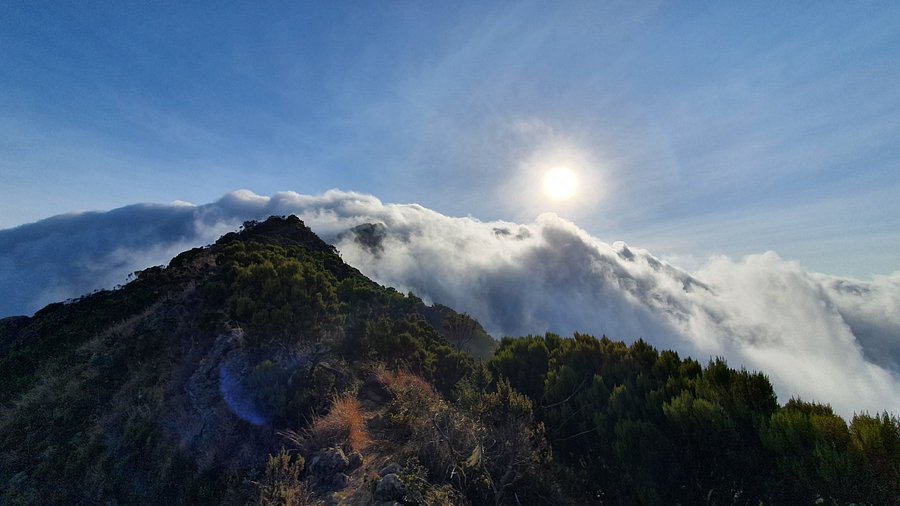
Here is what makes this ascent unlike every other climb we sell. Mahale is a national park with no roads at all; you arrive by light aircraft and boat, and the trek starts near the lakeshore where the chimpanzee trekking also begins. The route climbs through the same forest system the chimps inhabit, past streams and waterfalls, into higher woodland and grassland, with a TANAPA ranger accompanying the group as park rules require. Nights are camped on the mountain. The summit morning looks down on Lake Tanganyika, one of the oldest and deepest lakes on Earth, stretching toward Congo.
Almost nobody does this climb. Mahale receives only a few hundred visitors in a year, most come exclusively for the chimps, and the handful who add Nkungwe join one of the shortest lists in Tanzanian trekking.
Safari-tz.com builds the climb into full Mahale itineraries from Arusha, because in a fly-in park, the mountain is never the whole plan. Our main Mahale destination guide covers the chimp trekking side in full.
Nkungwe Climb at a Glance (Quick Facts)
Key Facts Before You Commit to Nkungwe
Quick Mount Nkungwe facts from Safari-tz.com: Mahale's highest peak, a two-to-three-day camping trek with a ranger, inside a fly-in-only park.
The short version: Mahale's highest peak, climbed over two to three days with camping, inside a park you can only reach by air and boat.
- Height: Roughly 2,460 metres at the summit, the highest of the peaks that give the Mahale range its profile.
- Duration: Two to three days on the mountain. Three is the humane version; two compresses the descent.
- Style: Camping trek. Crew and equipment travel with you; there are no huts anywhere in this park.
- Escort: A TANAPA ranger accompanies the climb, as required throughout the park.
- Terrain: Forest paths, steep wooded ridges, and higher grassland. Humid low, cooler high, slippery when wet.
- Access: Fly-in only, then boat along the shore. There are no roads into or inside Mahale.
- Best months: June to October, with the late dry season firmest underfoot.
- The pairing: Nobody flies to Mahale only to climb. The trek is built around chimpanzee trekking days, covered on our main Mahale guide.
- Fitness: Strong. The altitude is modest; the heat, humidity and gradient are the real bill.
- Rarity: A few hundred visitors reach Mahale each year and only a fraction attempt Nkungwe. You will not meet a queue.
What Is the Nkungwe Climb Famous For?
A Sacred Summit Above Chimpanzee Forest
Mount Nkungwe is known as the Mahale range's sacred high point, a rare forest climb through chimpanzee habitat ending above Lake Tanganyika.
Three things, and none of them is a certificate.
First, the setting has no rival in Tanzanian trekking. Every other climb in this country starts from a road. Nkungwe starts from a lakeshore you arrived at by boat, in a park with no vehicles, where the soundtrack of the lower route can include chimpanzee calls from the forest around you. Climbers who have done the famous peaks consistently say the same thing about Mahale: the wilderness here is a different category, not a different degree.
Second, the mountain matters locally. Nkungwe is held sacred by the Tongwe people, whose relationship with these mountains long predates the park, and the name Mahale itself is sometimes traded locally for the name of this peak. Guides carry that context up the trail, and we brief climbers on it, because walking respectfully on someone's sacred mountain is part of doing this properly.
Third, the summit view. Lake Tanganyika from Nkungwe's height is an inland sea running to the horizon, with the far shore in Congo on clear mornings and the forested ridges of the range dropping away below. Sunset and sunrise over that water are the reason photographers accept the sweat this climb charges.
The honest footnote: this is famous among a very small crowd. That is precisely its value.
Where Is Mount Nkungwe Located?
Finding Nkungwe on the Tanzania Map
Mount Nkungwe rises inside Mahale Mountains National Park on Lake Tanganyika's eastern shore in far western Tanzania, south of Kigoma, fly-in only.
Nkungwe stands inside Mahale Mountains National Park, on the eastern shore of Lake Tanganyika in Tanzania's far west, south of Kigoma town. On the map it is about as far from the northern safari circuit as Tanzania allows a mountain to be, and everything distinctive about the climb flows from that.
The access is its own chapter, covered fully further down this page, but the geographic facts frame everything: no roads reach the park, none exist inside it, and the final approach to any Mahale camp is by boat along the shoreline with the mountains rising directly out of the water. The range runs parallel to the lake, so the climb begins essentially at lake level, which is unusually low for a Tanzanian trek and explains both the heat of the early stages and the full height you actually climb, considerably more honest work than the summit figure suggests.
The neighbourhood matters for planning. Katavi National Park, the west's great dry-season game reserve, shares charter routings with Mahale, and Gombe, the other chimpanzee park, lies north past Kigoma. Western itineraries are built around those air links, and a Nkungwe climb sits inside that framework rather than apart from it.
The practical summary: this is the remotest climb in Tanzania by any measure that counts, and the remoteness is not a complication of the product. It is the product.
Why Should I Climb Mount Nkungwe?
The Case for Tanzania's Remotest Summit
Why climb Mount Nkungwe: the only chimpanzee-country summit trek in Tanzania, empty trails, a sacred peak and Lake Tanganyika below your tent.
Because you are already coming to Mahale for the chimps, and the mountain above the forest is one of the great unclaimed experiences in African trekking.
That framing matters. We rarely recommend Nkungwe as a standalone objective; the flights that make Mahale expensive to reach make a climb-only trip poor arithmetic. But for travellers already committing to Mahale's chimpanzee trekking, the climb converts a superb trip into a complete western expedition: primates in the forest, a camping ascent through that same wilderness, and a summit over the lake, all inside one park with zero repositioning.
The exclusivity is genuine rather than marketed. Mahale's total annual visitor count is a rounding error against the Serengeti's, most guests never leave the lower forest and the beach, and the mountain sees so few climbers that your crew may not remember the previous group. Trekkers who collect empty summits have almost nothing left at this level of empty.
And there is the character of the thing. This is expedition trekking in its old sense: a boat drops you in wild country, everything you need walks up with you, a ranger's rifle answers the fact that this is big, wild forest, and the summit is earned in sweat rather than queued for. People who want that specific feeling know exactly who they are, and this page is for them.
What Wildlife Can I See on the Nkungwe Climb?
Chimp Country Underfoot, Honestly Framed
The Nkungwe climb crosses wild chimpanzee habitat with monkeys, forest birds and antelope possible en route, though sightings follow forest rules.
You climb through genuine chimpanzee country, and that sentence needs immediate honest handling: the habituated chimp community that visitors track lives in the lower forest, and encountering chimps on the climb itself is possible but never the plan. The trekking days built around your climb are how you actually watch chimps at close range, and our main Mahale guide covers how that works, masks and all.
What the climb reliably offers is the forest's supporting cast, seen and mostly heard. Red colobus and other monkeys move through the canopy along the lower route, and the birdlife shifts with altitude in a way that keeps binocular-carriers busy the whole trek. Higher up, the wooded ridges and grassland hold forest antelope, warthog and, occasionally, larger surprises; this is a park where the wildlife has never learned to organise itself around vehicles, because there are none, so every sighting on foot follows forest rules: earned, brief, and better for it.
The ranger walking with your group is not ceremonial. Mahale's forest is big and genuinely wild, and the escort requirement exists for the same reason it does on every Tanzanian walking product: real animals, real terrain, professional judgement in front.
Set expectations at "wild forest trek with wildlife possible" rather than "game viewing with a summit," and Nkungwe will keep every promise this page makes.
When Is the Best Time to Climb Nkungwe?
Mahale Seasons for Trekkers
Climb Mount Nkungwe from June to October when Mahale's forest paths are driest. The wet season makes the steep forest route slow and slippery.
June to October, the same dry-season window that rules everything at Mahale, and within it the later months carry an extra argument.
The dry season firms up the forest paths, opens the lake for the flights and boat transfers your whole itinerary depends on, and delivers the clear summit mornings that justify the climb. August to October adds the chimp bonus: this is when the habituated community most reliably works the lower slopes near the shore, which means the trekking days wrapped around your climb are at their most efficient, shorter searches, more time watching. Since nobody sensible flies to Mahale without chimp days, the climb inherits the chimps' calendar.
The wet months transform the park beautifully and punish trekkers specifically. Waterfalls fill, butterflies erupt, storms over the lake put on evening theatre, and the steep forest paths turn to greased clay that makes a hard climb slower and occasionally unwise. Some camps in the park close in the deep rains, flight schedules thin, and we are plain with clients: wet-season Mahale is a legitimate chimp destination for the patient, but we do not recommend the Nkungwe climb in it.
One honesty note that applies year-round: this is equatorial lakeside forest, and even peak dry season means humid climbing on the lower mountain. The season improves the footing far more than it lowers the sweat
Is Nkungwe Good for First-Time Trekkers?
What This Trek Asks of Your Legs
Mount Nkungwe is a demanding climb: steep forest terrain, heat and humidity, and full camping in remote country. Fit, experienced trekkers only.
Honestly: no. This is the one climb on our site where we steer first-timers elsewhere and say so in the second sentence.
The difficulty is not altitude; at roughly 2,460 metres, the summit sits below the height where sickness dominates planning. The difficulty is everything else. The route climbs from near lake level, so the vertical work is greater than the summit number implies. The gradient through the forest is steep and sustained on paths that exist for wildlife and rangers rather than for tourism. The heat and humidity of the lower mountain tax fitness in a way cool-climate hikers consistently underestimate. And the remoteness removes the margin that makes beginner mistakes survivable elsewhere: there is no road below you, no hut ahead of you, and the exit from any problem is the way you came, on foot, then by boat.
Who thrives here: trekkers with real multi-day camping experience, comfortable being hot, wet and tired in sequence, who read the previous paragraph and felt interest rather than doubt. The two-versus-three-day choice is a difficulty setting; three days is our default recommendation because it splits the brutal middle section and buys weather flexibility.
First-timers wanting a forest mountain should start on Rungwe in the south, and first-timers wanting a serious summit should start on Meru. Both are covered on their own pages, and both will prepare you to come back for this one properly.
Is the Nkungwe Climb Safe?
How Risk Is Managed on This Mountain
Nkungwe climb safety: mandatory TANAPA ranger escort, guide-set pacing, weather judgement and honest planning for Tanzania's remotest summit trek.
Run properly, yes, and "run properly" carries more weight here than anywhere else we operate, because Mahale's remoteness converts small problems into large ones faster than any other park on this site.
The framework: a TANAPA ranger accompanies the climb as park rules require, the crew and guides set the pace and make the weather calls, and the camping logistics travel with the group so that a slow day never becomes an exposed night. When a guide turns the group for weather or ground conditions, the decision is final, and we build itineraries with enough slack that a turned day is a rescheduled summit rather than a lost one. That slack is not padding. It is the safety system.
The honest risk list, in the order they actually occur: heat and dehydration on the lower mountain, which discipline and water volume manage; slips on steep wet forest ground, which footwear, poles and pacing manage; and fatigue-driven stumbles on the descent, which the three-day itinerary exists to prevent. Wildlife risk is real but professionally handled; it is the ranger's entire job, and walking-safari rules apply throughout.
Evacuation reality, stated plainly: this is a fly-in park with no roads, so prevention does the work that ambulances do elsewhere. Declare injuries and conditions before booking, not on the mountain. And the site-wide rule holds: medical questions, including malaria precautions for a lakeside forest park, belong with your doctor before travel.
How Many Days Do I Need for the Climb?
Two Days, Three Days, and the Real Answer
The Nkungwe climb takes two to three days, but a real Mahale itinerary needs five to seven: flights, boat transfers and chimpanzee trekking included.
Two to three days on the mountain. Five to seven for the trip that makes the mountain make sense.
On the climb itself, three days is our recommendation and two is the compressed alternative for strong parties. The three-day shape puts camps at sane intervals, keeps the summit push fresh, and leaves the descent something other than a knee-destroying single drop back to the lake. The two-day version works; it simply spends comfort to buy a day, and in a park this expensive to reach, the day it buys is rarely worth what it costs your legs.
The trip arithmetic is the part that actually decides itineraries. Mahale runs on limited weekly flights, and arrival and departure days are consumed by the flight-plus-boat sequence at each end. Chimpanzee trekking, the reason the park exists in most guests' minds, deserves a minimum of two dedicated days for reliable, unhurried encounters. Stack that against the climb and the honest minimum is a five-night Mahale stay, with six or seven the version we actually enjoy building: chimps first while legs are fresh for the searching, then the climb, then a lake day where sore muscles meet clear water in the trip's best-engineered coincidence.
What we refuse to build is the squeezed version that attempts chimps and summit in three nights. It technically fits and reliably disappoints, and disappointing people at Mahale prices is not our business model.
What Activities Can I Combine at Mahale?
Chimps, Lake Days and Forest Walks
Around the Nkungwe climb: chimpanzee trekking, swimming and snorkelling in Lake Tanganyika, dhow trips, forest walks and waterfall visits at Mahale.
The climb is the add-on here, and the surrounding programme is the reason the flight was booked.
Chimpanzee trekking leads everything, and it deserves its own reading: our main Mahale destination guide covers the habituated community, how the daily searches work, the mask protocol, and the honest variability, from twenty-minute strolls to full-day pursuits depending entirely on where the chimps woke up. Plan a minimum of two trekking days around your climb, and read that guide before deciding anything.
The lake carries the rest of the programme, and carries it well. Lake Tanganyika at Mahale is clear, warm and swimmable off white sand, with hundreds of endemic cichlid species making snorkelling over the rocky sections a legitimate activity rather than a resort gimmick. Dhow and boat outings along the shoreline turn the mountains into scenery, kayaking is available through some camps, and the evening ritual of sundowners facing Congo across the water is the single image guests reference most in feedback.
Shorter forest walks and waterfall visits fill half-days without the climb's commitment, and for many travelling companions they are the correct alternative: one partner summits Nkungwe while the other does chimps, beach and waterfalls, and both consider themselves the winner. We build exactly that split regularly, and the reunion dinner argument over who chose better has never once been settled.
Where Do I Sleep on the Nkungwe Climb?
Tents on the Mountain, Camps by the Lake
Nkungwe climbers camp on the mountain with full crew support, bracketed by nights at Mahale's small lakeshore camps and lodges beside Tanganyika.
Two sleeping worlds, sharply divided by altitude.
On the mountain, it is expedition camping in full: tents, mats and meals carried and run by the crew, campsites in forest clearings and higher ground, and nights inside a soundscape that no recording has ever done justice. It gets genuinely cool at the upper camps for country this tropical, the packing list's warm layer is structural rather than optional, and the wilderness grade of these nights is the point of the product. There are no huts in this park, no permanent structures on the route, and no version of this climb that avoids canvas.
By the lake, Mahale's accommodation is a small collection of shoreline camps and lodges, few in number by design, positioned on the sand with the forest behind and the trekking essentially from the front step. Capacity across the park is tiny, seasonal closures apply in the deep rains, and the practical consequence is absolute: Mahale beds are booked far ahead or not at all, and the climb's dates are built around confirmed lakeshore nights rather than the other way round. We hold that sequencing discipline on every western itinerary because we have watched what happens to trips planned in the opposite order.
Comfort levels at the lake run from solid to genuinely superb; tell us your threshold and budget honestly and we will position you accordingly, with current options quoted per itinerary.
Is the Nkungwe Climb Good for Families?
The Family Answer, in Two Parts
The Nkungwe climb suits only fit older teenagers; Mahale itself works for families with teens, since TANAPA sets a minimum age for chimp trekking.
Two answers, because Mahale asks two questions.
The park first. Mahale is a realistic family destination only for families with teenagers, and the gate is regulatory before it is practical: TANAPA sets a minimum age for chimpanzee trekking, currently in the early teens, which we confirm at booking because park rules are the park's to change. Beyond the rule, the trip's structure, fly-in access, forest walking, camps without kids' infrastructure, self-selects for older children who genuinely like wild places. For the right teenager, Mahale is the family trip that ends every future holiday negotiation; nothing else will ever be this good again, and they will say so.
The climb is a narrower gate again. Nkungwe's difficulty section above applies without a youth discount: steep, hot, remote, multi-day camping. Fit late teens with real trekking behind them are considered case by case, with the guides' judgement final, and the default for anyone younger is that the mountain waits. The family pattern that actually works is the split we described in the activities section: teens and one parent do the chimps-and-lake programme in full while the climbers climb, and nobody spends the trip resenting anybody's summit.
Our request is the standing one: describe your children's real trekking history, not the aspirational version, and we will build the version of Mahale that fits the family you actually are.
What Should I Pack for the Nkungwe Climb?
Packing for Heat, Rain Forest and Cool Camps
Nkungwe packing list: grippy broken-in boots, poles, sweat-ready layers, a warm kit for high camps, dry bags throughout and a soft duffel only.
Pack like a jungle trek that ends somewhere cool, and pack everything as if it will meet water, because between sweat, streams and boat spray, it will.
The core: broken-in boots with aggressive tread, since the forest paths are steep, rooted and slick in any season; trekking poles for the descent your knees will otherwise narrate for a week; lightweight, fast-drying layers for the hot lower mountain, where cotton is a mistake you wear all day; genuine warm kit, fleece and hat included, for the upper camps, which surprise everyone; and full rain protection year-round, because equatorial forest treats forecasts as suggestions.
The Mahale-specific list: dry bags for absolutely everything, electronics doubly so, because your luggage travels by boat before it travels uphill; a soft duffel rather than a hard case, non-negotiable on light aircraft and lake boats alike; a headlamp with spares for camp nights; personal medication in full supply plus margin, given the nearest pharmacy is a flight away; and swimwear, because descending to Lake Tanganyika and not swimming would be the trip's one unforgivable planning error.
Airlines on these routes enforce tight weight limits on soft luggage, and we brief exact current allowances at booking rather than printing figures that expire. The discipline pays twice: everything you leave in Arusha is something nobody carries up a mountain.
How Much Does the Nkungwe Climb Cost?
What You Are Paying For in the West
Nkungwe climb costs ride on Mahale's fly-in logistics, premium park fees, camping crew and ranger requirements. Safari-tz.com itemises every quote.
Mahale is one of Tanzania's most expensive parks to visit, and the climb inherits that cost base before the first tent is pitched. Understanding why makes the quote read sensibly.
The structural costs come first: flights into a park with no road alternative, boat transfers at each end, and park fees that sit at the premium end of TANAPA's schedule, applied per day across a stay that the flight schedule itself stretches to five nights or more. Those elements price the Mahale trip whether you climb or not. The climb then adds its own layer: camping equipment and crew for the mountain days, the ranger arrangement, and the additional park days the trek occupies. Accommodation at the lakeshore camps spans a wide range, and where you sit on it moves the total more than any other single choice.
Numbers stay off this page as policy: fees are revised, flight costs move with seasons and fuel, and printed figures rot into misinformation. Your quote arrives current and itemised, flights, park fees, climb logistics, accommodation and transfers on separate lines, so you can see exactly which parts of the west you are buying.
The honest value framing: measured per day, Mahale is expensive; measured per experience nobody you know has had, it is one of the better purchases in African travel, and the climb is the cheapest part of the whole undertaking to add once you are there.
How Do I Get to the Nkungwe Trailhead?
Flights, Boats and No Roads at All
Reach the Nkungwe climb by light aircraft to Mahale's airstrip and boat along Lake Tanganyika. No roads serve the park; flight days are limited.
By air, then by water, and at no point by road, because there are none.
The standard routing is a light-aircraft flight from Arusha, with seasonal scheduled services and charter options linking through the western circuit, followed by a boat transfer along the shoreline from the airstrip to your camp, a leg that doubles as your introduction to the scale of the mountains you are about to climb. Flight days are limited to certain days of the week and thin further outside peak season, which is the single fact that shapes every Mahale itinerary: your trip's skeleton is the flight schedule, and everything else, chimp days, climb days, lake days, hangs on those fixed points. We confirm current schedules and charter-share options at quoting time, because printing a timetable here would guarantee only that it goes stale.
Kigoma provides the overland-and-boat alternative for expedition-minded travellers with serious time, and we arrange it when asked, with the honest brief that it converts two travel days into several and suits a very specific traveller.
The planning consequence we hold firmly: Mahale dates are locked around confirmed flights and beds first, and the climb is scheduled inside them, never the reverse. Western Tanzania rewards exactly one planning style, early and precise, and punishes every other one at the airstrip.
Can the Climb Be Combined With Other Parks?
Building the Full Western Expedition
Combine the Nkungwe climb with Katavi's untouched game viewing, Gombe's chimps or a Zanzibar finish. Mahale anchors Tanzania's western air circuit.
The west runs on shared air links, and the combinations write themselves once you see the map.
Katavi is the classic pairing and the one we recommend most. It shares charter routings with Mahale, and its character completes the western argument: a vast, barely visited savannah park where dry-season game concentrates spectacularly and where you can run full game drives without meeting another tourist vehicle, a sentence we can write about almost nowhere else in Africa. Katavi's plains-and-hippos intensity before Mahale's forest-and-lake calm, with the climb as the expedition's physical centrepiece, is the strongest week the western circuit sells.
Gombe, north past Kigoma, offers the chimp comparison for primate completists, a smaller, steeper park with its own famous research history, and we build the two-park chimp itinerary for travellers who want the full story. The honest note: for most guests, Mahale alone delivers the chimpanzee experience in fuller form, and Gombe is the enthusiast's addition rather than the default.
Beyond the west, the pairings are logistical rather than local: back through Arusha to the northern circuit for travellers combining regions, or the classic decompression finish on Zanzibar, where post-climb legs and Indian Ocean water reach a rapid understanding.
What the west does not do is bolt on casually. It is a deliberate, flight-locked circuit, and it rewards being treated as the destination rather than the detour.
Nkungwe vs Meru vs Rungwe: Which Forest Climb?
Three Mountains, Three Kinds of Wild
Nkungwe, Meru or Rungwe? Compare Tanzania's wilder climbs by access, difficulty, wildlife and character to pick the right mountain for your trip.
Three climbs sit below Kilimanjaro's fame, and they answer three different wants.
Meru is the structured one: huts instead of tents, a road to the gate, four organised days inside Arusha National Park, wildlife walking on day one and a genuinely dramatic summit ridge. It is the right first serious climb, the proven Kilimanjaro warm-up, and the easiest of the three to slot into any northern itinerary. Rungwe is the accessible forest one: a one-to-two-day rainforest volcano in the southern highlands, reachable by road, kipunji habitat, modest cost, and the correct introduction to what wet forest trekking does to boots and morale. Nkungwe is the expedition: fly-in only, camping only, the steepest logistics and the emptiest trails of the three, wrapped inside the chimpanzee trip that justifies the flights.
The selection logic we actually use: first serious summit, Meru. Forest curiosity on a southern itinerary or a tighter budget, Rungwe. Already committed to Mahale and its chimps, with real trekking experience banked, Nkungwe, and it will out-memory both of the others.
Difficulty ranks Nkungwe hardest by remoteness and terrain, Meru hardest by altitude, Rungwe the gentlest overall. Cost ranks in exactly the same order, driven almost entirely by access. And all three share the one honest warning: none of them is Kilimanjaro with a discount. Each is its own mountain, and choosing it for what it is beats choosing it for what it is near.
Why Book the Nkungwe Climb With Safari-Tz.Com?
Expedition Logistics From a Local Desk
Book the Nkungwe climb with Safari-tz.com: flight-locked Mahale planning, climb logistics, ranger coordination and itemised quotes from Arusha.
A Mahale climb is an exercise in sequencing: limited flight days, scarce lakeshore beds, chimp trekking days that cannot be rushed, a camping ascent that needs weather slack, and a boat schedule tying it all together. Get the sequence right and the trip feels effortless. Get one link wrong from a desk eight time zones away and the whole week unravels at an airstrip with no plan B. That sequencing is the entire service we sell on this page.
Booking with us means the flights, beds and permits lock first and the climb is built inside them; the camping crew, ranger arrangement and mountain logistics are coordinated with the park rather than assumed; the itinerary carries the slack that western Tanzania demands; and every expectation set here, the difficulty, the humidity, the chimp-first structure, the honest cost, is repeated in your briefing in the same plain terms. Lead guides Geoffrey Komba, William Mwasimba, and Isaac Munuo oversee our operations, and the western itineraries carry the same planning rigour as everything we run, because a guest at 2,400 metres above Lake Tanganyika is a long way from help and deserves planning that respects it.
We will also tell you honestly whether this climb belongs in your trip. For most Mahale guests the chimps and the lake are the complete experience, and we say so. For the trekkers this page was written for, you already know.
Ready to plan your Nkungwe climb?
- Request a tailor-made quote (fastest, best for a real plan)
- WhatsApp: +255 740 666 662
- Email: info@safari-tz.com
Tell us your dates, your trekking history honestly stated, and whether Katavi joins the plan. You will get a flight-locked western itinerary and an itemised quote.