Mount Rungwe Climbing Guide
mount rungwe overview
mount rungwe at a glance
what is mount rungwe famous for?
where is mount rungwe located?
why should i climb mount rungwe?
what wildlife can i see on mount rungwe?
when is the best time to climb rungwe?
is rungwe good for first-time trekkers?
is mount rungwe safe?
how many days do i need for mount rungwe?
what activities are available around tukuyu?
where do i stay for a rungwe trek?
is mount rungwe suitable for families?
what should i pack for a rungwe trek?
how much does a mount rungwe trek cost?
how do i get to mount rungwe?
can rungwe be combined with other destinations?
rungwe vs kitulo vs the livingstones?
why book mount rungwe with safari-tz.com?
Mount Rungwe Overview
Trekking a Forest Mountain Few Ever See
Mount Rungwe overview from Safari-tz.com: a forested dormant volcano near Tukuyu in the southern highlands, trekked in one to two days.
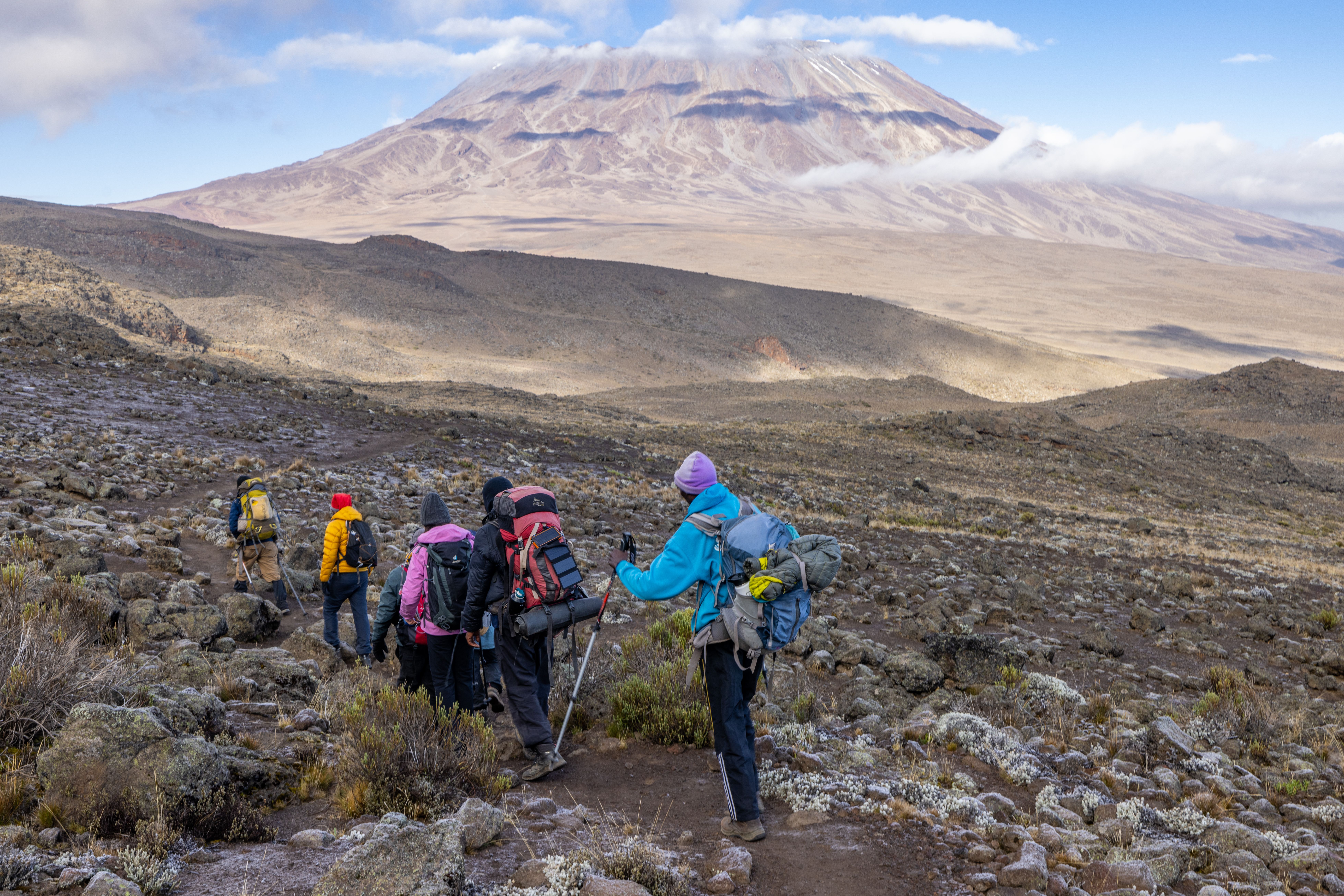
Mount Rungwe is a dormant volcano rising just under 3,000 metres above the tea country around Tukuyu, in the wet, green heart of Tanzania's southern highlands. Where the famous northern mountains climb through zones into bare alpine rock, Rungwe stays dressed almost the whole way: dense montane rainforest, then bamboo, then heath, with the forest canopy doing most of the scenery work rather than distant views.
The mountain sits within a protected nature forest reserve, and that forest is the reason biologists know Rungwe's name. It shelters the kipunji, a large forest monkey unknown to science until this century and found only in these southern highland forests, along with other wildlife that has retreated to this last block of high forest as farmland has climbed the surrounding hills.
The trek is a one-to-two-day forest climb with local guides, muddy in places in every season, and completely unlike the queue-managed experience of the famous peaks. Most months, the number of international trekkers on Rungwe rounds to zero.
Safari-tz.com builds Rungwe treks into southern highlands itineraries from the Mbeya side, pairing the mountain with Kitulo's flower plateau, the Livingstone Mountains and the Tukuyu crater country it rises from.
Mount Rungwe at a Glance
Key Facts Before You Trek Rungwe
Quick Mount Rungwe facts from Safari-tz.com: a forest reserve volcano near Tukuyu, one-to-two-day treks, rare kipunji habitat and wet trails.
The short version: a rainforest volcano near Tukuyu, climbed in one long day or a more humane two, inside the forest reserve that protects the kipunji.
- What it is: A dormant volcano just under 3,000 metres, covered in montane rainforest and bamboo.
- Protection status: A nature forest reserve, not a TANAPA national park. Fees, permits and guiding run through a different system, which we arrange.
- The famous resident: The kipunji, a monkey found only in these southern highland forests. Sightings are genuinely rare and never promised.
- Trek length: One very long day, or two days with a night on the mountain. We recommend two.
- Terrain: Forest paths that stay damp year-round, steep sections on root and mud, no technical ground.
- Gateway: Tukuyu, reached via Mbeya. The same gateway serves Kitulo and the Livingstone Mountains.
- Best months: June to October, the region's driest window. This is wet country; even dry season means damp forest.
- Views: Mostly forest until high on the mountain. Summit-day visibility depends on cloud, and we say so up front.
- Fitness: Moderate to strong. The altitude is modest; the mud, roots and gradient are the workout.
What Is Mount Rungwe Famous For?
A Primate Science Missed Until This Century
Mount Rungwe is famous as home of the kipunji, a monkey unknown to science until the 2000s and found only in Tanzania's southern highland forests.
One animal put this mountain on the world map: the kipunji.
Until the mid-2000s, no scientist knew this monkey existed. Local communities around Rungwe knew of it, as local communities usually do, but the formal description stunned primatology: a large, shaggy, tree-dwelling monkey with a call unlike any relative, so distinct it was eventually placed in a genus of its own. New monkey species are rare events. A new genus of African monkey, found in the twenty-first century, was front-page science, and it lives here, in the forests of Rungwe and the adjoining highland ranges, and nowhere else on Earth.
Now the operator honesty, because it matters more here than almost anywhere we write about. Kipunji are shy, forest-canopy animals surviving in small numbers, and no ethical company promises a sighting. Trekkers walk through genuine kipunji habitat, guides know the areas and the calls, and some groups get lucky. Most hear the forest and see its other residents instead. If a guaranteed rare-primate encounter is the goal, chimpanzee trekking at Gombe or Mahale is the honest recommendation, and we will make it.
Beyond the kipunji, Rungwe's fame is quiet and local: the sacred and practical role the mountain plays for communities around it, and its position as the wet, green anchor of the southern highlands.
Where Is Mount Rungwe Located?
Finding Rungwe on the Tanzania Map
Mount Rungwe rises above Tukuyu in Tanzania's southern highlands, between Mbeya, the Kitulo Plateau and Lake Nyasa, reached by road via Mbeya.
Rungwe stands over Tukuyu in the southern highlands, roughly between three of the region's other names: Mbeya to the north, the Kitulo Plateau to the east, and Lake Nyasa dropping away to the south.
The setting explains the mountain's character. This is the wettest, greenest corner of Tanzania, where moisture pushed up from the lake feeds tea estates, banana farms and rainforest in a landscape that surprises first-time visitors expecting savannah. The drive from Mbeya to Tukuyu climbs through that country and is a highlight before the trek even starts: tea rows combed across hillsides, roadside markets heavy with produce, and volcanic crater country on both sides of the road.
Rungwe's neighbourhood matters as much as the mountain. Within striking distance of Tukuyu sit a vast forest-rimmed crater lake in the Poroto hills, waterfalls, and the natural rock bridge local tradition names for God, all of which we fold into itineraries as half-day pieces around the trek. The Livingstone Mountains and Matema Beach continue south toward the lake, and Kitulo's flower plateau lies across the highlands, all sharing the same Mbeya gateway.
The practical summary: nothing here is a detour from anything else. The southern highlands work as one connected trip, and Rungwe sits in the middle of it.
Why Should I Climb Mount Rungwe?
The Case for the Forest Mountain
Why climb Mount Rungwe: true rainforest trekking, kipunji habitat, empty trails and a southern highlands setting most visitors never discover.
Because Tanzania has exactly one internationally known rainforest volcano trek, and this is it, and hardly anyone has worked that out yet.
The northern mountains sell altitude and open views. Rungwe sells immersion. You climb inside the forest for most of the route: moss on everything, bamboo corridors, birdsong you cannot source, the smell of wet earth that highland rainforest produces and nothing else does. Trekkers who have done Kilimanjaro often describe Rungwe as the opposite experience in the best sense, a mountain where the point is what surrounds you rather than what you can see from the top.
The emptiness is not a marketing line here; it is the defining condition. On most departures your group has the mountain entirely to itself, sharing it with guides, forest and whatever chooses to show itself. Travellers who found the northern circuit's popularity the one flaw in an otherwise great trip get that flaw removed here, entirely.
And there is the habitat argument. Walking through the home forest of one of the world's rarest primates carries a weight that no promised sighting could improve. Guests tell us afterwards that knowing the kipunji was somewhere in the canopy changed how they listened for the whole climb. That is the honest product: presence in the habitat, with luck as a possible bonus.
What Wildlife Can I See on Mount Rungwe?
The Forest Cast, Kipunji Included, Maybe
Mount Rungwe wildlife: kipunji habitat, colobus and other forest monkeys, rare forest duiker and rich highland birdlife, heard more than seen.
Forest wildlife plays by forest rules: you will hear far more than you see, and what you see will be earned.
The kipunji leads the list and gets its own honesty rule, stated in full further up this page: this is its habitat, guides know its range and call, and sightings are rare luck rather than product. The realistic primate encounters are the mountain's other monkeys, with colobus the most likely, crashing through the canopy in family groups and announcing themselves long before they appear. Rungwe's forest also shelters one of Africa's rarest forest duikers, a shy antelope that even researchers struggle to observe; trekkers should treat tracks and droppings as the expected evidence and an actual sighting as a story for life.
Birdlife is the reliable reward. Highland forest species work every level of the canopy, and the bamboo zones hold their own specialists. Birders should brief us in advance so we assign guides accordingly and pace the trek for watching rather than walking; the difference in what a slow group sees is enormous.
Set expectations correctly and this mountain delivers daily: chameleons on branches, monkeys overhead, unfamiliar calls that guides name instantly. Arrive expecting a game drive on foot and the forest will politely decline. Arrive as a forest walker and it gives you something every hour.
When Is the Best Time to Climb Rungwe?
Rungwe Seasons in a Wet Highland
Climb Mount Rungwe from June to October, the southern highlands' driest window. This is wet forest country, so expect damp trails in any month
June to October, and pack for damp anyway. Rungwe rises from the wettest region in Tanzania, and "dry season" here is a relative term the forest only partly respects.
Within the June-to-October window the trails are at their firmest and the odds of a clear summit at their best. Even then, morning cloud on the upper mountain is normal, and we tell trekkers plainly: the summit view is a lottery ticket, the forest is the guarantee. Groups that internalise that ordering enjoy every version of the weather.
The rains, building from around November and heaviest early in the year, transform the mountain rather than merely inconveniencing it. The forest goes into full production, streams run loud, and the mud graduates from feature to opponent. We run wet-season Rungwe only for travellers who specifically want peak-forest conditions and accept slow, slippery walking, and we shorten the daily stages to match.
One scheduling note that matters for combination trips: Rungwe's best trekking window and Kitulo's famous flowering season pull in opposite directions, since the flowers peak with the rains. A southern highlands itinerary that wants both leans into the shoulder months, and we will be straight with you about which experience your dates favour rather than promising both at full strength.
Is Rungwe Good for First-Time Trekkers?
What the Forest Asks of Your Legs
Mount Rungwe suits reasonably fit first-time trekkers: modest altitude, no technical ground, but steep, muddy forest paths that demand respect.
Yes, for a first-timer who understands that this mountain's difficulty is written in mud rather than altitude.
The altitude is the friendly part. At just under 3,000 metres, Rungwe sits low enough that the sickness which dominates planning on the big peaks is rarely a factor, and there is no summit-night ordeal in the dark. What replaces it is the terrain: sustained steep sections on wet earth, tree roots polished by moisture, and stretches where hands touch ground not because the route is technical but because the mud has opinions. Descending demands more concentration than climbing, which is the standard forest-mountain trade.
The one-day versus two-day choice is really a difficulty setting. The single-day traverse compresses everything into one long, hard push and suits strong regular hikers only. The two-day version, with a night on the mountain, turns the same distance into two honest but manageable days and is our default recommendation for first-timers, not least because it puts you in the high forest at dawn, when the wildlife is loudest.
The universal advice: footwear with serious grip, poles even if you consider them beneath you, and a sense of humour about arriving at the bottom wearing a respectable amount of the mountain. Everyone does. It washes off. The experience does not.
Is Mount Rungwe Safe?
Managing Risk on a Forest Mountain
Mount Rungwe safety rests on local guides, weather judgement, proper footwear and honest pacing on steep, wet forest terrain in remote country.
Rungwe is a safe trek by any reasonable standard, with a risk profile that is refreshingly ordinary: no altitude drama, no exposure, no big game on the trail. What remains is the honest arithmetic of wet forest in remote country.
Slips are the entire injury category that matters here. Wet roots, greasy clay and steep gradients account for essentially every problem we plan against, and the countermeasures are boring and effective: proper boots, poles, guide-set pacing, and the discipline to slow down when the forest is slick, which is often. The guides who lead Rungwe treks walk this mountain constantly and read its conditions the way northern guides read altitude symptoms; when they adjust the plan, the plan is adjusted.
Remoteness is the multiplier to respect. This is a forest reserve, not a park with rescue infrastructure, and evacuation from the upper mountain means being walked out. Prevention therefore does the work that emergency services do elsewhere, which is why we are direct about fitness before booking and why nagging injuries should be declared, not carried quietly uphill.
Weather calls belong to the guides, and cloud or storm on the upper mountain can turn a summit attempt around. When it does, the call is final. On health matters, the site-wide rule holds: medical questions, including malaria precautions for the lowland approach, go to your doctor before travel, not to a safari company.
How Many Days Do I Need for Mount Rungwe?
Choosing Between the Push and the Stay
Mount Rungwe takes one hard day or two better ones. Safari-tz.com recommends two, with a night on the mountain and dawn in the high forest
Two days on the mountain, three in the plan. That is the shape that respects both the trek and the travel.
The two-day trek splits the climb around a night on the mountain, and the argument for it is only partly about legs. A dawn start in the high forest is the single best wildlife window Rungwe offers: the canopy wakes up loudly, the light comes through in shafts, and whatever the forest is willing to show, it shows then. Day-trippers are still driving in from Tukuyu while that is happening. The one-day traverse exists, we run it for strong hikers with compressed schedules, and it delivers the summit at the cost of the mountain's best hours.
The third day is arithmetic. Reaching Tukuyu from anywhere takes real travel, and stacking arrival and ascent into the same day builds the trek on tired legs. A travel day in, then the two-day trek, is the minimum honest structure, and it slots into the southern highlands pattern this whole region follows: everything via Mbeya, everything rewarding one extra day.
Where Rungwe truly earns its keep is inside a longer southern itinerary, as the forest chapter between Kitulo's open plateau and the Livingstones' escarpment-and-lake finale. As a standalone fly-in objective it is a long way for a short trek; as part of the south, it is the part guests do not see coming.
What Activities Are Available Around Tukuyu?
Crater Country: the Days Around the Trek
Around Mount Rungwe: a forest-rimmed crater lake, waterfalls, the natural rock bridge near Tukuyu, tea country walks and southern highland markets.
Tukuyu sits in volcanic crater country, and the days around a Rungwe trek fill themselves without padding.
The signature half-day is the crater lake in the Poroto hills: a vast, forest-rimmed bowl of water reached by a walk through farmland and forest to the rim, with the descent to the water itself a steeper optional add-on for the sure-footed. Local guides lead it, the birding en route is excellent, and it pairs naturally with a trek recovery day. Waterfall visits fill the other half-days; this is the wettest region in Tanzania, and it spends that water photogenically, with falls dropping through banana and tea country within short drives of town.
The area's oddest attraction is a natural rock bridge over a river gorge, a formation local tradition credits to God and geology credits to an old lava flow, both of which feel plausible when you stand on it. Markets in Tukuyu and the villages run on weekly rhythms worth planning around; this is one of Tanzania's great produce regions, and market morning here is agriculture as theatre.
Tea country itself deserves a slow hour. Walking tracks thread the estates around Tukuyu, and the combed-green scenery photographs like Sri Lanka while receiving roughly none of Sri Lanka's visitors. That imbalance is the southern highlands in one sentence, and it will not last forever.
Where Do I Stay for a Rungwe Trek?
Simple Beds Before and On the Mountain
Rungwe trekkers stay in simple guesthouses and lodges around Tukuyu, with camping on the mountain for two-day treks. Expectations set honestly.
Tukuyu is the base, and the calibration speech we give for the whole southern highlands applies here in full: simple, clean, warm-hearted, and nothing pretending otherwise.
Around Tukuyu the options are local guesthouses and modest lodges. The honest description is functional comfort: decent beds, hot food, warm water arriving with varying degrees of ceremony, and hosts for whom an international trekker is still an occasion rather than a transaction. Some places trade on their tea-country settings, and a veranda over that scenery forgives a great deal of missing polish. What does not exist here is the boutique highland lodge the region's landscapes will eventually attract; travellers who arrive before it does are the ones who will get to say they did.
On the mountain, the two-day trek means camping, arranged with the guides: tents, mats, cooked meals, and a night inside a rainforest soundscape that no lodge at any price can retail. It gets properly cold in the high camp for a region this tropical, which surprises people, so the packing list's warm layer is not decorative.
Booking reality: capacity around Tukuyu is small and unbothered by online platforms, so arrangements run through people who know people, which is to say through us. We describe every property as it is, because in country this simple, the brief is the product.
Is Mount Rungwe Suitable for Families?
Family Fit: the Forest Has a Threshold
Mount Rungwe suits families with fit, hike-ready teenagers; younger children do better on Tukuyu's crater lake walks, waterfalls and tea country.
The mountain has a threshold, and it is written in mud and stamina rather than age limits.
Teenagers who genuinely hike, and who will find a muddy rainforest scramble funny rather than tragic, do well on Rungwe, particularly on the two-day version where the stages are humane and the forest camp is the kind of night that converts a teenager to the outdoors permanently. The mountain gives young naturalists constant material: chameleons, monkeys, tracks to identify, a guide with an answer for every call from the canopy. What it does not give is mercy on the steep wet sections, and a child who hates being cold, dirty and tired will express that opinion for the entire descent.
Younger families should base in Tukuyu and take the region at valley level, where the crater lake walk at rim-only ambition, the shorter waterfall visits, the rock bridge and the tea country make a genuinely strong family programme with beds and hot dinners at the end of each day. Several families we have hosted split exactly along that line: one parent up the mountain with the teens, the other running the crater-country programme with the younger ones, everyone reunited with competing evidence of who had the better time.
Our request is simply honesty about your children's actual relationship with hiking, not the aspirational version. The forest audits that claim thoroughly.
What Should I Pack for a Rungwe Trek?
Packing for Mud, Damp and a Cold Camp
Mount Rungwe packing list: aggressive-tread boots, poles, full rain gear in any season, warm camp layers, gaiters and dry bags for everything.
Pack for a wet mountain in every season, and assume the forest will find anything you failed to waterproof.
The core kit: boots with aggressive tread and ankle support, already broken in and already resigned to their fate, because Rungwe's clay is where boot dignity goes to die; trekking poles, non-negotiable on the descents; full rain protection regardless of month, jacket and trousers both, since highland rainforest treats "dry season" as a suggestion; and a genuinely warm layer plus hat for the high camp, where the temperature drops far below what the banana trees at the trailhead led you to believe.
The Rungwe-specific list: gaiters, which earn their keep within the first muddy hour; dry bags or heavy zip bags for everything electronic and everything sleep-related, because damp is ambient here, not an event; a spare full change of clothes sealed against the weather for camp, which transforms morale; and a headlamp for the camp night and the dawn start into the forest's best hour.
Leave the heavy summit-assault gear of the big peaks at home; there is no glacier chapter on this mountain. The correct mindset is closer to jungle than alpine. Guests who pack that way spend the trek watching the forest. Guests who pack wrong spend it negotiating with their own luggage while the forest carries on without them.
How Much Does a Mount Rungwe Trek Cost?
What You Are Paying For at Rungwe
Mount Rungwe costs come from forest reserve fees, local guides and porters, camping logistics and southern highlands transfers. Quotes are itemised.
Rungwe's cost structure is southern highlands arithmetic: modest fees, real people, long roads.
The fee layer runs through the forest reserve system rather than TANAPA's park gates, which generally makes the entry side of the invoice lighter than the famous mountains; we confirm current reserve fees when quoting because they are revised periodically and a printed figure would rot on this page. The human layer is where a proper trek spends: local guides who know the forest and its wildlife, porters and camp crew for the two-day version, and food that arrives hot on a mountain with no infrastructure. The logistics layer is the region's signature cost: the transfer legs via Mbeya and Tukuyu, and a vehicle committed to an itinerary where distances are measured in hours, not kilometres.
As everywhere on this site, we quote current, itemised figures for your specific dates and group size, with fees, crew, transport and accommodation on separate lines, and no number published here to go stale.
The value comparison we make without embarrassment: a Rungwe trek costs a small fraction of a northern mountain climb, and inside a combined southern itinerary its marginal cost shrinks further because the transfers are already earning their keep for Kitulo and the Livingstones. The south rewards travellers who stack it.
How Do I Get to Mount Rungwe?
The Route In, Planned Honestly
Reach Mount Rungwe via Mbeya, then the highland road to Tukuyu through tea country. Trailhead access is arranged locally with reserve guides.
Via Mbeya, like everything in the south, then up the highland road to Tukuyu.
Mbeya is the regional hub, reached from Dar es Salaam by air or long overland travel; we confirm current flight schedules at quoting time rather than printing one here to expire. From Mbeya the road to Tukuyu is the scenic hour-plus of tea and crater country described elsewhere on this page, on decent tarmac by southern standards. The final leg, from Tukuyu to the forest reserve trailhead, runs on local roads whose condition tracks the rain, and it is arranged together with the reserve guides so that permits, guiding and the start point align on the same morning. That coordination is precisely the sort of small, breakable logistics that a local operator exists to make invisible.
The timing shape that works: arrive Tukuyu the afternoon before, complete the briefing and gear check that evening, and start the trek early while the forest is loud and cool. Trekkers who try to drive in from Mbeya and start the same morning spend the mountain's best hours in a vehicle, which is a poor trade we decline to sell.
The straight summary: this is a two-stage journey to a barely visited mountain, pleasant when planned and punishing when improvised, which is why we build this leg with the same care as the trek itself.
Can Rungwe Be Combined With Other Destinations?
Rungwe's Place in the Southern Circuit
Combine Mount Rungwe with Kitulo's flower plateau, the Livingstone Mountains, Matema Beach and Ruaha for the definitive southern Tanzania trip.
Rungwe is the forest chapter of a book that already has a flower chapter, a mountain-and-lake chapter and a big-game chapter, all sharing one gateway.
The natural trilogy is the southern highlands itself: Kitulo's open flower plateau, Rungwe's rainforest, and the Livingstone Mountains' escarpment trek down to Matema Beach on Lake Nyasa. Three completely different walking experiences, one Mbeya gateway, and transfer legs that stack rather than multiply. Run in that order, the trip builds from open plateau to closed forest to the big descent and the lake, finishing on sand, which is itinerary architecture we are frankly proud of. The one seasonal tension, flagged in the seasons section above, is that Kitulo's flowering peaks in the rains while the treks prefer the dry; shoulder months split the difference, and we will tell you plainly which experience your dates favour.
For wildlife-first travellers, Ruaha connects through the same side of the country, letting a southern itinerary open with Tanzania's wildest big-game park and close with highlands and lake. That safari-then-mountains order is deliberate: trekking legs recover on game drives poorly, but game-drive stiffness walks off nicely.
What we advise against is the northern bolt-on: Rungwe as a detour from a Serengeti trip fights geography and loses. The south is a destination, not a side quest.
Rungwe vs Kitulo vs the Livingstones?
Three Highland Walks, Three Characters
Rungwe, Kitulo or the Livingstones? Compare the southern highlands' three walking experiences: rainforest volcano, flower plateau and lake escarpment.
The southern highlands sell three walking experiences that share a gateway and almost nothing else, so choosing correctly, or refusing to choose, is the planning decision that matters.
Rungwe is the forest: a one-to-two-day volcano trek inside closed rainforest, the kipunji's home habitat, immersive rather than panoramic, and the muddiest of the three by a distance. Kitulo is the opposite: open plateau walking across the flower fields Tanzanians call the Garden of God, gentle gradients, huge skies, botanical rather than athletic, and at its peak during the rains when Rungwe is at its hardest. The Livingstones are the journey: multi-day village-to-village trekking down the escarpment with Lake Nyasa below and Matema Beach as the finish line, the most culturally rich and the biggest time commitment of the three.
The matching guide we actually use with clients: forest lovers and wildlife-hopefuls lean Rungwe; photographers, botanists and gentler walkers lean Kitulo; travellers who want the trek to be the whole trip, with culture and a beach ending, lean Livingstones. Fitness ranks Livingstones hardest by accumulation, Rungwe hardest by terrain, Kitulo the kindest throughout.
The honest recommendation for anyone with a week-plus in the south: stop choosing. The three stack into one itinerary better than any of them stands alone, and that stacked trip is the best-kept secret in Tanzanian trekking.
Why Book Mount Rungwe With Safari-Tz.Com?
Local Coordination for a Local Mountain
Book Mount Rungwe with Safari-tz.com: reserve permits, local guides, honest expectations and full southern highlands logistics from one operator.
Rungwe is a mountain without a tourist machine around it, which is its charm and its test. There is no gate with a queue of operators, no standard package to mark up, no infrastructure to lean on when planning is lazy. A trek here is assembled from parts: reserve permissions, the right local guides, camp logistics, transfers timed to the forest's best hours, and expectations set truthfully about mud, cloud and the kipunji's privacy. Every one of those parts is easy to get wrong from a desk abroad and routine to get right from Arusha with working southern relationships.
That assembly is what booking with us buys. Lead guides Geoffrey Komba, William Mwasimba, and Isaac Munuo oversee our operations, the southern itineraries get the same rigour as our flagship routes, and the honesty on this page is the same honesty in the briefing: we would rather undersell the summit view and let the forest overdeliver than the reverse. Operators who promise kipunji sightings and clear summits are describing a mountain that does not exist, and we decline to compete with fiction.
We will also tell you when Rungwe belongs in your trip and when it does not. It is one chapter of the south, strongest in company, and building the right book is the actual job.
Ready to plan your Mount Rungwe trek?
- Browse our tours: Our Tours
- WhatsApp us directly: +255 740 666 662
- Email: info@safari-tz.com
Tell us your dates, your fitness honestly stated, and whether the forest, the flowers or the lake leads your priorities. You will get a real southern itinerary and an itemised quote.