Sanje Waterfalls Travel Guide
sanje waterfalls overview
sanje falls at a glance
what is sanje waterfalls famous for?
where is sanje waterfalls located?
why should i visit sanje waterfalls?
what wildlife can i see at sanje?
when is the best time to visit sanje falls?
is sanje suitable for first-time visitors?
is sanje falls safe to visit?
how many days do i need for sanje falls?
what activities are available at sanje falls?
where do i stay for sanje waterfalls?
is sanje suitable for families?
what should i pack for sanje falls?
how much does a sanje falls visit cost?
how do i get to sanje waterfalls?
can sanje be combined with other destinations?
sanje vs kalambo: which waterfall?
why book sanje with safari-tz.com?
Sanje Waterfalls Overview
A Tiered Giant Inside a Walking Park
Sanje Waterfalls overview from Safari-tz.com: Udzungwa's guided forest trail to tiered escarpment falls with endemic monkeys and swimmable pools.
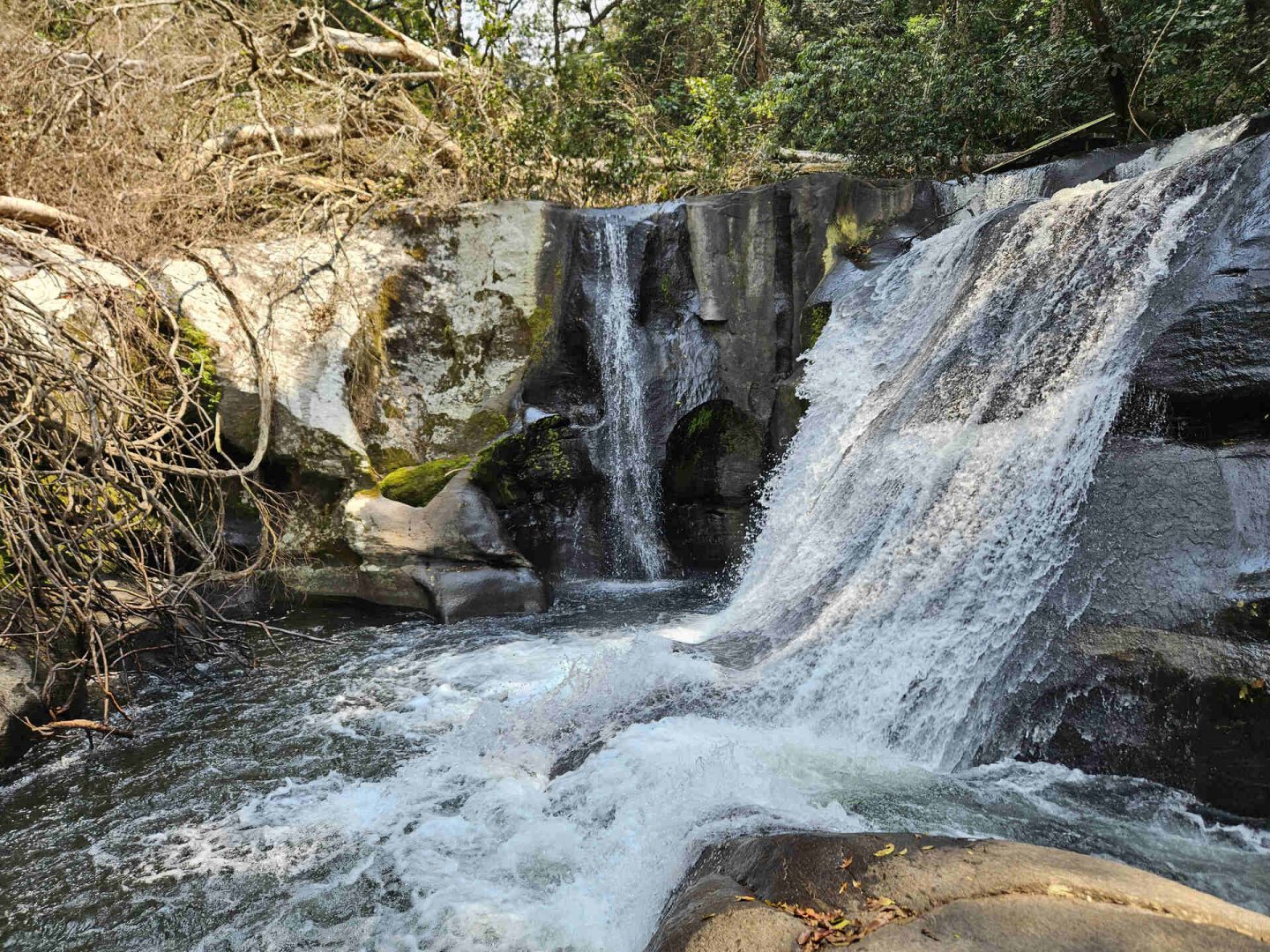
Sanje Waterfalls drops the Sanje River off the Udzungwa escarpment in linked tiers totalling roughly 170 metres, inside a national park with no roads and no vehicles, which means the falls are reached the only way this park permits anything to be reached: on foot, with an official TANAPA guide, up a forest trail that is half the attraction before the water even appears.The walk is the product as much as the falls are. The trail climbs through genuine Eastern Arc forest, home ground of the Udzungwa red colobus, a monkey that exists nowhere else on Earth and is seen on this route with a regularity that lets us use the word without flinching. The spray arrives before the view does, drifting through the trees on the approach, and the tiers then deliver in sequence: viewpoints over the Kilombero valley, the drops themselves, and the pools at the base where swimming, when the guide's daily judgement opens the water, converts a good hike into the day guests retell first.Our full Udzungwa Mountains guide covers the park entire, the multi-day trails, the deep-forest routes, the whole walking-park story. This page covers the falls day itself, because "Sanje Waterfalls" is what most travellers are actually searching for, and the day deserves its own manual. Safari-tz.com builds Sanje into southern itineraries as standing practice, the forest morning between Mikumi and Ruaha, and this page is the case for never skipping it.
Sanje Falls at a Glance
Key Facts Before You Walk to Sanje
Quick Sanje Waterfalls facts from Safari-tz.com: a guided half-day forest trail in Udzungwa to tiered falls, monkeys en route, pools below.
The short version: a guided half-day forest climb to tiered escarpment falls, endemic monkeys likely en route, a swim possible at the bottom, all one road day from Dar.
- The falls: Linked tiers totalling roughly 170 metres, dropping the Sanje River off the Udzungwa escarpment toward the Kilombero valley.
- The trail: A guided half-day round trip from the park's Mang'ula side. Steep in honest stretches, short enough that slow pace solves everything.
- The escort: An official TANAPA park guide on every walk, per park rules. Elephant and buffalo use this forest, so the rule has teeth.
- The monkeys: Udzungwa red colobus regularly seen on this route; the Sanje mangabey, named for this very area, is the rare-luck bonus.
- The swim: Pools below the drops, open or closed by the guide's daily call on river levels. Briefed as a maybe, delivered as a highlight.
- Fees:TANAPA park entry and guide fees apply, the series' structural opposite of frontier Kalambo.
- Gateway: Mang'ula, reached by good road from Dar via Mikumi in a single day.
-Best months:June to October for the balance of trail, flow and swimmable pools.
- Fitness:Reasonable half-day-hike fitness. Families and first-timers are this page's home crowd.
What Is Sanje Waterfalls Famous For?
Tiers, a Swim, and a Monkey Named for the Place
Sanje Waterfalls is famous for its tiered escarpment drop, the swimmable pools below, the red colobus en route and the mangabey that bears its name.
Sanje's fame stacks like its own tiers: the drop, the swim, and a piece of scientific history hiding in the name.The drop first. The Sanje River leaves the escarpment in stages rather than one plunge, and the tiered structure is the falls' character: viewpoints meet the water at different levels as the trail climbs, the full column assembles and disassembles depending on where you stand, and the best single vantage moves with the season's volume, the waterfall truth this series established at Kalambo and Sanje demonstrates on a walkable scale. In the big-flow months the tiers merge toward one roaring sheet; in the deep dry they separate into an elegant staircase. Both are worth the trail. They are different products, and we say so at booking.The swim is the democratic fame. Pools below the drops, forest-shaded, spray-cooled, and open on the guide's daily river-level call, deliver the mid-hike reward almost no comparable falls in East Africa can match, and the maybe-not-promise briefing this website's Udzungwa page established travels here intact, especially where children are involved.The name is the connoisseur's fame. The Sanje mangabey, one of the great primate discoveries of the late twentieth century, found by science after researchers recognised an unknown call in these forests, carries this waterfall's name into every zoology textbook that mentions it. The monkey itself remains rare luck on any walk. The fact that your half-day trail runs through the type locality of a primate species is the kind of quiet distinction this series exists to point out.
Where Is Sanje Waterfalls Located?
Finding Sanje on the Tanzania Map
Sanje Waterfalls sits in Udzungwa Mountains National Park near Mang'ula, one road day from Dar es Salaam via Mikumi on the southern highway.
Sanje pours off the eastern face of the Udzungwa Mountains, inside the national park, above the village country of the Mang'ula gateway, and its location is the entire commercial argument this page keeps making: this is the great waterfall that sits beside a road every southern safari already drives.The approach borrows the Udzungwa page's geography whole. The southern highway runs from Dar es Salaam through Morogoro, crosses Mikumi National Park with the elephants-beside-the-tarmac opening act our access sections enjoy describing, and reaches the Mang'ula side in a single honest road day, with the trailhead then minutes from the park gate. Within a southern circuit itinerary the arithmetic improves to trivial: Mikumi's lodges to the Sanje trail is a short morning transfer, and the falls slot between Mikumi and Ruaha with barely a detour, the positioning this website has been calling the best value-per-astonishment geometry in the south since the parent page published.The escarpment setting explains the falls' behaviour. Udzungwa's eastern wall catches the moisture off the Kilombero valley, the Sanje River drains the high forest that moisture built, and the drop happens where plateau meets valley air, which is why the spray drifts so far and why the viewpoints over the Kilombero rice country are half the trail's photography.The map summary, series edition: Kalambo ends a pilgrimage. Sanje interrupts a commute, in the best sense that sentence has ever carried.
Why Should I Visit Sanje Waterfalls?
The Case for Never Driving Past Sanje
Why visit Sanje Waterfalls: a genuine spectacle inside a half-day, endemic monkeys overhead, a forest swim and the easiest logistics in the series.
Because Sanje compresses everything this waterfall series sells, spectacle, wildlife, water you can enter, into a half-day that costs your itinerary almost nothing, and skipping it therefore needs a better reason than most travellers can produce, a sentence the parent page wrote about Udzungwa generally and this page sharpens to its falls specifically. The value argument leads. Kalambo, the series' other pole, asks a week of the far west for its giant; Sanje asks a morning of a southern circuit you were already running. The trail delivers a genuine escarpment spectacle, not a consolation cascade, the endemic colobus deliver wildlife most visitors assume needs a specialist trip, and the swim delivers the thing no game drive ever has: participation. Guests come back to the vehicle changed in the specific way walking changes a safari, the parent page's texture argument, proven here in its most purchasable form.The buyer-intent argument follows, stated plainly for the readers this section exists for: if you are comparing southern itineraries and one includes a Sanje morning while the other doesn't, at similar cost, the comparison is over. And if your itinerary was built without it, ask why. The honest answers are rare.The forest argument closes it. The climb to the falls is an hour inside the Eastern Arc's ancient biology, spray drifting through trees older than the trail's oldest visitor by centuries, and the falls at the top are the reward for a walk that would justify itself without them. Very few destinations anywhere let the journey and the destination audit each other this well.
What Wildlife Can I See at Sanje?
Endemic Monkeys Overhead, Honestly Framed
Sanje wildlife: Udzungwa red colobus regularly seen on the trail, the rare Sanje mangabey as luck, forest birds, and elephant sign in the forest.
Sanje holds the strongest realistic wildlife claim in this waterfall series, and the framing discipline this website applies everywhere lets the claim stand at full strength precisely because it is earned: the Udzungwa red colobus is regularly seen on this trail, and "regularly" is the honest word rather than the hopeful one.The colobus troops work the canopy along the route's forest sections, their crashing arrivals usually announcing them before the guides' pointing does, and watching a species whose entire global existence is these mountains, from a trail you reached one road day from Dar, is the encounter this page rates above the falls themselves for a certain kind of traveller. Other monkeys round out the canopy cast, and the birdlife runs the Eastern Arc's rich register the parent page describes, with the falls' spray zone adding its own specialists for the binocular-carriers.The Sanje mangabey holds its standing frame: this is its type locality, the guides know its ground and its call, and a sighting remains genuine rare luck, celebrated when it lands, never sold in advance. The larger residents hold theirs: elephant and buffalo genuinely use this forest, their sign on the trail is common, encounters are uncommon, and the mandatory guide, as the parent page said plainly, is why both sentences can sit together calmly.The series comparison writes itself: Kalambo's wildlife soars below its rim, Sanje's swings above your head, and between them the waterfall series has already out-delivered most game drives' supporting casts.
When Is the Best Time to Visit Sanje Falls?
The Flow-Versus-Swim Trade, Priced
Visit Sanje Falls from June to October for the best balance of flow, dry trails and open pools; the rains swell the tiers but close the swim.
June to October, and the series' founding trade returns in a friendlier costume: at Sanje the flow argues not with the roads, which stay open here year-round in the way the far west's never do, but with the swim, and pricing that trade is this section's job. The dry months deliver the balanced product. The trail firms up, the tiers run at their elegant-staircase volume, still a genuine spectacle, honestly less thunder than the big-flow photographs, and the pools below sit at the calm levels where the guides' daily call most often opens the water. For families and swimmers, this is the season, and it conveniently matches the southern circuit's own game-viewing calendar, the whole itinerary peaking together in the standing way.The rains invert the trade. The tiers merge toward the roaring single sheet that the falls' most dramatic images show, the spray zone extends its reach down the trail, the forest goes glossy and loud, and precisely then the river runs at levels that close the pools, the trail turns greasy on its steep sections, and the visit becomes a spectacle-only product for sure-footed travellers who want that specific version, briefed as exactly that. The scheduling law holds its series form: mornings own this trail, the forest loudest and coolest, the light on the tiers at its best, the parent page's gate-proximity lodging logic existing precisely in this law's service. And the guide's water call remains the day's one unappealable ruling, briefed in advance so nobody's morning hinges on the river's mood.
Is Sanje Suitable for First-Time Visitors?
The Series' Friendliest Application Form
Sanje suits first-time hikers and nearly everyone else: a steep but short guided trail where slow pace solves everything and the reward swims.
Yes, more completely than anywhere else this waterfall series will publish, and the parent page's grading transfers with its confidence intact: Sanje is the correct first African forest hike for almost anyone of reasonable fitness, and this page adds only the falls-day specifics. The trail's honest description: a guided half-day round trip with genuine climbing in it, steep enough in stretches that the falls feel earned, short enough that a slow pace solves everything, on forest paths that mix roots, rock and, near the spray, slickness that the footwear line in the packing section exists for. Regular walkers handle it comfortably. Sedentary travellers finish it proud, damp and evangelical. The guides pace both kinds correctly, having done so for years, and rest stops in a forest this alive entertain themselves, the standing observation from the family pages applying to adults just as well.Who should plan adjustments rather than avoidance: travellers with knee trouble, for whom the descent is the honest challenge and poles the honest answer; and anyone for whom the swim is the trip's point, who should weight their dates toward the dry months per the seasons section and still hold the guide's call as the maybe it is.The series framing closes the section: Kalambo's application form asked for expedition temperament and a week. Sanje's asks whether you can walk uphill for a while in good company. Almost everyone reading this qualifies, which is the entire point of the accessible pole.
Is Sanje Falls Safe to Visit?
How Risk Is Managed on the Falls Trail
Sanje safety rests on mandatory park guides, the daily swim ruling, spray-slick footing discipline and the forest rules of a walking park.
Sanje runs the safest profile in this waterfall series, and saying so plainly is itself useful information for the families and first-timers this page serves, provided the three items that remain get their honest paragraphs.The water leads. The pools' swim ruling belongs to the guide, daily, based on river levels that change the calculation in ways no visitor reads from the bank, and the ruling is final in the standing form: when the water is closed, it is closed, and the briefing in advance, especially where children's expectations are involved, is how a closed pool stays a footnote instead of a crisis. Swimming, when open, follows the guide's spots and terms, waterfall pools having currents and rock that local knowledge maps and enthusiasm does not.The footing follows. Spray-slick rock near the viewpoints and the steep trail sections after rain write this destination's actual injury ledger, small, unheroic, and answered by the standing set: genuine tread, attention at the marked wet zones, poles for descent-shy knees, and the guides' pacing. The viewpoint edges here are gentler than the series' unfenced giants, and the edge discipline travels anyway, feet planted, no backward steps toward drops, children in hand at the overlooks.
The forest closes the list at parent-page strength: elephant and buffalo use these woods, the mandatory guide is the mechanism, and the walking-park rules are followed as given.
The site-wide close, standing and unamended: medical questions to your doctor before travel, the falls' altitude and effort being modest and the discipline being everything.
How Many Days Do I Need for Sanje Falls?
One Morning, Properly Built, Is Enough
Sanje Waterfalls needs one properly built morning: overnight at Mang'ula, dawn start, the trail and swim, and onward by mid-afternoon.
One morning, properly built, and the phrase carries this section, because Sanje is the series' proof that a great waterfall day is a construction rather than a duration. The build runs the parent page's law: the overnight at the Mang'ula side rather than a morning commute from Mikumi's distance, the dawn-adjacent start that puts the group on the trail in the forest's loudest and coolest hour, the unhurried climb with the colobus given their time, the falls and the swim owning the late morning, and the descent delivering everyone to a late lunch with the afternoon transfer toward Mikumi or Ruaha intact. That shape costs an itinerary one overnight positioned correctly and returns the day most guests rank in their trip's top three, the arithmetic this website has stopped being surprised by.
The extensions serve the specific. A second morning on a different park trail converts the falls stop into the fuller Udzungwa visit the parent page argues for, the honest minimum for birders whose targets ignore transit schedules. The multi-day park treks belong entirely to the parent page and are linked, not duplicated, here.The counsel-against holds the series' line with local teeth: the drive-past version, Sanje glimpsed as a lunch-stop question mark from the highway, and the squeezed version, the trail attempted in the midday heat after a morning transfer, both exist in the wild and both deliver a fraction of the constructed morning at most of its cost. The park's minimum honest unit remains the Sanje morning. Below that, save it, the standing phrase, for the trip that deserves it.
What Activities Are Available at Sanje Falls?
Trail, Tiers, Pools and the Village Belt
At Sanje Falls: the tiered viewpoints, the guided forest climb, swimming below the drops, Kilombero valley panoramas and Mang'ula's village belt.
The falls day organises its own menu, and this section walks it in trail order, which is how guests actually meet it. The forest climb opens: the guided ascent through colobus country, the guides producing the small finds this website's forest pages celebrate, chameleons, calls named instantly, the spray's first drift through the trees announcing the destination before any viewpoint confirms it. The viewpoints then stack with the tiers: Kilombero valley panoramas opening at the trail's shoulders, the drops meeting the path at their different levels, and the season's volume deciding, per the standing waterfall truth, which vantage owns the day. The pools close the ascent's account: the swim on the guide's terms when the river permits, forest-shaded, spray-cooled, and rationed by nothing except the afternoon's schedule, which the constructed morning built generously for exactly this reason. Off the trail, the honest supporting register. The village belt below the park, Mang'ula's farm-and-forest edge, carries its own low-key interest for second-day visitors, the parent page's observation transferring; birding along the park boundary rewards early risers whose falls morning is booked for day two; and the Mang'ula gate's park interpretation, modest and improving, frames the Eastern Arc story for travellers who want the science before the trail delivers the evidence. What Sanje deliberately does not offer gets the series' plain sentence: no zip lines, no railings, no concession stands, a national-park waterfall in a walking park, and the absence, as this website keeps concluding about its favourite places, is the amenity.
Where Do I Stay for Sanje Waterfalls?
Beds at the Gate, Comfort at Mikumi
Sanje visitors stay in simple Mang'ula lodges and guesthouses at the park gate, or base at Mikumi's camps and take the falls as a day trip.
The accommodation answer splits along the line the parent page drew, and this page redraws it with the falls day's specific interests in charge.The Mang'ula option serves the constructed morning. Simple lodges and guesthouses cluster at the park's edge in the honest southern register, clean, friendly, garden-set against the escarpment wall, and their entire strategic value is the geometry: minutes from the gate, which converts the dawn-adjacent start from a negotiation into an arrangement, and puts the trail's best hour inside your morning instead of inside your transfer. Falling asleep to the escarpment's night sounds remains, as the parent page priced it, an amenity no star rating captures, and for the falls-focused visitor this side of the line is our default recommendation.The Mikumi option serves the comfort-calibrated. The park's higher-end camps, covered on Mikumi's own page, offer the southern circuit's proper lodges, and the falls then become a day trip with an earlier alarm and a real transfer in front of the trail, workable, regularly done, and honestly second-best for the morning's quality, a trade some travellers make gladly for the evening's. We brief the trade and build either version.
Capacity at Mang'ula runs small and fills in the dry peak per the parent page's warning, the booking-ahead law applies, and the standing promise closes the section: every property described exactly as it is, the simple ones proudly, because in this corner of the series, unlike its far-western opening, simple comes with hot water and a road.
Is Sanje Suitable for Families?
The Series' Best Family Day, With One Rule
Sanje is the waterfall series' best family day: monkeys, a climb sized for children and a swim, with the guide's water ruling briefed in advance.
The warmest family answer this waterfall series will give, inherited from the parent page and sharpened here: Sanje was practically designed by accident for children who like walking, and the single rule that governs the family version is the one this page has repeated since Section 3. The case restates itself in a child's own currency: monkeys overhead, announced by crashing; a trail with a rewards ladder, viewpoint, bigger viewpoint, the sound growing, the spray arriving; a waterfall you hear building for half an hour; and at the bottom of it all, a swim. Park guides here handle family pacing with practiced ease, young naturalists leave with checklists ticked and guide-taught facts attached, and the parent page's finding stands as this page's headline: families consistently report the Sanje morning as the day their children stopped tolerating the holiday and started leading it. The rule is the water briefing. The swim is the guide's daily call, children are told so before the trail and not at the pools, and a family that arrives with the maybe properly installed treats a closed river as weather instead of betrayal. We consider that briefing part of the product and deliver it in writing before travel.The boundaries run the standing set at their gentlest: the climb is real and hill-hating children will file their objection on the steep stretches; the spray-slick zones and the overlooks take the children-in-hand law at ordinary strength; and the combination the parent page loves closes the section intact, the Sanje forest morning between Mikumi game drives, different muscles, different attention, competing loyalties by dinner.
What Should I Pack for Sanje Falls?
Packing for a Climb That Ends in Water
Sanje packing list: grippy shoes for spray-slick rock, swimwear and a towel, dry bags, water, binoculars for the colobus and a light rain shell.
Pack for a hot, steep forest walk that might end in a swim, the parent page's organising sentence, and this page tightens it to the falls day's specifics, where two items decide the whole experience.The two deciders: footwear with genuine grip, the series' standing first line, because Sanje's spray zones and polished trail rock are exactly where waterfall visits collect their small injuries, and smooth soles are a choice against yourself; and the swim kit, swimwear worn under trail clothes for the efficient, a small towel, and a dry bag for everything electronic, packed even in the months when the pools' odds run low, because carrying a swimsuit you never open costs nothing and the reverse regret is permanent. More than one guest has swum in trail shorts and dried on the descent, cheerfully, but the packed version is better.The supporting kit runs the day-trail standard: water per person at honest volumes for a humid climb, sun cover for the open viewpoint stretches, a light rain shell doubling as spray protection at the closer vantages, snacks, and the binoculars this trail promotes to essential, the colobus being half the visit and the canopy being where they live. Poles for descent-shy knees hold their standing recommendation.The subtraction rule arrives at its gentlest series setting: this is a half-day with a daypack, the safari wardrobe stays in the vehicle, and the bag's final signatory, for once, is not a cold summit-morning self but a wet, delighted one, drip-drying beside a 170-metre staircase of water, which is the entire pitch in one image.
How Much Does a Sanje Falls Visit Cost?
What You Are Paying For at Sanje
Sanje costs combine TANAPA park and guide fees with modest lodging and short transfers, the waterfall series' best value day by a distance.
Sanje prices as the series' value anchor, and the structure explains it in the parent page's single line, re-earned here: no flights, no vehicles inside, no premium lodge economy, just a park fee, a guide fee, and a morning.The build: TANAPA park entry and the official guide fees that every trail carries, the invoice's core and the structural opposite of Kalambo's frontier arrangements, the series' two poles differing in fee architecture as completely as they differ in journey; Mang'ula's modest lodging or the Mikumi base per Section 12's trade; and a transfer layer measured in fuel and an hour rather than road days, the southern highway doing the work the far west charges expedition rates for. The falls day inside an existing southern itinerary therefore prices at a park day's fees plus one repositioned overnight, and this website has already published its verdict on that arithmetic: the marginal cost of adding Sanje to a Mikumi–Ruaha trip is small enough that leaving it out needs a better reason than most travellers can produce.Standalone Sanje trips from Dar exist and price honestly as a road day each way wrapped around the falls morning, workable for coast-based travellers with a spare two days and briefed as exactly that.
Figures stay off the page at standing strength, TANAPA revises on its own schedule, quotes arrive current and itemised, and the series' value table now has both its ends: Kalambo, the expedition you build a week around; Sanje, the morning that improves the week you already had.
How Do I Get to Sanje Waterfalls?
The Easiest Road in the Series
Reach Sanje Waterfalls by road from Dar es Salaam via Mikumi to Mang'ula in one day, or as a short transfer inside any southern itinerary.
By the southern highway, in a day from Dar or an hour from Mikumi's side, and the waterfall series' access sections now own both extremes: Kalambo took the longest-approach title, and Sanje takes the shortest without a contest. The standard run borrows the parent page's route wholesale: southwest out of Dar on the main highway through Morogoro, the Mikumi crossing with its roadside elephants earning its standing mention, and the Mang'ula side reached in one full but unheroic driving day, early departure recommended for the usual Dar-traffic reasons and for the Mikumi daylight. Within the southern circuit the leg collapses to a short morning transfer from Mikumi's lodges, or a comfortable repositioning day from Ruaha's direction, the falls slotting between the parks in the geometry this website has been selling since the parent page published. The rail note earns its sentence for the overland-curious: the TAZARA line passes through this country and Mang'ula has a station, a routing with charm and a timetable relationship best described as informal, which we confirm per trip for the travellers who ask in the steady voice such arrangements require.The timing law closes the series' friendliest access section in its standing place: sleep at the gate side, walk at first light, and let the road's ease fund the morning's quality rather than excuse a lazy start. The highway makes Sanje easy. The dawn, as the parent page ruled and this page co-signs, is what makes it excellent.
Can Sanje Be Combined With Other Destinations?
Can Sanje Be Combined With Other Destinations?
Combine Sanje Waterfalls with Mikumi next door, Ruaha's deep safari, the full Udzungwa walking park, or Nyerere's rivers on the southern circuit.
Sanje's combinations are the parent page's combinations wearing the falls' colours, and this page states them in booking order rather than repeating the full case.Mikumi plus Sanje is the automatic pairing: game drives beside forest walking, the two-park rhythm guests rate above either alone, and the falls morning sitting between Mikumi mornings at the cost of one repositioned overnight, the arithmetic Sections 10 and 15 already closed. The Mikumi–Sanje–Ruaha run extends it into the definitive southern road itinerary, savannah, forest, deep wild, in ascending order of remoteness, with the falls as the middle movement; and Nyerere's river country substitutes for Ruaha on the boat-and-drive side of the south with the falls day earning its place identically.The parent-page extension serves the walkers: a second Udzungwa day, a different trail, or the multi-day park treks that belong to the Udzungwa guide entire, the falls morning functioning, as it has for years of our guests, as the audition that books the longer show.The series connection closes with the frame page one built: travellers assembling Tanzania's waterfall story start here, at the accessible pole, and earn their way toward Kalambo's pilgrimage as the pages between them publish, the ask-and-pay ladder climbing with the series. Sanje is its first rung and its easiest yes.The counsel-against retires the section in standing form: the drive-past remains the region's oldest mistake, and this page exists, sentence by sentence, to end it.
Sanje vs Kalambo: Which Waterfall?
The Morning and the Pilgrimage
Sanje or Kalambo? Compare Tanzania's two great waterfalls by access, spectacle, wildlife and cost, the series' poles priced honestly.
The waterfall series' two poles now both hold pages, and comparing them is less a choice than a diagnosis, because the two falls serve travellers who barely overlap.Sanje is the morning: half a day inside a southern itinerary you were running anyway, TANAPA structure, a guided trail, endemic monkeys at realistic odds, a swim when the river permits, and the series' lightest invoice by a distance. It suits, honestly, almost everyone, families leading, and its whole argument is that it costs nothing worth counting against what it returns. Kalambo is the pilgrimage: a continental-ranking giant at the end of the far west's longest roads, frontier arrangements, marabous below an unfenced rim, half a million years of human history in the riverbank, and an invoice that is mostly journey. It suits the committed few its page spent nineteen sections identifying, most of them arriving via Katavi, all of them knowing themselves.The diagnosis, one line each in the family tradition: if your Tanzania trip exists and you want a waterfall in it, Sanje, today, no deliberation. If a waterfall could justify a Tanzania trip on its own, Kalambo is the only candidate the country holds, and its page is the application form.The completist's note, series edition two: the pages between the poles are coming, the Kilimanjaro-country falls and the southern highlands' rain-fed drops each with their own ask-and-pay position, and the ladder will rank them as it grows. Its ends, whatever arrives between them, are now fixed.
Why Book Sanje With Safari-Tz.Com?
One Morning, Held to Its Best Version
Book Sanje Waterfalls with Safari-tz.com: gate-side positioning, dawn discipline, the water briefing done properly and itemised southern quotes.
Sanje is the easiest destination in this series to visit and, by the pattern this website documented at Longido and re-proves here, exactly that easiness is where the mediocre version hides. The falls forgive nothing about timing: the late start meets the heat on the climb and the crowds' hour at the pools; the Mikumi commute without the earlier alarm delivers the trail at its quietest-forest-hours' end; the family that arrives unbriefed on the water ruling stakes a child's day on a river's mood; and the itinerary that never repositioned the overnight buys the whole experience at a discount it didn't want. None of the fixes cost money. All of them, in the standing phrase, live in the day before the day. Booking with us buys that day before, southern edition: the Mang'ula overnight positioned at the gate side, the dawn-adjacent start held against itinerary pressure, the guide arrangements and current TANAPA fees confirmed rather than assumed, the water briefing delivered in writing per the family section's promise, and the falls morning integrated into the southern rhythm, Mikumi behind it, Ruaha ahead, per the parent page's architecture. Lead guides Geoffrey Komba, William Mwasimba, and Isaac Munuo oversee our operations, and the standing sentence carries its record into the series' second page: guests do not experience our logistics in proportion to their size, fourteen pages and counting.We will also tell you plainly when Sanje deserves the second day, the conversation the parent page admitted happens with almost every hiker we brief, and the ones who listen, it reported truthfully, thank us from the trail.
Ready to plan your Sanje Waterfalls visit?
- Request a tailor-made quote (fastest, best for a real plan)
- WhatsApp: +255 740 666 662
- Email: info@safari-tz.com
Tell us your dates, your southern itinerary, and whether the swim matters to your party. You will get a gate-side plan, honest seasonal counsel and an itemised quote.