Soni Waterfalls Travel Guide
soni waterfalls overview
soni falls at a glance (quick facts)
what is soni falls famous for?
where is soni falls located?
why should i visit soni falls?
what wildlife can i see at soni?
when is the best time to visit soni falls?
is soni suitable for first-time visitors?
is soni falls safe to visit?
how many days do i need for soni falls?
what activities are available at soni falls?
where do i stay for soni falls?
is soni suitable for families?
what should i pack for soni falls?
how much does a soni falls visit cost?
how do i get to soni falls?
can soni be combined with other destinations?
soni vs sanje vs kalambo?
why book soni with safari-tz.com?
Soni Waterfalls Overview
A Working Falls in a Market-Town Valley
Soni Waterfalls overview from Safari-tz.com: a compact falls at a market town on the Mombo–Lushoto road, the Usambara trip's classic first stop.
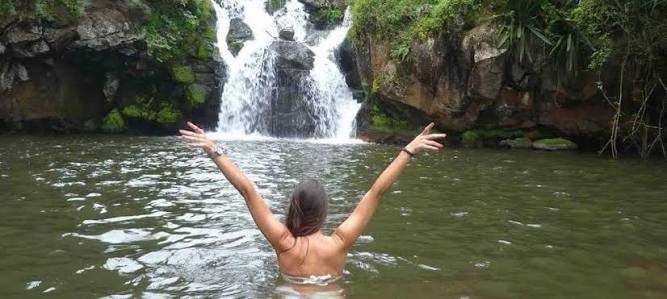
Soni Waterfalls drops through the middle of a small Usambara valley town on the climb road between Mombo and Lushoto, and the honest sentence about its scale comes first, because this website's waterfall series has already published a continental giant and a swimmable masterpiece, and Soni is neither: it is a compact, powerful drop where mountain rivers meet, visible in glimpses from the road itself, and seen properly on a short walk that most travellers complete between parking and lunch.
What Soni has instead of scale is context, and context is what this page sells. The falls power a valley town that has been a crossroads of Usambara life for generations, the market here on its weekly rhythm ranks among the region's liveliest, the viewpoint paths above town open the valley and the mountain wall, and the whole scene sits on tarmac, an hour's climb from the main highway, at the front door of the trekking country our Usambara Mountains guide covers in full.
The practical frame in one line: Soni is the classic first stop of a Usambara itinerary, the place the climb road teaches you what these mountains are before Lushoto formalises the lesson, and this series' first entry in a category its two poles could not fill, the falls you meet on the way rather than travel for.
Safari-tz.com builds Soni into nearly every Usambara routing we sell, at a cost the schedule barely notices.
Soni Falls at a Glance (Quick Facts)
Key Facts Before Your Soni Stop
Quick Soni Waterfalls facts from Safari-tz.com: a compact falls on the Lushoto road, market days, viewpoint walks and the easiest stop going.
The short version: a modest, charming falls at a market town on the Lushoto climb road, visited in an hour or built into a half-day, with no machinery and almost no cost.
- The falls: A compact drop at the meeting of mountain rivers in the valley's heart. Honest scale: powerful, photogenic, and small beside this series' giants.
- The setting: Soni town, on the tarmac between Mombo junction and Lushoto, in the West Usambaras' green valley country.
- The visit: Road glimpses free of charge; the proper viewpoints on a short local walk; the half-day version adding the market and the paths above town.
- The market: One of the Usambaras' liveliest produce markets, on its weekly rhythm, checked when we plan, per this website's standing market law.
- The rules: No park, no gate, no fees machinery. Local guiding through the Usambaras' cultural-tourism arrangements, modest and worth taking.
- Access: The easiest in this series so far, on tarmac the whole way. The access section barely has a job.
- Best months: June to October and December to February, with the flow honesty priced in the seasons section.
- Fitness: Anyone. The falls walk is short; the viewpoint paths add honest gradient for those who want it.
- The role: The waypoint. Soni opens Usambara trips the way an overture opens the show.
What Is Soni Falls Famous For?
A Market, a Valley, and Honest Water
Soni Falls is known for its roadside reveal on the Lushoto climb, its famous produce market, and valley viewpoint walks above the falls town.
Soni's fame is local, layered, and older than tourism, and the falls are honestly the third layer.
The first fame is the market. Soni's weekly market has pulled produce, traders and buyers down from the Usambara villages and up from the plains for generations, and on its day the town multiplies: fruit and vegetables from the mountains' famous farms stacked in geometries, fabric and hardware and argument, the valley's whole economy visible in one square. Travellers who time the stop to market day, the standing law says we check the rhythm when we plan, consistently rank it above every waterfall in this series that is not swimmable, and the comparison is closer than Sanje's fans would like.
The second fame is the position. Soni is where the climb road first delivers the Usambaras properly, the valley walls closing in green, the temperature already dropping from Mombo's plains heat, banana and tea country beginning, and generations of travellers have made it the arrival ritual: stop, breathe mountain air, meet the falls, continue to Lushoto changed. The viewpoint paths above town formalise the fame, short climbs to vantages over the valley that the parent page's trekking network threads into longer routes.
The third fame is the water itself, framed at honest scale: a hard-working drop at the rivers' meeting, loudest and widest after rain, the town's white noise and its photograph. Nobody crosses an ocean for it. Nearly everyone who passes stops for it, and that, in this series' taxonomy, is exactly what a waypoint falls is for.
Where Is Soni Falls Located?
Finding Soni on the Tanzania Map
Soni Falls sits on the tarmac climb between Mombo junction and Lushoto in the West Usambaras, the natural first stop of any Usambara routing.
Soni sits partway up the mountain road between Mombo, the junction town on the Arusha–Dar highway, and Lushoto, the Usambaras' hill-town capital, in the valley country where the climb's famous bends begin delivering their scenery. The parent page maps the whole approach, the half-day from Arusha or Moshi to Mombo, the under-an-hour climb, the temperature drop that guests feel as the mountains' handshake, and Soni is where that handshake happens: the first real town of the climb, the falls audible from the road on strong-flow days, the valley opening its green ledger for inspection.
The position writes the itinerary logic this page keeps returning to. Every Usambara trip passes Soni twice, up and down, which makes the stop's marginal cost effectively zero and its omission effectively careless; the only planning question is which passage gets the proper visit, and the answer is usually the arrival, per the overture logic of Section 2, with the descent pass reserved for whatever the market calendar or the first visit's appetite left unfinished. Travellers basing in Lushoto reach Soni as the easiest excursion on the mountain, minutes back down the tarmac, and the valley's own guesthouse country, covered in the accommodation section, makes Soni itself a base for the slower school of Usambara traveller.
The wider map is the parent page's: Mtae and the trekking network above, Irente's edges over the plains, Mombo and the highway below, and the falls town sitting at the door of all of it, taking tickets
Why Should I Visit Soni Falls?
The Case for the Series' First Waypoint
Why visit Soni Falls: zero-detour charm on the Lushoto climb, a famous market, valley viewpoint walks and the Usambaras' best arrival ritual.
Because the stop costs nothing and returns the whole register of things this website's Usambara pages sell, in miniature, an hour before Lushoto.
The arithmetic argument is the shortest in this series. Kalambo asks three road days; Sanje asks a half-day and park fees; Soni asks a parked vehicle and an hour, on a road your itinerary is already climbing, and returns a waterfall, a valley, and, on the right day, one of northern Tanzania's great markets. There is no cheaper astonishment-per-effort purchase on this website, and the only reason Soni does not win the value championship our cost sections keep awarding is that the astonishment is gentle, which this page has been honest about since its first sentence.
The arrival-ritual argument is the one guests actually report. Trips have textures, and the difference between driving straight to Lushoto and stopping at Soni is the difference between arriving somewhere and entering it: the falls as punctuation, the market or the valley walk as first contact, the mountain air taken standing still rather than through a vehicle window. Guides notice that guests who stopped at Soni ask better questions in Lushoto, the on-foot recalibration our Udzungwa page documented, available here for the price of an hour.
And the honest third argument: Soni filters nobody. No fitness bar, no edge law at Kalambo strength, no journey application form, the rare page in this series' whole run where the answer to "who is this for" is simply everyone on the road, which, given where the road goes, is everyone this website's Usambara pages were written for.
What Wildlife Can I See at Soni?
The Valley's Small, Green Register
Soni's wildlife is the Usambaras' gentle register: valley birdlife, chameleons on the viewpoint paths and farm country, with no big game at all.
The honest register arrives at its gentlest setting in the whole series, and the parent page's Eastern Arc framing carries it: no big game, no colony, no endemic headline at the falls themselves, just the Usambaras' green small-life doing what it does around a valley town, and travellers briefed that way enjoy every minute of it.
The birdlife is the register's substance. The valley's mix of river, forest patch and farm edge keeps the binocular-carriers occupied on the falls walk and the viewpoint paths, sunbirds working the gardens, the river's own kingfisher-and-wagtail cast at the water, and the parent page's rule applying in miniature: declared birders get pacing, and the serious Eastern Arc endemic work belongs to Amani and the deeper forests, one page over, where this website sends it. The chameleons are the reliable delight, the Usambara guides' produced-from-a-hedge trick performing at Soni as it performs across the range, and children, per the family section, rate it above the falls.
The rest of the valley's viewing is agricultural, and this page counts it as viewing without apology: the produce country that stocks the famous market, tea and banana and vegetable terraces at their green work, the Usambara farming spectacle that the parent page calls the mountains' true landscape, met here at valley scale on the easiest paths in the range.
The redirect, series edition: travellers wanting waterfall wildlife take Sanje's monkeys or Kalambo's marabous, both a page away, and Soni cheerfully waves them off, holding the market.
When Is the Best Time to Visit Soni Falls?
The Flow Trade at Its Cheapest Stakes
Visit Soni Falls year-round on its tarmac road; June to October and December to February give the best balance, and rain fattens the falls free.
The series' flow-versus-access trade reaches Soni and discovers it has almost nothing to trade: the road is tarmac in every month, the visit is an hour at minimum, and the only variable left is the water itself, which makes this the one page in the series where the rains improve the product at essentially no access cost.
The standard windows still organise the recommendation, June to October and December to February, because they organise the Usambara trip around the stop, the parent page's trekking calendar and view-clarity logic deciding the itinerary that Soni opens. Within them, the falls run the honest plateau-river pattern: strongest early in the dry windows off the rains' account, thinning gently as the months dry, never disappearing, never at Kalambo's theatrical amplitude either way.
The rains themselves get this series' first genuinely warm word. April and May fatten Soni into its loudest, widest self, the valley goes an implausible green, the market runs regardless because markets always do, and the costs are the mild ones, mist on the viewpoint paths, mud on their steeper stretches, the parent page's greased-clay honesty at valley scale. For travellers passing in the rains anyway, coast-bound overlanders, green-season safari itineraries, Soni is the rare stop this website recommends more warmly in the wet, not less.
The daily law survives even here, softened: mornings serve the falls' light and the market's peak hours, the overture logic favours the arrival stop, and the alarm clock, for once in this series, can relax to merely sensible.
Is Soni Suitable for First-Time Visitors?
The Page With No Application Form
Soni Falls suits absolutely everyone: an hour's roadside stop at minimum, with short walks and gentle viewpoint paths for those who want more.
Yes, without a single clause, and this section, which has graded expedition temperaments and altitude histories across fifteen pages, takes the rest of the paragraph off.
The minimum visit asks for the ability to leave a vehicle: the road glimpses and the near viewpoints sit within minutes of parking, on ground any mobile traveller manages, and the falls deliver their honest scale to everyone who stops. The proper short walk to the better vantages adds uneven valley path at gentle lengths, the local guiding smoothing it further for anyone who wants a hand, and the viewpoint climbs above town add real gradient only for those who volunteer, graded by the parent page's Usambara standard, rolling rather than punishing, and always optional.
Who this suits, the standing question, answers itself: the road-tired, the trek-bound warming up, the families of the section below, the travellers for whom this series' other pages wrote application forms, and the Usambara-committed for whom Soni is simply how the mountains say hello. Who should route elsewhere: nobody stops here instead of the series' giants, they stop here as well, which dissolves the question this section usually exists to answer.
The one honest note, kept from the safety section ahead: wet-day rock near falling water is slick at Soni exactly as it is everywhere, the series' first commandment about tread applies even to an hour's stop, and the flip-flops that the tarmac access tempts travellers into are the only mistake this gentlest of pages needs to name.
Is Soni Falls Safe to Visit?
How Risk Is Managed at Gentle Scale
Soni Falls safety is the series' simplest: wet-rock footing sense, road-edge awareness in a working town, and gentle path care above the valley.
The series' shortest safety section, earned honestly: Soni carries no unfenced continental gorge, no guided-always machinery, no pool call, and its risk conversation is the ordinary care a working valley town and wet rock ask of any sensible visitor.
The footing item leads, as it leads every page in this series: spray-side and river-edge rock runs slick in every season and slicker after rain, the viewpoints near the water are taken on planted feet with the standing no-backward-steps rule at its gentle setting, and proper tread, the first commandment, converts the entire subject into a non-event. The viewpoint paths above town add the parent page's valley-trail honesty, polished clay after rain, gradients that reward poles for those who carry them, and the local guides' path knowledge worth its modest cost precisely here
The town item is this page's own: Soni is a working crossroads, not a site, the road through it carries real traffic including the market day's multiplied version, and the ordinary town-awareness of parked vehicles, road edges and children in hand near the tarmac does the quiet work that gate machinery does elsewhere. Market days add market sense, bags worn sensibly, valuables boring, the standing photography law, people are people, permissions brokered, cameras courteous, applying at full strength in a market that is nobody's performance.
The site-wide close stands at its briefest: health questions to your doctor before travel, and the Usambaras' gentle altitude and climate, the parent page notes, rarely give them much to discuss.
How Many Days Do I Need for Soni Falls?
An Hour, a Half-Day, or a Quiet Base
Soni Falls needs an hour at minimum, rewards a half-day with the market and viewpoints, and serves the slow school as a quiet Usambara base
An hour at honest minimum, a half-day at honest best, and, for the slow school of Usambara traveller, a base whose case this section makes last, because it surprises people.
The hour is the waypoint doing its job: the arrival stop on the Lushoto climb, the falls met properly at the near viewpoints, mountain air taken standing still, and the trip's texture upgraded at a cost the schedule cannot feel. We build this version into nearly every Usambara routing by default, and the standing counsel inverts for once: at Soni, unlike everywhere else this website has written, the squeezed version is a legitimate version, because the stop was designed by geography to be squeezable.
The half-day is the page's recommendation where calendars allow: the falls, the viewpoint walk above the valley, and the market when the weekly rhythm cooperates, the standing check-the-day law applying, assembled around lunch in the valley's unhurried register. Paired with the afternoon climb to Lushoto, it is the best first day the Usambaras offer, and the parent page's trekking itineraries inherit a party already converted.
The base case is the surprise: Soni's valley guesthouse country, covered next section, hosts a quieter, greener, lower-key version of the Usambara stay than Lushoto's busier register, minutes from the town's life and the trailheads that thread the valley into the parent page's network. Travellers who chose it tell us the falls' white noise at night was the amenity no listing mentioned, and the slow school, once found, tends to stay found.
What Activities Are Available at Soni Falls?
Falls, Market, Paths and the Overture
At Soni Falls: the falls viewpoints, the famous weekly market, valley viewpoint walks, farm-country paths and the start of the Usambara network.
Soni's menu is the Usambara register at valley scale, and its four items assemble the half-day Section 10 recommended.
The falls viewpoints open it: the road glimpses that cost nothing, the short walk to the proper vantages where the rivers' meeting shows its work, and the local guiding pointing the season's best angle in the way this series has now documented at every scale, the best viewpoint moving with the volume at Soni exactly as at Kalambo, just with lower stakes and drier cameras.
The market is the menu's headline when the calendar grants it, and Section 3 spent its fame properly; here belongs the practical note: market mornings peak early, the produce theatre is at full stock before the heat, and the overture stop that lands on market day should land in the morning, which the arrival logic was recommending anyway.
The paths carry the rest: the viewpoint walks above town, honest gradient to valley panoramas and the mountain wall, threading into the parent page's network for parties whose appetite grows on the spot, a documented Usambara pattern; and the farm-country wanders through the produce terraces at conversational pace, the guides narrating the agriculture that stocks the square, the mountains' true landscape at its most legible.
And the overture itself deserves its menu line, because guests keep naming it: the hour of arrival, falls met, air taken, valley read, the Usambaras entered rather than reached. No other activity on this website costs less or gets reported more warmly per minute spent.
Where Do I Stay for Soni Falls?
The Valley's Quiet Beds, and Lushoto's
Soni visitors stay at the valley's quiet guesthouses and garden lodges or base in Lushoto minutes up the road, per the Usambaras' gentle register.
The parent page owns the Usambaras' full accommodation picture, the cluster's most comfortable, and this section adds only the valley's own case, which Section 10 already leaked: Soni is the range's quiet bed.
The valley register runs small guesthouses and garden lodges in the green country around the town, simpler than Lushoto's best and calmer than all of it, positioned where the falls' white noise reaches the verandas and the viewpoint paths start at the gate, the doorstep logic this website applies everywhere arriving here at its most literal. The Usambara softening applies in full, real beds, hot dinners, fireplace-and-blanket cold-night comfort per the range's standing surprise, and the calibration speech, delivered on the parent page, is cross-referenced rather than re-performed, with the one valley-specific note that the slow school's favourite properties here trade polish for setting and win the trade.
The Lushoto alternative sits minutes up the tarmac and needs no case this website has not already made: the hill town's wider range, the trekking network's hub, and Soni reachable as the easiest excursion on the mountain, which is how the standard itinerary meets it. The choosing logic is the traveller's tempo: overture-and-onward parties stop at Soni and sleep in Lushoto; the slow school reverses it and reports no regrets.
Booking pressure runs the parent page's mild Usambara pattern, the better valley beds filling around holidays and market weekends, and we hold them when the route locks, describing each, per the standing promise, exactly as it is
Is Soni Suitable for Families?
The Series' Easiest Family Yes
Soni Falls is the series' easiest family stop: an hour's charm, a market children love, chameleons on demand and only road-and-wet-rock sense needed.
The easiest family yes this series will ever write, and the reasons take one paragraph because the obstacles took none.
Soni asks families for nothing the school run did not already teach: children in hand near the town's road, wet-rock sense at the falls viewpoints, the two ordinary cares Section 9 named, and everything else is reward. The falls are pitched at exactly the scale young attention processes whole, loud, close, comprehensible, the market is a sensory event children navigate at their own delighted frequency, fruit mountains, fabric colour, the theatre of commerce, and the guides' chameleon trick, the Usambara constant, outranks the waterfall in most children's rankings, a defeat the falls accept gracefully. The viewpoint walks flex to family pace per the range's standing kindness, and the whole stop fits inside the hour a car-bound child's patience actually contains, which is the design insight the waypoint category was built on.
The base case extends the welcome: the valley's quiet guesthouses suit families precisely because nothing about them hurries, gardens absorb energy, the paths start gently at the gate, and the parent page's family framing, the cluster's best, inherits a valley annex.
The combination writes itself into the standing template: Soni's hour or half-day as the family's Usambara overture, the trekking network's child-flexed stages beyond per the parent page, and the coast or the safari circuit on either side. Children who met the mountains at Soni, guides report, arrive at Irente's edges already believers, which makes the edge rules easier to teach, and that quiet safety dividend closes the section.
What Should I Pack for Soni Falls?
Packing for an Hour That May Grow
Soni packing list: real shoes despite the tarmac, a light rain layer, market cash in small notes, camera courtesy and the Usambara warm layer.
The lightest list in the series, organised by its one real risk: Soni's tarmac access tempts travellers into treating it as a fuel stop, and the packing failure here is not what the bag lacks but what stayed in it, in the boot, up the mountain, while the hour quietly grew into the half-day this page kept predicting.
The core: real shoes despite the tarmac, the first commandment's gentlest enforcement, because the falls viewpoints and valley paths are wet-rock and clay country in miniature and the flip-flop error got its naming in Section 8; a light rain layer in any month, the Usambaras manufacturing weather at valley scale exactly as the parent page warns at ridge scale; and the warm layer within reach rather than packed deep, the range's standing surprise beginning its work on the Soni climb, where the temperature drop is the first thing guests mention.
The market kit: cash in small denominations, the standing village-economy line at its most enjoyable, because the produce theatre rewards participation and the mountains' famous fruit travels well to Lushoto dinners; a bag for the buying that will happen; and the camera courtesy law at market strength, permissions brokered, people not scenery, the guides carrying the introductions.
Binoculars stay in the daypack per the valley's gentle birding, and the subtraction rule closes at its most relaxed: it is an hour, or a half-day, minutes from the vehicle throughout, and for once in this series the bag can afford to be wrong. Bring the shoes anyway.
How Much Does a Soni Falls Visit Cost?
What You Are Paying For at the Waypoint
Soni Falls costs almost nothing: modest local guiding, market spending money and the valley's gentle lodging. The series' lightest invoice.
The series' lightest invoice, and the structure is one sentence long: no park, no gate, no machinery, just modest local guiding worth taking, market money worth spending, and lodging only if the slow school claims you.
The build, such as it is: local guiding through the Usambaras' cultural-tourism arrangements for the falls walk and the viewpoint paths, the standing functioning-structure component at its smallest scale and, per this website's unbroken policy, still the version we price, because the valley's guides earning properly is what keeps the paths guided at all; the market's spending, which is not a cost but gets budgeted like one by families who have met the fruit; and the valley or Lushoto lodging per Section 12's registers, the parent page's honest rates applying. Transport barely earns a line: the stop sits on a road the itinerary already pays for, and the marginal cost of the waypoint is, as Section 5 calculated, effectively the parking brake.
The series positioning completes the frame this page has served throughout: Kalambo's invoice is a journey, Sanje's is a park day, Soni's is pocket change, and the astonishment-per-shilling table now has its full range, with the honest note that Soni's astonishment is the gentle kind and its shillings are correspondingly few. Value, this series keeps learning, is a ratio, and ratios do not require giants.
Figures stay off the page at standing strength, the guiding and lodging components confirmed current at quoting, itemised in the standing form for whichever version, hour, half-day or base, your route takes.
How Do I Get to Soni Falls?
The Access Section With Nothing to Do
Reach Soni Falls on the tarmac Mombo–Lushoto road, partway up the Usambara climb, with parking in town and the viewpoints minutes away on foot.
On the tarmac, partway up the climb this website has already driven twice, and the access section that took the series' longest-approach title at Kalambo hands Soni its opposite: the shortest section of its kind these pages will ever print, because there is honestly almost nothing to manage.
The route is the parent page's: the highway to Mombo junction from either direction, the mountain road beginning its bends, and Soni arriving partway up as the climb's first real town, announced by the valley's green closing in and, on strong-flow days, by the falls themselves before the parking does. Vehicles stop in town, the near viewpoints sit minutes away on foot, the local guides meet the arranged visits in the standing way, and the entire logistics conversation is thereby concluded. Lushoto-based travellers reverse the geometry, minutes back down the tarmac as the mountain's easiest excursion; coast-and-Tanga routings meet the town from the same road wearing the other direction.
The scheduling notes are preferences rather than laws, a luxury this series has not previously been able to afford: mornings for the market's peak and the falls' light, the arrival pass for the proper stop per the overture logic, and the rains requiring nothing of the road at all, per Section 7's warm word, only patience with the paths.
The family's oldest sentence, which every hard page in this run has proven, gets its holiday here: at Soni the journey is not the first day of anything. It is an hour up a good road, and the mountains do the rest.
Can Soni Be Combined With Other Destinations?
The Overture, Placed in Its Show
Combine Soni Falls with Lushoto and the Usambara treks, Irente's viewpoints, Mtae's ridge route, or the Tanga coast, the range's natural opener.
Soni combines the way overtures combine, with everything that follows, and the parent page's itinerary architecture carries this section with the waypoint's placement added.
The Usambara combination is the default and barely qualifies as one: Soni opens the range's every routing by geographic decree, the hour or half-day on the climb, then Lushoto, Irente's edges, the trekking network toward Mtae per the parent page's full menu, with the falls stop functioning as the trip's tuning note, the party arriving at the trailheads already converted per Section 5's recalibration argument. The descent pass closes the same trips symmetrically, collecting whatever the market calendar or the first visit left, and the two-pass structure means Soni is the one stop in this website's run that itineraries get two chances at, a forgiveness nothing else on these pages offers.
The through-traffic combinations serve everyone else: the safari-to-coast routings the parent page maps, Arusha's circuit behind, Tanga and Pangani or Zanzibar-via-the-coast ahead, with Soni as the leg-stretch that outperforms its billing; and the Eastern Arc completists' chain, the range's page linking to the Ulugurus and Udzungwa down the southern road, now with the arc's gentlest waterfall marking its northern door, and Sanje, this series' own, marking the southern one, a symmetry the series' comparison section is about to enjoy.
The caution section this website usually closes on has nothing to hold: Soni bolts on to everything, casually, by design, and the only planning failure available is driving past, which the parent page's Mombo-junction statistics suggest remains, regrettably, the regional tradition.
Soni vs Sanje vs Kalambo?
Three Falls, Three Honest Categories
Soni, Sanje or Kalambo? The waterfall series' three categories compared: the waypoint, the participation masterpiece and the pilgrimage.
Three pages in, the series' taxonomy is complete enough to state as a system, and Soni's arrival names the third category the poles could not fill.
Kalambo is the pilgrimage: the continental single-drop ranking, the half-million-year riverbank, the far west's full journey as the price of an empty railing, the falls you build an expedition around. Sanje is the participation masterpiece: the guided climb, the endemic monkeys, the swim inside the reward, the falls you fold into the southern circuit at a park day's cost. Soni is the waypoint: the falls you meet rather than seek, the hour that upgrades a trip's texture at the cost of a parking brake, the overture whose job is not to be the show but to open it, and the first entry in the category this series will populate further as the Kilimanjaro-country and southern-highlands pages arrive, roadside and village falls across the map waiting for their honest scale to be stated as warmly as this page has stated Soni's.
The matching, series edition three, now runs a full sentence each: expedition-tempered and west-bound, Kalambo; circuit-bound and swim-hungry, Sanje; Usambara-bound at all, Soni, automatically, the question dissolving per Section 8. And the completist's answer matures with the system: the categories stack rather than compete, a single Tanzanian journey can honestly hold all three, pilgrimage, participation and waypoint, and the itinerary that does, the far west, the southern circuit, the Usambara climb, is no longer a hypothetical, because this website now holds every page required to build it.
Why Book Soni With Safari-Tz.Com?
The Smallest Stop, Still Done Properly
Book Soni Falls with Safari-tz.com: market-day scheduling, local guide engagement, overture placement and the Usambara routing done right.
An hour's stop on a tarmac road would seem to need no operator at all, and the honest first sentence of this section agrees: travellers can stop at Soni unassisted and have a fine time, which no other page in this run could safely say. What the operator adds at the waypoint is therefore not access but placement, and placement is quietly most of the value: the market calendar checked so the stop lands on the day the town multiplies, the standing law's cheapest and highest-yield application anywhere on this website; the local guides engaged in advance through the arrangements that keep the valley's paths guided, rather than negotiated at a parking spot; the overture positioned on the arrival pass where its texture work compounds through the whole Usambara trip; the half-day version built with lunch and the viewpoint walk in the right order for the light; and the slow-school base option surfaced at planning for the travellers it fits, who almost never know to ask.
None of it is difficult. All of it is the difference between the fuel-stop version and the version guests report with disproportionate warmth, and the fifteen pages behind this one have established where that difference lives: the day before the day. Lead guides Geoffrey Komba, William Mwasimba, and Isaac Munuo oversee our operations, and the standing sentence carries into the series' gentlest page intact: guests do not experience our logistics in proportion to their size, fifteen pages and counting.
We will also tell you, in the standing spirit, when Soni is all the waterfall your trip needs, and mean it as the compliment it is.
Ready to plan your Soni Falls stop?
- Request a tailor-made quote (fastest, best for a real plan)
- WhatsApp: +255 740 666 662
- Email: info@safari-tz.com
Tell us your dates and your Usambara plans, and we will check the market day before anything else. You will get the overture placed properly, the guides arranged and an itemised quote for whichever version your route takes.