Uluguru Mountains Climbing Guide
uluguru mountains overview
uluguru at a glance (quick facts)
what are the uluguru mountains famous for?
where are the uluguru mountains located?
why should i hike the uluguru mountains?
what wildlife can i see in the ulugurus?
when is the best time to hike the ulugurus?
are the ulugurus good for first-time hikers?
are the uluguru mountains safe?
how many days do i need in the ulugurus?
what are the main uluguru hiking trails?
where do i stay for an uluguru hike?
are the ulugurus suitable for families?
what should i pack for the ulugurus?
how much does an uluguru hike cost?
how do i get to the uluguru mountains?
can the ulugurus be combined with other parks?
ulugurus vs udzungwa vs usambara?
why book the ulugurus with safari-tz.com?
Uluguru Mountains Overview
Hiking the Eastern Arc's Most Reachable Wall
Uluguru Mountains overview from Safari-tz.com: Eastern Arc forest and Luguru farmland hiked from Morogoro, from half-day trails to full peak days.
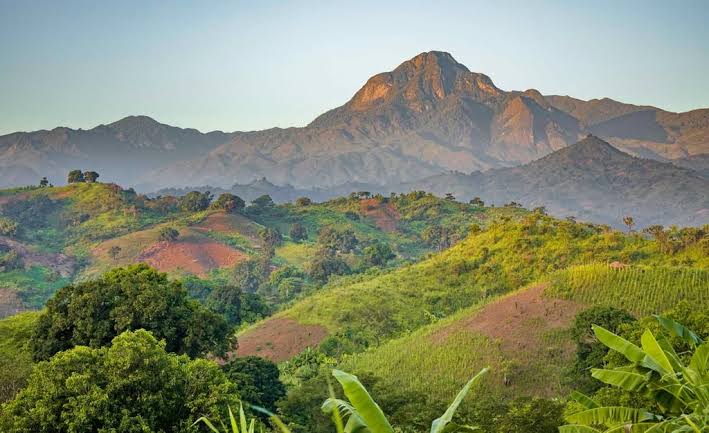
The Uluguru Mountains rise as a green wall directly behind Morogoro, close enough that the town's evening light show is the mountains themselves changing colour. They belong to the Eastern Arc, the ancient forest chain that gave Tanzania Udzungwa's endemic monkeys, and the Ulugurus carry the same deep-time biology on their ridges: old forest, species found nowhere else, and a scientific reputation far larger than their tourist one.
What makes the Ulugurus different from every other mountain on this site is how thoroughly people live on them. The lower and middle slopes are Luguru country, farmed in terraces that climb to angles most agriculture would refuse, threaded with footpaths that double as the hiking trails. A hike here moves through working villages before it reaches protected forest, and the Luguru, one of Tanzania's matrilineal societies, are as much the destination as the ridgeline.
The classic outings run from the half-day climb to the old German-era station at Morningside, above the town, to full-day peak ascents and waterfall trails, all walked with local guides from Morogoro's community tourism network.
Safari-tz.com adds the Ulugurus to southern itineraries as the culture-and-forest day the circuit otherwise lacks, since Morogoro sits directly on the road every southern safari already drives.
Uluguru at a Glance (Quick Facts)
Key Facts Before You Hike Uluguru
Quick Uluguru facts from Safari-tz.com: Eastern Arc mountains above Morogoro, community-guided day hikes, Luguru culture and no big game at all.
The short version: Eastern Arc mountains rising straight from Morogoro town, hiked in guided day trips through farmland into old forest, with culture doing half the work.
What it is: A forested mountain block above Morogoro, protected higher up as a nature forest reserve, farmed and inhabited below.
The experience: Day hikes and occasional overnights through Luguru villages and terraces into Eastern Arc forest. Cultural walking plus forest, not game viewing.
The classic trail: The climb to Morningside, a German-era mountain station above the town. Half a day up and down for reasonable legs.
The bigger days: Steep full-day peak climbs and waterfall routes for fit hikers.
Guides: Local guides through Morogoro's community cultural-tourism arrangements, which channel fees into the villages you walk through.
Wildlife honesty: No big game. Endemic forest birds, chameleons, monkeys possible, and botany that plant people cross oceans for.
Gateway: Morogoro town, three to four road hours from Dar es Salaam on the southern highway.
Best months: June to October for dry trails and clear ridge views.
Fitness: Easy-to-moderate for Morningside; genuinely steep for the peaks. These mountains rise fast and the trails follow suit.
What Are the Uluguru Mountains Famous For?
Endemic Birds, African Violets and Terraces
The Ulugurus are famous for endemic birdlife, wild relatives of the African violet, Luguru terrace farming and the Morningside trail above Morogoro
Among birders, one bird. Among botanists, one houseplant. Among everyone who has actually stood on the slopes, the terraces.
The bird first: the Uluguru bushshrike, found only in these mountains, is one of African birding's genuine prizes, and serious listers plan whole trips around the chance. The wider forest carries the Eastern Arc's signature density of endemics and near-endemics, which is why ornithologists were surveying these ridges long before any tourist thought to.
The houseplant is a better story than it sounds. The wild relatives of the African violet, the plant on half the world's windowsills, grow in Tanzania's Eastern Arc forests, the Ulugurus among their homes, and seeing the wild cousins of something so domesticated growing on a misty ridge rearranges how you look at both. The mountains' botany runs far deeper than one famous genus, and the forest here has been a collecting ground for science for over a century.
Then the terraces. Luguru agriculture climbs these slopes at angles that stop first-time visitors mid-stride, an entire landscape engineered by hand across generations, and the view of it from the trails is the image guests photograph most. Add the Morningside station, a relic of the German era sitting above the town with the plains spread below, and the Ulugurus' fame assembles itself: small, specific, and earned.
Where Are the Uluguru Mountains Located?
Finding the Ulugurus on the Map
The Uluguru Mountains rise directly behind Morogoro town in eastern Tanzania, three to four road hours from Dar es Salaam on the southern highway.
Directly behind Morogoro, and that placement is the whole logistical story. No other serious mountain landscape in Tanzania starts this close to a major town, and no other sits this squarely on a road you were probably driving anyway.
Morogoro is the junction town of the southern highway, three to four hours from Dar es Salaam depending on traffic leaving the city, and every road itinerary heading for Mikumi, Udzungwa or Ruaha passes through or near it. The mountains begin at the town's edge; trailheads are a short local transfer from the hotels, and the classic Morningside hike looks back down on the streets you had breakfast in. For trip design, this is gold: the Ulugurus convert an overnight that most southern itineraries already schedule in Morogoro from a logistics stop into a destination.
The geography also explains the character. The Ulugurus catch the moisture coming off the Indian Ocean, which is why their forests stayed lush through epochs while the plains dried around them, why the Luguru could farm the slopes so intensively, and why the ridges hold cloud in the afternoons. Morning is the mountain's honest window, for views and for legs alike.
The summary for planners: zero extra kilometres for most southern trips, one extra day, and the circuit gains its culture-and-forest chapter. Few upgrades in Tanzanian travel cost less.
Why Should I Hike the Uluguru Mountains?
The Case for the Mountains Everyone Drives Past
Why hike the Ulugurus: living Luguru culture, Eastern Arc forest, endemic birds and the easiest mountain access on the whole southern highway
Because tens of thousands of safari travellers drive past these mountains every year at highway speed, and the handful who stop get an experience the circuit cannot otherwise provide.
The cultural walking is the core of it. Most Tanzanian hiking passes through wilderness; the Ulugurus pass through a civilisation. Trails here are the working paths of Luguru daily life, and a day on them moves through terraced farms, village greetings, produce heading downhill on heads and bicycles, and the ordinary rhythm of a society organised, unusually for the region, along matrilineal lines, where land and lineage pass through mothers. Guides from the community network explain that world from inside it, and guests consistently rank those conversations above the scenery, which, given the scenery, is a serious compliment.
The forest closes the argument for the specialists. Birders come for an endemic they can find nowhere else on the planet and leave with a list of Eastern Arc specials; plant-minded travellers walk through the wild homeland of a houseplant they have known all their lives. Neither experience exists on a game drive at any price.
And there is the plain travel arithmetic: one day, no detour, modest cost, guided by people whose villages benefit directly. Very few decisions in Tanzanian trip planning offer this much return on this little logistics, and we make the case for it in almost every southern itinerary we build.
What Wildlife Can I See in the Ulugurus?
Small, Rare and Feathered: the Honest List
Uluguru wildlife is Eastern Arc small game: the endemic Uluguru bushshrike, forest birds, chameleons and monkeys possible, with no big game at all.
The honest list is short on drama and long on rarity, and travellers who understand that distinction book the Ulugurus for exactly the right reasons.
No big game lives on these hiking routes. The slopes are farmed and villaged, the protected forest sits higher, and the wildlife product is the Eastern Arc's speciality register: birds, reptiles, botany and the occasional monkey, most of it small, much of it found nowhere else. The Uluguru bushshrike headlines for birders, an endemic that makes these mountains a fixed stop on serious African birding routes, and the supporting cast of forest species keeps binoculars busy the entire forest section. Brief us if birds are the point; the guide assignment and pacing change completely, and a birding day here moves at a quarter of hiking speed by design.
The reptile department is quietly excellent. Eastern Arc forests are chameleon country of global significance, and sharp-eyed guides produce them from foliage with a regularity that feels like sleight of hand. Add the wild African violet relatives and the forest botany, and the Ulugurus reward the traveller whose idea of wildlife includes things that do not run.
Along the farmed slopes, the liveliest viewing is human agriculture at improbable angles. We frame it that way deliberately: come for culture and forest with rare small wildlife attached, and the mountains overdeliver. Come expecting animals of vehicle-viewing size, and you have booked the wrong page; Mikumi is an hour further down the same road, and we will route you there without argument.
When Is the Best Time to Hike the Ulugurus?
Uluguru Seasons and Morning Logic
Hike the Ulugurus from June to October for dry trails and clear views, and start early in any month: these mountains build cloud by afternoon.
June to October for the season, and early morning for the hour, and of the two rules the second one is less negotiable.
The dry months firm up trails that Luguru farm traffic keeps polished year-round, hold the ridgeline views open longest, and align the Ulugurus with the rest of the southern circuit's calendar, so the mountain day slots into a Mikumi-Udzungwa-Ruaha run without seasonal compromise. Within the window, the months after the long rains carry the bonus of green terraces at full production, which is when the agricultural landscape photographs best.
The morning rule comes from how these mountains make their own weather. The Ulugurus intercept Indian Ocean moisture, it is the reason their forests exist, and the practical consequence is afternoon cloud building on the ridges with a reliability you could nearly set meetings by. A dawn start buys clear summit views, cool climbing on the steep sections, and the villages at their liveliest; a late start buys mist where the view was scheduled and heat on the exposed terraces. We schedule every Uluguru day around this and decline politely when itineraries try to push the hike to an afternoon.
The rains themselves, short late in the year and long early, green the mountains spectacularly and grease the steeper paths in equal measure. Morningside stays walkable for the careful in most conditions; the big peak days become dry-season propositions, and we say so when we quote.
Are the Ulugurus Good for First-Time Hikers?
What the Slopes Ask, Trail by Trail
The Ulugurus suit first-time hikers on the Morningside trail, while the full peak days are steep, sustained climbs for genuinely fit walkers only.
Yes on Morningside, with respect on everything above it, and one warning that applies to the whole massif: these mountains do not believe in gentle gradients.
The Ulugurus rise from the plains almost without preamble, and the trails, being Luguru working paths rather than engineered switchbacks, take the slope more or less as it comes. Morningside is the correct first outing: a half-day climb on a well-walked route to the old German station and back, steep enough in stretches to earn the view, short enough that a slow pace solves everything, and social enough, with farm traffic and village life the whole way, that rest stops entertain themselves. Reasonably active first-timers finish it pleased; sedentary travellers finish it, full stop, and are proud.
The peak days are a different tier. Full-day climbs on sustained steep ground, honest heat on the open sections, and descents that interrogate untrained knees, they belong to genuinely fit walkers, and we grade them that way in every quote rather than letting summit names flatter anyone into the wrong booking. The guides pace conservatively and read their clients well; even so, the mountain marks fitness honestly, and self-assessment beforehand is cheaper than discovery halfway up.
Our standing request stands: your real walking history, not the aspirational edition. The Ulugurus have a trail for nearly everyone, and matching person to path is most of what a good mountain day is made of.
Are the Uluguru Mountains Safe?
How Risk Is Managed on Village Trails
Uluguru hiking safety rests on community guides, early starts ahead of afternoon weather, steep-trail pacing and honest fitness matching per route
The Ulugurus are among the lowest-risk mountain days we sell, and the reasons are structural rather than lucky: inhabited lopes, community guides, and no dangerous game anywhere on the routes.
The human environment is the first safety system. These are settled, farmed mountains where the trails carry daily local traffic, guides are known in every village they lead you through, and a hiker is never far from people, shade or help. The community-tourism arrangement reinforces it; the villages your fees support have every interest in your good day, and it shows in how visitors are received.
The actual risk ledger is the standard steep-trail set. Slips on polished clay and smooth rock account for nearly everything worth planning against, particularly on descents and after rain, and the countermeasures are the usual unglamorous ones: proper tread, poles for the big descents, guide-set pacing and the early start that keeps the steep work in the cool hours. Heat and dehydration on exposed terrace sections respond to water discipline and hats. The afternoon cloud that closes the views can also disorient unguided walkers on the upper paths, which is one of several good reasons the guided arrangement is not a formality we would ever suggest skipping.
The site-wide health rule closes as always: medical questions and malaria precautions for the lowland approach belong with your doctor before travel. We are a ground operator, and we stay on our side of that line everywhere on this website.
How Many Days Do I Need in the Ulugurus?
One Good Day, and When to Add More
One full day covers the Ulugurus for most travellers, with two days or a village overnight for birders, photographers and dedicated hikers.
One well-built day is the honest answer for most travellers, which makes the Ulugurus the cheapest meaningful addition on the southern circuit, and there are two profiles who should take more.
The standard day: overnight in Morogoro, dawn start up the Morningside route or an equivalent, the cultural walking and forest edge through the cool hours, back down for a late lunch, and onward toward Mikumi with the afternoon transfer, or a second Morogoro night if the pace prefers it. That single day delivers the terraces, the villages, the forest introduction and the views, and it converts a logistics overnight into most guests' surprise favourite.
Profile one for more time: birders. The bushshrike and the Eastern Arc list do not perform to a transit schedule, and a serious birding attempt wants two mornings minimum, planned with the guides around the target species' terrain. Profile two: hikers and photographers taking a peak day or a village overnight, where the second day buys either the summit or the golden-hour terraces that the standard day's timing cannot.
What we counsel against is the half-measure: attempting the Ulugurus as a highway pause without the overnight and the dawn start. The afternoon cloud schedule punishes it, the heat punishes it, and the mountains' best material, morning villages, clear ridges, active forest, sits precisely in the hours a drive-through misses. One real day or none; the in-between buys the worst of both.
What Are the Main Uluguru Hiking Trails?
The Trail Menu, Honestly Graded
Uluguru trails run from the classic Morningside half-day to steep full-day peak climbs and waterfall routes, all guided through the community network.
The menu runs from half-day heritage to full-day thigh audit, all of it guided through the community network, and grading it honestly is this section's whole job.
Morningside anchors the list: the walk up to the German-era station perched above the town, through villages and terraces into the forest edge, with the plains opening below as you climb. It is the Ulugurus' signature outing, the right first exposure for nearly everyone, and a half-day commitment that punches far above its logistics. Waterfall routes on the massif's flanks offer alternatives at similar effort, seasonal in their drama and confirmed with the guides for current conditions.
The peak days step up sharply. Routes to the summits above Morogoro climb steep, sustained forest paths, ask full-day fitness and reward it with ridge-top views across the plains toward the rest of the southern circuit, cloud schedule permitting, which is why every peak day we build starts at dawn. Village-overnight variants exist for travellers who want the terraces at both ends of the light, arranged through the same community structures the day hikes support.
Route availability, current conditions and the right match for your group are confirmed with the Morogoro guides when we build the itinerary; trail realities on farmed, weathered mountains shift with seasons, and we would rather hand you this month's truth than a printed list's version of last year's. Tell us your legs and your interests, and the menu narrows itself.
Where Do I Stay for an Uluguru Hike?
Beds in the Town Below the Wall
Uluguru hikers base in Morogoro town, which offers Tanzania's widest highway-town lodging range, with village overnights possible on the mountain.
Morogoro is the base, and for once on this side of the country, the accommodation paragraph carries good news: this is a proper town with a proper range.
As the southern highway's junction city, Morogoro offers everything from business hotels to garden lodges to budget guesthouses, most within a short transfer of the trailheads, and the mountain wall provides the view from a satisfying number of breakfast terraces. The positioning logic that matters is the usual one: the dawn start rules everything in these mountains, so we place hiking clients where the morning transfer is minutes rather than logistics, and where an early breakfast is an arrangement rather than a negotiation. Standards run comfortably above the deep-south simplicity of Matema or Tukuyu, which makes the Ulugurus the softest landing in this whole trekking cluster for travellers calibrating their appetite for simple.
On the mountain itself, village overnights are the alternative for the committed: arranged through the community network, honestly simple in the mattress-net-and-bucket-shower register, and paid back in full by dusk and dawn among the terraces, the hours day visitors never see.
Booking pressure here is mild by Tanzanian standards, but the better hiking-convenient options still fill around conference seasons and holiday weekends, town rhythms rather than tourist ones, and we hold rooms accordingly when the itinerary locks.
Are the Ulugurus Suitable for Families?
The Family Answer: Warmly, on the Right Trail
The Ulugurus suit active families well: Morningside works for school-age walkers, with village life, terraces and forest edges holding attention.
Warmly yes, on the right trail, and for a reason particular to these mountains: the walking is never boring for a child, because the walking is never empty.
Wilderness trails ask children to sustain interest in scenery; Uluguru trails hand them a continuous parade. Village greetings, chickens with opinions, farm loads moving on heads and bicycles, terraces to puzzle over, a guide producing chameleons from apparently empty bushes, and the promise of the old station or a waterfall as the finish line. Morningside at family pace is one of the most naturally child-compatible mountain days in Tanzania, and guides from the community network handle young walkers with the ease of people whose own children use these paths for the school run.
The boundaries are the standard steep-mountain set. The gradients are real, so a child who genuinely hates climbing will register the protest early; the family pace should own the schedule, with the dawn start softened to early-morning rather than abandoned; and the full peak days remain adult territory, fit hiking teenagers considered case by case with guide judgement final. Sun and water discipline matter on the open terrace sections, small legs dehydrating faster than they report.
The combination that works: the Uluguru family day between Dar and Mikumi, culture and legs before the game drives begin. Children arrive at their first elephant already invested in Tanzania, which changes how the whole safari lands.
What Should I Pack for the Ulugurus?
Packing for Steep Paths and Villages
Uluguru packing list: grippy walking shoes, sun and rain layers, plenty of water, modest village-appropriate clothing and binoculars for the forest.
Pack for a steep day walk through inhabited country, which adds one consideration most mountain lists skip: you are a guest in villages the entire way.
The trail kit is the standard steep-day set: walking shoes or light boots with genuine tread, because Luguru foot traffic polishes these paths to a shine that punishes smooth soles; sun protection for the open terrace sections, where the equatorial morning arrives with intent; a light rain layer year-round, these being mountains that manufacture their own weather; water in per-person quantities that feel generous at packing and correct at noon; and poles if descents trouble your knees, which the Ulugurus will establish definitively either way. Binoculars earn their carry from the first forest edge, doubly so for anyone with bird intentions.
The village consideration shapes the wardrobe: practical, modest clothing reads as respect in Luguru country, shoulders and knees covered travels better than athletic minimalism, and the safari costume registers as odd on a farm path. Small denominations of cash serve the produce, crafts and refreshments that appear along the way, and buying something in a village your fees already support completes the economics the right way.
Cameras deserve one briefing line: the terraces and views photograph freely, but people are people, and the guides will broker portrait permissions properly. Ask first travels well in every language, and here it is simply the standing rule.
How Much Does an Uluguru Hike Cost?
What You Are Paying For at Morogoro
Uluguru costs combine community guide fees, modest reserve charges, town lodging and short transfers, making it a low-cost, high-value mountain day.
The Ulugurus are the least expensive serious mountain day on this entire site, and the structure explains it: no park gate premium, no flights, no expedition logistics, and a fee system built to fund villages rather than infrastructure.
The invoice assembles from small parts. Community guide fees through the Morogoro network, which is the component doing double duty as the local economy's share; modest charges where routes touch the protected forest; town lodging at Morogoro's un-touristed rates; and transfers measured in minutes rather than fuel budgets. Village overnights and peak-day logistics add their honest increments for those variants. Against the southern circuit's park days, the Uluguru day typically registers as the itinerary's smallest line, which is a strange status for what many guests rank among its best days.
Figures stay off the page per standing policy; community arrangements and reserve charges revise on their own schedules, and printed numbers curdle. Your quote arrives current and itemised, guiding, fees, lodging and transfers on separate lines.
One value note we make openly: cheap here does not mean corners cut, it means the cost base is genuinely small. The guides are paid properly through a structure their communities run, and the difference between our quote and a street-corner arrangement in Morogoro is the difference between that structure functioning and it being bypassed. We are unapologetic about pricing the functioning version.
How Do I Get to the Uluguru Mountains?
The Easiest Approach on This Site
Reach the Ulugurus via Morogoro town, three to four highway hours from Dar es Salaam, with trailheads a short local transfer from the hotels.
By the southern highway to Morogoro, which your itinerary was very likely driving anyway, and then a local transfer measured in minutes. This is the easiest approach of any mountain on this website, and we intend the sentence exactly as written.
From Dar es Salaam, the highway run to Morogoro takes three to four hours with the honest variable being escape velocity from Dar's traffic, which is why we schedule the leg early and treat the arrival afternoon as settling-in rather than achievement. Travellers already on the southern circuit have it easier still: Morogoro sits on the route between Dar and Mikumi, so the mountains cost nothing in kilometres, only the decision to stop. From the town, trailheads for the classic routes are short local transfers, and the dawn-start logic covered in the seasons section is the only timing discipline the approach demands.
No flights, no boats, no seasonal road closures worth the name, no four-by-four dependencies: the Ulugurus' access paragraph is the shortest on the site because there is genuinely little to manage. What planning attention they do require goes instead into the morning schedule and the guide arrangements, both of which we lock in advance so the day starts when the mountain is at its best.
If Tanzania's other wild hikes are expeditions, this one is an appointment. Keeping it early is the entire trick.
Can the Ulugurus Be Combined With Other Parks?
The Ulugurus' Place in the Circuit
Combine the Ulugurus with Mikumi, Udzungwa and Ruaha on the southern road, adding the circuit's culture-and-forest day where the highway already runs.
The Ulugurus combine with the entire southern road because they sit on it, and the itinerary logic writes itself once that registers.
The natural sequence runs Dar, Morogoro and the Uluguru day, then Mikumi's game drives, Udzungwa's forest trails, and Ruaha for the deep-safari finale, a progression that opens with culture, adds savannah, deepens through forest and closes wild, each stage an honest step further from the highway. The Uluguru and Udzungwa pairing deserves its own sentence: two Eastern Arc experiences a day apart, the inhabited mountains and the protected ones, farmed slopes then roadless forest, and together they teach the Eastern Arc story better than either alone. Travellers heading instead for Nyerere's river country make the Uluguru stop pay identically on the way through.
For the walking-first traveller, the Ulugurus open the same chain this cluster keeps building: Uluguru culture-walking, Udzungwa's trails, then south to Rungwe, Kitulo and the Livingstones for the highlands trilogy, a road itinerary of Tanzanian walking that encounters almost no other tourists between its first terrace and its final beach.
The one caution mirrors Udzungwa's: resist the drive-past. The mountains reward the overnight and the dawn, and glancing at them from the highway while promising yourself next time is exactly how tens of thousands of travellers a year maintain the emptiness we then sell. We prefer you on the inside of that statistic.
Ulugurus vs Udzungwa vs Usambara?
Three Arcs of the Same Ancient Chain
Ulugurus, Udzungwa or Usambara? Compare the Eastern Arc's three walking destinations by culture, forest, wildlife and access to pick your mountains.
The Eastern Arc offers three walkable chapters, and they divide the chain's inheritance three ways: Udzungwa took the wildlife, Usambara took the infrastructure, and the Ulugurus took the culture.
Udzungwa is the protected one, a national park with no roads inside, endemic primates with realistic sighting odds, and trails from half-day to full trek; choose it when forest wildlife is the point, and read its own page on this site. Usambara, in the north-east, is the established one: the longest-running village-trekking scene in Tanzania, the widest guesthouse network, multi-day routes between viewpoints, and the easiest logistics for extended walking; choose it when the trek itself is the holiday and comfort in the simple register matters. The Ulugurus are the lived-in one: the most intensively farmed and inhabited slopes of the three, the matrilineal Luguru world threaded through every trail, the endemic bushshrike for the listers, and access so painless it embarrasses the other two; choose them when culture leads, time is short, or the southern circuit is already your road.
Fitness separates them less than character does; all three grade their steep sections honestly and scale to the walker. Access separates them completely: the Ulugurus win outright for the southern road, Usambara suits northern itineraries via the Tanga side, and Udzungwa asks one extra highway stage past Mikumi.
The completist's answer, as ever in this cluster: the chain is one story, and travellers with the days for two chapters rarely regret the second.
Why Book the Ulugurus With Safari-Tz.Com?
Small Logistics, Done Properly Anyway
Book the Ulugurus with Safari-tz.com: community guide coordination, dawn-start scheduling, honest trail matching and itemised southern quotes.
The Ulugurus are logistically small, which tempts trip planners into treating them casually, and casual is precisely how this mountain day underdelivers. The failure modes are all timing and matching: the late start that meets the afternoon cloud, the fit-sounding peak route sold to a Morningside-grade group, the guide arrangement improvised at a hotel desk instead of confirmed through the community network, the drive-past that promises next time. Nothing about the fix is complicated. It simply has to be done, in advance, by someone who knows which details carry the day.
Booking with us buys exactly that: the Morogoro overnight positioned for a minutes-long morning transfer, the dawn start held against itinerary pressure, the trail graded to your group's real legs, the community guides engaged through the structure that pays their villages properly, and the day integrated into the southern circuit's rhythm so it strengthens the trip around it. Lead guides Geoffrey Komba, William Mwasimba, and Isaac Munuo oversee our operations, and a one-day mountain gets the same planning discipline as a week in the west, because guests do not experience our logistics in proportion to their size.
We will also tell you honestly when the Ulugurus fit your trip and when they do not; culture-led walking is a specific pleasure, and matching it to the travellers who will love it is the job.
- Request your free tailor-made safari quote
- Chat with a safari expert on WhatsApp: +255 740 666 662
- info@safari-tz.com
Tell us your dates, your walking appetite, and whether the southern circuit continues past Morogoro. You will get a matched trail, a dawn-built day plan and an itemised quote.