Usambara Mountains Climbing Guide
usambara mountains overview
usambara at a glance (quick facts)
what are the usambara mountains famous for?
where are the usambara mountains located?
why should i trek the usambara mountains?
what wildlife can i see in the usambaras?
when is the best time to trek the usambaras?
are the usambaras good for firsttime trekkers?
are the usambara mountains safe?
how many days do i need in the usambaras?
what are the main usambara trekking routes?
where do i stay in the usambara mountains?
are the usambaras suitable for families?
what should i pack for the usambaras?
how much does a usambara trek cost?
how do i get to the usambara mountains?
can the usambaras be combined with other trips?
usambara vs uluguru vs udzungwa?
why book the usambaras with safaritz.com?
Usambara Mountains Overview
Walking the Green Highlands of Lushoto
Usambara Mountains overview from Safaritz.com: established villagetovillage trekking around Lushoto, from day walks to multiday ridge routes.
The Usambara Mountains rise off the northern highway between Arusha and the coast, a block of cool, intensively farmed highlands that has been welcoming walkers longer than anywhere else in Tanzania. Lushoto, the old German hill town at their heart, anchors a trail network that runs from halfday viewpoint walks to multiday villagetovillage routes across the ridges, guided through culturaltourism arrangements that have been refining themselves for decades.
Like Udzungwa and the Ulugurus, the Usambaras belong to the Eastern Arc, the ancient chain whose isolated forests manufactured species found nowhere else. The mountains' most famous export sits on windowsills worldwide: the African violet was first collected for science in these forests in the 1890s, and its wild relatives still grow here. The eastern block adds Amani, a rainforest reserve built around a Germanera research station, where the Arc's endemic birdlife concentrates.
What distinguishes the Usambaras inside our trekking cluster is establishment. Guesthouses stand a day's walk apart, guides know routes their fathers guided, and multiday walking here comes with beds, hot food and a town to start from. It is the gentlest entry into Tanzanian trekking we sell.
Safaritz.com builds Usambara treks into northern itineraries, where the mountains sit conveniently between Arusha's safari circuit and the coast.
Usambara at a Glance (Quick Facts)
Key Facts Before You Trek Usambara
Quick Usambara facts from Safaritz.com: Lushotobased village trekking, guesthousetoguesthouse routes, Irente views and Amani's rainforest.
The short version: Tanzania's most established village trekking, based in Lushoto, walked guesthouse to guesthouse, with the country's easiest multiday logistics.
What it is: Two mountain blocks in the northeast: the West Usambaras around Lushoto for village trekking, and the East Usambaras around Amani for rainforest and birds.
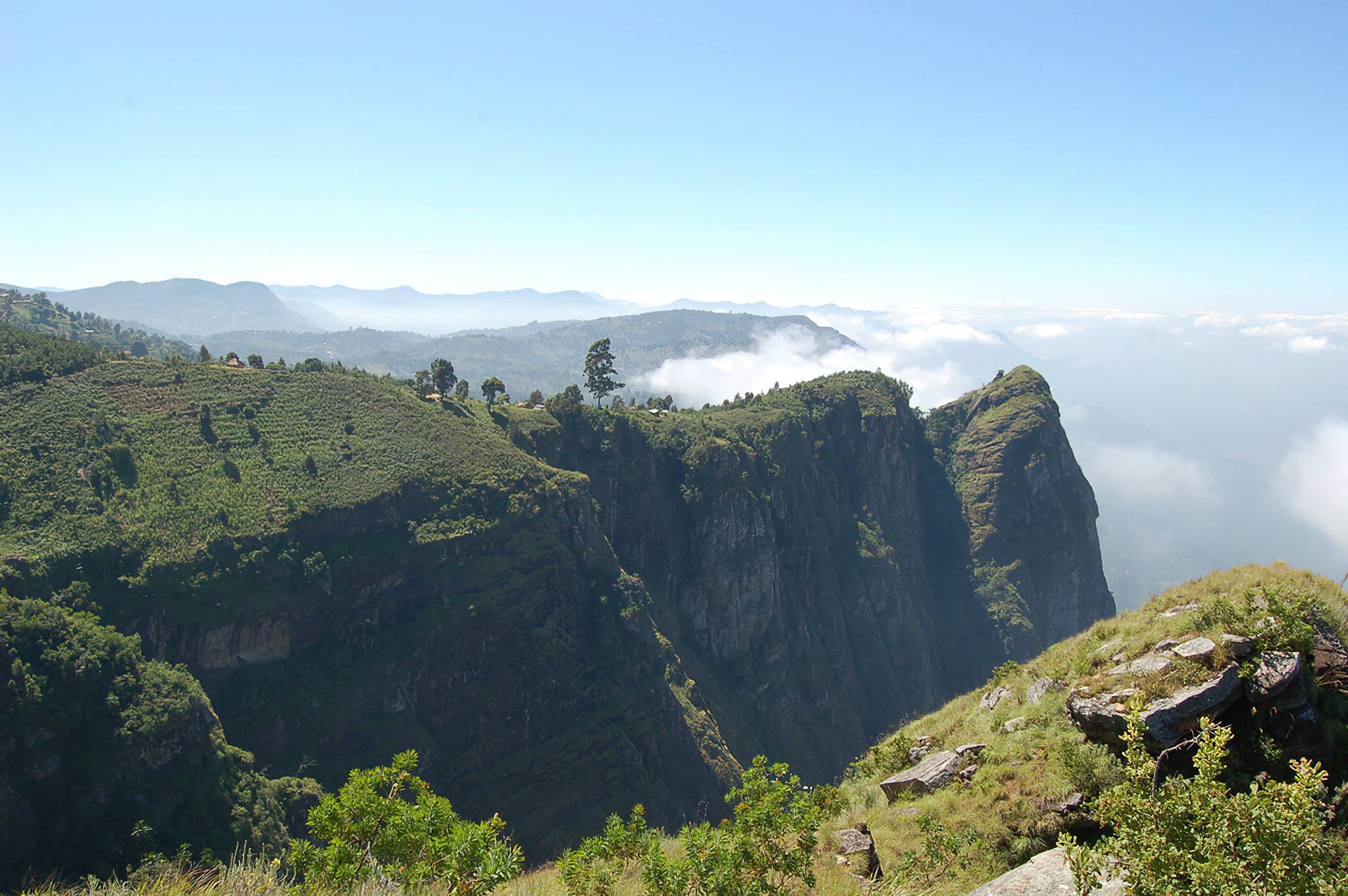
The signature view: Irente Viewpoint, where the mountains end in cliffs and the Maasai plains open hundreds of metres below.
The classic trek: Multiday villagetovillage routes across the western ridges, with the walk toward the edgeoftheworld village of Mtae the best known.
The style: Guesthousetoguesthouse. Beds, hot meals and local hosts most nights; no expedition camping required.
Guides: Local guides through Lushoto's longrunning culturaltourism arrangements.
Wildlife honesty: No big game. Endemic birds, chameleons and forest botany, with Amani the specialist's block.
Gateway: Mombo junction on the Arusha–Dar highway, then the climb road up to Lushoto.
Best months: June to October, with December to February a solid second window.
Fitness: Scales from easy day walks to honest multiday distances. Gradients are moderate by this cluster's standards; the Usambaras roll where the Ulugurus climb
What Are the Usambara Mountains Famous For?
Viewpoints, Violets and Village Trails
The Usambaras are famous for the Irente Viewpoint, the African violet's original forests, Mtae's ridgeedge village and Tanzania's oldest trek network.
Three fames, in ascending order of how far they travelled: a viewpoint, a trail network, and a houseplant that conquered the world.
The viewpoint first, because it is the image that sells the mountains. At Irente, near Lushoto, the highlands simply stop: cliffs drop to the Maasai plains, the lowland heat shimmers far below your cool ledge, and on clear days the view runs toward the Pare mountains and beyond. Mtae, at the far end of the classic multiday route, repeats the trick at village scale, a settlement built along the ridge edge where sunset happens below eye level. These edges are the Usambaras' signature: nowhere else in this cluster does the walking end at drops like these.
The trail network is the working fame. Village trekking here predates most of Tanzania's tourism, the routes link farms, forests, markets and viewpoints in walkable daily stages, and the guesthouse spacing turned multiday walking from expedition into holiday decades before anywhere else in the country managed it.
The houseplant is the global fame. The African violet was first collected for science in these forests in the 1890s and named for the German officer who sent it home; the descendants sit on windowsills on every continent, and the wild originals still grow in the Usambaras' shade. Amani's forests in the eastern block guard that botanical inheritance along with the Arc's endemic birds, which is why plant people and listers treat these mountains as pilgrimage ground.
Where Are the Usambara Mountains Located?
Finding the Usambaras on the Map
The Usambara Mountains rise in northeast Tanzania above the Arusha–Dar highway, reached via Mombo junction and the climb road to Lushoto town.
Northeast Tanzania, in Tanga region, directly above the highway that every overland traveller between Arusha and the coast already drives. That placement makes the Usambaras this cluster's northern answer to the Ulugurus' southern convenience: the mountains sit on a road your itinerary probably uses anyway.
The approach is a small event in itself. From Mombo, the junction town on the main highway, the road climbs into the mountains through a sequence of bends that gains the highlands in under an hour, the temperature dropping noticeably as the plains fall away, until Lushoto appears in its valley of gardens and old German buildings. Travellers from Arusha or Moshi reach Mombo in a solid half day; from Dar the run is longer and usually argues for an overnight somewhere sensible. The eastern block is a separate approach via the Tanga side, with Amani reached by its own forest road, and combining both blocks is a routing decision we make deliberately rather than an addon.
The neighbourhood matters for trip design. The Pare mountains fill the gap toward Kilimanjaro, the Tanga coast and Pangani's old port lie below to the east, and the northern safari circuit sits a highway ride west. The Usambaras therefore slot into northern itineraries the way the Ulugurus slot into southern ones: zero meaningful detour, one decision to stop, and the trip gains a chapter nothing else in it resembles.
Why Should I Trek the Usambara Mountains?
The Case for Tanzania's Gentlest Trek
Why trek the Usambaras: multiday walking with real beds, ridgeedge views, living Sambaa culture and the easiest trekking logistics in Tanzania.
Because the Usambaras solved the problem that keeps most travellers from multiday trekking: they removed the suffering without removing the walk.
Everywhere else in this cluster, walking for several days means tents, carried loads and bucket showers, worn as badges by those of us who enjoy them. The Usambaras replaced the tents with guesthouses spaced a day's walk apart, the carried loads with light daypacks, and the trail rations with hot dinners cooked by hosts, and they did it decades ago, which is why the arrangements actually work. The result is the only trek in Tanzania we recommend without hesitation to fit travellers who have never trekked: real distances, real ridges, real villages, and a bed with a roof at the end of every stage.
The days themselves carry the argument. Sambaa farm country rolls past in terraces and market paths, the forest sections deliver chameleons and birdsong, and the route keeps producing its signature payoff, edges where the mountains stop and the plains appear below like a map of somewhere hotter. Guests who walked to Mtae describe the arrival, along a ridge into a village with sky on both sides, as the single best afternoon of their Tanzania trip, safari included, and they say it often enough that we have stopped being surprised.
Add the cool climate, a genuine relief miditinerary, and the case closes itself: this is the trek for people who suspected they might like trekking. They do.
What Wildlife Can I See in the Usambaras?
Small, Endemic and Feathered: the List
Usambara wildlife is Eastern Arc small game: endemic birds around Amani, chameleons on every trail, monkeys possible, and no big game anywhere.
The honest register, consistent across our Eastern Arc pages: no big game, and rarity in place of drama. The Usambaras' wildlife fits in your hand, perches in the canopy, or grows in the shade, and the travellers who book for exactly that leave the happiest.
Birds lead, and the eastern block leads the birds. Amani's rainforest is one of East Africa's storied birding sites, holding Usambara endemics and Eastern Arc specials that serious listers cross continents for, with the reserve's research history meaning the forest is unusually well documented and well guided. Names on the endemic list carry the mountains' own name, which tells you what the ornithologists concluded. Birders should declare themselves at planning stage; an Amani birding itinerary is a different product from a Lushoto trek, moving at watching pace with specialist guides, and we build it that way from the start.
On the western trekking routes, the register is trail wildlife: chameleons produced from hedges by guides with practiced eyes, monkeys possible in the forest patches, butterflies in numbers, and the botany that made these mountains famous, wild African violets included where the forest keeps its shade. The farmed sections offer the same lively human landscape as the Ulugurus, market traffic and terrace agriculture standing in for game.
The redirect stands as ever: travellers wanting animals at vehicle scale belong on the safari circuit west of here, and we route them there without argument. The Usambaras sell a quieter kingdom, honestly labelled
When Is the Best Time to Trek the Usambaras?
Usambara Seasons, Honestly Told
Trek the Usambaras from June to October or December to February. The highlands stay cool yearround, and the rains mainly cost you the big views.
June to October first, December to February second, and a gentler seasonal penalty than anywhere else in this cluster, because the Usambaras' altitude keeps them walkable when the lowlands swelter.
The long dry season delivers the mountains at their most reliable: firm trails, cool bright days made for distance, and the clear air that the viewpoint fame depends on, since Irente and Mtae sell their drops by visibility and a hazy day refunds nothing. December to February, the short dry window, walks nearly as well, greener underfoot, warmer, with afternoon buildups possible but rarely tripshaping, and it suits travellers threading the mountains between northerncircuit safaris and coast time in the high season.
The rains, short late in the year and long from around March to May, green the terraces spectacularly and charge the mountains' streams, and their real cost is specific: mud on the steeper connecting paths, and cloud sitting exactly where the views live. Village trekking continues for the flexible, the guesthouse structure forgiving weather in a way camping never does, and we run wetseason Usambara for travellers who accept trading panoramas for atmosphere. Amani's rainforest, for its part, hardly acknowledges seasons except in birdsong.
The operator note we add every time: pack for cool evenings in any month. Firsttime visitors read "Tanzania" and pack for heat, then meet a Lushoto night at altitude. The fleece you doubted earns its place by the first dinner.
Are the Usambaras Good for FirstTime Trekkers?
The Friendliest MultiDay Walk We Sell
The Usambaras are Tanzania's best first trek: honest daily distances, moderate gradients, guesthouse nights and routes that scale to any walker.
Yes, more completely than anywhere else on this website, and the recommendation comes with its reasons attached rather than asterisks.
The gradients are the kind first. Where the Ulugurus climb and Rungwe wallows, the Usambara routes roll: honest ups and downs between villages, steep pitches in stretches rather than campaigns, and daily distances set by guesthouse spacing that generations of walkers have already voted sensible. A reasonably active person who walks at home handles the classic multiday stages comfortably, and the network's density means routes shorten or lengthen to match the group, a flexibility campingbased treks cannot offer.
The support structure is the second reason. A bed, a hot dinner and a roof reset a body in ways a tent never will, luggage transfers between stages can be arranged so daypacks stay light, and a walker having a hard day is never more than hours from a road, which changes the psychology of committing to day three. The guides, drawing on the longest guiding tradition in Tanzanian trekking, read firsttimers well and pace accordingly.
The honest asterisk, singular: multiday walking is still multiday walking. Legs tired by day two stay in the conversation until the end, hills do not negotiate, and the standing request applies here as everywhere, your real walking history at planning stage, not the aspirational edition. The Usambaras will be kind to almost anyone. Matching the route length to the truth is what lets them.
Are the Usambara Mountains Safe?
How Risk Is Managed on Village Routes
Usambara trekking safety rests on established guides, inhabited routes, viewpoint common sense and the gentlest remoteness profile in the cluster.
The Usambaras carry the friendliest risk profile of any trek we sell, for the same structural reasons the Ulugurus do, multiplied by decades of established practice: inhabited routes, known guides, no dangerous game, and a road never far from the trail.
The human environment does the heavy lifting. These are settled, farmed highlands where trails carry daily local traffic, guides work routes their communities have guided for generations, and the guesthouse network means a walker with a problem is always within reach of a bed, a phone signal and a vehicle. The culturaltourism structure aligns everyone's interests in your good week, and it shows.
The genuine risk items are two, and both respond to ordinary discipline. First, the standard steeptrail ledger, slips on polished clay after rain, rolled ankles on rough connecting paths, managed by tread, poles for those who want them, and guide pacing. Second, and specific to these mountains, the edges. Irente, Mtae and the route's other dropoffs are unfenced viewpoints above serious cliffs, magnificent and indifferent, and the rules are the obvious ones applied without exception: guide's positioning advice followed, photographs taken from feet planted well back, children within arm's reach, and wind respected. The edges have excellent safety records precisely because everyone treats them as edges.
The sitewide close as always: health questions, malaria thinking for the lowland approaches included, belong with your doctor before travel. We arrange mountains, not medicine.
How Many Days Do I Need in the Usambaras?
Two Days, Four Days, or the Full Week
The Usambaras reward two days around Lushoto, shine on the classic threetofourday trek toward Mtae, and fill a week with Amani added.
Two days minimum, three to four for the mountains' best product, and a week if Amani joins the plan. The Usambaras scale honestly at every length, and the choice is really about which of their three offers you are buying.
The twoday version is Lushotobased: a guesthouse in or near town, day walks to Irente and the nearer forest and village circuits, and the highlands experienced as a cool, green interlude inside a northern itinerary. It is a genuine visit rather than a sample, and for travellers threading safari and coast on a schedule, it is the honest recommendation.
The threetofourday trek is the signature. Villagetovillage stages across the western ridges toward Mtae, guesthouse nights along the way, and the slow accumulation that makes multiday walking worth its name: farms giving way to forest giving way to edges, hosts and markets changing character with the miles, and the ridgeline arrival that Section 5 already spent its superlatives on. This is the version we mean when we call the Usambaras Tanzania's best first trek.
The week adds the eastern block, repositioning to Amani for rainforest and the Arc's birds, a different mountain range in everything but name, and the combination covers the Usambaras' whole hand: culture, edges and endemics. Birders often invert the ratio and give Amani the lion's share, which is exactly what planning stage honesty about your interests is for.
What Are the Main Usambara Trekking Routes?
The Route Menu, Honestly Graded
Usambara routes run from Irente day walks to the classic multiday village trek toward Mtae, with Amani's rainforest trails as the eastern chapter
The menu has three shelves, and the grading is friendlier than anywhere else in this cluster.
The day walks stock the first shelf. From Lushoto, guided circuits reach Irente Viewpoint and its neighbouring edges, the royal village heritage sites of the old Sambaa kingdom, waterfall and forest loops, and the farmandmarket paths that surround the town. Any of them fills a half or full day at conversational pace, and the viewpoint walks are the correct first date with these mountains.
The classic trek fills the second shelf: the multiday villagetovillage routes running west and north across the ridges, with the line toward Mtae the best known and best loved. Stages run at honest but humane daywalk lengths between guesthouse villages, the route braids so that threeday and fourday versions both exist without padding, and luggage transfer between stages keeps the walking light for those who want it. Variations reach markets on their weekly days, viewpoint detours, and quieter parallel paths when the guides judge the group would prefer them.
Amani's trails stock the third shelf, over in the eastern block: rainforest walking around the old research station, botanical paths through the Germanera plantings and the wild forest beyond, and the birding circuits that make the reserve's name. Gradients there are gentle; attention, not fitness, is the currency.
Route availability and current conditions are confirmed with the Lushoto and Amani guides at booking, per this cluster's standing rule: this month's truth, not last year's list.
Where Do I Stay in the Usambara Mountains?
The Cluster's Most Comfortable Beds
Usambara lodging runs from Lushoto lodges to village guesthouses on the trekking routes, the widest and most comfortable network in the cluster
The Usambaras hold the strongest accommodation hand in our entire trekking cluster, and it changes what kind of holiday multiday walking can be.
Around Lushoto, the range runs from established lodges with gardens and fireplaces, some occupying Germanera farms and buildings that are attractions in their own right, down through solid midrange options to simple guesthouses, and the cool climate makes the fireplace detail more than decorative. Farm lodges in the surrounding hills add the region's celebrated homegrown table, bread, cheese and produce from the property, which after a day's walking constitutes a serious argument. On the trekking routes, village guesthouses carry the stages: simple, clean, warmblanketed rooms with hot dinners and hosts for whom walkers are a decadesold normality rather than an event, which shows in how smoothly the evenings run.
Amani offers its own modest reserve accommodation and nearby options, functional bases for forest days rather than destinations, and we brief that plainly.
The calibration speech this cluster usually requires arrives here in its mildest form: nothing in these mountains is luxury by northerncircuit definitions, but the Usambaras are where simple stops costing comfort. Booking pressure concentrates on the better Lushoto properties in the dry peaks and around holidays; the village network absorbs trekkers more forgivingly. We hold the beds when the route locks, and we match the mix, lodge bookends with village middles is the popular pattern, to each traveller's stated threshold.
Are the Usambaras Suitable for Families?
The Cluster's Best Family Mountains
The Usambaras are the cluster's best family trek: short stages, real beds, living villages and viewpoint rules children can be taught and kept to.
The friendliest family answer in this whole cluster, and for structural reasons rather than optimism: beds, short stages, and a landscape that entertains children by itself.
The guesthouse network is the family's decisive advantage. Children who would mutiny by the second camping night reset completely in a real bed after a hot dinner, stages can shorten to child pace without wrecking the route, luggage moves by transfer so nobody carries a sulking sixyearold's pack, and a family having a hard day is hours from a road rather than days. The trails themselves run the same continuous parade that makes the Ulugurus work for children, villages, markets, chameleons on demand from the guides, and the trek's builtin rewards ladder of viewpoints, with the Mtae arrival as a finish line children remember into adulthood.
The boundaries are two, one soft and one hard. Soft: multiday walking still asks for children who fundamentally like walking, and the family pace must own the schedule from the planning stage, which is exactly what the route's flexibility exists for. Hard: the edges. Irente, Mtae and the route's other drops are unfenced cliffs, the viewpoint rules in the safety section apply to children doubled, arm's reach, feet planted, guide's word final, and families who cannot rely on a child to hold those rules should take the daywalk version and skip the ridgeedge nights. We say that plainly because the edges deserve it.
The pattern that works: Usambara trek between safari and coast. Children arrive at the beach already legends in their own dinner stories.
What Should I Pack for the Usambaras?
Packing for Cool Highlands and Long Days
Usambara packing list: walking shoes with tread, warm evening layers in any month, rain shell, daypack setup for luggage transfers and binoculars.
Pack for a coolclimate walking holiday with village nights, and let the luggagetransfer system do what it was built for: your day carries a daypack, your bag travels ahead.
The walking kit: shoes or light boots with real tread for paths that mix clay, rock and farm traffic polish; a daypack sized for water, layers, camera and snacks; sun protection for the open ridge sections, where altitude sharpens the equatorial sun even in cool air; and a rain shell yearround, these being mountains with their own weather opinions. Poles remain a personal vote; the rolling gradients demand them less than anywhere else in the cluster, and the long descents off the ridges still reward them.
The Usambaraspecific emphasis is warmth, and it surprises everyone: proper evening layers, a fleece at minimum and a warm hat for the higher villages, because Lushoto nights and ridgetop guesthouses run genuinely cold by Tanzanian instincts, and blankets, however generous, work better on a warmly dressed guest. Add the villagecountry wardrobe rule this cluster holds throughout, practical and modest travels as respect, plus small cash for markets, produce and crafts along the stages, and binoculars promoted from optional to standard the moment Amani enters the itinerary.
The softbag rule matters less here than on the flyin treks, but the transfer system still prefers duffels to hard shells, and so do the guesthouse stairs. Pack light, dress warm at night, and let the mountains carry the rest.
How Much Does a Usambara Trek Cost?
What You Are Paying For at Lushoto
Usambara costs combine guide fees through the culturaltourism structure, guesthouse nights, luggage transfers and highway access. Quotes itemised
The Usambaras price like what they are: an established, roadaccessed, guesthousebased trek, which lands them among the bestvalue multiday experiences in Tanzania and the gentlest invoice in this cluster after the Ulugurus' single day.
The build is transparent. Guide fees flow through the culturaltourism structure that has run these routes for decades, the component doing double duty as the villages' share; guesthouse nights and meals price in the honest local register; luggage transfers between stages add their modest line for those who take them; and the access layer is highway fuel and hours rather than airfares, with the Mombo–Lushoto climb the only special leg. Amani adds reserve fees and its own guiding when the eastern block joins. Where routes touch protected forest, small charges apply and we confirm them current at quoting, per the standing policy that keeps printed numbers off every page in this cluster: fees revise on their owners' schedules, and stale figures are misinformation wearing confidence.
Your quote arrives itemised, guiding, lodging, transfers and fees on separate lines, for your dates and group.
The value framing we repeat from experience: measured per rewarding day, a Usambara trek routinely undercuts a single premium park day on the circuits either side of it, and travellers who added it "to break the journey" have a habit of filing it among the trip's best decisions. The mountains have been overdelivering at this price point for decades. We simply keep the arrangement honest.
How Do I Get to the Usambara Mountains?
The Highway, the Climb, the Hill Town
Reach the Usambaras via Mombo on the Arusha–Dar highway, then the mountain road to Lushoto. Amani is a separate approach from the Tanga side.
Via Mombo, the junction on the Arusha–Dar highway, then the mountain road that climbs to Lushoto, and the whole approach runs on tarmac, which in this trekking cluster qualifies as luxury access.
From the Arusha and Moshi side, the highway run to Mombo fills a solid half day, comfortably done as a morning leg with Lushoto reached by midafternoon, teatime in the hill town being the traditional and correct arrival. From Dar the drive is longer and honest planning treats it accordingly, either as a full committed day or broken en route; travellers connecting from Zanzibar and the coast can route via Tanga, which also opens the door to Amani on the way. The Mombo–Lushoto climb itself takes under an hour of continuous bends, gains its altitude visibly, and delivers the trip's first temperature drop as a physical sensation, the moment guests understand why they packed the fleece.
Amani's approach is separate and slower: from the Tanga side by a forest road that respects rain, into the reserve where the eastern block's accommodation waits. Combining both blocks is a routing sequence, west then east or the reverse, that we build deliberately around your onward direction, coastbound itineraries favouring the westfirst order.
No flights required, no boats, no serious seasonal gambles on the Lushoto side: the Usambaras' access matches their character. Established, comfortable, and waiting just off a road you were driving anyway.
Can the Usambaras Be Combined With Other Trips?
The Usambaras' Place in an Itinerary
Combine the Usambaras with the northern safari circuit, Kilimanjaro country, or the Tanga and Pangani coast, the trek between savannah and sea.
The Usambaras are the northern itinerary's missing middle: the walking chapter between safari and sea, positioned exactly where the classic routes already run.
The signature combination is the full northern arc: safari circuit first, Serengeti, Ngorongoro, Tarangire in whatever composition your trip carries, then the highway east with the Usambara trek as the cool green interlude, finishing on the coast, whether the Tanga and Pangani shore directly below the mountains or Zanzibar beyond it. That sequence orders itself for good physiological reasons: gamedrive stiffness walks off beautifully on village trails, and trektired legs meet the Indian Ocean with welldocumented gratitude. Kilimanjaro climbers use the mountains the other way, as the gentle unwinding after summit week, knees permitting, and we schedule that version with the descent days it honestly needs.
The Pangani coast deserves its own sentence in this section: the old port and its beaches sit close below the eastern mountains, quiet in a way Zanzibar stopped being, and the trektoPangani finish is one of the most underrated weekendings we build.
For the walking completists, the Usambaras open the Eastern Arc chain from the north: Usambara first, then the Ulugurus and Udzungwa down the southern road on another trip or an ambitious single one, the chain's three walkable chapters covered on their own pages here.
The standing caution closes as ever: the drivepast is the region's oldest mistake. Mombo junction has watched half a century of travellers promise themselves next time. The mountains prefer this time, and so, on the record, do we.
Usambara vs Uluguru vs Udzungwa?
The Arc's Three Chapters, Compared
Usambara, Uluguru or Udzungwa? Compare the Eastern Arc's three walking destinations by trek style, wildlife, culture and access to choose yours.
The comparison our Uluguru page opened deserves its symmetrical close, and the division of inheritance holds from this side too: Udzungwa took the wildlife, the Ulugurus took the culture, and the Usambaras took the infrastructure, which in trekking terms means they took the multiday crown.
Choose the Usambaras when the trek itself is the point: the only guesthousetoguesthouse network in the country, the gentlest gradients in the cluster, the ridgeedge viewpoints, and logistics so established that firsttime trekkers and families clear the bar comfortably. Their road is the northern one, which settles the choice for most itineraries by geography alone. Choose the Ulugurus when culture leads and time is short: the singleday format, the Luguru matrilineal world, the terraces, and a southern highway placement that costs nothing to visit. Choose Udzungwa when forest wildlife is the point: the nationalpark protection, the endemic primates with realistic odds, and trails that scale from the Sanje Falls morning to genuine wilderness trekking.
Birders complicate the picture productively: Amani in the eastern Usambaras and Udzungwa's forests are both pilgrimagegrade, the Uluguru bushshrike is a singlesite prize, and a dedicated Eastern Arc birding itinerary threads all three, a trip we build with different pacing entirely.
The honest summary after building all three pages: the Arc is one ancient story told in three accents, north, centre and south. Match the accent to your route and interests, and whichever chapter you choose, you will be walking in forests that were old before the Rift Valley finished forming. Few decisions in Tanzanian travel are this safe to get slightly wrong.
Why Book the Usambaras With SafariTz.Com?
Established Routes, Properly Assembled
Book the Usambaras with Safaritz.com: route matching, guesthouse and guide coordination, Amani integration and itemised quotes from Arusha.
The Usambaras are the easiest trek in Tanzania to book adequately and, for exactly that reason, the easiest to book beneath their potential. The established network means a mediocre version assembles itself: standard route, firstavailable guesthouses, a guide allocated rather than matched, viewpoints hit at whatever hour the schedule spat out. It functions. It also leaves the mountains' best material, the right guesthouse mix for your comfort threshold, the market days threaded into the stages, the viewpoint hours chosen for light rather than convenience, the Amani question asked and answered at planning rather than regretted after, sitting on the table uncollected.
Booking with us buys the assembledproperly version: routes matched to your real legs and days, the lodgebookendsvillagemiddles accommodation pattern tuned to your threshold, guides engaged through the structure that has run these mountains for decades and briefed on your interests before you arrive, luggage transfers arranged so the walking stays a pleasure, and the trek integrated into the northern itinerary's rhythm, safaritomountainstocoast, so each chapter sets up the next. Lead guides Geoffrey Komba, William Mwasimba, and Isaac Munuo oversee our operations, and Tanzania's gentlest trek gets the same planning discipline as its hardest, because the difference between adequate and excellent lives entirely in the details nobody sees.
We will also tell you which version of the Usambaras fits your trip, the twoday taste, the classic trek, or the week with Amani, and we will tell you honestly when it is the twoday one.
- Request your free tailor-made safari quote
- Chat with a safari expert on WhatsApp: +255 740 666 662
- Email: info@safari-tz.com
Tell us your dates, your walking appetite, and whether safari, Kilimanjaro or the coast sits on either side. You will get a matched route, the right beds, and an itemised quote