Things to Do in Babati, Tanzania
explore lake babati
climb mount hanang
experience cultural tourism
visit local farms
explore babati town & food
go birdwatching
day trip to tarangire
a northern circuit base
Explore Lake Babati
Hippos, canoes and sunsets
Explore Lake Babati — a short walk from town, this hippo-dotted lake offers canoe rides with local fishermen, tilapia fishing, nature walks and lovely sunsets.
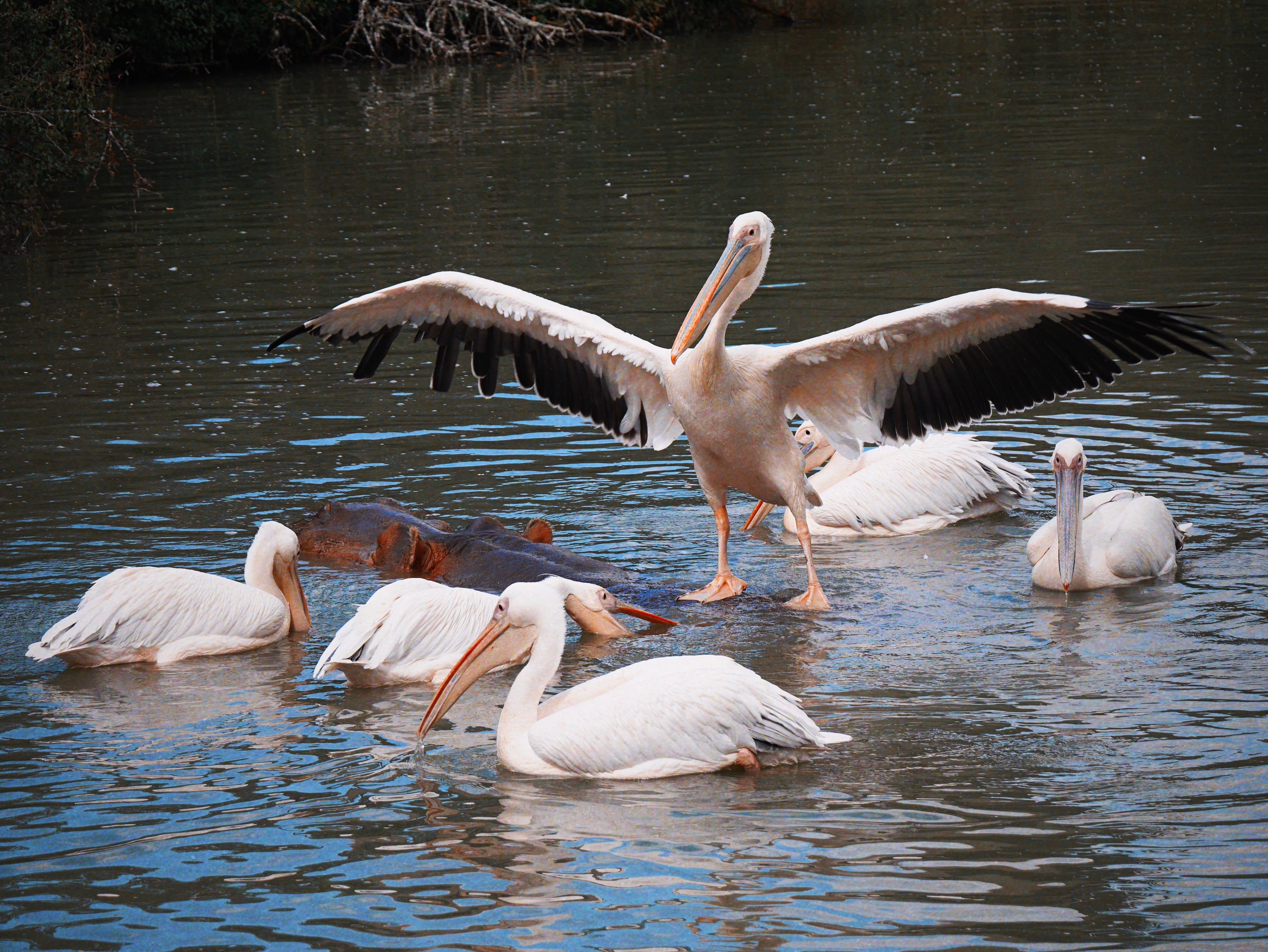
Lake Babati is the town’s natural heart, an eighteen-square-kilometre sheet of water a short walk from the centre, and its great draw is hippos — Babati is one of the few towns in Tanzania where a resident pod lazes in the shallows within sight of the streets. A trip out with one of the local fishermen, often by traditional canoe, gets you closer to them and to the lake’s abundant waterbirds, and the lake is rich in tilapia and Nile perch for those who want to fish.
The trails around the shore make for gentle nature walks, and the sunsets over the water are a nightly event worth pausing for.
An honest note: hippo numbers rise and fall with the water, and recent dry years have thinned sightings, so treat a close encounter as a bonus — and always keep a respectful distance, as hippos are genuinely dangerous. Go with a local guide who knows the lake. We arrange it. Pricing on request.
Climb Mount Hanang
Tanzania’s fourth-highest peak
Climb Mount Hanang from Babati — Tanzania's fourth-highest mountain at 3,420m, a challenging volcanic trek with big Rift Valley views, a Kili alternative.
About an hour or so beyond Babati rises Mount Hanang, a striking free-standing volcanic cone and, at 3,420 metres, Tanzania’s fourth-highest mountain after Kilimanjaro, Meru and Loolmalasin. Climbed from the little town of Katesh at its foot, it is one of the country’s finest and least-known trekking peaks — a stiff hike through farmland, forest and open moorland to a summit with sweeping views over the Rift Valley, the crater and the plains below.
For experienced, reasonably fit hikers it makes a wonderful, crowd-free alternative to Kilimanjaro, done over a long day or, better, two to three days.
Do not underestimate it: this is a proper mountain, cold and exposed at the top, with no water on the upper slopes, so it needs a guide, proper kit and self-sufficiency. Our fuller guide is on the Mount Hanang page [link]. We arrange the climb. Pricing on request.
Experience Cultural Tourism
Gorowa, Barabaig and Iraqw life
Experience cultural tourism around Babati — community visits to the Gorowa, Barabaig and Iraqw peoples, with dances, village walks, local food and farming life.
Babati and the surrounding Hanang district are home to a remarkable mix of peoples living side by side — the Cushitic-speaking Gorowa and Iraqw, who farm the hills, and the Nilotic Barabaig (a Datoga group also known as the Mang’ati), semi-nomadic cattle-herders whose women still wear goatskin dresses and whose men walk the plains with spears. The contrast between settled farmers and proud pastoralists is the real fascination here.
Babati was in fact one of the birthplaces of community cultural tourism in Tanzania, and its programmes take you into village life properly — traditional dances, guided village walks, home-cooked local food, visits to traditional homesteads, and time learning how families farm and keep livestock.
These tours are genuinely community-run, so your visit supports the villages directly. It is an authentic, humbling window into rural Tanzania. We arrange it through the local programme. Pricing on request.
Visit Local Farms
Sunflowers, coffee and beehives
Visit the farms around Babati — sunflower fields, maize, coffee and livestock, plus community beekeeping and biogas projects, often part of a cultural tour.
The fertile, well-watered country around Babati is a patchwork of small farms, and a visit is a natural extension of the cultural tours. The signature crop is the sunflower — whole hillsides turn gold with them in season, grown for the cooking oil that is a mainstay of the region — alongside maize, coffee, and the cattle and goats that most families keep.
Many of the community tours build in visits to genuinely useful local projects: dairy and ox-plough farming, community beekeeping, and even household biogas systems that turn livestock waste into cooking fuel.
These are real working smallholdings rather than show-farms, and seeing how families make the land work — sustainably and inventively — is quietly fascinating. It pairs naturally with a village visit. We arrange it. Pricing on request.
Explore Babati Town & Food
Markets, plates and local life
Explore Babati town — its lively produce market, craft shops, Kwaraa Stadium and restaurants serving nyama choma, ugali and fresh Lake Babati tilapia.
Babati itself is a relaxed, friendly country town, and a wander through it is a pleasure after the bustle of Arusha. Its central market is a regional trade hub — stalls piled with fresh produce and grain, livestock changing hands, and small craft shops — and the town has an easy, unhurried air, right down to Kwaraa Stadium, the main sporting venue where the community gathers for a match. The town’s name, charmingly, is said to come from a Gorowa boy’s reply of ‘Baba ti’ — ‘this is my father’ — misheard by a German official as the place name.
On the plate, the food is fresh and hearty: nyama choma, the grilled meat everyone loves; ugali with vegetables from the surrounding farms; and, above all, tilapia straight from Lake Babati, with tropical fruit to finish.
It is genuine small-town Tanzania rather than a polished tourist stop, which is exactly its charm, and a local guide adds colour to the market. We can include a town-and-food tour. Pricing on request.
Go Birdwatching
Wetlands, lakes and Rift birds
Go birdwatching around Babati — wetlands, forests and Rift Valley landscapes draw over 400 species, from fish eagles and pelicans to kingfishers and storks.
With its wetlands, patches of forest, lakes and Rift Valley scenery all in one small area, Babati is a genuinely rewarding birding destination — over four hundred species have been recorded around the district. The lakes and marshes draw the waterbirds: African fish eagles, cormorants, pelicans, storks, herons, egrets and jewel-bright kingfishers, joined in the northern winter by flocks of migrants.
A walk around Lake Babati or the surrounding wetlands, binoculars in hand, turns up a fine list without much effort, and the setting is lovely.
It suits keen listers and casual watchers alike; go early when the birds are active, and a local birding guide who knows the calls and the spots makes all the difference. We arrange a guide. Pricing on request
Day Trip to Tarangire
Elephants and ancient baobabs
Day-trip to Tarangire National Park from Babati — around 70km away, famed for huge elephant herds, ancient baobabs, big cats and 550+ birds in the dry season.
Babati’s closest big-game park is Tarangire, only around seventy kilometres away and very much within reach for a day trip. It is one of the northern circuit’s great treasures — famous above all for its enormous elephant herds and the giant, ancient baobab trees that dot its landscape, alongside lions, leopards, giraffes, zebra and more than 550 species of bird.
It is at its most spectacular in the dry season, from about June to October, when the wildlife of the wider ecosystem crowds in to drink at the Tarangire River and the game-viewing is superb.
Its closeness makes Tarangire an easy and rewarding day out from Babati. We cover it fully on the Tarangire page [link], and arrange the vehicle, guide and park fees. Pricing on request.
A Northern Circuit Base
Within reach of the great parks
Use Babati as a northern-circuit base — within reach of Tarangire, Lake Manyara, Ngorongoro and Mount Hanang, an off-beat alternative to busy Arusha.
Beyond its own charms, Babati’s position makes it a handy and unusual base for the northern safari circuit. Tarangire is on the doorstep, Lake Manyara [link] and the highland town of Karatu are an easy drive north, the Ngorongoro Conservation Area [link] lies beyond, and Mount Hanang rises to the south — so from one relaxed, affordable town you can reach a remarkable spread of Tanzania’s best wildlife and scenery.
For independent-minded travellers it is an appealing alternative to basing yourself in busy Arusha or Karatu: quieter, cheaper, more local, and closer to the cultural side of the region.
Be realistic about the distances — Ngorongoro in particular is a fair drive — so we plan the routing to make the most of the days. We build Babati into a full northern-circuit itinerary. Pricing on request.