Things to Do in Dar es Salaam
visit bongoyo island
explore mbudya island
sandbanks: fungu yasini & sinda
coco beach & msasani peninsula
snorkelling & diving
deep-sea fishing
sunset dhow cruise
national museum of tanzania
visit the village museum
old boma & colonial city centre
harbourfront churches
visit kariakoo market
kivukoni fish market & harbour
mwenge woodcarvers market
slipway waterfront
street food & swahili cuisine
art galleries & cultural centres
live music & nightlife
botanical gardens & birding
cycling & walking tours
day trip to bagamoyo
day trip to saadani park
pugu hills forest reserve
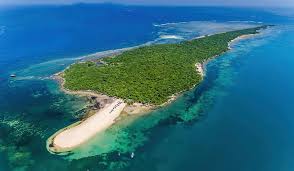
Visit Bongoyo Island
The city’s favourite island escape
Boat to Bongoyo Island from Dar's Slipway — a 30-minute crossing to white sand, snorkelling, a nature trail and grilled seafood in a marine reserve.
Bongoyo is the easy island escape, and the one most people do. Boats leave through the day from the Slipway on the Msasani Peninsula and take about half an hour to reach this uninhabited little island, part of the protected Dar es Salaam Marine Reserve, just a couple of kilometres offshore.
What you get is two arcs of white sand, water clear enough to swim in at any state of the tide — a real luxury when the mainland city beaches are tide-locked — snorkelling over the reef, a short nature trail through the scrub, and thatched bandas for shade. Local rangers grill fresh fish and sell cold drinks; green and hawksbill turtles nest on the beaches.
It is rustic rather than resort-like: simple facilities, a conservation fee on arrival, and busier at weekends, so a weekday is calmer. Bring cash, sunscreen and your own snorkel if you have one. We arrange the boat and the day. Pricing on request.
Explore Mbudya Island
A Zanzibar-like beach off Kunduchi
Cross to Mbudya Island from Dar's north coast — a short motorboat ride to white sand, clear water and reef snorkelling, an easy island day from Kunduchi.
Mbudya is Bongoyo’s northern twin — another uninhabited marine-reserve island, often called a slice of Zanzibar dropped just off the city. It sits about three kilometres off the north coast near the Kunduchi fishing community, a short fifteen-to-twenty-minute motorboat hop from the beach hotels up there, which makes it the natural island choice if you are staying on the northern beaches rather than in town.
The draw is the same easy pleasure: soft white sand, warm clear water for swimming and snorkelling over the coral, and simple thatched bandas for shade, with grilled fish from the local crew.
Like Bongoyo it is basic and beautiful rather than developed — bring cash and sun cover. Which island suits you mostly comes down to where you are staying, north coast or peninsula. We sort the boat and the logistics. Pricing on request.
Sandbanks: Fungu Yasini & Sinda
Charter trips to wilder islands
Charter to Fungu Yasini or Sinda Island off Dar es Salaam — a bare sandbank north of the city and a quiet island south, ringed by reef for snorkelling.
For something wilder than the two main islands, two charter trips stand out. Fungu Yasini, north of the city, is a large bare sandbank — no trees, no facilities, just a strip of sand in the sea ringed by coral, exposed by the tide and superb for snorkelling and stark photography. Sinda Island, to the south near Kigamboni, is a quiet, little-visited island with its own beaches and reef.
Neither runs on a schedule the way Bongoyo does; you charter a boat, privately or as a group, which is part of the appeal — you often have the place to yourselves.
Because there are no facilities, you bring everything: water, food, shade, snorkel gear, and on the sandbank an eye on the tide, as it shrinks and vanishes as the water rises. Best in calm, clear conditions. We arrange the charter and a guide. Pricing on request.
Coco Beach & Msasani Peninsula
The city’s seafront playground
Dar es Salaam's Msasani Peninsula — Coco Beach at Oyster Bay, beach clubs and seafront cafes, sunset views and watersports like kayaking and paddleboarding.
The Msasani Peninsula — Oyster Bay and Masaki — is the leafy, breezy seafront side of Dar, and where the city goes to relax. Its heart is Coco Beach, the lively urban beach along Oyster Bay that fills with Tanzanian families at weekends: a string of stalls selling Zanzibar mix and grilled snacks, music, joggers, courting couples and a proper carnival feel as the sun goes down.
Around it the peninsula has beach clubs, seafront cafes and restaurants, ocean-view spots for a sundowner, and resorts that offer kayaking and paddleboarding on calm days.
Be clear about Coco Beach’s appeal: it is about atmosphere, food and people-watching rather than swimming — the water and tides here suit a stroll more than a dip, and the islands are the place for that. Come at the weekend or for sunset to see it at its best. We can build a peninsula evening into your stay. Pricing on request.
Snorkelling & Diving
Reefs off the city’s islands
Snorkel and dive the reefs off Dar es Salaam's marine-reserve islands — coral, tropical fish and dive sites near the city, with operators for all levels.
You don’t have to go far from Dar to get under the water. The marine-reserve islands a short boat ride offshore are fringed with coral, and you can snorkel straight off the beaches at Bongoyo and Mbudya, while the better scuba sites lie off the islands’ seaward eastern sides. Local operators run snorkelling trips and dives for all levels, including courses.
There is real life out there — reef fish, coral gardens, dolphins in the channels, and the occasional humpback whale passing in the deeper water between May and August.
Set expectations honestly: this is convenient city diving, not the world-class reefs of Mafia or Pemba, and visibility varies with the season and the city’s proximity — the dry months from June to October are clearest. For a quick fix without the flight south, it is excellent. We arrange the operator and boat. Pricing on request.
Deep-Sea Fishing
Game fish in the channel
Go deep-sea fishing from Dar es Salaam — charter into the Indian Ocean for sailfish, tuna, kingfish and other game fish, near the Pemba and Zanzibar channels.
The deep water off Dar holds serious game fish, and a charter out into the Indian Ocean is a real draw for anglers. Crews target sailfish, tuna, kingfish, dorado and, in season, marlin, working the productive channel waters that run toward Zanzibar and Pemba.
Trips run as half or full days on a properly equipped boat with an experienced crew who know the grounds; billfish are usually tagged and released, which is the right way to fish them.
The fishing is seasonal and weather-dependent — the crew will tell you honestly what is running and whether the sea suits going out — so a little flexibility on dates helps. Good for a group with a keen angler or two. We arrange the charter and crew. Pricing on request.
Sunset Dhow Cruise
The coast under sail at dusk
A sunset dhow cruise off Dar es Salaam — sail the coast aboard a traditional Swahili boat as the sun sets over the Indian Ocean, often with drinks and seafood.
A sunset dhow cruise is the loveliest way to end a Dar day. You head out along the coast aboard a traditional wooden Swahili dhow — the same lateen-rigged design that has carried trade across this ocean for a thousand years — as the light softens and the sun drops into the haze behind the city, often with drinks and a plate of grilled seafood as you go.
It is calm, atmospheric and genuinely romantic, and works just as well for a group winding down as for a couple. Most cruises leave from the Msasani side of the city.
One honest note: a dhow needs wind to sail properly, so on a still evening you may motor more than sail — it is still a beautiful way to be on the water. We arrange the boat and the timing for the best of the sunset. Pricing on request.
National Museum of Tanzania
From early humans to independence
The National Museum & House of Culture in Dar es Salaam — Tanzania's story from the Olduvai fossils to coastal trade, the colonial era and independence.
The National Museum and House of Culture is the place to put Tanzania’s whole story in order, and a good first stop in the city. Its prize is a cast of the famous ‘Nutcracker Man’ (Zinjanthropus) skull that the Leakeys uncovered at Olduvai Gorge — a reminder that this country is one of the cradles of humankind — alongside displays on the ancient Shirazi and Kilwa coastal trade, the slave trade, the German and British colonial eras and the road to independence.
It is an excellent primer if you are heading on to the northern sites or simply want the context behind everything you’ll see on the coast.
Be realistic: it is modest and a little dated next to a big Western museum, but the content is genuinely interesting and a guide brings it alive. An easy couple of hours. We arrange entry and a guide. Pricing on request.
Visit the Village Museum
Traditional homes under one roof
The Makumbusho Village Museum in Dar es Salaam — an open-air set of traditional houses from Tanzania's ethnic groups, with music and dance performances.
The Village Museum — Makumbusho — is an open-air museum on the edge of town where traditional dwellings from across Tanzania’s many ethnic groups have been built in their authentic styles, so you can walk from a Chagga homestead to a coastal Swahili house to a Maasai enclosure in an afternoon. It is a neat way to glimpse the diversity of a country you might only otherwise see in one or two regions.
The real highlight is the live performance: ngoma drumming and dance staged in the grounds, full of energy and colour.
It is modest and open-air, and the dance performances run to a schedule, so it is worth arranging your visit around them rather than arriving cold. Lovely for families and for anyone who won’t make it into the rural areas. We check the performance times and set it up. Pricing on request.
Old Boma & Colonial City Centre
The oldest stones in the city
Explore historic central Dar es Salaam — the 1860s Old Boma, the Askari Monument and German colonial buildings on the harbourfront, on a guided walk.
Central Dar still carries the bones of the city Sultan Majid of Zanzibar founded in 1862. The oldest piece is the Old Boma, a low coral-walled building from the 1860s with a beautiful carved Zanzibari door, saved from demolition and now home to the city’s architecture museum. A short walk away, the bronze Askari Monument stands at the centre of town, a memorial to the African soldiers — the askari — who died in the First World War.
Between and around them, the harbourfront along Sokoine Drive holds the heavier German colonial buildings, including the old Governor’s residence that became State House, a layered record of the city’s Omani, German and British chapters.
It all makes sense on foot with a guide, who can read the buildings and the history street by street — do it in the cooler morning, as central Dar is hot and busy. We arrange the walk and guide. Pricing on request.
Harbourfront Churches
Two German-era churches by the sea
Dar es Salaam's German-era churches — the Gothic St Joseph's Cathedral and the Bavarian-style Azania Front Lutheran Church, landmarks on the harbourfront.
Two of Dar’s most photographed buildings are the German-era churches that still anchor the harbourfront. St Joseph’s Cathedral, the Roman Catholic one, is a proper piece of Gothic ambition — spire, pointed arches and fine stained glass — begun by German Benedictine missionaries in 1897 and finished a few years later, raised, pointedly, on the site of the town’s first mosque.
A short walk along the front stands the Azania Front Lutheran Church of 1898, smaller and quite different: a white-walled, red-tiled building in the Bavarian style of the day, with little tiled canopies over the windows and a belfry looking out over the water, which you can sometimes climb for a harbour view.
Both are working churches, so visit respectfully and around services; someone may offer to show you round for a small donation. Easy to fold into a city-centre walk. We arrange the guide. Pricing on request.
Visit Kariakoo Market
East Africa’s great trading bazaar
Kariakoo Market in Dar es Salaam — one of East Africa's largest, busiest markets, a sensory maze of produce, spices, textiles, electronics and more.
Kariakoo is Dar’s beating commercial heart — one of the largest and busiest markets in East Africa, a dense, roaring maze of streets and stalls selling literally everything: pyramids of fruit and vegetables, sacks of spices, bolts of kanga and kitenge cloth, phones, electronics, hardware and goods you didn’t know you needed. It is the city at full volume.
For a curious traveller it is an extraordinary, sensory experience and a window into how the city really works, far more than any mall.
Be sensible: it is intense and crowded, so go in the morning with a local guide, carry little, keep your phone away and ask before photographing people. With the right guide it is exhilarating rather than overwhelming. We arrange a guide who knows the maze. Pricing on request.
Kivukoni Fish Market & Harbour
The catch and the busy harbour
The Kivukoni fish market in Dar es Salaam — the morning catch auctioned off the boats by the harbour, with ferries and dhows working the busy port front.
At the harbour mouth, the Kivukoni fish market — the old Ferry market — is where Dar’s catch comes ashore. Get there in the morning and you’ll find the boats unloading and a fast, noisy auction in full swing, with everything from reef fish to tuna changing hands on the wet concrete. It is loud, pungent and completely real.
All around it the harbour works: the Kigamboni ferry shuttling across the creek packed with people, dhows under sail, and cargo ships at the port that has made this city for over a century.
Go early, before the catch is sold and the heat builds, wear shoes you don’t mind, keep your valuables close, and take a guide for the context. A vivid hour of real Dar. We arrange the visit. Pricing on request.
Mwenge Woodcarvers Market
Carvings, Tingatinga and crafts
The Mwenge Woodcarvers' Market in Dar es Salaam — Makonde carvings, bright Tingatinga paintings, jewellery and crafts bought direct from the makers.
Mwenge is where Dar does crafts. This busy market is wall-to-wall with the work of Tanzanian artisans — the tall, intricate Makonde ebony carvings, the bright, whimsical Tingatinga paintings that started in this city, beadwork, jewellery, fabric and curios — much of it made on the spot, so you can watch carvers at their blocks of wood as you browse.
Buying here puts money straight to the makers, and it is a far better place for gifts than any hotel shop.
Haggling is expected and part of the fun: prices start high, so counter at around half and settle somewhere in between, and look closely, as the genuinely fine pieces sit alongside mass-produced ones. A guide helps you find the quality and keeps the bargaining friendly. We can take you. Pricing on request.
Slipway Waterfront
Waterfront dining and boats
The Slipway on Dar es Salaam's Msasani Peninsula — waterfront restaurants, shops, a weekend craft market, sunset views and boats out to Bongoyo Island.
The Slipway is Dar’s easygoing waterfront hub, out on the Msasani Peninsula, and a pleasant place to land after a hot day in the city. It strings together waterfront restaurants and cafes, shops, a weekend craft market and a sunset bar right on the water, and it is also where the boats leave for Bongoyo Island, so it doubles as a jumping-off point.
It is the comfortable, safe, tourist-friendly side of the city — relaxed rather than gritty — and good for a sundowner, a meal or some unhurried shopping. The city’s modern malls elsewhere offer the same air-conditioned comforts if you need them.
Lovely toward sunset, easy with families, and an effortless contrast to a morning in Kariakoo. We can fold it into your day. Pricing on request.
Street Food & Swahili Cuisine
Eating your way round the city
Eat your way round Dar es Salaam — street grills of mishkaki and chips mayai, Swahili coconut and spice cooking, and Tanzania's freshest seafood, on a tour.
Eating is one of the real joys of Dar, and a food tour is the best way in. The street scene is brilliant: smoky mishkaki skewers off the grill, chips mayai (a chip omelette), samosas and chapati, and urojo — the tangy ‘Zanzibar mix’ soup — washed down with fresh tropical juice. Sit-down Swahili cooking layers a thousand years of Indian Ocean trade onto the plate, with the coconut, cardamom and clove of African, Arab, Indian and Persian kitchens in dishes like pilau and biryani.
And the seafood is as fresh as Tanzania gets — prawns, octopus, crab and the day’s fish, grilled simply and superbly.
With street food the rule is to eat where it is busy and freshly cooked, which a guide makes easy while steering you to the spots locals actually rate. The city’s café scene is growing too, for a good coffee between meals. We arrange a guided food tour. Pricing on request.
Art Galleries & Cultural Centres
Contemporary Tanzanian art
Dar es Salaam's art scene — contemporary Tanzanian galleries, the Tingatinga painters' cooperative and cultural centres hosting exhibitions and workshops.
Beyond the carving markets, Dar has a genuine contemporary art scene worth seeking out. A handful of galleries show the work of established and emerging Tanzanian artists, and the Tingatinga Arts Cooperative — home of the bold, naïve, brightly coloured painting style born in this city — is the place to watch the painters at work and buy straight from them.
Cultural centres and artist spaces around the city host changing exhibitions, live performances and open studios, giving a creative, current counterpoint to the colonial buildings and museums.
The scene is scattered and low-key rather than concentrated in one quarter, so it rewards a curated visit; we can point you to what is showing and worth your time while you’re here. We arrange the guide and visits. Pricing on request.
Live Music & Nightlife
Bongo Flava, Taarab and beach bars
Dar es Salaam after dark — live Bongo Flava, Taarab and jazz, plus a nightlife scene from laid-back beach bars to upscale lounges across the city.
Dar is a music city — it is the home of Bongo Flava, the Tanzanian hip-hop and pop that dominates East African airwaves — and after dark it comes alive. You can catch live Bongo Flava, the swaying orchestral Taarab of the Swahili coast, jazz and old-school dance bands across venues from the peninsula to the city, especially at weekends.
The nightlife runs the full range, from barefoot beach bars with a sound system in the sand to polished lounges and clubs, so there is something whether you want a quiet sundowner with a band or a proper late night.
It is best with someone who knows where the good live music is on a given night, and sensible to arrange safe transport back rather than wander. We can steer you to what suits and sort the logistics. Pricing on request.
Botanical Gardens & Birding
A green pause in the city
Dar es Salaam's Botanical Gardens — a shady colonial-era oasis of tropical trees in the centre, and a good spot for resident and migratory coastal birds.
In the middle of the hot, hard city, the Botanical Gardens are a small green lung — a shady oasis of tropical trees and historic plantings laid out in the German colonial era, near the National Museum and State House. They are a fine place to slow down for half an hour between the harbourfront sights.
For birdwatchers, the gardens and the leafy peninsula are quietly rewarding: a good list of resident coastal and garden birds, boosted by migrants through the northern winter, all within the city.
Be realistic — the gardens are modest and a little squeezed by the growing city around them — but as a calm, shaded pause they do the job, and they pair naturally with a museum visit. We can include them on a city walk. Pricing on request.
Cycling & Walking Tours
The city at street level
See Dar es Salaam at street level — guided walking and cycling tours through the historic centre, harbourfront, neighbourhoods and markets.
For all its scale, Dar makes most sense at street level with a local guide. A walking tour threads the historic centre, the harbourfront churches and the Old Boma, edges into the markets and shows you the daily life that a taxi window hides — it is how the city stops being a confusing sprawl and starts being a place you understand.
For more ground, a cycling tour rolls through neighbourhoods, the waterfront and quieter corners at a pace between walking and driving, with a guide picking the calmer routes away from the worst traffic.
Both are best in the cooler early morning, as the midday heat and humidity are real, and a guide handles the navigation and the street-smarts so you can just look. A great orientation on a first day. We arrange the guide. Pricing on request.
Day Trip to Bagamoyo
Slave-trade history up the coast
Day trip from Dar es Salaam to Bagamoyo — the historic Swahili and colonial town, with its Catholic mission, Old Fort and Kaole ruins, two hours north.
Bagamoyo makes one of the best day trips out of Dar — about seventy-five kilometres and an hour and a half to two hours up the coast. This quiet, atmospheric old town was once the most important caravan port on the coast, the place ivory and enslaved people were shipped to Zanzibar, and later the first capital of German East Africa, and the history is everywhere you look.
A day takes in the crumbling old Stone Town, the Holy Ghost Mission (the oldest on the mainland, where Livingstone’s body rested), the Old Fort and Caravan Serai, and the thirteenth-century Kaole ruins just south of town. Our full guide to the town is on the Bagamoyo page [link].
It is a sombre, moving and rewarding day; with the drive each way, treat it as a full day rather than a quick outing. We arrange the transfer and a guide. Pricing on request.
Day Trip to Saadani Park
Where the bush meets the ocean
Saadani National Park from Dar es Salaam — the only Tanzanian park on the Indian Ocean, with game drives, a Wami River boat safari and beach. Best overnight.
Saadani is Tanzania’s coastal safari — the only national park in the country that runs down to the Indian Ocean, where you can watch elephants and giraffe against a backdrop of surf, take a boat safari on the Wami River among hippos and crocodiles, and end the day on an empty beach. As a wildlife-and-ocean combination it is unique.
Be honest with yourself about the logistics, though: from Dar it is a long haul on roads that turn rough, several hours up the coast, so a true day trip is a stretch — it really wants an overnight to be worth the journey, and it is often more easily reached by way of Bagamoyo. We cover it in full on the Bagamoyo page [link].
For travellers who want a taste of safari without flying inland, it delivers something nowhere else does. We arrange the park, transfers and a lodge or camp. Pricing on request.
Pugu Hills Forest Reserve
Ancient coastal forest near the city
Pugu Hills Forest Reserve near Dar es Salaam — one of the oldest coastal forests in the region, with hiking trails, rich birds and a bat cave, outside the city.
When the city gets too much, Pugu Hills offers a quick lungful of forest. Only about twenty-five kilometres from the centre, near the airport, this is one of the oldest patches of coastal forest in the region, a swathe of tall miombo and woodland laced with hiking trails.
It is a real spot for birds — well over eighty species recorded, hornbills among them — along with butterflies and the small forest life. Its quirk is a cave in an old railway tunnel that houses a big colony of bats, which pour out in a stream at dusk: an oddly thrilling sight.
You’ll want a guide and a little arranging, as facilities are basic and the forest edges are nibbled by the growing city, but as a half-day green escape close to town it works well. Best in the cooler morning, or stay for the evening bats. We arrange the guide and transfer. Pricing on request.