Things to Do in Dodoma, Tanzania
tour the vineyards & wineries
nyerere square & the capital
visit the gaddafi mosque
visit the university of dodoma
markets & local food
kondoa rock-art sites
discover the bahi wetlands
Tour the Vineyards & Wineries
Tanzania’s wine capital
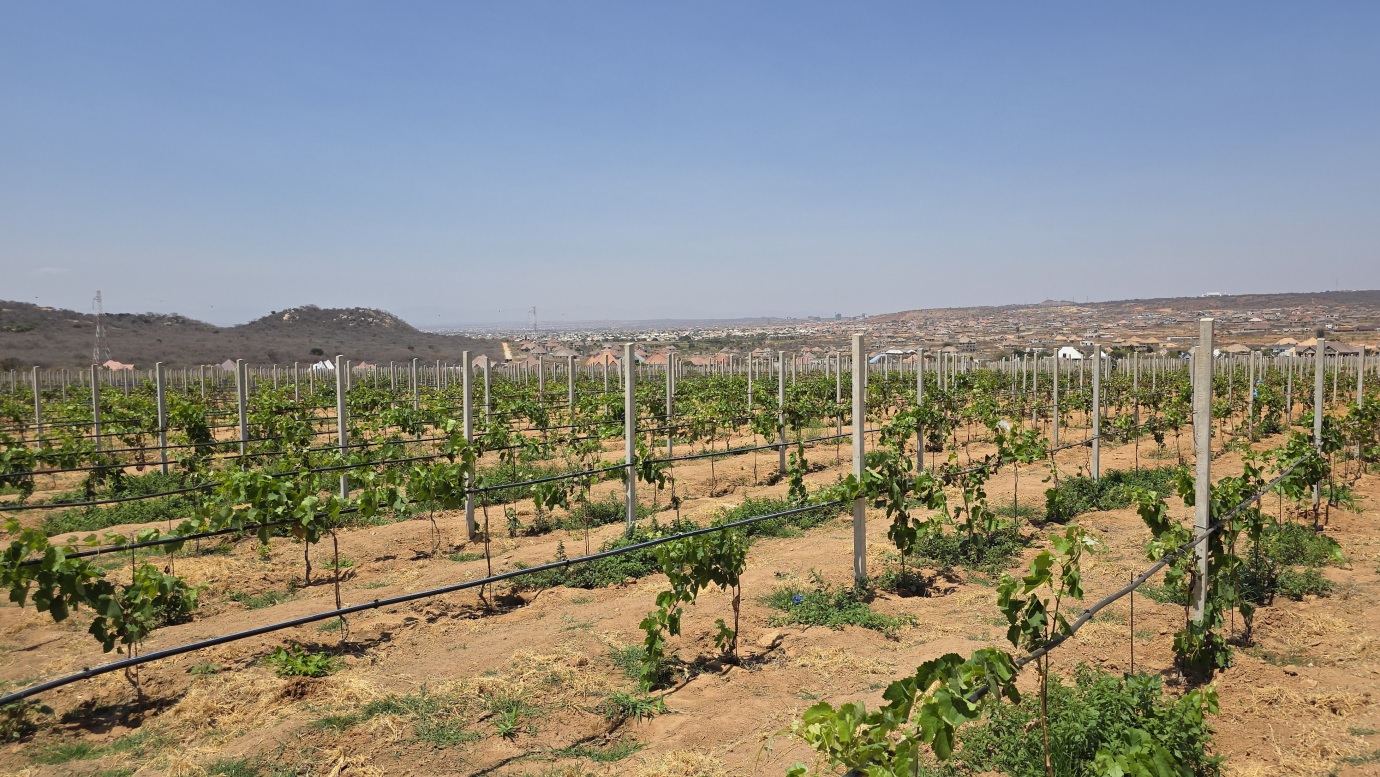
Tour Dodoma's vineyards — the heart of Tanzania's wine industry, for tastings of Chenin Blanc, Shiraz and the local Makutupora grape grown nowhere else.
Here is Dodoma’s biggest surprise: it is the capital of Tanzania’s wine industry, and almost every grape grown for wine in the country comes from this region. The dry plateau climate, well-drained red soils and the big swing between hot days and cool nights turn out to suit the vine, and Tanzania is now the second-largest wine producer in sub-Saharan Africa after South Africa. A wine tour here takes you through the vineyards, explains how the grapes are grown, and ends, of course, with a tasting, often paired with local food.
Alongside familiar Chenin Blanc, Shiraz and Cabernet Sauvignon, look for Makutupora — a red grape named for a village just north of the city and grown nowhere else on earth, so a glass of it is something you truly cannot taste anywhere but here.
Set your expectations honestly: this is an emerging, small-scale industry rather than a polished wine region, born from missionary altar-wine in the 1930s and still finding its feet — but that, and the one-of-a-kind Makutupora, are exactly what make it worth the visit. Call ahead, as the wineries are modest operations. We arrange the tour and tasting. Pricing on request.
Nyerere Square & the Capital
The heart of the capital
See the heart of Tanzania's capital — Nyerere Square and its monuments, the round Parliament building, and a city tour of its churches and viewpoints.
To understand Dodoma is to understand its role as capital, and the civic heart of the city is the place to start. Nyerere Square, named for the nation’s founding father, is the main public space — monuments to independence, landscaped gardens, and locals out for an evening stroll — and nearby stands the distinctive round Bunge, the Parliament building where the National Assembly meets, symbol of Dodoma’s status as the seat of government.
A guided city tour ties it together: the government complex, Dodoma’s striking modern Cathedral and other churches and mosques, the everyday neighbourhoods, and a climb up Simba Hill for a sunset view over the whole city.
Bear in mind this is a young, deliberately planned capital — chosen by Nyerere to move government to the heart of the country — so the interest lies in watching a capital take shape rather than in ancient monuments, and Parliament can only be admired from outside. A good half-day orientation. We arrange a guided tour. Pricing on request.
Visit the Gaddafi Mosque
A great mosque on the plateau
Visit the Gaddafi Mosque in Dodoma — one of East Africa's largest mosques, a striking pink-and-white landmark of domes and minarets. Dress modestly to visit.
One of Dodoma’s most striking landmarks is the Gaddafi Mosque, funded by the late Libyan leader and among the largest mosques in East Africa. Its pink-and-white walls, tall minarets, fine tilework and great domes rise over the low city, and the expansive prayer halls within can hold several thousand worshippers — an impressive piece of modern Islamic architecture in the heart of the capital.
The courtyard is open to visitors, and respectful, modestly dressed guests can often arrange a guided look inside outside prayer times.
As an active place of worship it asks for the usual courtesies — modest dress covering shoulders and knees, shoes off where required, and quiet respect — which a local guide helps you observe. A memorable stop on any city tour. We arrange it. Pricing on request.
Visit the University of Dodoma
A glimpse of young Tanzania
Visit the University of Dodoma — one of the country's largest universities, a modern, green campus framed by acacia hills, with a lively student atmosphere.
On the edge of the city sprawls the University of Dodoma — UDOM — one of the largest universities in Tanzania and indeed one of the biggest campuses in Africa. Its modern academic buildings, framed by acacia-studded hills and threaded with green open spaces, make for a surprisingly pleasant wander, and the lively student atmosphere, with its impromptu cultural events, offers a cheerful glimpse of young, forward-looking Tanzania.
It is more an easy, agreeable stroll than a formal sight, and all the better for it — a chance to see a side of the country far from the safari trail.
As a working campus it is best visited respectfully and unobtrusively, ideally with a local guide who can show you around. A gentle add-on to a city tour. Pricing on request.
Markets & Local Food
Grapes, honey and the grill
Explore Dodoma's markets and food — stalls of fresh grapes, honey, sunflower oil and peanuts, and restaurants serving nyama choma and ugali with Dodoma wine.
Dodoma’s markets are the place to see the produce of the surrounding plateau, and they carry a clue to what makes the region special — alongside honey, golden sunflower oil, peanuts, traditional fabrics and crafts, you will find fresh grapes, a reminder that this is wine country. They give an honest, unvarnished look at daily life in the capital.
That produce reaches the plate in hearty central-Tanzanian style: nyama choma, the grilled meat everyone loves; slow-cooked goat; ugali with vegetables; and, increasingly, restaurants that pair these regional dishes with a glass of the local Dodoma wine — a pairing you will find almost nowhere else in the country.
It is simple, local eating rather than fine dining, and picking up a bottle of Dodoma wine or a jar of honey makes a fitting souvenir. We can include a guided market-and-food tour. Pricing on request.
Kondoa Rock-Art Sites
Ancient art in the hills
Day-trip from Dodoma to the Kondoa rock-art sites — a UNESCO World Heritage Site of over 150 painted shelters of ancient hunter-gatherer art, on guided walks.
Dodoma’s star attraction lies a couple of hours to the north: the Kondoa rock-art sites, a UNESCO World Heritage Site and one of the finest concentrations of ancient rock painting in East Africa. Scattered through the Irangi Hills along the Rift Valley escarpment are more than 150 painted rock shelters, their walls covered in red and white ochre images of animals, people and mysterious spirit figures, left by the hunter-gatherer ancestors of today’s Sandawe over thousands of years.
Visits run as guided heritage walks with local guides from the Kolo information centre, with the richest galleries at Kolo and Mnenia a short walk into the hills.
It is a full-day trip — two to three hours each way — and some of the sites remain sacred to local people, so a respectful, guided approach is essential. Our fuller guide is on the Kondoa page [link]. We arrange the day trip. Pricing on request.
Discover the Bahi Wetlands
A seasonal birding wetland
Discover the Bahi Wetlands west of Dodoma — a seasonal wetland that draws migratory and resident birds after the rains, fine for birdwatching and photography.
West of the city lie the Bahi Wetlands, a broad seasonal marshland on the floor of the plateau’s internal drainage — and a rewarding spot for anyone who loves birds and big, quiet landscapes. When the water is in, the wetlands draw a wealth of birdlife, resident species joined by flocks of migrants, and the flat, watery scenery is lovely for photography.
It is a peaceful, little-visited corner where you are far more likely to meet local herders and fishermen than other travellers.
The key thing to know is that Bahi is strongly seasonal: it comes alive during and just after the rains, roughly March to May, and can be dry and unremarkable in the height of the dry season — the opposite of most attractions here — so we time a visit for when the water and the birds are in. A guide and a sturdy vehicle help on the rural tracks. Pricing on request.