Things to Do in Lake Manyara
enjoy a classic game drive
search for tree-climbing lions
explore the groundwater forest
the treetop walkway
birdwatching & flamingos
hippo pool & lakeshore
maji moto hot springs
guided nature walks
night game drives
rift valley views & photography
picnic sites & scenic lunch
visit mto wa mbu village
kondoa rock-art extension
Enjoy a Classic Game Drive
A whole safari in miniature
Take a game drive in Lake Manyara National Park — varied habitats in a small park bring elephants, giraffes, buffalo and hippos beneath the Rift escarpment.
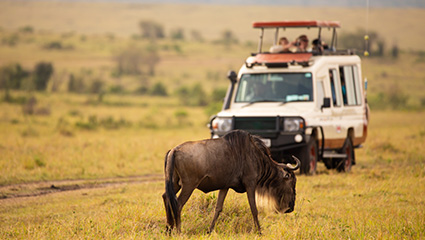
A game drive is the heart of any Manyara visit, and the park’s great trick is variety. Because the habitats change so fast — from the shady groundwater forest at the gate, through acacia woodland and open grassland, to the edge of the lake — a single morning’s loop delivers an unusually rich cast: big elephant herds, giraffe, zebra, buffalo, wildebeest, warthog, hippo and a good spread of antelope, all against the wall of the Rift escarpment.
You can explore on a half-day drive, easily slotted into a journey toward Ngorongoro, or take a full day to reach the quieter southern reaches and the hot springs.
Be realistic about scale: this is a small, intimate park, so the pleasure is the density and the scenery rather than the sheer numbers of the Serengeti, and there are no rhino here. Early morning is the prime time. We arrange the vehicle, guide and park fees. Pricing on request.
Search for Tree-Climbing Lions
Lions in the acacia branches
Look for Lake Manyara's famous tree-climbing lions — one of few places lions rest in the acacias. Sightings are rare and never guaranteed, but unforgettable.
Manyara’s most famous residents are its lions, which here do something lions almost nowhere else do: drape themselves along the branches of the acacia and fig trees to doze the day away. Nobody is quite sure why — the favourite theories are escaping the biting tsetse flies and ground-level insects, catching the breeze, or simply the view — and Manyara was for decades the classic place to witness it.
When you find one, a great cat stretched out above your head is one of the most memorable sights in Tanzania.
Now the honest part, because the brochures rarely tell you: Manyara’s lion population is small and elusive, and tree-climbing sightings are genuinely rare — plenty of visitors see no lions at all here, let alone one up a tree. Come hoping, not expecting, and treat a sighting as the bonus it is. Our guides know where the prides favour. Pricing on request.
Explore the Groundwater Forest
A lush forest at the gate
Explore Lake Manyara's groundwater forest — a lush belt of mahogany and fig fed by escarpment springs, alive with blue monkeys, baboons and forest birds.
The first thing you meet inside the gate is one of Manyara’s most surprising habitats: a lush, dripping groundwater forest, fed not by rain but by springs welling up from the foot of the escarpment. Towering mahogany, fig and tamarind trees close over the track, and the cool green gloom feels a world away from the open savannas of the Serengeti or Tarangire.
It is full of life. Troops of baboons — among the largest in Africa — lounge along the road, blue monkeys move through the canopy, bushbuck slip between the trunks, and the birding is excellent.
Because it sits right at the entrance, every visit begins here, and it sets the tone for the variety to come. A lovely, shaded start to the day. We arrange the drive and guide. Pricing on request.
The Treetop Walkway
Tanzania’s first canopy walk
Walk Lake Manyara's treetop canopy walkway — Tanzania's first, a 370-metre suspended bridge through the forest with a bird's-eye view of monkeys and birds.
A more recent addition, and a genuinely novel one, the Lake Manyara Treetop Walkway was the first canopy walk in Tanzania. A chain of suspension bridges takes you some 370 metres through the groundwater forest at heights of up to eighteen metres, letting you stroll through the treetops and look down on a world the game-drive vehicle never reaches.
Up among the branches you get a bird’s-eye view of the canopy birds, butterflies and monkeys, with guides on hand to point out what you are seeing, and it is a great change of pace and perspective — especially good for families and anyone glad to be out of the car.
Practical notes: it runs as a separate activity with its own fee, sits near the park entrance, and the gently swaying bridges are fine for most but worth knowing about if heights unsettle you. We arrange it alongside your game drive. Pricing on request.
Birdwatching & Flamingos
Over 400 birds and a soda lake
Birdwatch at Lake Manyara — over 400 species across forest, woodland and soda lake, from flamingos and pelicans to hornbills and eagles. Flamingos are seasonal.
Manyara is one of the finest birding parks in Tanzania, precisely because its mosaic of habitats — forest, woodland, grassland and the great soda lake — packs so many different birds into a small area. Over four hundred species have been recorded: silvery-cheeked hornbills and fish eagles in the forest and woodland, and a wealth of water birds along the lake, from pelicans and yellow-billed storks to herons, cormorants and kingfishers.
The lake’s headline act is the flamingos, both lesser and greater, which can gather in pink drifts on the alkaline shallows.
Here is the honest bit: flamingo numbers swing wildly with the water level and the algae they feed on, and even when present the birds are often far out across the soda flats — so bring binoculars and treat a pink-tinged shoreline as a bonus rather than a certainty. They are most likely in and after the wet season, though bird interest is year-round. We arrange a guide who knows the birds. Pricing on request.
Hippo Pool & Lakeshore
Where the animals meet the water
Visit Lake Manyara's hippo pool and lakeshore — watch hippos wallow from a viewpoint and see zebra, buffalo and giraffe gather at the water in the dry season.
One of the best spots in the park is the hippo pool, where the Mto wa Mbu River spreads into the lake. A raised viewpoint lets you safely get out and watch the hippos wallow, snort and jostle at close range — a rare chance to be on foot near big game — while pelicans, storks and other water birds work the shallows around them.
Beyond the pool, the open lakeshore is the park’s great gathering ground. In the dry months especially, when water elsewhere has dried up, the grassy flats by the lake draw concentrations of zebra, wildebeest, buffalo, waterbuck and giraffe down to drink and graze, making for superb open viewing.
In the wet season the lake swells and the animals disperse into greener country, so the dry months are the time for the shore. We work the lake edge into your drive. Pricing on request.
Maji Moto Hot Springs
Geothermal springs by the lake
See the Maji Moto hot springs at Lake Manyara's southern end — geothermal water hot enough to boil an egg, with a boardwalk over them, on a long drive south.
At the far southern end of the park, where the Rift’s forces still simmer beneath the surface, the Maji Moto hot springs bubble up along the lakeshore. The water here is genuinely hot — well over sixty degrees, hot enough to cook an egg — and faintly sulphurous, a vivid reminder that this whole landscape was shaped, and is still being shaped, by the Great Rift’s volcanic and tectonic forces. A boardwalk lets you walk out over the springs, with boards explaining the geology.
It is a fascinating, off-the-usual-track corner of the park and a real change from wildlife viewing.
One firm caveat: the springs lie at the southern tip, a long drive down through the entire park from the gate, so reaching them really needs a full day — a half-day visit rarely gets this far. Worth it if you have the time and like your landscapes geological. We plan the day to include it. Pricing on request.
Guided Nature Walks
The small details on foot
Take a guided nature walk at Lake Manyara — explore on foot with an armed ranger, learning the plants, tracks, insects and birds a game drive races past.
For a different rhythm, Manyara offers ranger-guided nature walks in designated parts of the park. On foot, accompanied by an armed ranger, you slow right down and tune in to everything the game drive races past — the plants and their uses, animal tracks and droppings, insects, birds and the small forest creatures that make the ecosystem tick.
It is a hands-on, sensory way to understand the park rather than a big-game outing, and walking the forest or the edge of the springs zone connects you to the place in a way no vehicle can. Walks run from a short hour to a half-day.
For safety the walks are ranger-led and confined to designated areas, which is exactly as it should be in a park full of elephants and buffalo. A great leg-stretch and a naturalist’s delight. We arrange the ranger and route. Pricing on request.
Night Game Drives
The park after dark
Take a night game drive in Lake Manyara — one of the few Tanzanian parks to allow after-dark drives, spotlighting civets, genets, bush babies and porcupines.
Unusually for Tanzania, Lake Manyara is one of the very few national parks that allows game drives after dark — most parks shut their gates at dusk — which makes a night drive here a special opportunity rather than something you can do just anywhere.
With a spotlight, the guide goes looking for the animals the daytime never reveals: civets and genets on the prowl, bush babies leaping through the branches, porcupines, nightjars on the track, and, with luck, a hunting predator such as a leopard. The forest and woodland take on a completely different character once the sun is down.
It runs as a special activity with its own fee and an authorised operator, and as with all nocturnal wildlife the animals are elusive — but the experience itself is the reward. A real highlight for keen wildlife-watchers. We arrange it. Pricing on request.
Rift Valley Views & Photography
Lake, cliffs and golden light
Photograph Lake Manyara's Rift Valley scenery — escarpment, soda lake and forest make a dramatic backdrop, best in the soft light of sunrise and late afternoon.
Manyara is one of Tanzania’s most photogenic parks, and not only for its wildlife. The combination of the towering Rift Valley escarpment, the silver sheet of the soda lake and the deep green of the forest gives a sense of place few parks can match, and photographers find endless compositions in the layering of cliff, water, woodland and animals.
Some of the most spectacular views are actually from the escarpment road climbing out of the park toward Karatu, which looks back down over the whole lake and plain — a classic stop for a panoramic shot, especially as the light softens.
As ever, sunrise and the golden hour before sunset are when the park performs, throwing warm light across the lake and long shadows through the forest. We build the viewpoints and the best light into your day. Pricing on request.
Picnic Sites & Scenic Lunch
Lunch in the wild
Enjoy a bush picnic at Lake Manyara — scenic picnic sites let you break a game drive for lunch surrounded by forest, lake views and the sounds of the park.
On a full day in the park, lunch becomes part of the experience. Manyara has several designated picnic sites in lovely settings — in the forest, or out with views across the lake — where you can step out of the vehicle, stretch your legs and enjoy a packed safari lunch surrounded by the sights and sounds of the park.
It is one of the simple pleasures of a safari day: birdsong overhead, the lake glinting in the distance, and time to just sit and take it in between drives.
One word of warning from experience — the resident baboons and vervet monkeys are bold and brazen thieves, so keep your food close and never feed them, however charming they look. We pack the lunch and pick the spot. Pricing on request.
Visit Mto wa Mbu Village
120 tribes at the park gate
Take a cultural tour of Mto wa Mbu at Lake Manyara's gate — one of Tanzania's most diverse villages, with banana farms, markets, cooking, crafts and cycling.
Right at the park gate sits Mto wa Mbu — ‘river of mosquitoes’ — one of the most extraordinary villages in Tanzania, where people from more than 120 of the country’s ethnic groups, Maasai, Iraqw, Datoga, Chagga and many more, live and farm side by side. A cultural tour here is the perfect complement to a morning’s game drive, and one of the best community-tourism experiences on the northern circuit.
There is a lot to do: guided walks through the lush banana and rice farms fed by the escarpment streams, a taste of the local food and the famous banana beer, the colourful market, artisan and craft workshops, and gentle cycling tours through the fields and the village.
It is a genuine working community, and the cultural-tourism enterprise is set up so the bulk of the proceeds stay with local families — so it feels like a real exchange rather than a show. Easy to add to your Manyara day. We arrange the tour and guide. Pricing on request.
Kondoa Rock-Art Extension
Ancient paintings far to the south
Extend your safari to the Kondoa Rock-Art Sites — UNESCO-listed paintings thousands of years old, a long journey south of Lake Manyara into Tanzania's interior.
For travellers with a deeper interest in human history, the Kondoa Rock-Art Sites are one of Tanzania’s most remarkable — and least-visited — cultural treasures. UNESCO-listed since 2006, this scatter of painted rock shelters around Kolo holds thousands of images created over many thousands of years by hunter-gatherer and, later, pastoralist communities: human and animal figures, hunting scenes and ritual artwork that open a window onto some of East Africa’s earliest societies. Guided archaeological tours bring the paintings, their techniques and their meaning to life, and can be combined with visits to the present-day Kondoa communities.
Be clear that this is a genuine extension rather than a day trip: Kondoa lies a long way south of the safari circuit, several hours’ drive toward the centre of the country on roads that can be rough, so it really calls for an overnight and a real interest in archaeology.
For the right traveller it is unforgettable and gloriously off the beaten track. Our fuller guide is on the Kondoa page [link]. We arrange the journey, guide and stay. Pricing on request.