Things to Do in Lushoto & Usambara
hike to irente viewpoint
multi-day usambara village trek
mtae & mambo — the far ridges
magamba rainforest
magamba viewpoint & kwahondo peak
the german cave
mazumbai forest reserve
birdwatching in the usambaras
butterflies & chameleons
usambara waterfalls
shambaa culture & royal history
traditional cooking classes
lushoto markets & mountain farms
german colonial heritage
the growing rock (jiwe linalokua)
mountain biking in the usambaras
photography & scenic drives
Hike to Irente Viewpoint
The cliff edge over the Maasai plains
Hike to Irente Viewpoint near Lushoto — a cliff edge with the Maasai plains nearly 1,000m below, paired with lunch at the organic Irente Biodiversity Farm.
Irente is the postcard view of the Usambaras and the first thing most people do from Lushoto. A gentle hike of about fifteen kilometres, or a short drive and a stroll, brings you to the lip of a sheer escarpment where the mountains simply end and the Maasai plains spread out almost a thousand metres below, with the village of Mazinde tiny on the flat. It is at its most dramatic at sunset.
The natural pairing is lunch at the Irente Biodiversity Farm a little way back from the edge — an organic farm and garden café famous for its homemade cheese, bread and jam, and a lovely spot to sit among the flowers.
One honest note: midday haze can soften the long view, so a clear morning or the golden light of late afternoon is the time to go. Easy enough for families. We arrange the guide, the farm visit and transfers. Pricing on request.
Multi-Day Usambara Village Trek
Village to village across the range
Trek the Usambara Mountains over several days — village to village between Lushoto, Rangwi, Mambo and Mtae, through forest and farms, sleeping in villages.
The Usambaras are laced with footpaths the Shambaa have walked for generations, and stringing several together into a multi-day trek is the finest way to experience the range. The classic route links Lushoto with the villages of Rangwi, Mambo and Mtae and others between, walking through montane forest, terraced farms and deep valleys, with the plains opening up at every ridge.
You sleep along the way in village guesthouses, homestays or, on some routes, camping under cool, clear mountain skies — part of the appeal is the rhythm of moving slowly from one community to the next, sharing meals and conversation rather than ticking off sights. Trips run from a gentle two days to a serious week, led by local guides.
Be ready for real walking days and simple village lodging; this is mountain country and the rains make trails muddy, so the drier months are easier going. We arrange the route, guides and stays. Pricing on request.
Mtae & Mambo — the Far Ridges
Cliffs and views over Mkomazi’s plains
Trek to Mtae and Mambo in the northern Usambaras — clifftop villages with sweeping views over the Pare Mountains and Mkomazi plains, at sunrise and sunset.
At the far northern end of the range, the villages of Mtae and Mambo cling to the very edge of the mountains, and the views from them are the most jaw-dropping in the Usambaras. From the cliffs the land falls away to the Mkomazi plains and the Pare Mountains beyond, a vast hazy distance that turns spectacular at sunrise and sunset — Mambo in particular is famous among trekkers for its dawn and dusk light.
They are usually the reward at the far end of a multi-day trek, walked to over a few days from Lushoto, though you can also drive out and stay a night or two to soak up the views and the quiet of these remote ridge-top communities.
It is a few hours from Lushoto either way, so build in time. The clear, dry months give the longest views. We arrange the trek or the drive, the stay and a guide. Pricing on request.
Magamba Rainforest
Colobus, chameleons and ancient trees
Walk Magamba Nature Forest Reserve near Lushoto — ancient rainforest with colobus monkeys, endemic chameleons and birds, plus a royal Shambaa village en route.
Magamba is the great forest of the Western Usambaras — a nature reserve of dense, dripping montane rainforest just a few kilometres above Lushoto, full of the species that make these mountains famous. A walk in takes you among black-and-white colobus and blue, Sykes’ and velvet monkeys, the strange little two-horned chameleons found only here, endemic forest birds and trees centuries old.
The usual outing is a half-day loop on foot, climbing through villages and farmland into the forest, often taking in a royal Kilindi village and the old German cave on the way (more on that below). A local guide spots the wildlife you would walk straight past and tells you how the Shambaa use the forest plants for food and medicine.
It is a proper forest walk and gets muddy after rain, so the drier months are easier. We arrange the guide and reserve fees. Pricing on request.
Magamba Viewpoint & Kwahondo Peak
The highest point in the Usambaras
Climb to Magamba Viewpoint and Kwahondo Peak above Lushoto — at 2,287m the highest point in the Usambaras, with forest trails and sweeping views.
For the high points of the range, head up into the Magamba forest. The Magamba Viewpoint, at around 1,850 metres, gives a sweeping look back over Lushoto town and the surrounding forested ridges — an easy add-on to a forest walk. Above it rises Kwahondo Peak, also called Kigulu Hakwewa, which at roughly 2,287 metres is the highest point in the whole Usambara range.
Reached on foot through the forest from the reserve office, it is a genuine hike rather than a viewpoint you drive to, climbing through the cool montane woods to the top. Because the summit is forest-cloaked, the best views are often from the open ridges and clearings on the way rather than the peak itself — worth knowing before you set your heart on a panorama up top.
Drier months mean firmer trails. We arrange the guide and fees. Pricing on request.
The German Cave
A colonial-era trench dug into the hill
Visit the German Cave in the Magamba forest near Lushoto — a trench dug by German forces in the First World War, now home to bats. A short forest detour.
Tucked into the Magamba forest, just below the viewpoint, is a low cave-like trench dug by German soldiers during the First World War, when these mountains were part of the long East African campaign that Lettow-Vorbeck waged against the British across what is now Tanzania. It was used as a hideout and defensive position, and today its main residents are bats roosting on the walls.
It is a small thing — a dark cut into the hillside rather than a grand monument — but it is an evocative one, and your guide can set out how the war played out in these forests as you duck inside. It works as a short, atmospheric detour on a Magamba rainforest walk rather than a trip in itself.
Bring a torch, and expect it to be tight and dark. We fold it into a Magamba walk with a guide. Pricing on request.
Mazumbai Forest Reserve
One of the last untouched rainforests
Hike Mazumbai Forest Reserve in the Usambaras — one of the last pristine montane rainforests in the range, rich in colobus, endemic birds and rare plants.
If Magamba is the famous forest, Mazumbai is the pristine one — one of the last patches of genuinely untouched montane rainforest left in the Usambaras, protected for research and conservation and seen by very few visitors. Reached from Soni or Bumbuli through a landscape of tea and coffee, it is the place to go for the real, primary Eastern Arc forest.
Inside, it is dense, ancient and quiet, with black-and-white colobus high in the canopy, a long list of endemic and forest birds, butterflies and rare plants found in only these mountains. It rewards anyone who cares about forests and wildlife rather than ticking off a viewpoint.
It is remote and access needs arranging in advance, so it suits a planned day trip or a couple of nights rather than a casual drop-in. We handle the permissions, guide and transfers. Pricing on request.
Birdwatching in the Usambaras
Endemic birds of an Eastern Arc range
Birdwatch in the Usambara Mountains — an internationally known hotspot for Eastern Arc endemics, with rare forest species at Magamba and Mazumbai.
The Usambaras are on the map for serious birders worldwide, because the isolation of these Eastern Arc forests has produced a clutch of birds found in only this range and nowhere else on earth. The forests at Magamba and Mazumbai are the prime ground, holding rare endemics alongside a long list of montane forest species.
Forest birding is hard birding — the specials are skulking and the canopy is high — so a guide who knows the calls and the spots is the difference between a frustrating walk and a memorable one. We pair you with someone who actually knows the Usambara birds rather than a general guide.
It is rewarding year-round, with extra movement when migrants arrive in the green season. It works as dedicated birding days or layered into forest walks. Pricing on request.
Butterflies & Chameleons
Tiny endemics of the mountain forests
Spot the Usambaras’ endemic butterflies and chameleons — including the West Usambara two-horned chameleon, found in these forests and nowhere else.
Some of the Usambaras’ most charming residents are the smallest. These forests are a stronghold for endemic chameleons — the slow, swivel-eyed West Usambara two-horned chameleon among them, plus tiny pygmy chameleons that sit in the leaf litter — and for butterflies in colours found in only these mountains, with the slopes above Soni especially known for them.
Finding them is a delight, particularly for children, but it takes a guide’s trained eye: chameleons are masters of not being seen, and your guide will pick them off a branch you have walked straight past. Bring a macro lens if you have one.
It is best on a forest or village walk in the warmer, brighter parts of the day when the insects are active. We arrange a guide who knows where to look. Pricing on request.
Usambara Waterfalls
Forest falls on the Lushoto trails
Hike to the Usambara waterfalls near Lushoto — Mkuzi, Soni and Kisasa, reached on scenic walks through forest and farmland, fullest in the wetter months.
The wet Usambara forests feed a scatter of waterfalls, and reaching them is half the pleasure — the walks in wind through farmland, forest and village. The three best known near Lushoto are Mkuzi, reached on a hike up past Magamba village; Soni Falls, an easy and scenic stop right by Soni town on the road up from Mombo; and Kisasa, tucked in the hills near Magamba.
Each is a half-day outing combining the fall itself with the scenery and villages along the way, and a guide turns the walk into a tour of mountain life rather than just a march to the water.
One seasonal truth: the falls are fullest during and just after the rains and can drop to a trickle late in a dry spell, so ask which is running best when you visit. We arrange the guide and route. Pricing on request.
Shambaa Culture & Royal History
The mountain kingdom of the Wasambaa
A Shambaa cultural tour around Lushoto — the farming, traditions and history of the Wasambaa, and the royal Kilindi clan who ruled the old Usambara kingdom.
The Usambaras are the homeland of the Shambaa — the Wasambaa — who farmed and ruled these mountains long before any European arrived. A cultural tour opens up both the everyday and the historical: the intensive mountain farming, the food and medicine plants, the daily rhythm of village life, and the deeper story of the Shambaa Kingdom that once governed the whole range.
That kingdom was run by the Kilindi ruling clan from the old capital at Vugha and reached its height in the nineteenth century under the famous king Kimweri ye Nyumbai. You can walk to royal villages like Kwembago, where guides from the community tell the history of the chiefdom — how it rose, how it fractured, and how it met the Germans — in the places it actually happened.
It is living culture and real history at once, led by local people so the benefit stays in the villages. Easy to combine with a forest or village walk. We arrange the guide. Pricing on request.
Traditional Cooking Classes
Mountain ingredients at a village table
Join a Shambaa family near Lushoto for a cooking class — cook regional dishes from the mountain’s own vegetables, fruit and spices, then share the meal.
The cool Usambara climate grows things the lowlands cannot — temperate vegetables, fruit, dairy and spices — and a cooking class with a Shambaa family is the tastiest way to understand the mountain larder. You cook a regional meal from scratch with the family, learning the dishes and the ingredients, then sit down and eat it together.
It is relaxed and genuinely hands-on, often starting with a wander round the garden or market to gather what you will cook, and it sits naturally alongside a farm or market visit for a fuller day in village life.
Any time of year, and we can plan around dietary needs if you let us know. We arrange the class with a host family. Pricing on request.
Lushoto Markets & Mountain Farms
The mountain breadbasket up close
Visit Lushoto’s markets and the small Usambara farms around it — vegetables, fruit, spices and dairy grown in the cool highlands and sold in local markets.
Lushoto feeds a big slice of northern Tanzania. The cool, fertile slopes are intensively farmed for temperate vegetables, fruit, spices and dairy, much of it trucked down to the hot cities below, and the town’s markets are a bright, busy crush of all of it. A wander through with a guide shows you the trade that the mountains run on.
Out of town, visits to small family farms fill in the rest of the picture — how a steep mountainside is terraced and worked, how the dairy and spice production fits in, and how it all reaches the market. The organic Irente farm is one polished example; most are simple smallholdings.
It is real working life rather than a show, lovely and low-key, and easy to pair with a cooking class. Bring small cash for the market. We arrange the guide and farm visits. Pricing on request.
German Colonial Heritage
A hill station and its old buildings
Explore Lushoto’s German colonial heritage — old hill-station buildings, churches and villas through the town and villages, on a guided history walk.
The Germans loved Lushoto for the same reason visitors do — the cool air — and made it a hill-station retreat they called Wilhelmsthal, somewhere to escape the coastal heat. They left behind a scatter of solid colonial buildings, churches, villas and schools, both in the town and out in the surrounding villages, that a guided history walk pulls together into a story.
It is a low-key kind of heritage: faded, lived-in, often repurposed buildings rather than a preserved quarter, set among the gardens and pines that give Lushoto its oddly European feel. A guide explains what each was, how the hill station worked, and how it sat alongside the Shambaa kingdom it was imposed upon.
An easy half-day, any time of year, and good to combine with a town and market wander. We arrange the guide. Pricing on request.
The Growing Rock (Jiwe Linalokua)
A boulder that locals say keeps growing
Visit the Growing Rock (Jiwe Linalokua) near Soni — a boulder local legend says keeps growing, reached on a scenic Usambara hike rich in butterflies.
One of the Usambaras’ odder attractions, the Growing Rock — Jiwe Linalokua in Swahili — is a large boulder near the village of Magila, below Soni, which local people say has been slowly growing for as long as anyone can remember. Whatever the geology, the legend and the cultural significance are real, and the rock is woven into local belief.
The visit is as much about the journey as the stone: the usual route hikes from Soni up over Kwamongo mountain, famous for its butterflies, with views across Soni, Lushoto and the Handeni plains, then descends to the rock and a community soil-conservation project nearby, where a guide explains the mystery and the methods.
It is a quirky half- to full-day outing rather than a grand monument — the walk, the views and the story are the point. We arrange the guide and route. Pricing on request.
Mountain Biking in the Usambaras
Forests, tea fields and village tracks
Mountain bike the Usambaras around Lushoto — forest tracks, tea fields, villages and ridge trails, on guided rides from gentle loops to demanding descents.
The Usambaras are made for mountain biking — a web of forest tracks, tea-field lanes and village paths winding across the ridges, all in a cool climate that makes pedalling a pleasure rather than a sweat. Rides range from gentle valley loops for casual cyclists to long, exhilarating descents, including the classic drop down the mountain from Lushoto toward the plains.
A guided ride links the good tracks and the best scenery, with stops in villages and at viewpoints along the way, and we match the route and the effort to what you actually want — a relaxed cultural roll or a proper leg-burning day.
The terrain is hilly by nature, so some routes are demanding, and the drier months give firmer, less slippery tracks. Bikes, helmets and a guide are part of what we set up. Pricing on request.
Photography & Scenic Drives
Cliffs, forest, mist and mountain roads
Photograph the Usambaras around Lushoto — cliffs, forests, villages and misty viewpoints, with scenic mountain drives linking the best light and locations.
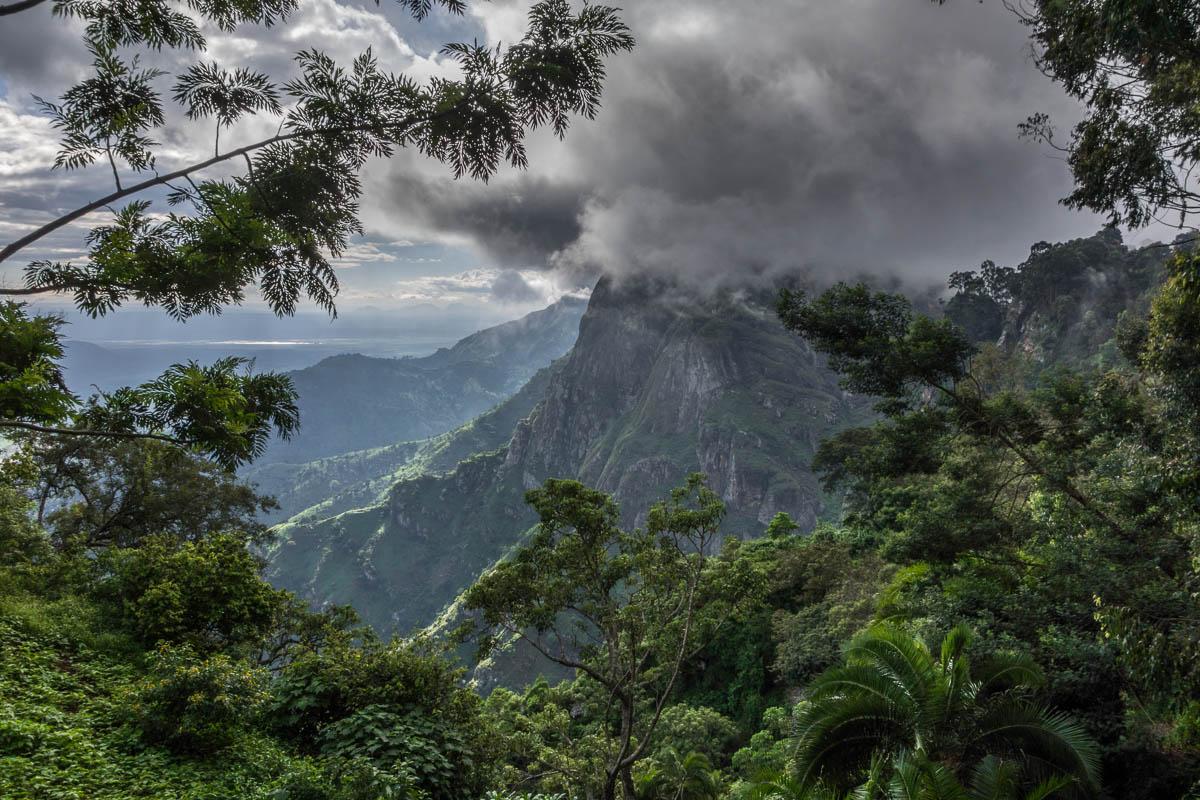
Few places in Tanzania give a photographer as much variety as the Usambaras — the sheer drop of the Irente escarpment, mist pouring through rainforest, terraced farms stacked up the slopes, village life and the faces of the Shambaa, all in soft mountain light. The winding mountain roads are an attraction in themselves, and the scenic drives between locations are half the trip.
A guided photography day is about timing and access more than anything: catching the escarpment in early light, hitting a viewpoint as the mist lifts, and getting into villages where you are genuinely welcome. The one rule we hold to is asking before photographing people, which a local guide makes natural rather than awkward.
Dawn, dusk and the moody light of the wetter months are when the mountains perform. We arrange the guide, the drives and the timing. Pricing on request.