Things to Do in Mtwara, Tanzania
dive mnazi bay marine park
explore mikindani old town
makonde carving & the plateau
shangani beach & the waterfront
mtwara town & cashew country
seafood & coastal cuisine
the ruvuma & mozambique border
Dive Mnazi Bay Marine Park
The finest reefs in the south
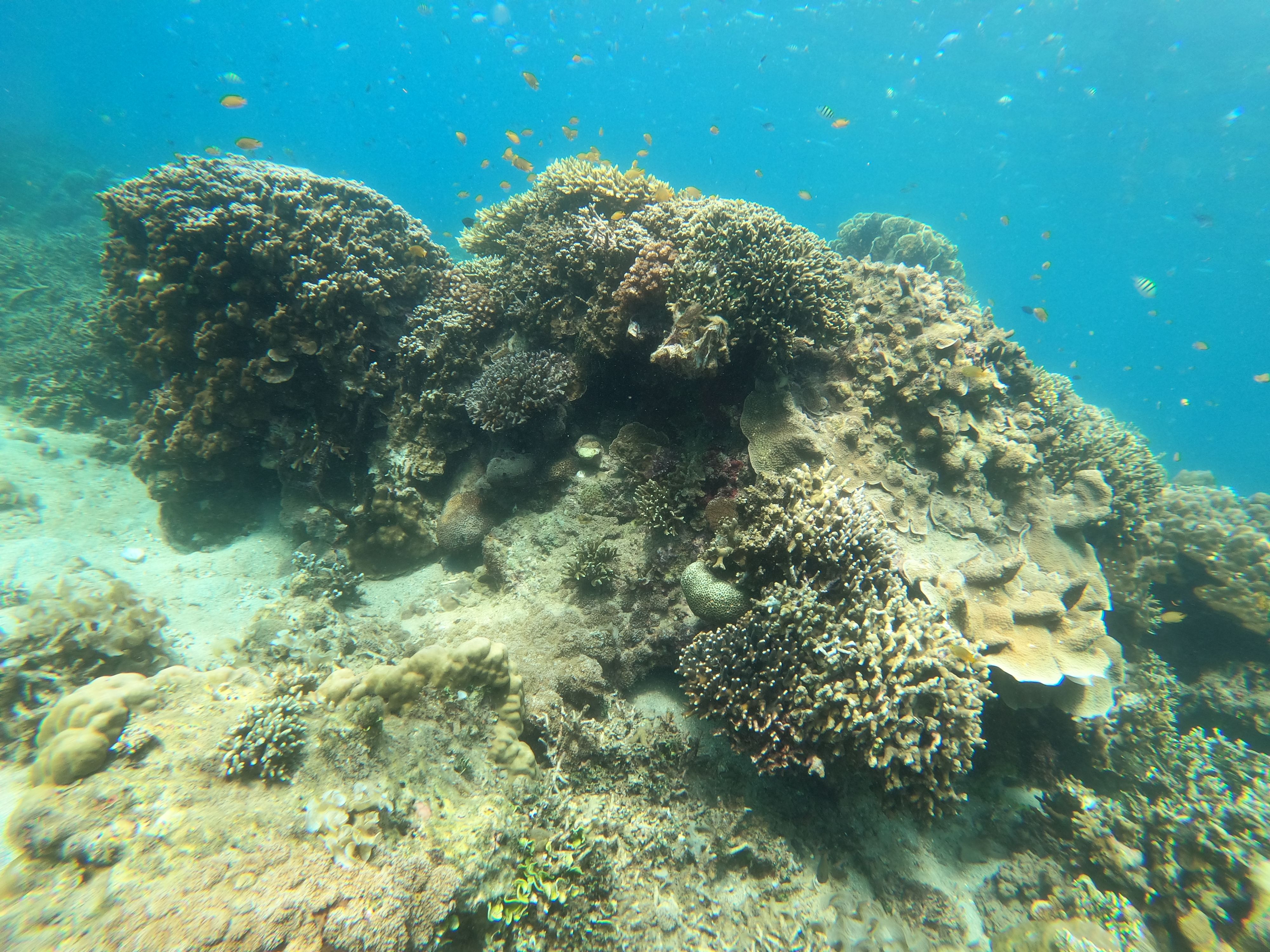
Dive Mnazi Bay Marine Park at Mtwara — reefs with 400+ fish and more coral species than anywhere on the East African coast, off the white sands of Msimbati.
The jewel of the far south lies just offshore: the Mnazi Bay-Ruvuma Estuary Marine Park, a sprawling protected sweep of reef, island and estuary running down to the Mozambique border. Designated in 2000 and still barely explored, it shelters extraordinary underwater riches — more than 400 species of fish and over 250 kinds of coral, more types than anywhere else on the entire East African coast — with dramatic drop-offs, coral channels and reefs that most divers have never heard of, let alone visited.
At its heart is the Msimbati Peninsula, fringed by the pristine white sands of Ruvula Beach, where the snorkelling is superb and you may well have the reef entirely to yourself.
This is genuinely off-the-beaten-track diving — world-class beneath the surface, simple and undeveloped above it — so come for the marine life and the solitude rather than resort comforts. The dry season brings the calmest, clearest water. We arrange the dives, boats and beach stay. Pricing on request.
Explore Mikindani Old Town
A Swahili port frozen in time
Explore Mikindani near Mtwara — a preserved old Swahili port of coral-stone alleys, carved doors and an 1895 German boma, steeped in coastal trade history.
Just up the coast from Mtwara, Mikindani is the historical heart of the whole region — a gorgeously preserved old Swahili port that feels frozen a century ago. Its winding coral-stone alleys are lined with carved wooden doors, shaded terraces and thick-walled Arab-Swahili houses, presided over by the grand German Boma of 1895, now sympathetically restored as a hotel high above the bay.
For centuries this was a major Indian Ocean trading port, its reach extending inland as far as Malawi and the Congo, dealing in ivory, copper and, darkly, enslaved people; a sombre reminder survives in the old slave market and the giant hollow baobab said to have held captives. A modest house here is long associated with the explorer David Livingstone, though the link to the actual building is doubtful.
When the British chose Mtwara’s deeper harbour, Mikindani was left behind — and its loss is the visitor’s gain, for little has changed since. A guided walk brings its layered history alive. We arrange it. Pricing on request.
Makonde Carving & the Plateau
Africa’s master wood carvers
Discover Makonde carving around Mtwara — the ebony masks and swirling 'shetani' spirit sculptures of Africa's master carvers, on the plateau and in town.
Mtwara is the homeland of the Makonde, whose wood carvers are celebrated across Africa and beyond. Working the dense black ebony known as mpingo, they create hauntingly beautiful pieces — fierce ceremonial masks, elongated figures, and the swirling, interlocking ‘shetani’ spirit sculptures and ‘ujamaa’ trees-of-life for which the Makonde are world-famous. Boys begin learning the craft around the age of ten, and the skill is passed down the generations.
Their heartland is the Makonde Plateau, rising inland west of Mtwara to the breezy, mist-wreathed town of Newala, perched above the Ruvuma Valley with views reaching into Mozambique. In Mtwara itself you can watch carvers at work and buy directly from them.
The plateau is deeply rural with rough roads, so a visit is a proper expedition best done with a guide, while the workshops in town are easily reached — and buying at source puts your money straight into the carvers’ hands. Unmissable for lovers of African art. We arrange it. Pricing on request
Shangani Beach & the Waterfront
Town beach and busy bay
Relax at Shangani Beach in Mtwara — the town's swimming beach on the bay, plus the colourful dhow port and fish market and views across to the Msangamkuu sands.
For an easy day by the sea without leaving the city, Mtwara’s own beach lies out in the leafy Shangani quarter on the northern shore of the bay. It is a gentle, sandy spot, good for a swim — best at high tide — with calm currents and few hazards, which makes it a favourite with families.
The wider bay is the real theatre, though: the dhow port and fish market come alive in the early morning and late afternoon as the catch comes in, and across the water the Msangamkuu Peninsula shows off long white sands, best admired from the little viewpoint above the shore.
It is a working town beach rather than a resort strip, tidal and unpolished, but a pleasant, local way to end a hot day. We can point you to the best spots and arrange a bay trip by dhow. Pricing on request.
Mtwara Town & Cashew Country
A planned port and cashews
Explore Mtwara town — a planned port city born of the 1940s groundnut scheme, with a Makonde museum and painted church, in Tanzania's leading cashew region.
Mtwara town is a curiosity in its own right. Almost uniquely in Tanzania, it was planned and built more or less from scratch by the British in the 1940s to serve the Tanganyika Groundnut Scheme — a grand post-war plan to grow groundnuts for a hungry Britain that failed spectacularly and was abandoned by 1951, leaving behind a deep-water port, improbably wide avenues and a town laid out for far more people than ever came. A recent offshore-gas boom has stirred it back to life.
There are a couple of genuine gems: a small museum of Makonde, Makua and Yao culture, and St Paul’s church, its walls covered in wonderfully whimsical biblical murals. But the region’s defining crop is the cashew — Mtwara is the leading cashew-growing region in the country, producing a huge share of the national harvest.
The town itself is functional and spread out rather than pretty, best treated as a comfortable base with a quirky backstory. A guided orientation and a cashew-country visit fill it out nicely. We arrange it. Pricing on request.
Seafood & Coastal Cuisine
Straight from the dhows
Eat well in Mtwara — fresh seafood straight off the dhows, coconut fish curry, octopus stew and pilau with cassava, tropical fruit and the region's own cashews.
With the dhows landing their catch each day, Mtwara eats superbly for a town its size, in the classic Swahili style of the coast. Grilled fish comes straight off the boats; octopus is slow-cooked into rich stews; fish is simmered in fragrant coconut curry; and everything is served with pilau rice, cassava or ugali and a heap of sweet tropical fruit.
And of course there is the cashew, the region’s pride, roasted and salted or worked into snacks and sweets — the perfect thing to nibble with a cold drink as the sun goes down over the bay.
It is honest, fresh, home-style cooking rather than fine dining, but with seafood this good straight from the ocean, it hardly needs to be anything more. We can point you to the places the locals rate. Pricing on request.
The Ruvuma & Mozambique Border
The edge of Tanzania
Reach the edge of Tanzania at Mtwara — the Ruvuma River border with Mozambique and the Unity Bridge crossing, a remote deep-south frontier of big skies.
There is a particular thrill to standing at the very edge of a country, and Mtwara offers exactly that. South and west of the city runs the broad Ruvuma River, the natural border between Tanzania and Mozambique, its far bank a different nation. Inland, beyond the Makonde Plateau, the Unity Bridge spans the river as an official crossing point into Mozambique.
This is a genuine frontier, remote and little-travelled — cut off from tourism altogether during Mozambique’s long civil war and only slowly opening as new roads and the ‘Mtwara Corridor’ trade route push through. From the cliffs at Newala the view reaches across the river valley into Mozambique.
There is no single ‘sight’ here so much as the atmosphere of the deep, wild south — big rivers, big skies and the end of the road. It pairs with the quieter coast of neighbouring Lindi [link] to the north. We plan routes through the far south. Pricing on request.