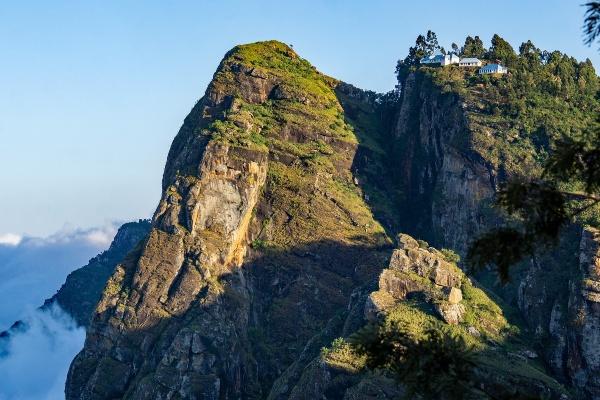
Things to Do in Same.
hike the south pare mountains
trek to shengena peak
chome nature forest reserve
waterfalls, streams & natural pools
sunrise, sunset & valley viewpoints
village-to-village walks & homestays
pare cultural tours
traditional pare food
traditional farming tours
same local markets
coffee & spice farm visits
birdwatching around same
mkomazi national park game drive
nyumba ya mungu dam excursion
mountain biking & rural cycling
photography tours around same
same off the beaten path
Hike the South Pare Mountains
Cool, green ridges few tourists ever walk
Hike the South Pare Mountains from Same — cool green ridges, montane forest and farming villages in the ancient Eastern Arc, on day or multi-day walks.
The South Pare Mountains are the reason to come to Same. Part of the Eastern Arc — a chain of ancient crystalline mountains far older than Kilimanjaro and reckoned one of the most biodiverse places on the continent — they rise straight off the hot plains into cool, green, cultivated highlands where the air is a genuine relief from the lowlands below.
Hiking here is a mix of forest, ridge and village. Trails climb through smallholdings of maize, beans and bananas, into pockets of old forest, and out onto ridges with long views across the Maasai Steppe toward Mkomazi. You can do a half-day taster or string several days together, sleeping in villages along the way. Local guides lead it, both because they know the paths and because the income matters here.
Set your expectations sensibly: this is not Kilimanjaro, but it is not a manicured trail either — paths are rough and signage is minimal, which is half the appeal. Dry season is far better underfoot. We arrange guides, any homestays and transfers. Pricing on request.
Trek to Shengena Peak
The Pare’s high point, and the region’s second
Trek to Shengena Peak (2,462m) in Chome Nature Reserve near Same — the highest point in the Pare Mountains, with views to Mkomazi and Kenya’s Taita Hills.
Shengena is the prize. At 2,462 metres it is the highest peak in the entire Pare range and the second-highest point in the Kilimanjaro Region after the big mountain itself, sitting inside the Chome Nature Forest Reserve in the heart of the South Pare.
Getting there is part of it: most people drive the rough couple of hours up from Same to Chome, where the reserve has a visitor centre, then walk. The summit hike runs around six hours up through dense montane forest that gives way to moss-draped, stunted ‘elfin’ woodland near the top — eerie and beautiful. Many trekkers split it over a couple of days, overnighting in Chome village or camping in the reserve. On a clear day the summit gives you Mkomazi spread out below, the North Pare, and the Taita Hills across the Kenyan border.
It is a proper day’s effort and the weather up high can close in fast, so an overnight takes the pressure off. Dry season for footing and views. We arrange guides, reserve fees, camping or village stays and transfers. Pricing on request.
Chome Nature Forest Reserve
Ancient Eastern Arc forest above Same
Walk Chome Nature Forest Reserve above Same — 14,000 hectares of ancient Eastern Arc montane forest with rare endemic species, and the source of Same’s water.
Shengena gets the glory, but the forest it sits in is the real treasure. Chome Nature Forest Reserve protects more than fourteen thousand hectares of Eastern Arc montane forest along a sixteen-kilometre ridge — the kind of ancient, isolated woodland that evolves species found nowhere else on earth, with a roll-call of endemic plants and birds and a tangle of moss-draped elfin forest near the crests.
You do not have to summit Shengena to enjoy it. Shorter guided forest walks let you go in among the giant trees, the birdsong and the cool damp air for a few hours rather than a full day. The reserve is also the practical lifeline of the district — it is the main water source for Same town and the irrigation farms below — and parts of it are sacred to the Pare, which is a big reason so much of it still stands.
It is a managed reserve, so a guide and entry fees apply, and the forest floor is muddy after rain. Dry season is easier. We arrange the guide, fees and transfer. Pricing on request.
Waterfalls, Streams & Natural Pools
Cool water on the Chome trails
Find waterfalls, mountain streams and natural pools on the Chome and South Pare trails near Same — refreshing stops on a hike, fullest in and after the rains.
The Pare slopes are well watered — that forest on top wrings moisture out of the air — so the trails around Chome and the South Pare are threaded with streams, small waterfalls and clear pools. They are less a destination in themselves than the natural rest stops of a good hike: a place to cool your feet, fill a bottle from a spring, or sit under a fall for ten minutes before pushing on.
Be honest about the season, though. Several of the falls are seasonal, at their fullest during and just after the rains and reduced to a trickle late in a dry year. A local guide knows which ones are running and worth the detour at any given time, which saves a wasted climb.
They fold naturally into a Pare Mountains hike rather than standing alone. Bring shoes you do not mind getting wet. We arrange the guide and route. Pricing on request.
Sunrise, Sunset & Valley Viewpoints
Ridges over the Maasai Steppe and Mkomazi
Hike to ridge viewpoints above Same for sunrise and sunset over the Maasai Steppe and Mkomazi — short walks with long views across the plains to the horizon.
One of the simplest pleasures around Same costs nothing but an early start or a late one. The ridges above the town look clean out over the Maasai Steppe and down toward Mkomazi and the Tsavo country beyond, and at sunrise and sunset that huge dry plain turns gold and pink in a way the lowland heat hides during the day.
These are short, easy walks rather than treks — an hour or so up to a ridge or a known viewpoint with a guide — which makes them perfect bookends to a day, or an easy outing if you are not up for a full mountain hike. Sunrise means a dark start; sunset is the lazier option.
They pair beautifully with a village homestay, so you wake up already in the hills. The dry season gives the clearest air and the longest views. We arrange the guide and timing. Pricing on request.
Village-to-Village Walks & Homestays
Old footpaths and a night with a family
Walk the ancient footpaths between Pare villages near Same and stay overnight with a local family — the most authentic way to experience mountain life.
The Pare have been walking between their villages on the same footpaths for generations, long before any road, and following those paths with a local guide is the truest way to see the mountains. You move at walking pace from one settlement to the next, through farms and forest, stopping to talk, watch and share a meal rather than tick off sights.
The natural extension is to stay the night. Village homestays put you in a family’s home — eating what they eat, hearing how a mountain household actually runs, waking to the sounds of the village — and the money goes straight to the people hosting you. It is the single most rewarding thing you can do in Same.
Set expectations honestly: a homestay means a simple bed, basic shared facilities and no frills. Come open-minded and it is unforgettable; come expecting a lodge and you will be disappointed. We arrange the walk, the host families and transfers. Pricing on request.
Pare Cultural Tours
One of Tanzania’s oldest mountain cultures
A Pare cultural tour near Same — the history, sacred forests, ironworking, dances and storytelling of the Wapare, on these mountains for over 500 years.
The Pare — Wapare in their own tongue — have lived on these mountains for at least five hundred years, which makes them one of the oldest continuous cultures in Tanzania, and they have held onto their traditions more tightly than most. A cultural tour, led by people from the community, opens that world up.
There is real history here. The Pare were famous ironworkers, smelting and forging tools and weapons that they traded far across the region long before the colonial era. Their mountaintop forests are sacred ground, tied to ancestors and ritual, which is a large part of why those forests survive at all. And the culture is still very much oral and alive — expect storytelling, music and dance, and the chance to hear myths and history straight from elders rather than read them on a board.
This is living culture, not a staged performance, and it is the better for it. Easy to combine with village walks. We arrange the guide and visits. Pricing on request.
Traditional Pare Food
Mountain-grown food at a family table
Taste traditional Pare cooking near Same — dishes built on mountain-grown maize, beans, bananas and greens, often prepared and shared with a local family.
Eating in the Pare hills is a window into how the mountains feed themselves. The food is built almost entirely on what grows on the slopes — maize, beans, bananas of every kind, avocados, pumpkin leaves and other greens — cooked simply and eaten together. It is hearty, honest mountain food rather than anything dressed up for visitors.
The best way to try it is at a family’s table, often as part of a homestay or cultural visit, where you might also help with the cooking and hear what each dish means. The brave can sample dengelua, the local home-brew the Pare make for celebrations — an acquired taste, but part of the experience.
It is simple, filling and completely local; come hungry and without expectations of a menu. We can build a food experience into a village or cultural visit. Pricing on request.
Traditional Farming Tours
Centuries of clever mountain agriculture
See traditional Pare farming near Same — terraces, irrigation furrows and mixed plots of maize, beans, bananas and avocado that sustain the highlands.
The Pare turned a steep, awkward mountainside into productive farmland centuries ago, and a farming tour shows you how. You walk working family plots where maize, beans, bananas, avocados and coffee grow layered together, fed by hand-dug irrigation furrows and held in place by terracing and soil-conservation methods passed down for generations.
It is more interesting than it sounds. These are some of the oldest sustainable farming systems in East Africa, worked out long before anyone wrote a manual, and the farmers who show you around know exactly why each crop sits where it does. You come away understanding the mountain as a kind of vast, clever garden.
These are real farms with real work going on, not a demonstration plot, so a respectful visit and the small fee go directly to the family. Easy walking, any season, though the green months show the farms at their most lush. We arrange the visit and guide. Pricing on request.
Same Local Markets
Produce, livestock and real local life
Visit Same’s local markets — produce, livestock and handmade goods traded by mountain farmers and plains herders. An honest slice of everyday Tanzanian life.
Same’s markets are not laid on for anyone — they are where the district actually does its business, and that is precisely why they are worth an hour. Mountain farmers bring down produce, plains herders bring livestock, and traders spread out everything from tomatoes and secondhand clothes to handmade tools, all in a cheerful crush of bargaining and gossip.
Going with a guide turns it from a confusing scrum into something you can read — what is in season, where the goods come from, how the mountain and the plains feed each other. Market days are the liveliest, and your guide will know which day is which in which village.
Do not expect a polished craft market; expect the real thing, dust and all. Bring small cash and a relaxed attitude. We arrange the guide and transfer. Pricing on request.
Coffee & Spice Farm Visits
Small high-altitude farms above Same
Visit small coffee and spice farms in the higher Pare villages near Same — high-altitude smallholdings where you can see how each crop is grown and processed.
Up in the higher, cooler Pare villages, families grow small plots of coffee and spices alongside their food crops, and a farm visit here is an intimate affair — a single smallholding and the family who works it, rather than an estate. You see how the coffee is grown, picked and processed by hand, and how spices are dried and prepared, often finishing with a taste of the result.
It is the kind of thing that only works because someone local takes you, since these are home gardens rather than tourist sites, and the visit puts a little money directly into a mountain household.
As with coffee anywhere, the live picking is seasonal — mainly the second half of the year — though the processing and tasting work any time. It folds easily into a village walk or cultural day. We arrange the visit and guide. Pricing on request.
Birdwatching around Same
Eastern Arc forest birds and plains species
Birdwatch around Same — Eastern Arc forest specials in the Pare Mountains, plus plains and wetland species below, including rarities found almost nowhere else.
For birders, Same is quietly special, because the Eastern Arc forests of the Pare Mountains hold restricted-range species that exist in only a handful of these ancient forest islands and nowhere else on the planet. Chome’s montane forest is the place to look for them, and tracking them down is exactly the kind of challenge that brings serious birders to obscure corners.
Lower down, the picture changes completely: the dry plains around Same and along the edge of Mkomazi turn up dry-country birds, and you will also spot antelope and monkeys out in the lowland bush. The wetter ground toward the Nyumba ya Mungu reservoir adds waterbirds. Between forest and plain it is a genuinely varied list.
A guide who knows the forest calls is the difference between hearing the rarities and actually seeing them. The green months from November to April bring migrants. We pair you with the right guide and arrange transfers. Pricing on request.
Mkomazi National Park Game Drive
The big park right on Same’s doorstep
Mkomazi National Park sits 6km from Same — black rhino, wild dog, oryx and gerenuk in a quiet dry park bordering Kenya’s Tsavo. The easiest day out here.
Here is the happy accident of basing yourself in Same: the gate of a full national park is barely six kilometres from town. Mkomazi is the easiest, most rewarding day out you can have here, and Same is literally its gateway — most visitors approach it from hours away, while you are already on its doorstep.
It is a big, dry wilderness of acacia and commiphora running up against Kenya’s Tsavo West, the two sharing one ecosystem. Be clear-eyed about the game: densities are lower than the famous northern parks, so this is about rarities and space, not big herds. The draws are a fenced sanctuary protecting reintroduced black rhino (visitable as an extra), African wild dog, and dry-country specials like the fringe-eared oryx and the long-necked gerenuk, plus more than 450 bird species and the Pare and Usambara mountains as a backdrop.
Game drives are the core, with guided bush walks available. The dry months pull the game to water. Being so close, a half or full day works easily. We arrange the vehicle, guide, park fees and transfer. Pricing on request.
Nyumba ya Mungu Dam Excursion
A vast reservoir on the Maasai Steppe
Visit Nyumba ya Mungu, Kilimanjaro Region’s largest reservoir north of Same — fishing, boat rides, birdlife and big mountain views on a clear day.
Nyumba ya Mungu — ‘House of God’ — is the biggest body of water in the Kilimanjaro Region, a vast reservoir thrown across the Pangani River back in the 1960s where the plains open out below the Pare. On a clear day both Kilimanjaro and Meru float on the horizon beyond the water, and the light at dawn and dusk over the fishing boats is something.
It is a working place rather than a resort: a fishing community lives off its tilapia, and an excursion here means going out with local boatmen — a boat ride across the open water, a go at fishing, and good birdwatching along the reedy shores. That is the honest pleasure of it, not facilities.
Two straight notes: it lies north of Same in neighbouring Mwanga, so it is a fair drive rather than a quick hop, and the water level rises and falls a lot with the seasons and rainfall, which shapes what is possible on the day. We arrange the boat, guide and transfer. Pricing on request.
Mountain Biking & Rural Cycling
Pedal the Pare farmland and back lanes
Cycle the Pare Mountains and lowland lanes around Same — village tracks, farmland and scenery well off the tourist routes, on a guided mountain bike tour.
On two wheels, the Same area splits neatly in two. Up in the Pare Mountains the riding is properly demanding — steep, rough tracks between villages and farm plots, rewarded with views and a real sense of having earned them. Down on the flatter lowland lanes the cycling is gentler, rolling through farmland and settlements where a bicycle still draws waves.
Either way it is cultural as much as physical: you stop at villages, talk to people and see daily life at a pace a vehicle blows past. A guide leads and we provide the bikes, matching the route to how hard you actually want to work.
The dry season gives firmer tracks; the mountain routes get treacherous in the rains. Half or full day, mountain or lowland. We arrange bikes, guide and transfers. Pricing on request.
Photography Tours around Same
Mountains, villages and dramatic light
A photography tour around Same — the Pare Mountains, terraced farms, village life and dramatic light over the plains toward Mkomazi, far off the tourist trail.
Same is a photographer’s quiet goldmine precisely because no one else is here — no tour buses in your frame, no crowds at the viewpoint. The raw material is excellent: the layered ridges of the Pare, terraced farms stitched into the slopes, village life carrying on unposed, and the enormous dramatic light over the plains toward Mkomazi at either end of the day.
A guided photography day is partly about timing and access — being on the right ridge at sunrise, getting into a village where you are welcome — and partly about doing it respectfully. The one rule we hold to is asking before photographing people; a guide from the community makes that natural rather than awkward, and the portraits are better for the trust.
Dawn and dusk are the sessions that matter, and the dry season gives the cleanest mountain air. It threads easily through hikes and village visits. We arrange the guide, access and timing. Pricing on request.
Same Off the Beaten Path
Who Same is really for
Same is one of northern Tanzania’s least-visited corners — best for travellers who want authentic, quiet, community experiences over polished tourist comfort.
It is worth being plain about who Same is for, because it is not for everyone. If you want lodges, swimming pools and a tight schedule of headline sights, the famous parks will serve you better. If you want somewhere genuinely off the tourist map — quiet, authentic, community-run, where the experiences are about people and mountains rather than polish — there are few better places in the north.
It also sits cleverly on the map. Same is right on the highway between the northern safari circuit and both the coast and the Usambara Mountains, so it slots in as a two- or three-day detour rather than a special trip, and it makes a peaceful contrast after the intensity of a climb or a safari.
Come with a little patience for rough roads and simple beds and it pays you back generously. We can build Same into a wider Tanzania itinerary so it joins up neatly with everything else. Pricing on request.