Best Green Season Safari in Tanzania
best green season safari in tanzania
Best Green Season Safari in Tanzania
Discover the best green season safari in Tanzania, with the right months, parks, wildlife, weather, costs, and planning advice from Safari TZ.
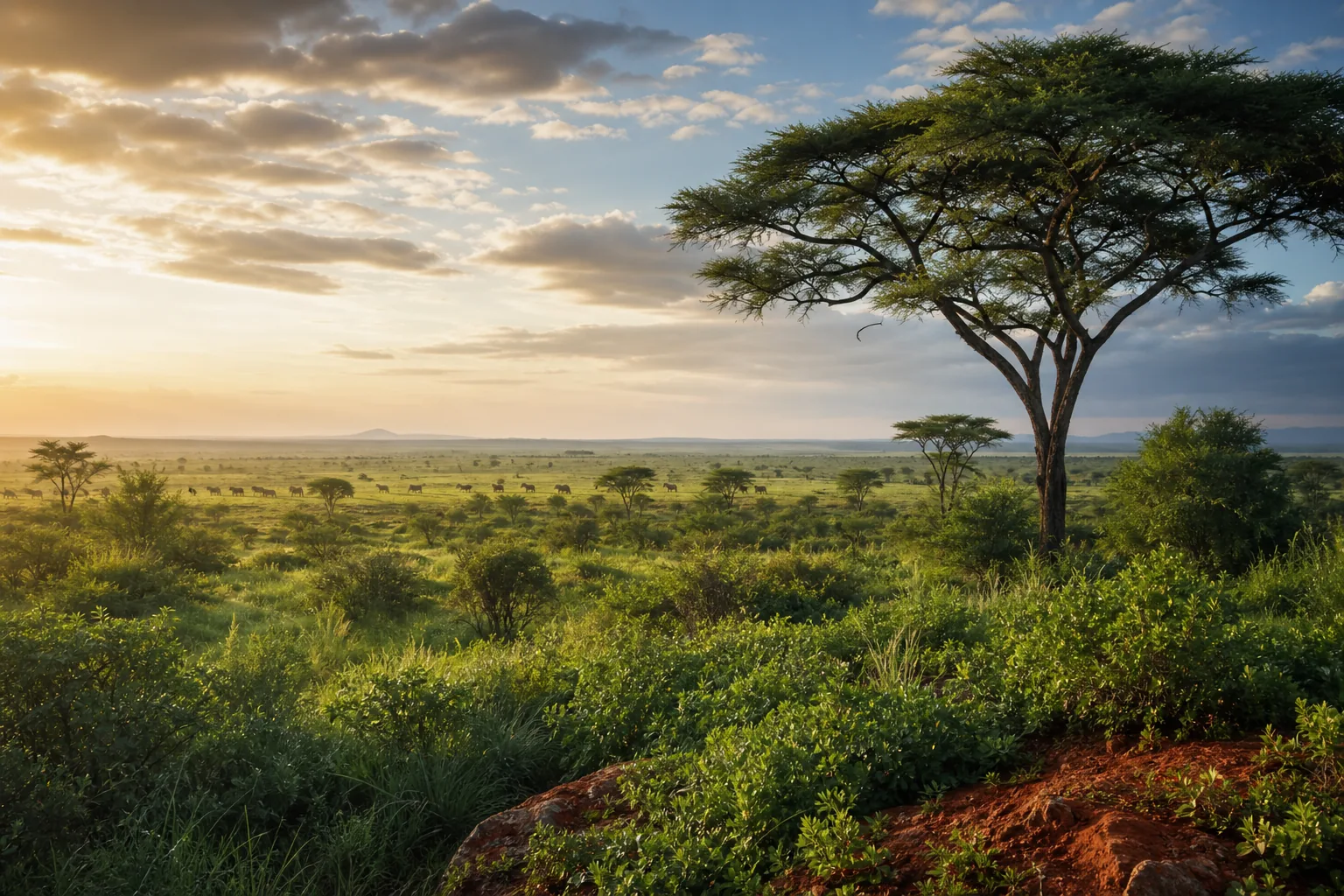
The best green season safari in Tanzania runs through a bright, changing landscape when rain brings fresh grass and new life. Safari TZ maps this season from November to May across seven major parks, giving travelers more room to match the route to their wildlife goals.
Here’s how the season works, which parks fit it best, and what to plan before you book.
1. Safari TZ
Safari TZ is a Tanzanian-owned operator based in Arusha. Safari TZ offers safaris with its own driver-guides and 4x4 fleet, rather than selling another company’s departure.
For green season travel, that direct setup matters. A local team can adjust the route when rain changes road conditions or when wildlife shifts to fresh grazing. We can also build the trip around a clear goal, such as calving in the southern Serengeti, elephants in Tarangire, or a wider circuit with time in Ruaha and Nyerere.
Our green season window is November through May. The route can include Serengeti, Ngorongoro Crater, Tarangire, Lake Manyara, Ruaha, Selous or Nyerere, and Arusha National Park. That seven-park reach is useful for travelers who want variety instead of spending every day in one part of northern Tanzania.
Safari TZ has run Tanzania safaris, Zanzibar holidays, and Kilimanjaro climbs since 1991. We serve private and group travelers across budget, mid-range, and luxury trips. The same ground team handles the route, vehicle, and daily timing, so there are fewer handoffs between a booking desk and the people on safari.
There is one point to check early. A seven-park route can mean long drives or extra domestic flights. More parks do not always mean a better trip. Families may need fewer transfers, while photographers may accept a longer route for better light and more varied habitats.
For a first trip, we usually favor a focused route with enough nights in the Serengeti. For repeat visitors, a southern circuit can make the green season feel very different.
Our view: Safari TZ is the clearest fit for travelers who want a direct Tanzanian operator and a green season route that can stretch beyond the usual northern circuit.
To compare routes, ask for the full plan before paying a deposit. It should show park nights, transfer days, vehicle type, lodging level, and what happens if heavy rain affects a track.
The Best Tanzanian Parks for a Green Season Safari
The best green season safari in Tanzania depends on the park mix. Each area changes in its own way after rain, so the strongest route is built around the wildlife you want to see.
Serengeti National Park
The Serengeti is the main draw for migration activity and open plains. In the green season, grass can spread across the landscape and herds move in response to rain and food. The exact position changes, so no operator can promise a sighting in one fixed spot.
Southern Serengeti and the Ndutu area are especially important during calving months. The landscape is open, which can help with viewing newborn animals and the predators that follow them. A longer stay gives your guide more chances to find active areas instead of chasing a single reported sighting.
Ngorongoro Conservation Area
Ngorongoro works well beside the Serengeti because it adds a dense wildlife setting within a shorter area. The crater floor can feel busy with animals even when weather makes a long plains drive less appealing.
Plan the crater visit with care. The descent and ascent take time, and the day can become tiring if it sits between two long transfers. We prefer to place it where guests can rest before or after the crater drive.
Tarangire, Lake Manyara, and Arusha
Tarangire brings a different mix of woodland and open areas. It is a strong choice when you want elephants and a route with less focus on the Serengeti. Lake Manyara adds a compact park experience, while Arusha National Park can work well at the start or end of a trip from Arusha.
These parks also help shape a trip around flight times. A traveler with only a week may prefer a northern route with fewer long drives. A traveler with more time can add southern parks instead of repeating the same habitat.
Ruaha and Nyerere
Ruaha and Nyerere bring a wilder southern feel. They suit travelers who want fewer vehicles and a slower pace, though the route may need flights or longer transfers. Their value lies in the change of setting, not in trying to copy the Serengeti.
Serengeti National Park is part of a wider ecosystem, so wildlife does not follow park borders. That is one reason we plan green season routes around habitats and recent field conditions rather than treating each park as an isolated box.
Choosing the Right Green Season Month
The best month for a green season safari depends on whether you want new births, fresh color, or a quieter trip. November through May is a useful planning window, but it is not one single weather pattern.
November and December
Short rains often begin to change the bush in November. The first storms can be local, so one park may look wet while another stays dry. December can bring greener ground and good bird activity, but travelers should expect cloud, short rain, and muddy sections on some tracks.
This period can suit guests who want fresh scenery and do not need every day to be dry. It also works well for a route that mixes parks, since the trip has more than one area to absorb changes in weather.
January and February
January and February are the key months for calving in the southern Serengeti. The herds gather around fresh grazing, and predator activity can rise near vulnerable young animals. This is the month choice for travelers who care most about the cycle of birth and pursuit.
Calving season is not a promise of constant action. Some drives are quiet. The reward comes from staying in the right area for several nights and letting the guide read the movement each morning.
March through May
March can still bring strong wildlife viewing with lush color. April and May are wetter in many parts of the country, though conditions vary by location and year. Roads may become slower, and some camps may reduce operations during the wettest stretch.
These months can suit repeat visitors, birdwatchers, and photographers who value cloud light and green scenery. They are less suited to travelers who want a tight schedule with no weather changes.
Use the month as a starting point, not the whole decision. The right route also depends on the number of nights, road access, lodging style, and whether you can move by air when needed.
Wildlife Highlights: Migration, Calving, and Predators
A green season safari in Tanzania can show a different side of the migration. The herds respond to rain and grazing, while predators stay close to areas with high numbers of young animals.
Migration movement
The Great Migration is a moving system, not a fixed event at one lodge or viewpoint. In the green season, the southern plains often become important because new grass draws large herds. Your guide will use recent sightings, tracks, weather, and animal behavior to decide where to spend the next drive.
That is why a promise of one exact migration sighting should make you cautious. A sound plan gives the guide time and keeps the route flexible.
Calving season
Calving is the main reason many travelers choose January or February. Newborn wildebeest and zebra can be seen on the plains, while lions, cheetahs, and hyenas search for easy prey.
The experience can feel intense, but guests should keep a respectful distance. Your guide should place the vehicle where you can watch without blocking animals or crowding another vehicle.
Predator activity
Predator sightings are never guaranteed. Green grass can make some animals harder to spot, yet prey numbers in one area may create strong viewing. Early drives often help because animals are active before the heat builds.
Birdlife is another reason to travel in this season. Migrant birds can add color and movement to a drive, especially when the bush is full after rain. A good guide will pause for small sightings instead of treating every drive as a search for lions.
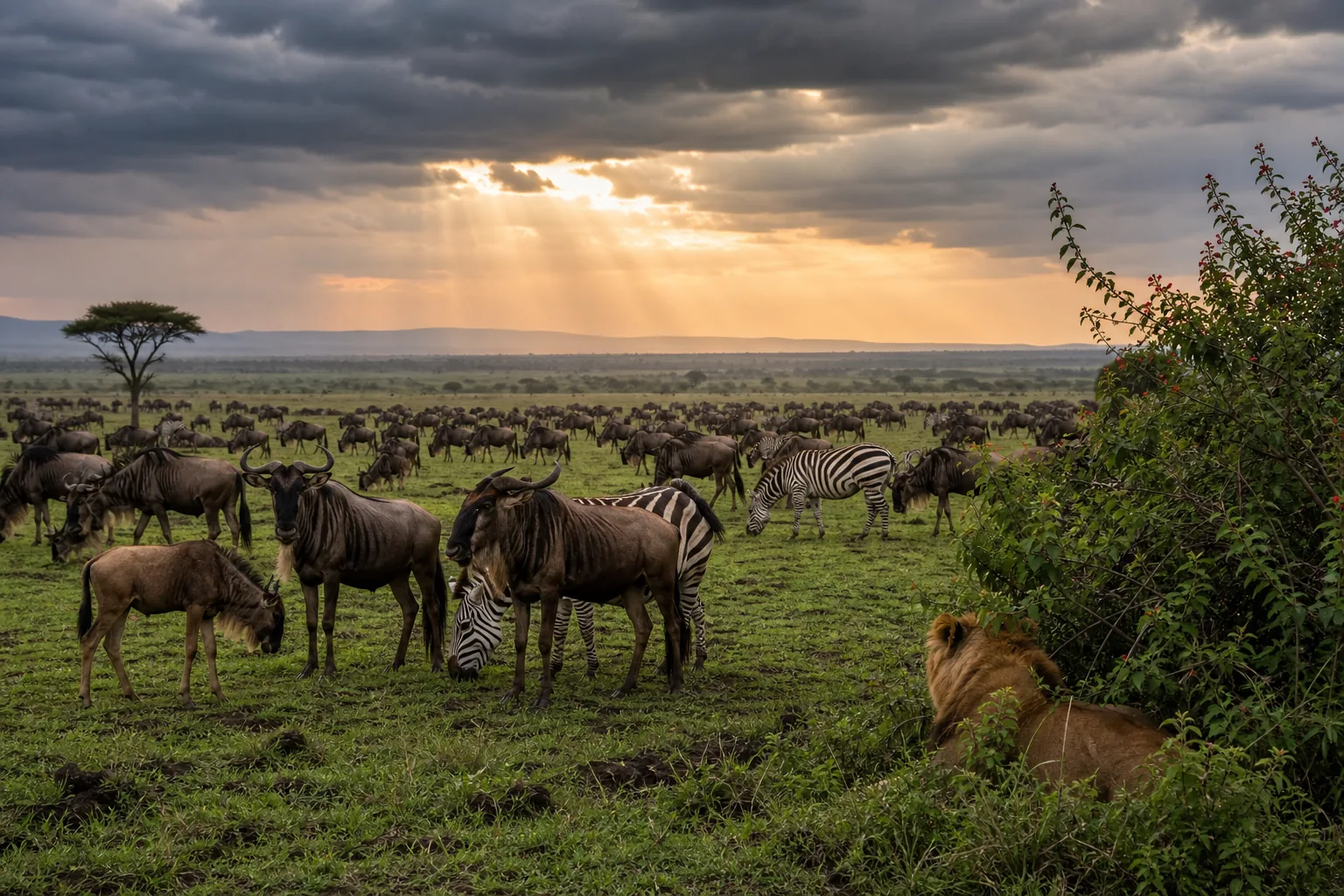
The strongest wildlife plan leaves room for ordinary moments too. A herd crossing a wet track or a jackal moving through new grass can be as memorable as a famous sighting.
How to Plan a Comfortable, Responsible Green Season Trip
Comfort on a green season safari comes from good timing and honest planning. Rain is part of the season, so the goal is to prepare for it rather than pretend it will not happen.
Match the route to your time
Start with the number of nights, then choose the parks. A short trip should avoid too many long road days. A longer trip can combine the northern circuit with southern Tanzania, but it may need a domestic flight.
Ask how many full game-drive days you get. A route can list many parks and still leave little time inside them if transfers take up the schedule.
Pack for wet tracks and cool mornings
Bring a light waterproof layer, closed walking shoes, quick-dry clothes, and a warm layer for early drives. Protect cameras and passports in dry bags. A small day pack is easier to manage than a large case inside the vehicle.
Rain does not mean every day is wet. Many storms pass quickly, but the road can stay soft after the sky clears. Build some flexibility into the plan.
Ask clear questions about lodging
Lodging ranges from simple tented stays to high-end lodges, and the research pool shows that many safari listings do not state the accommodation type clearly. Ask where you sleep each night and whether the camp stays open during the wetter part of the season.
Also ask about power, hot water, laundry, and the distance between camp and the main viewing areas. These details shape comfort more than a broad label such as luxury or mid-range.
Build a useful budget
Safari cost changes with park fees, vehicle use, guide service, flights, lodging, and trip length. Published starting prices are missing from many safari listings, so compare full itineraries rather than one headline rate.
Our Tanzania safari cost guide from Arusha explains the main cost drivers and shows why two trips with the same number of days can have different totals.
Choose responsible operating habits
Ask how the operator handles waste, water, fuel, and local employment. Look for clear answers rather than a vague eco label. Small choices help, such as carrying a refillable bottle and avoiding single-use plastic.
Respect park rules at every sighting. Stay on approved tracks, keep noise low, and never ask a guide to crowd an animal for a better photo. Responsible travel protects the quality of the place you came to see.
Safari TZ can explain the tradeoffs before we build the route. If you want the most wildlife time, we may suggest fewer parks. If you want a broad view of Tanzania, we can discuss the extra travel that comes with it.
Frequently Asked Questions
What is the green season in Tanzania?
The green season in Tanzania usually refers to the wetter months from November through May. Rain brings new grass, brighter scenery, and strong calving-season viewing in the southern Serengeti. Conditions vary by month and park, so travelers should expect both sunny drives and periods of rain.
When is the best green season safari in Tanzania?
The best green season safari in Tanzania is often January or February for calving and predator activity. November and December suit travelers who want fresh color and early rains. March through May can work for photographers or repeat visitors who accept wetter roads and a slower pace.
Is a green season safari worth it?
Yes, a green season safari is worth it if you value lush scenery, calving, and fewer busy-feeling moments. It is less suitable for travelers who need dry roads every day. A flexible route and enough nights in one wildlife area make the season more rewarding.
Which parks should I visit in Tanzania’s green season?
The best parks depend on your goal. Choose the southern Serengeti for calving, Ngorongoro for dense wildlife viewing, and Tarangire for a different habitat. Ruaha and Nyerere suit travelers seeking southern Tanzania. Safari TZ can match the park mix to your time and travel style.
Does rain stop safari drives in Tanzania?
Rain does not usually stop every safari drive, but it can slow vehicles and affect some tracks. Storms may pass quickly, while wet ground can remain soft. Your operator should keep the route flexible and explain how weather may change transfer times.
Conclusion
For most travelers, the best choice is a green season route with enough time in the Serengeti, plus one or two parks that fit the rest of the trip. Start by sending Safari TZ your travel month, budget range, and wildlife priorities. Our Arusha team can then shape a route that fits the season instead of forcing the season into a fixed plan.