Best Tanzania Budget Safari Options in 2026
best tanzania budget safari options in 2026
Best Tanzania Budget Safari Options in 2026
Planning a Tanzania budget safari? Discover the best affordable options, parks, tips, and itineraries to make the most of your trip without overspending.
You don't need to spend a thousand dollars a day to see lions, elephants, and the Great Migration. Budget safaris in Tanzania typically start from around $1,598 per adult, and with the right operator and itinerary, you'll see everything that matters. Here are the best Tanzania budget safari options right now, from short three-day trips to epic ten-day circuits, and who each one is actually for.
1. Safari TZ , Best Local Operator for Budget Safaris in Tanzania (Our Top Pick)
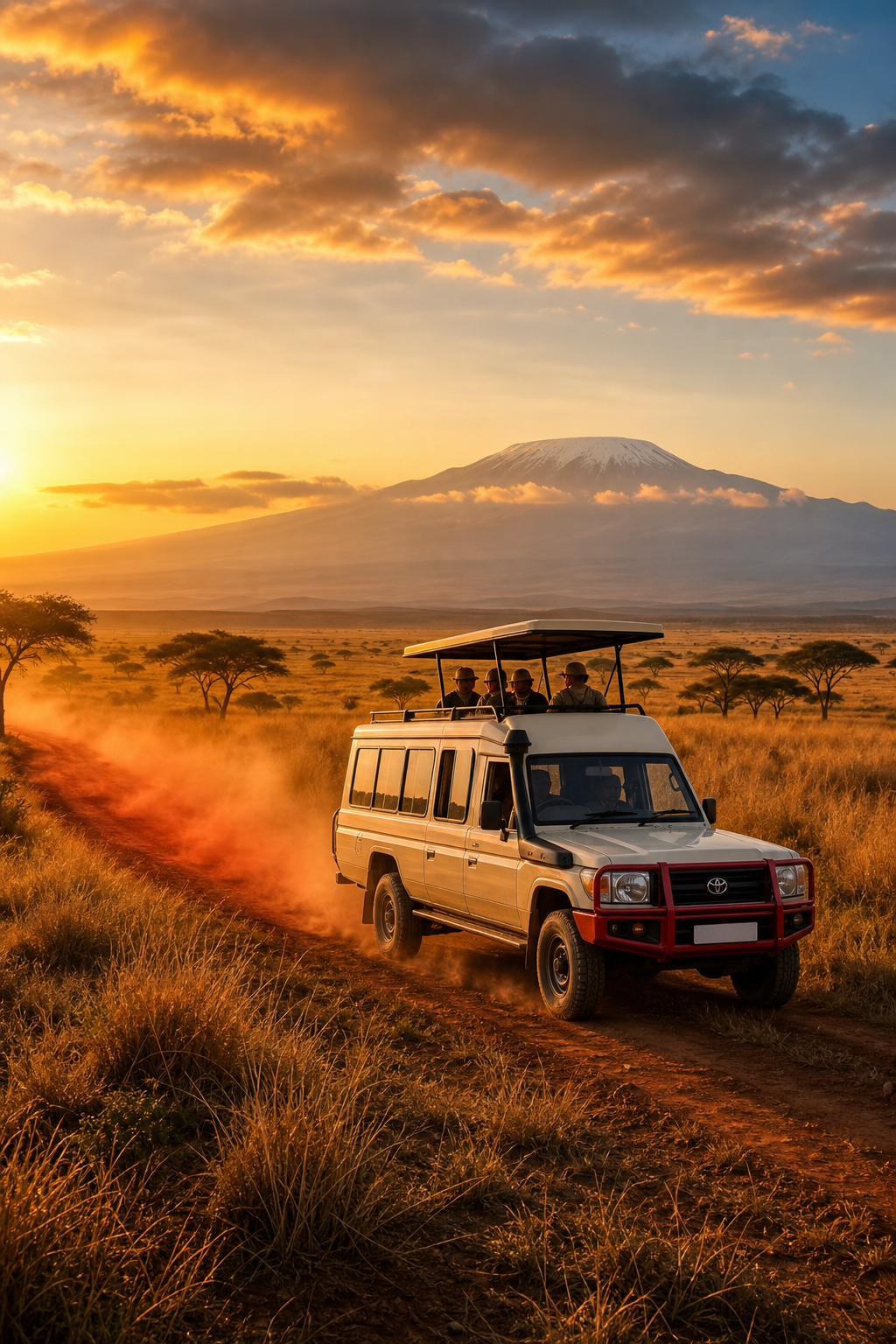
We're Safari TZ, a Tanzanian-owned operator based in Arusha. We run our own fleet of 4x4 Land Cruisers with experienced driver-guides who have worked these parks for years. There's no middleman, no booking platform markup , you deal directly with the crew that actually shows up.
That distinction matters more than it sounds. When you book through an aggregator, you often have no idea which vehicle you're getting, who your guide is, or whether the company has ever actually been to the park. We own the vehicles, we employ the guides, and we design every itinerary ourselves from our office in Arusha.
Our budget safari range runs from three-day camping trips through Tarangire and Ngorongoro up to full ten-day northern circuit routes. Every quote includes park fees, all meals, a private guide, and airport transfers from Kilimanjaro or Arusha. What it doesn't include: your international flight, your Tanzania e-visa (around $50), travel insurance, or tips , we keep quotes honest rather than burying those costs in the headline number.
For a full breakdown of what drives the price at every tier, our Tanzania safari cost guide with real prices from Arusha walks through exactly what's included and what to budget separately.
The one honest caveat: we don't publish per-person rates publicly because group size affects the split significantly. Contact us for a quote and we'll give you a real number within 24 hours. That's not evasion , it's how genuine ground operators work, versus platforms that show a "from" price that only applies to a group of six in low season.
2. 3-Day Budget Camping Safari , Best for First-Timers on a Tight Timeline
A three-day camping safari is the shortest itinerary that still gives you a genuine wildlife experience. Based on our own trip pricing, a three-day group shared budget camping safari starts from around $1,598 per adult. That's the floor , it typically covers one or two parks, budget camping accommodation, and a shared 4x4.
Most three-day itineraries focus on Lake Manyara and Ngorongoro, or Tarangire and Ngorongoro. You won't reach the Serengeti in three days without losing most of your game-drive time to the road. If the Serengeti is a priority, go four days minimum.
The format is group-shared: you travel with strangers in the same vehicle, split fuel and guide fees, and follow a fixed itinerary. This is the right call for solo travelers and backpackers. You're not paying for an empty seat. The tradeoff is that you can't linger at a lion sighting if three other travelers are hungry for lunch.
Budget camping means basic public campsites with shared facilities. They're inside or very close to the parks. Nights are cold, showers are cold, and it's brilliant. Lodges just outside the park boundary cost roughly $78, $90 per night and add real comfort without the full camp experience , your call.
A three-day trip works best if you're adding it to a longer East Africa trip or you have hard flight constraints. If your schedule allows even one extra day, take it.
3. 4-Day Serengeti Budget Camping Safari , Best for Iconic Wildlife on a Budget
Four days is the minimum for a proper Serengeti safari. You need at least two full game-drive days inside the park to have a realistic shot at the big cats, large elephant herds, and , depending on the season , the Great Migration. Our top best 4-day Serengeti camping safari starts from $1,598 per adult, making this one of the most price-competitive options for iconic wildlife.
The standard route leaves Arusha early, passes through Tarangire for an afternoon game drive, camps near the central Serengeti by night two, runs two full days in the park, then exits through Ngorongoro for a crater drive on the way back. It's a tight schedule, but our guides know exactly where to find wildlife at each hour.
The Serengeti has fewer accommodation options than Kenya's Masai Mara, which pushes prices up inside the park. Budget campsites are the answer: a basic camp in the Serengeti keeps costs significantly lower than a luxury lodge. Same lions. Different mattress.
Accommodation is overwhelmingly camping-based across budget safari options, and that's not a compromise , it puts you inside the ecosystem at dawn when the animals are most active, rather than driving in from a lodge on the park boundary.
One thing worth knowing: a four-day trip from Arusha by road means roughly two days in the Serengeti and two days of driving. If you want three full Serengeti days, add a night or look at the six-day option below.
4. 6-Day Serengeti Budget Camping Safari , Best for Deep Serengeti Immersion
Six days changes the rhythm entirely. You stop rushing. You can sit at a cheetah sighting for an hour without watching the clock. Starting prices for a six-day Serengeti camping safari run from around $1,920 per adult — a reasonable rate for what's included.
The extra two days over the four-day itinerary usually get split between more time in the central Serengeti and an exploration of the western corridor or the northern areas near the Mara River. That's where the river crossings happen during the migration, typically July through October.
Tanzania's high safari season runs June to October, which aligns with the dry season and peak migration movement. This is when game viewing is best , less vegetation, animals clustered around water sources, and the wildebeest crossings if you're in the right area. Prices are higher in peak season. The low season (roughly November through May, minus the short rains in November and long rains in April, May) brings lower rates and fewer vehicles at sightings.
For budget travelers, the shoulder months of June and November hit the sweet spot: decent wildlife activity, fewer crowds than July, August, and prices that haven't fully spiked. Our guides prefer the green season for birdlife and newborn animals, even if the grass is taller.
Six days also allows a proper Ngorongoro crater descent rather than a rushed half-day. The crater is a separate conservation area with its own fee structure, and it deserves a full morning.
5. 7-Day Northern Circuit Safari , Best for Seeing Tanzania's Top Parks in One Trip
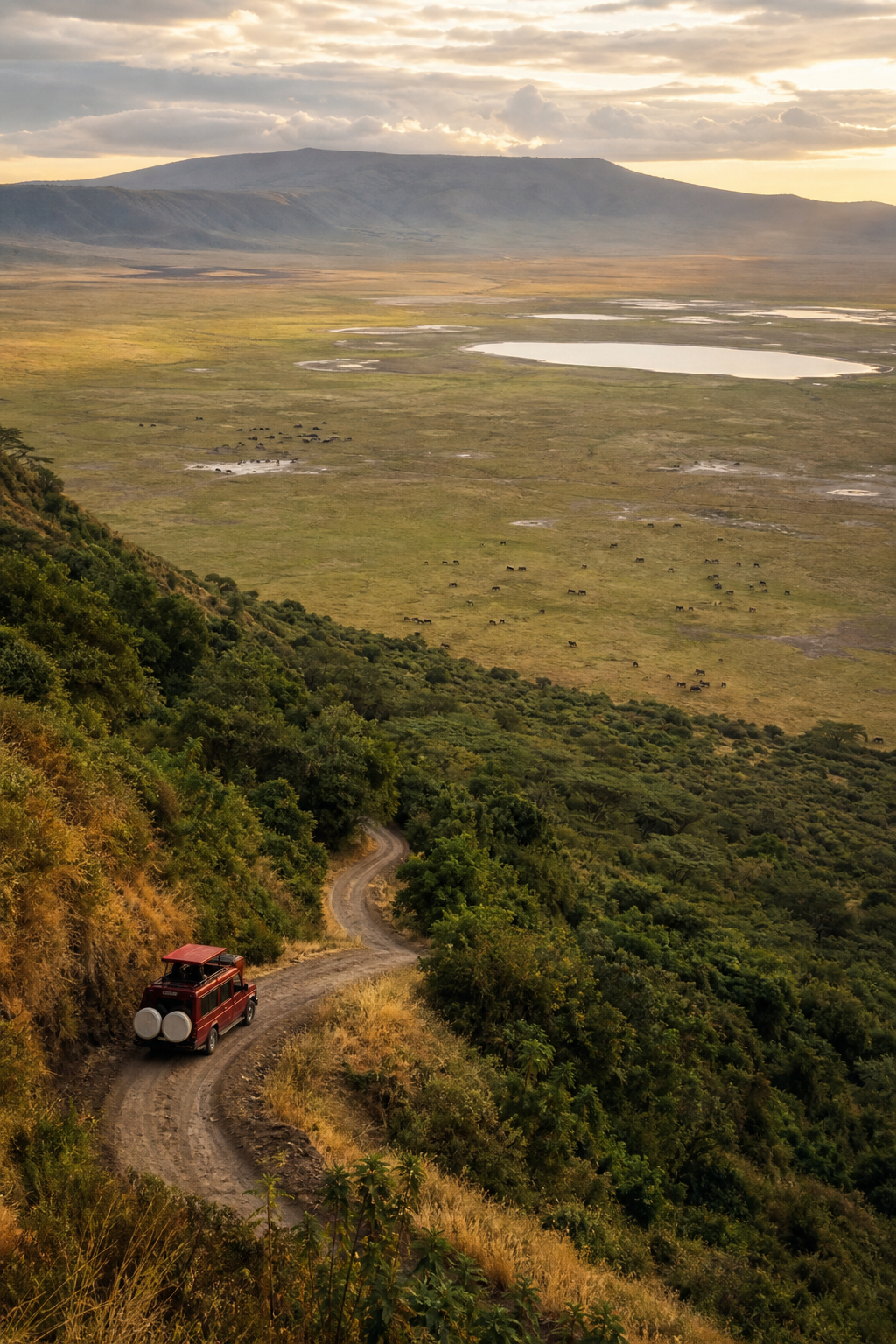
The Northern Circuit is Tanzania's flagship wildlife route. It connects Tarangire, Lake Manyara, Ngorongoro Crater, and the Serengeti in one continuous loop from Arusha. Seven days is the minimum to do it properly , you need one meaningful day in each park to come away with a real sense of each ecosystem rather than a rushed tick-box tour.
This format is ideal for first-time Tanzania visitors who want to see the breadth of what the country offers. Tarangire is famous for its elephant concentrations during the dry season, with herds of up to 300 animals. Lake Manyara has tree-climbing lions. Ngorongoro shelters the densest population of large mammals on earth in a single 260 km² caldera. The Serengeti needs no introduction.
Seven-day itineraries for the Northern Circuit are available at multiple price points. The key cost drivers are accommodation tier and group size. Budget camping keeps the price accessible. Mid-range lodges inside or adjacent to the parks push costs up significantly but add real comfort after long drive days.
One usable note: the Northern Circuit involves a lot of driving. Arusha to Tarangire is about 2.5 hours. Tarangire to the Serengeti is a long day. Our driver-guides handle navigation and vehicle maintenance , that's not a small thing when a tyre blows 80 km from the nearest town. Dealing directly with the operator rather than a booking platform means the same team manages every leg of your route.
6. 7-Day Mobile Safari , Best for Off-the-Beaten-Track Budget Adventurers
A mobile safari uses a camp that moves with you , or with the migration. Instead of a fixed campsite, your accommodation shifts to stay near the wildlife action. It's more logistically complex than a standard camping trip, but it's genuinely immersive in a way that stationary camps can't replicate.
The Explore Tanzania Mobile Safari format covers Tarangire, Ngorongoro Crater, and the Serengeti over seven days and six nights, with an emphasis on private, off-the-beaten-track positioning away from the busier public areas. It suits travelers who want an intimate experience close to nature rather than the relative comfort of a permanent campsite.
Costs for mobile safaris sit above standard budget camping because of the logistics involved in moving camp. But compared to permanent luxury tented camps, a well-run mobile operation gives you similar wildlife proximity at a lower price point. The tradeoff is comfort consistency , some nights the camp setup is faster than others, and facilities are genuinely basic.
Group size matters here more than on any other format. A small group of four splits the vehicle and camp costs more efficiently. Solo travelers joining a departure share those costs with strangers, which keeps it accessible. Budget camping group safaris on the Tanzania Northern Circuit vary in price depending on group size, itinerary length, and season, with mobile setups typically sitting at the higher end of the camping range.
This format isn't for everyone. If you need reliable hot water and a secure door to lock at night, go with a standard tented camp or budget lodge. If you want to wake up with elephants visible from your tent and you're comfortable with basic conditions, a mobile safari is hard to beat.
7. 10-Day Tanzania Budget Safari , Best for Remote Parks and Maximum Wildlife
Ten days opens the itinerary beyond the Northern Circuit. The standard 10-day format includes Tarangire, Lake Natron, Ngorongoro Crater, and the Serengeti , a combination that adds a dramatically different landscape in Lake Natron with its flamingo populations and the volcanic backdrop of Ol Doinyo Lengai. This is the most geographically varied budget itinerary available.
Lake Natron is genuinely remote. It's a two-hour drive from the nearest main road, the surface is alkaline and harsh, and it's one of the few places in Tanzania that still feels completely off the tourist circuit. Our guides have been running this route for years, and the flamingo flats in the right season are unlike anything else on the continent.
Ten days also allows slower pacing overall. You spend three nights in the Serengeti rather than two, which means a chance to explore different zones , the central Seronera area for cats, the western corridor for river crossings, the northern Loliondo boundary for fewer vehicles. Wildlife density in the Serengeti is highest in the dry season, but the park has year-round resident populations that make any month viable.
The ten-day format suits repeat visitors to Tanzania who've done the standard circuit, and first-timers who want maximum depth without trimming anything. Budget planning for a ten-day trip should account for the higher accumulated park fees , Tanzania's national parks authority levies daily conservation fees per person at each park, and they add up over ten days across multiple areas. Our quotes include all fees so there are no surprises at the gate.
Best Parks to Target for a Budget Tanzania Safari
Not all parks are equal on a budget. Some hit harder on fees, accommodation costs, and logistical complexity. Here's how the main options compare for value-conscious travelers.
Tarangire National Park is consistently the best-value entry point. Fees are lower than the Serengeti, the elephant herds during the dry season (July, October) are spectacular, and it's only 2.5 hours from Arusha. Budget camps outside the park boundary run around $78, $90 per night, making overnighting here genuinely affordable.
Lake Natron is a more remote destination that rewards travelers willing to venture off the standard northern circuit. It works well as part of a longer itinerary — the dramatic soda lake landscape and its flamingo colonies offer something genuinely different from the classic savannah parks, and the lower visitor numbers mean a quieter, more intimate experience.
Ngorongoro Crater has its own fee structure on top of the Conservation Area fee, which makes it one of the pricier stops per day. But the wildlife density inside the 260 km² caldera is unmatched , rhinos, lions, hippos, and elephant all in one descent. It's worth budgeting for even on a tight trip.
Serengeti National Park has the highest park fees in Tanzania. Budget camping inside the park is the only way to keep it affordable. The central Seronera region has the best year-round wildlife and the closest access to the public campsites.
If you're genuinely budget-constrained, a three-day Tarangire plus Ngorongoro itinerary gives you more wildlife hours per dollar than any other combination in the northern circuit. Skip Lake Natron on a shorter trip if you need to choose — Tarangire delivers more raw volume, while Lake Natron suits those with more days and a taste for remote landscapes.
Money-Saving Hacks: How to Cut Costs on a Tanzania Safari
The biggest cost lever on any Tanzania safari is group size. A shared joining safari splits the fixed costs , vehicle, fuel, guide day rate, park fees for the vehicle , across every passenger. Going solo in a private vehicle is genuinely expensive. Joining four strangers on a shared itinerary cuts your per-person cost by 30, 40%.
Travel timing is the second lever. High season (June, October) costs more at every accommodation level. The shoulder months of June and late October give you most of the wildlife benefit at lower rates. The green season (November, May, avoiding the heavy April, May rains) is when serious wildlife watchers go for fewer vehicles and better photography light , and when operators offer their lowest prices.
A few more specific tactics that actually work:
- Book directly with the ground operator. Booking platforms and aggregators add a margin. We're the operator, not a reseller , what you pay us is what runs the trip, not what funds a platform's ad budget.
- Camp rather than lodge. Budget campsites inside the parks cost a fraction of lodges on the boundary. You're also positioned better for early morning game drives before the day-visitor vehicles arrive.
- Skip the add-ons for a first trip. Hot air balloon flights over the Serengeti run around $600 per person. Night drives and Maasai village visits add cost. See the parks first. Come back for the extras.
- Pack your own snacks. Food along safari routes is expensive and limited. Bringing snacks from Arusha before departure saves money and keeps energy levels up during long drive days.
- Bring a reusable water bottle with a filter. Guides provide drinking water, but having your own supply means you're not dependent on the vehicle's stock midday. Staying properly hydrated matters more than you'd think after six hours in a hot 4x4.
One thing worth understanding about cost transparency: operators who publish only a "from" price are usually showing the rate for a minimum group in low season. A real quote should itemize park fees, accommodation, guide costs, and vehicle. If those are bundled into one number without a breakdown, ask for the detail before you commit. Planning ahead on how far in advance to book international flights can also meaningfully reduce your overall trip cost , flights to Kilimanjaro or Dar es Salaam are the single biggest variable outside the safari itself.
Tanzania Budget Safari Comparison Table
FAQ
How much does a Tanzania budget safari cost per day?
Budget camping safaris in Tanzania typically cost varies by operator, group size, and season when booked through a local ground operator on a shared itinerary. This includes park fees, accommodation, a guide, and all meals. Accommodation outside the park boundary and group size are the two biggest variables. Private vehicle options start significantly higher.
What is the cheapest way to do a Tanzania safari?
The cheapest way is a shared joining safari booked directly with a local operator in Arusha. You travel with other guests in a shared 4x4, split fixed costs, and stay at budget public campsites inside the parks. Avoiding booking platforms and aggregators removes the middleman margin. Traveling in the shoulder or green season (early June or November) also cuts accommodation costs noticeably.
Which Tanzania parks are best on a tight budget?
Tarangire National Park gives the best wildlife value per dollar, with lower daily fees than the Serengeti, massive elephant herds in the dry season, and budget lodges nearby. A national park in the northern circuit with lower entry fees pairs well with Tarangire on a three-day trip. The Serengeti is the most expensive park per day but budget camping inside the park is the only cost-effective way to include it.
When is the cheapest time to visit Tanzania on safari?
The low season (April, May, during the long rains) has the lowest prices, but heavy rain limits game drives in some areas. The best balance for budget travelers is the shoulder months: early June before peak season begins, or late October to early November after it ends. Wildlife viewing is still excellent and you'll pay noticeably less for accommodation than in July or August.
Is it safe to do a budget camping safari in Tanzania?
Yes, if you book with a licensed operator with experienced guides. Budget camping in Tanzania's national parks is well-established and regulated by the national parks authority. Campsites are fenced or patrolled, and guides handle all logistics. Bring a good sleeping bag for cold nights, use insect repellent consistently, wear neutral-coloured clothing (tsetse flies preferentially target dark or bright colours), and drink at least 1.5 litres of water during game-drive days.
Can I do a Tanzania safari without a tour operator?
Technically yes, some parks allow self-drive with a hired rental vehicle. But Tanzania's parks are large, remote, and require knowledge of animal behaviour and road conditions that most visitors don't have. Guides also communicate with each other by radio about wildlife locations, which dramatically improves your sightings. For most budget travelers, a shared group safari with a local operator gives better value and better wildlife encounters than self-drive.
Conclusion
Tanzania budget safaris work best when you book directly with the operator running the trip. Safari TZ is based in Arusha, owns its vehicles, employs its guides, and prices honestly without platform markups. Whether you want three days in Tarangire or ten days across the full northern circuit, get in touch and we'll send you a real, itemised quote within 24 hours.