What to Wear on Safari: A Complete Packing Guide
what to wear on safari: a complete packing guide
What to Wear on Safari: A Complete Packing Guide
Discover what to wear on safari with expert advice on layering, colors, footwear, and sun protection. Pack smart for comfort and safety on your Tanzania safari.
Planning a safari is exciting, but packing can feel overwhelming. The key is to dress for comfort, safety, and practicality without overpacking. Here's what to wear on safari, whether you're exploring the Serengeti or watching the sunrise over Ngorongoro.
The Layering System: Staying Comfortable from Dawn to Dusk
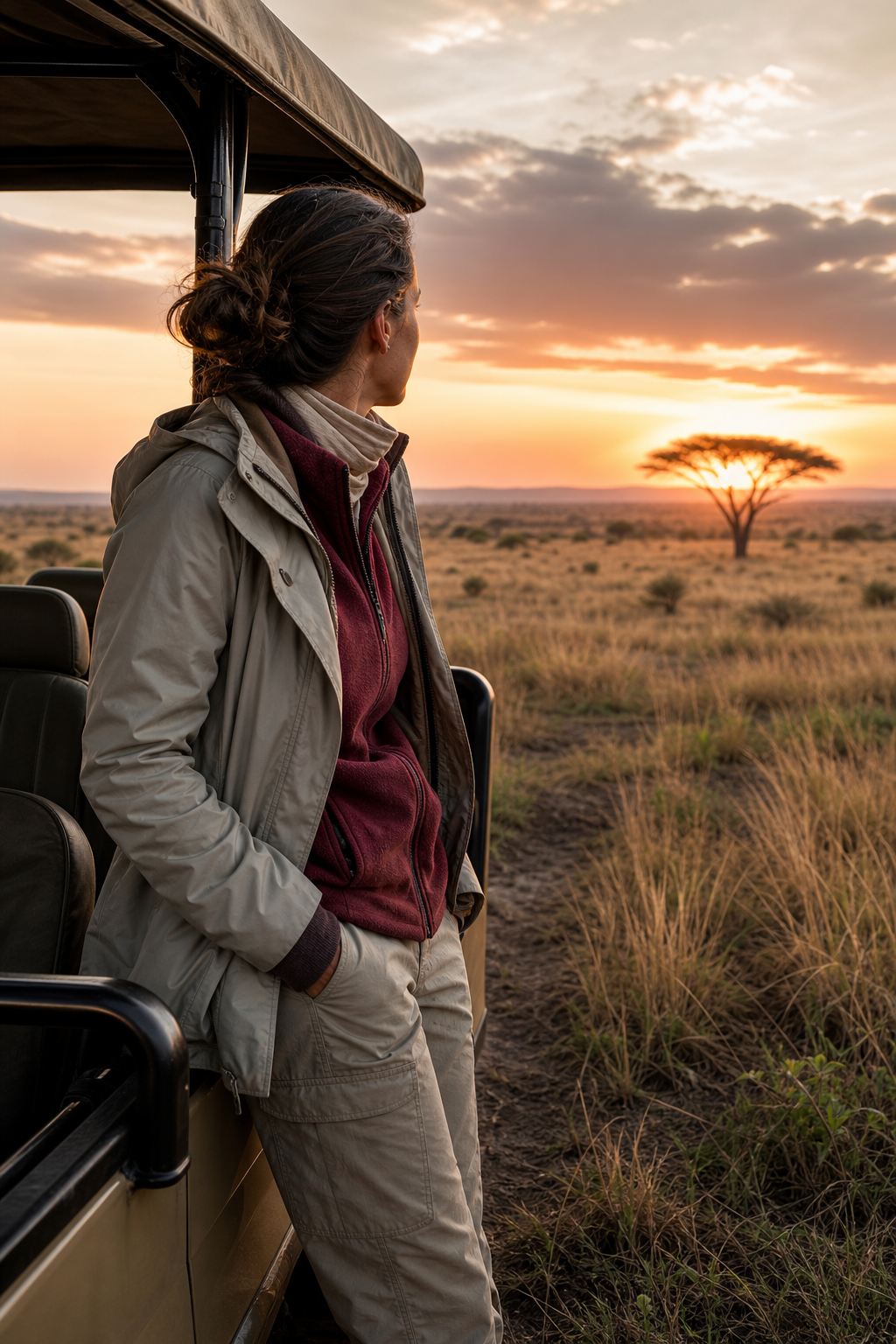
Safari mornings start cold, temperatures can drop to 50°F (10°C) before sunrise. By midday, the same spot might hit 90°F (32°C). The secret to staying comfortable is layering. We recommend three layers: a base layer to wick sweat, a mid layer for insulation, and an outer shell to block wind and dust.
Your base layer should be a lightweight, moisture-wicking shirt, synthetic or merino wool, not cotton, because cotton stays wet and cold. For the mid layer, a fleece or a soft-shell jacket works well. On top, a thin windbreaker or a safari vest with pockets is perfect. As the sun climbs, you peel off layers. By noon you might be in just your base layer. At Safari TZ, we advise all our guests to bring a small daypack to stash layers as you shed them.
Colors and Fabrics: What Works Best on Safari
Fabric choice matters almost as much as color. Lightweight, breathable materials like cotton, linen, and synthetic blends keep you cool in the heat. Avoid denim, it's heavy, slow to dry, and traps heat. Instead, choose quick-dry pants with zip-off legs to convert to shorts.
Neutral colors, khaki, olive, beige, and light brown, are standard for a reason. They help you blend into the bush, making wildlife sightings less disturbed. Dark colors like black and navy attract tsetse flies, and bright colors (especially white) stand out to animals. Stick to earth tones. For sun protection, a long-sleeved shirt in a light color reflects UV rays and keeps you cooler than bare arms.
Many safari operators, including Safari TZ, provide detailed packing lists that emphasize these fabric and color rules. Following them keeps you comfortable and safe.
Footwear: Choosing the Right Shoes for Game Drives and Bush Walks
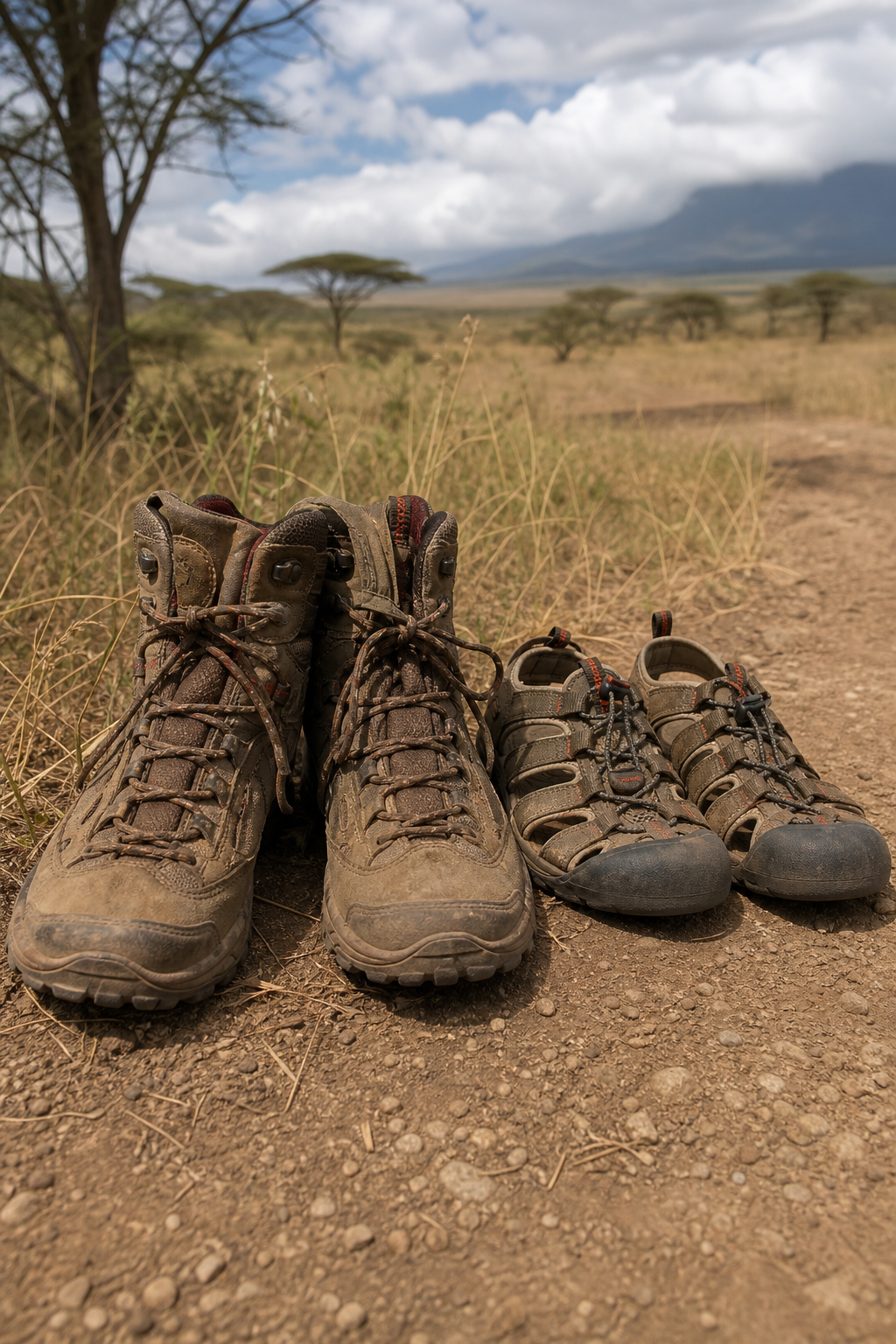
Your feet will thank you for packing the right shoes. For game drives, closed-toe shoes are non-negotiable, you'll step out of the vehicle into gravel, thorny grass, and uneven ground. A pair of sturdy hiking boots or trail runners with good traction is ideal. They protect your ankles and keep dust out.
For bush walks, we recommend the same boots. Many first-timers underestimate how much walking they'll do, even on a driving safari. A second pair of comfortable closed-toe sandals or slip-ons is great for evenings at camp. Leave flip-flops at home unless your lodge has a pool. Wikipedia's guide to safari notes that proper footwear is one of the most critical items for comfort and safety.
Headwear and Sun Protection: Essential Gear for the African Sun
The sun on the savanna is intense year-round. A wide-brimmed hat that shades your face, ears, and neck is your best defense. Caps don't offer enough coverage. Look for a lightweight, breathable hat with a chin strap, it won't blow off during an open-vehicle drive.
Polarized sunglasses are a must for cutting glare.
Sunscreen is equally important. Apply SPF 30 or higher to all exposed skin, and reapply after sweating. Don't forget your lips, a lip balm with SPF prevents cracking. For extra protection, consider a buff or scarf to cover your neck and shoulders. On that note, choosing the right sunscreen from Tanning Ultimate can make a big difference in staying burn-free.
Accessories and Final Tips: What Else to Pack for a Safari
A few extras improve your safari experience. A lightweight, breathable scarf or sarong serves multiple purposes: sun protection, dust mask, or a makeshift blanket on chilly mornings. Insect repellent with DEET is essential in the evenings and near waterholes. Bring a reusable water bottle, staying hydrated is key, and your lodge or camp will include filtered water.
Binoculars are a major change for spotting animals from a distance. Many lodges provide them, but if you have your own, bring them. A small flashlight or headlamp is handy for nighttime walks between tents. And for those evenings when you want to freshen up, a travel-friendly fragrance can be nice, check out Essentia Perfume's guide to travel scents for ideas. Lastly, pack a dry bag for dirty clothes and a small first-aid kit with blister plasters.
We've been running safaris for over three decades, and the golden rule is simple: pack less than you think you need. A 15kg soft duffel is plenty.
FAQ
What should I wear on a safari in Tanzania?
Wear neutral-colored, lightweight clothing in layers. Long pants and long sleeves protect against sun and insects. Comfortable closed-toe shoes are a must. Avoid bright colors and heavy fabrics.
Can I wear jeans on safari?
It's best not to. Jeans are heavy, slow to dry, and restrict movement. Choose quick-dry travel pants or cargo trousers instead.
Do I need special boots for safari?
Not necessarily. Sturdy hiking boots or trail runners with good grip are fine. They protect your feet on rocky terrain and during bush walks. Sandals are only for camp.
What color clothing is best for safari?
Neutral earth tones like khaki, olive, beige, and tan. They help you blend into the environment and avoid attracting insects. Avoid black, dark navy, and bright colors.
How many outfits should I pack for a week-long safari?
Three to four sets of clothing are enough. Most camps offer laundry services. Focus on mix-and-match pieces and layer for temperature changes.
Is a hat necessary on safari?
Yes. A wide-brimmed hat protects your face, ears, and neck from the strong sun. A cap is not sufficient. Look for a breathable hat with a chin strap.
Conclusion
Packing for a safari doesn't have to be complicated. Stick to neutrals, lightweight layers, and sturdy footwear, and you'll be comfortable from dawn to dusk. For a complete packing list tailored to Tanzania, check out Safari TZ's detailed guide. Now go enjoy the wild, you're ready.