Tanzania Safari Health and Safety: The Real Risks
start here
water
food
sun and heat
malaria
vaccinations
altitude
camp safety after dark
if you get ill out there
crime and personal safety
what to worry about
health and safety questions
Start here
Dehydration
Dehydration first, stomach upsets second, sunburn third. The real ranking of what goes wrong on Tanzanian safaris, from decades of departures.
People spend months worrying about snake bites, scorpions and animal attacks. In decades of operating safaris we have dealt with almost none of those. Here is what we actually see, in order of how often it happens.
Dehydration is first by a wide margin. Six to eight hours in a vehicle under equatorial sun, and most people simply do not drink enough. Stomach upsets are second, usually mild, and more often caused by a change of diet, a large buffet, too much alcohol or a long travel day than by anything contaminated. Sunburn and heat exhaustion are third, and the reason is specific: the breeze through a moving vehicle makes it feel far cooler than it is. Then constipation, from flights and inactivity and not drinking. Then motion sickness on rough roads, particularly in western Serengeti or after heavy rain. Then minor cuts, bites and blisters.
The short answer: drink more water than you think you need and start before you are thirsty. Wear sunscreen and a hat even when the vehicle feels cool. Bring more of your prescription medication than the trip requires. Tell your guide early when something is wrong rather than waiting to see if it improves. And check that your travel insurance genuinely includes emergency medical evacuation — most of the serious problems we have handled came down to that policy.
None of the above is dramatic, which is precisely the point. Professional safaris are very safe because guides, camps and park authorities work to procedures developed over decades. The threats are dehydration, fatigue, poor preparation and ignoring good advice.
Safari-TZ is not a medical provider. Anything clinical — vaccinations, antimalarials, existing conditions, medication — belongs with your doctor or a travel medicine clinic, well before you fly.
Water
Three to five litres a day
Bottled water in every vehicle, three to five litres a day, and the honest answer on brushing your teeth with lodge water.
Every vehicle carries complimentary bottled drinking water for the whole trip. That is not a courtesy — dehydration is the most common health problem we deal with and the water is there to solve it.
Most guests drink three to four litres a day. In Tarangire or the Serengeti during the dry season, five is not unusual. The advice we give every group on day one: drink before you feel thirsty. Thirst is a lagging indicator and in a moving vehicle you will not notice it until you have a headache.
Brushing your teeth. Established lodges and camps use treated water that is generally considered safe. Our honest position: if you have a sensitive stomach or simply want to remove the question, use bottled water. It costs almost nothing and it eliminates a worry that would otherwise sit in the back of your mind all week.
Bottled drinking water is always available at reputable lodges and camps. You will not be short of it anywhere on a normal itinerary.
Food
Camps are the safe part
Safari lodges hold high food-safety standards because their reputation depends on it. What they do, and what to be careful about outside them.
The professional safari industry runs high food safety standards for a simple commercial reason: a lodge that makes guests ill does not survive the reviews.
Good camps refrigerate properly, purify the water used in their kitchens, cook meat thoroughly, wash vegetables carefully and follow strict hygiene procedure. Across thousands of departures, genuine food poisoning traced to a reputable lodge has been extremely rare in our experience.
Outside the safari circuit, ordinary sense applies. Be careful with food that has been standing uncovered, raw seafood from restaurants you do not know, ice where the water source is uncertain, and unpeeled fruit from roadside vendors unless you wash it yourself.
Freshly cooked hot food is almost always the safest option, and it is also most of what you will be eating.
A note on the stomach upsets we do see: they are usually about volume and novelty rather than contamination. Safari buffets are generous, the days are long, and people eat and drink more than they would at home. That accounts for more discomfort than any kitchen does.
Sun and heat
The vehicle breeze is lying to you
Why experienced travellers still get burnt on safari, what the moving vehicle does to your sense of temperature, and what to bring.
Sunburn on safari catches out experienced travellers, and there is a specific reason for it.
You are near the equator, often at altitude, in an open-roofed vehicle, and the breeze from driving makes it feel far cooler than it is. Your skin is getting a full day of equatorial sun while your body is telling you it is pleasant. By the time you notice, it is done.
What we tell every group: sunscreen in the morning before you leave, reapplied at the midday stop. A wide-brimmed hat rather than a cap — the back of the neck and the tops of the ears are where people burn. Long sleeves are cooler than bare arms in direct sun, which is counterintuitive and true.
Heat exhaustion follows the same pattern as dehydration and usually arrives with it. If you feel unusually tired, headachy or slightly nauseous by mid-afternoon, tell your guide. Ending a game drive an hour early is a small cost.
Malaria
We will not tell you which tablets
Which parks and seasons carry real risk, what camps do about mosquitoes, and why no safari operator should be recommending you a specific antimalarial.
Malaria is present across much of Tanzania, particularly at lower elevations. Higher-risk areas include the Serengeti, Tarangire, Ruaha, Nyerere and the Selous region. Risk generally rises during and shortly after the rainy seasons, as mosquito numbers increase.
What good camps do: mosquito nets, insect screens where the structure allows, and evening room spraying at many properties.
What we ask you to do regardless of medication: use insect repellent, cover your arms and legs after sunset, and sleep under the net where one is provided. Mosquito activity is heaviest from dusk onwards, which is exactly when people relax and stop bothering.
On tablets. Guests ask us constantly which antimalarial to take, and we do not answer that question. The right choice depends on medical history, age, allergies and what else you are already taking — none of which a safari operator is qualified to weigh. Speak to a travel medicine clinic well before departure, because some regimens need starting in advance of travel.
Any operator who recommends you a specific antimalarial is giving medical advice they are not qualified to give. That is worth knowing about them.
Safari-TZ is not a medical provider.
Vaccinations
A clinic decides this, not us
Why we send every vaccination question to a travel clinic, the one entry requirement that is a document rather than health advice, and when to start.
We do not advise on vaccinations, and no safari operator should. Requirements change, they vary by your own medical history and where you are travelling from, and a travel medicine clinic is the only sensible source.
Book that appointment early. Some vaccinations need multiple doses over weeks, and some antimalarial regimens start before you fly. Leaving it to the fortnight before departure is the most common preventable mistake we see.
One thing that is a document rather than health advice: Tanzania requires proof of yellow fever vaccination from travellers arriving from, or transiting through, countries with a risk of transmission
Whether it applies to you depends on your routing, including where you connect. Check with us and with your airline if your itinerary passes through a third country.
Safari-TZ is not a medical provider. Everything on this page other than the entry-document point belongs with a travel clinic.
Altitude
The crater rim is higher than you think
The Ngorongoro rim sits above 2,200 metres. Most people feel nothing, some get a mild headache. What to expect and what we advise on arrival.
The Ngorongoro Crater rim sits somewhere between roughly 2,200 and 2,400 metres, which surprises people who did not think a safari involved altitude at all.
Most visitors notice nothing. Some get a mild headache, feel slightly short of breath on stairs, or find it considerably colder than they packed for. Serious altitude sickness is very uncommon here, largely because guests spend one or two nights before descending into the crater or moving on — there is no sustained exposure.
What we advise on arrival: stay well hydrated, go easy on alcohol the first evening, and take the first night gently. That handles most of it.
If you have significant heart or lung disease, tell us before booking so we can discuss it, and discuss it with your own doctor as well. This is the one part of a standard Northern Circuit itinerary where altitude is a genuine consideration rather than a footnote.
Note this is a different question from Kilimanjaro altitude, which is a different scale entirely.
Camp safety after dark
Do not walk alone. That is the rule.
Many camps are unfenced and elephants walk between the tents. What the escort rule is, why it exists, and what happens when guests ignore it.
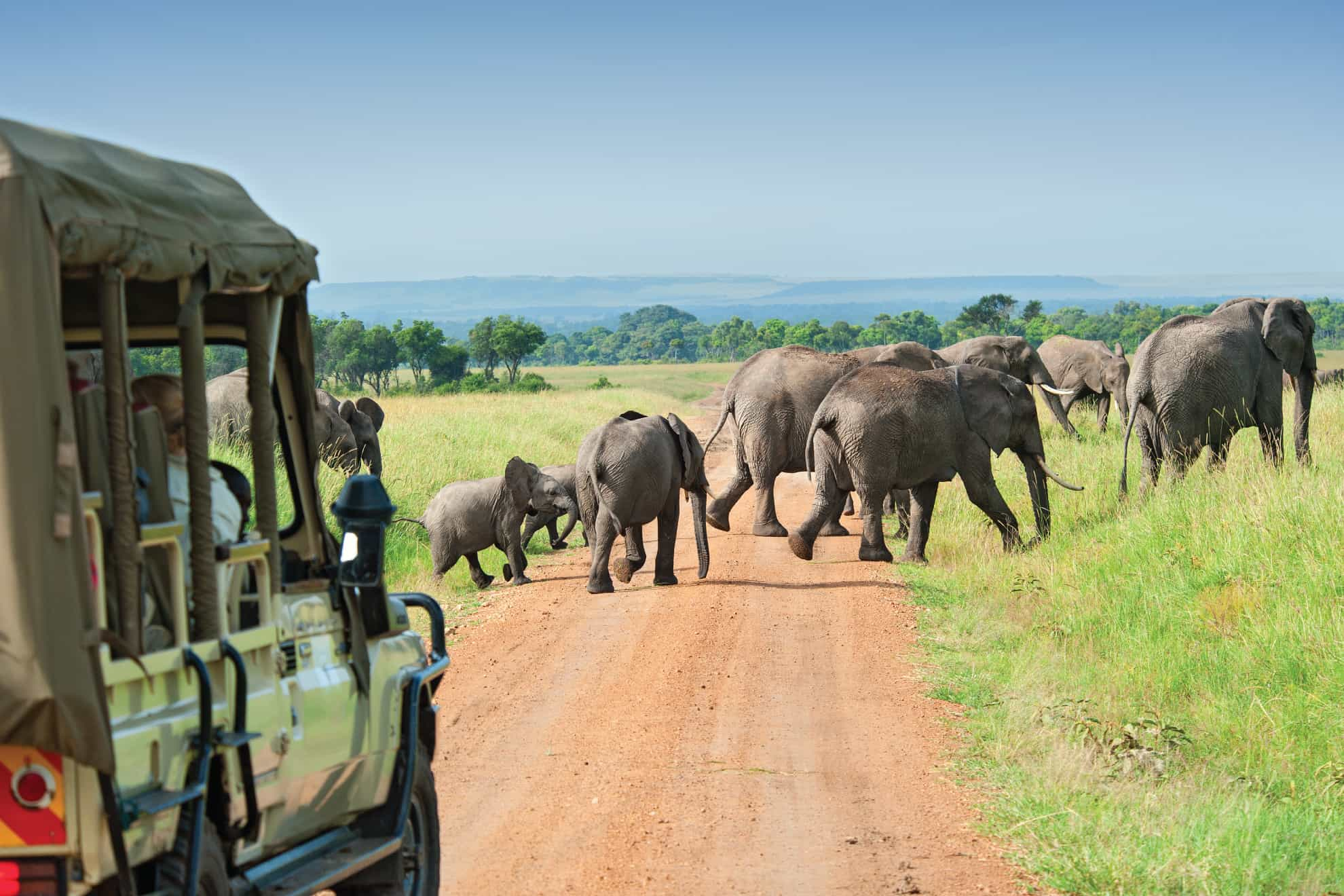
Many safari camps are unfenced, because wildlife moves through them. Elephants walking between tents and buffalo grazing near reception are ordinary events, not emergencies.
After dark the rule is one sentence: do not walk alone. If you need to get to dinner or back to your tent, ask for an escort. A member of staff walks with you carrying a powerful torch, and at some camps an armed ranger is available if wildlife is close by.
The rules exist because wild animals do not recognise property boundaries, not to frighten anyone. Camps that feel relaxed about this are usually fenced; the ones that insist have a reason.
The only genuine problems we have seen have come from guests deciding to ignore the instruction — walking back alone after dinner, or stepping outside a tent to photograph elephants. Those ended without injury. They did not need to happen at all, and the margin in a couple of them was thinner than the people involved realised.
If you are nervous about unfenced camps, say so at booking. Plenty of excellent properties are fenced and we will build the itinerary around it rather than talk you into something you will lie awake in.
If you get ill out there
Never wait to see if it improves
What happens when a guest falls seriously ill in the Serengeti, how an evacuation actually runs, and the single rule our guides work to.
A guest in the central Serengeti developed severe chest pain and shortness of breath during a morning game drive. Our guide ended the drive immediately, contacted operations by satellite phone, and drove directly to Seronera Airstrip while keeping the guest calm and monitoring them. An emergency flight took them to Arusha for treatment. They recovered fully.
What that reinforced is now standing instruction: never wait to see if it gets better. Our guides escalate early rather than trying to work out how serious something is. A game drive cut short unnecessarily costs an afternoon. The other error costs considerably more.
Guides carry regular first aid training and vehicles carry a stocked kit. That is first aid, not medical care, and the distinction matters — hospitals are concentrated in Arusha, Moshi and the larger towns, and road evacuation from deep inside the Serengeti or Ruaha takes hours.
Which is why we say this plainly and repeatedly: check that your travel insurance includes emergency medical evacuation, and check it before you buy rather than after. More of the serious situations we have handled turned on that policy than on anything clinical.
The smaller version of the same rule applies to you as a guest. Tell your guide when something is wrong. Guides would far rather hear about a headache at ten in the morning than deal with heat exhaustion at three
Crime and personal safety
More lost passports than incidents
Generally safe, not crime-free. The honest position on Arusha, Moshi, airports and the parks, from an operator based here.
Tanzania is generally a safe destination for visitors. It is not crime-free, and pretending otherwise helps nobody.
Arusha and Moshi. Do not display expensive jewellery. Avoid walking alone late at night. Use registered taxis or transport arranged through your operator rather than flagging something down.
Airports. The realistic risk is distraction theft rather than anything violent. Keep passports, cash and cameras with you rather than in checked luggage.
Inside the parks. Crime is effectively unheard of. The safety question in a national park is wildlife, not people — listen to your guide, stay in the vehicle unless told otherwise, and follow camp rules.
Across thousands of clients, this company has dealt with far more forgotten passports than criminal incidents. That is the honest proportion, and it is worth holding onto against whatever you have read.
What to worry about
The dramatic risks are not the real ones
People worry about lions and snakes and ignore sunscreen and prescriptions. The two lists, side by side, from decades of operating Tanzanian safaris.
What guests worry about: lions entering camp, snake bites, crocodiles, sleeping in tents, spiders.
Every one of those is exceptionally rare, and we have handled almost none of them in decades of operating.
What guests overlook, and shouldn't:
- Not drinking enough water
- Forgetting sunscreen, or not reapplying it
- Poor footwear
- Running out of prescription medication
- Ignoring small symptoms until they become large ones
- Buying travel insurance without checking whether emergency medical evacuation is included
That last one is the most consequential item on this page and the one people put least thought into.
Much safari health writing is built for clicks. Some of it implies that stepping outside your tent is life-threatening; some of it suggests there is nothing to think about at all. The truth sits in the middle and it is duller than either: professional safaris are very safe, and the things that go wrong are dehydration, fatigue, poor preparation, and not mentioning a problem early enough.
Health and safety questions
Straight answers
Water, malaria, vaccinations, camp safety and what happens in a medical emergency. The questions we are asked most, answered plainly.
What is the most common health problem on safari? Dehydration, by a wide margin. Six to eight hours in a vehicle under equatorial sun and most people do not drink enough. Aim for three to four litres a day, five in the dry season.
Can I drink the tap water in Tanzania? Bottled water is provided in every vehicle and available at all reputable lodges. For brushing teeth, established lodges use treated water that is generally considered safe — use bottled if you have a sensitive stomach.
Which malaria tablets should I take? We will not answer that, and no operator should. It depends on your medical history and current medication. See a travel medicine clinic well before you fly.
What vaccinations do I need for Tanzania? A travel clinic decides this. Book early, because some vaccines need multiple doses. Yellow fever proof is required for travellers arriving from countries with transmission risk — check your routing including connections.
Are safari camps safe at night? Yes, if you follow the rule. Many are unfenced and wildlife moves through. Do not walk alone after dark — ask for an escort.
Is altitude a problem at Ngorongoro? The rim sits above 2,200 metres. Most people feel nothing; some get a mild headache. Stay hydrated and go easy on alcohol the first evening.
Is Tanzania safe for tourists? Generally yes. Ordinary precautions in Arusha and Moshi, distraction theft at airports, and effectively no crime inside the parks. The safety question in a park is wildlife.
What happens if I fall seriously ill on safari? The guide escalates immediately, operations is contacted, and evacuation runs to the nearest airstrip and on to Arusha or beyond. Make sure your travel insurance includes emergency medical evacuation.