Birdwatching in Tanzania: Where, When and How Long
start here
realistic species numbers
the birder's calendar
endemics and forest birding
tanzania's birding regions
where you sleep decides your morning
who guides you
birds we sometimes miss
birds and big game in one trip
group or private?
what birding costs
what to bring
tanzania or kenya?
birding questions we get
Start here
Ten days, and here is why
Ten days is our minimum for a Tanzania birding trip. Why a standard safari pace costs you birds, and what a realistic ten-day itinerary covers.
Tanzania has over 1,100 recorded bird species. You will not see anything close to that, and any operator implying otherwise is selling you a number rather than a trip.
Here is what actually happens. On a well-planned Northern Circuit birding itinerary our clients record 70 to 120 species a day, and 320 to 450 across an eight to ten day trip. The first two days always produce the biggest counts, because everything is new. In the Eastern Arc forests the daily figure drops to 40 to 80 — you are walking forest trails rather than scanning open savannah — but the quality goes up sharply, because most of what you find lives nowhere else on earth.
The short answer: plan ten days minimum. Fewer than that and you have a sightseeing trip with birdwatching added. Come between November and April for Palearctic migrants and breeding plumage. Sleep inside or immediately beside the parks, because bird activity runs from first light to about nine in the morning and you cannot spend those hours driving to a gate. And accept before you book that some birds are possible, some are probable, and very few are guaranteed.
When someone tells us they want to bird Tanzania, we say ten days. Not as a range and not as an upsell — below that it stops being a birding trip.
Ten days covers Tarangire, Lake Manyara, the Ngorongoro Highlands and the central Serengeti without rushing a single morning. Compress the same four into seven and every dawn becomes a transfer.
The reason is pace, and it is the thing clients underestimate more than budget or season. A general game drive covers distance because the animals worth stopping for are visible at range. Birding inverts that. You work the riverine strip, the acacia edge, the thicket you cannot identify by call. A morning that would move you across half of Tarangire on a normal safari might cover eight kilometres.
So: fewer parks, more nights in each. A birder who insists on five parks in a week will see plenty of birds and properly bird none of them.
Realistic species numbers
Our figures, not a brochure figure
70-120 species a day on the Northern Circuit, 320-450 on an 8-10 day trip, 40-80 a day in the Eastern Arc forests. What our clients actually record.
Northern Circuit — Serengeti, Ngorongoro, Tarangire, Manyara. Seventy to 120 species a day. Three hundred and twenty to 450 on a dedicated eight to ten day itinerary. Expect the first two days to produce the biggest single-day counts, then a natural tail-off as the easy birds are already on the list.
Eastern Arc mountains — Usambaras, Udzungwas. Forty to 80 a day. Lower, and that is the point. You are on foot in forest, the birds are above you rather than beside the vehicle, and a high proportion of what you find is endemic or highly localised. Every sighting carries weight in a way a savannah tick does not.
These are our figures from trips we have run, not a published maximum. An experienced birder in good conditions will beat them. A first-timer in flat overcast light will not. Season, pace and how hard your guide works all move the number.
The birder's calendar
Birders need a different calendar to safari
Migrants, breeding plumage, nesting, sunbird flowering and water levels. The birding calendar is not the safari calendar. What changes, month by month.
Most Tanzania websites discuss one season: the Great Migration. Birders need a completely different calendar, built around five things the mammal pages never mention.
Palearctic migrants arrive with the rains and leave before the dry season. Breeding plumage transforms species you would otherwise walk past. Nesting behaviour makes birds visible and vocal in a way they are not the rest of the year. Flowering seasons determine where the sunbirds are. And water levels decide the entire waterbird picture — a shallow lake edge holds birds a full lake does not.
That points at November to April. It is also the green season, which means some roads deteriorate, some southern and western camps close, and photographers work in flat overcast light more often than they would like.
June to October is the classic safari window: easier driving, concentrated mammals, thinner birding. The residents do not leave, so you will still do well — but you miss the migrants and most of the colour.
If birds are the point of the trip, come in the green season and accept the mud. If you are travelling with someone who wants lions, the shoulder months at either end are the honest compromise.
Endemics and forest birding
The birds you cannot get anywhere else
Northern Circuit specialities and Eastern Arc forest endemics. Why the best Tanzanian birds are found on foot, and what that means for your itinerary.
The Northern Circuit gives you endemics without leaving the standard route. Rufous-tailed weaver and ashy starling are straightforward in Tarangire. Grey-breasted spurfowl is a Serengeti ecosystem bird you will not find in Kenya.
The serious endemics live in the Eastern Arc mountains, and reaching them changes the whole shape of the trip — because you find them on foot. Forest birding is walking birding. Trails, humidity, birds in the canopy above you rather than beside a vehicle window. Any page that describes Tanzanian birding purely as a game-drive activity has left out the half that produces the best species.
We have operated trips through the Usambaras and built custom itineraries into the Udzungwas, but they are a small fraction of what we run compared with the Northern Circuit. They are almost always custom-built around a client's target species rather than scheduled departures — people come to the Eastern Arc chasing specific endemics, not to raise a day count.
That is the fork in the road. Northern Circuit birding is comfortable, high-volume and pairs with big game. Eastern Arc birding is harder, lower-volume and produces species most visiting birders never see. Decide which trip you want before you compare itineraries.
Tanzania's birding regions
Four regions, four different trips
Northern Circuit, Lake Natron, the Eastern Arc forests and the western wetlands. What each gives you, and the honest version of what Natron is like.
Northern Circuit — Manyara, Tarangire, Ngorongoro, Serengeti. Highest species-per-day in the country for a first visit, and it runs alongside big game. Manyara's groundwater forest and lake edge in a single morning is the best introduction to Tanzanian birding there is.
Lake Natron — the brochures show flamingos and stop there. The honest version: extremely hot, very dry, windy every afternoon, remote, dusty, with slow rough roads and accommodation more basic than most people expect. What you get in return is a landscape unlike anywhere else in East Africa, and — when water levels cooperate — thousands of lesser flamingos breeding beneath Ol Doinyo Lengai. It is a place for people who like wild country, not comfort. Go knowing that.
Eastern Arc forests — the Usambaras and Udzungwas, on foot, for endemics. Amani in the East Usambaras is the site serious birders come for.
Western and southern wetlands — the Moyowosi and Kigosi system. Expedition logistics, very few visitors, and no guarantees of anything.
- Lake Manyara →
/destination/lake-manyara-national-park-safari-guide - Tarangire →
/destination/tarangire-national-park-safari-guide - Lake Natron →
/blog/lake-natron-birdwatching - Ol Doinyo Lengai →
/destination/ol-doinyo-lengai-climbing-guide - Amani →
/destination/amani-nature-forest-reserve-overview - Moyowosi →
/destination/moyowosi-game-reserve-overview - Kigosi →
/destination/kigosi-national-park-safari-guide
Where you sleep decides your morning
Why dawn decides everything
Bird activity runs from first light to about 9am. Which Northern Circuit lodges we put birders in, and why position beats luxury every single time.
Bird activity peaks from first light until roughly nine in the morning. That single fact decides more about a birding trip than the vehicle, the guide or the season.
If your lodge sits an hour outside the park gate, you spend the best two hours of every day driving. We would rather put a birder in a simple camp inside prime habitat than a luxurious one on the wrong side of a gate, and we say so at quoting stage even when it costs us the upgrade.
Where we actually place birders on the Northern Circuit:
Tarangire Safari Lodge. The grounds do the work. Hornbills, barbets, weavers and sunbirds before breakfast, and the river views pull in raptors and waterbirds without anyone starting an engine.
Manyara Wildlife Safari Camp. Escarpment-edge position, genuine bird activity inside the gardens, and early access into the park.
Kati Kati Tented Camp, central Serengeti. Not chosen for luxury. Chosen because you wake up already inside prime habitat instead of driving an hour from outside the park.
Rhino Lodge, Ngorongoro Highlands. Simplicity again. The montane forest around the lodge holds turacos, robin-chats and sunbirds you can work before you ever descend into the crater.
The pattern is consistent: for birders, position beats luxury. Spend the money on days and the vehicle, not the bed.
Who guides you
An honest note about our own guides
A great safari guide finds lions. A bird guide notices pipits, cisticolas and distant raptors. The difference matters, and here is what we can offer.
A standard safari guide is excellent at finding lions. A dedicated bird guide notices the pipits, cisticolas, larks and distant raptors that a general guide drives past without registering. That difference is the whole decision, and getting it wrong ruins a birding trip.
Our guides are experienced Tanzanian safari guides who know their birds well. On a mixed trip, or a first birding visit, they are exactly what you want — they know the calls, they know where the species sit, and they know the parks. That covers most people who come to us wanting birds.
What we do not have on staff is a dedicated specialist birding guide of the kind a hard-core lister needs — someone whose professional life is Eastern Arc endemics and who can put you onto a rufous-winged sunbird by ear. If that is the trip you want, say so at enquiry stage and we will be straight with you rather than assign a general guide and hope.
The question worth asking any operator, us included: how many bird species did the guide you are assigning me record on their last trip? An operator who cannot answer is giving you whoever is free that week.
Birds we sometimes miss
Possible, probable, and almost never certain
Pel's Fishing Owl, African Pitta, African Finfoot. The species we cannot promise, why we say so before you book, and what happens when we miss one.
A guest from the UK came to us wanting to photograph Pel's Fishing Owl. We gave it two evenings on suitable rivers. We heard one calling. We never saw it.
Afterwards he said something that changed how we brief every birding client: the disappointment came from assuming that because the guidebook listed the species, seeing it was likely. It is not the same thing, and nobody had told him.
So we tell people now, before departure. Some birds are possible. Some are probable. Very few are guaranteed. Pel's Fishing Owl, African Pitta and African Finfoot all sit in the first category. So does the shoebill in the western wetlands.
The other side of that coin: we stopped beside a seasonal wetland in Tarangire during the November short rains, having heard a call we could not place. A pair of African Finfoots came out of the reeds for perhaps thirty seconds — long enough for everyone in the vehicle to get them in binoculars — and vanished. The client had put finfoot in his top five before the trip. Plenty of experienced birders visit Tanzania repeatedly and never see one.
That is birding. Patience beats driving hard between ticks, and an operator who promises you a species list is an operator who has not been out much.
Birds and big game in one trip
Four in ten of our birders travel this way
One partner wants lions, the other wants larks. How we split the day so both trips work, and the one situation where the compromise breaks down.
Around four in ten of our birding enquiries are mixed couples: one partner is a birder, the other wants wildlife, photography and scenery. These are some of the best trips we run, but only if you decide in advance who gets the mornings.
The split that works: early mornings for birds, when calls peak and the light is usable, then the middle and late day for game drives. Tarangire and Lake Manyara carry this easily — high bird density and reliable mammals in the same drive.
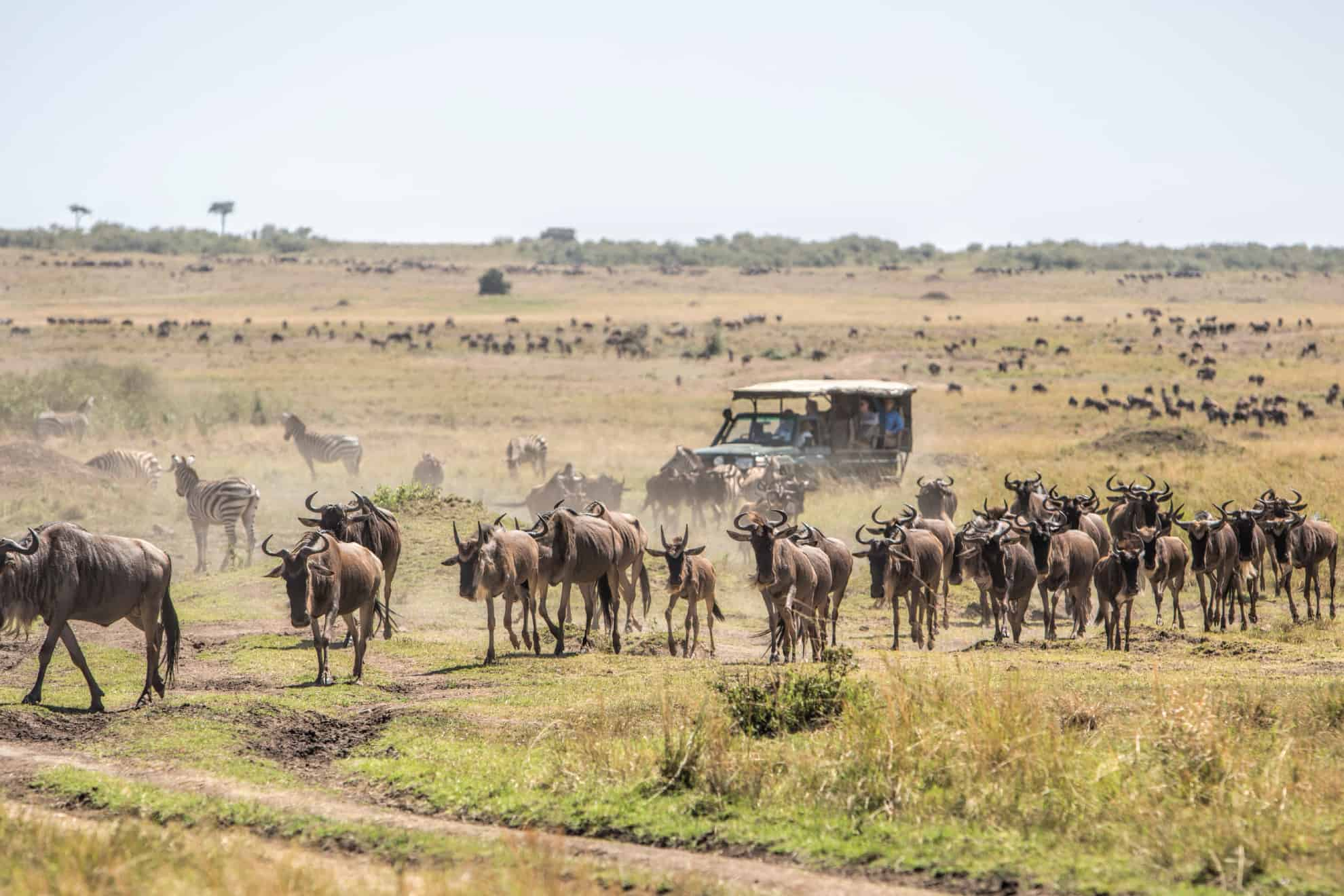
Where it breaks is the Serengeti in peak Migration. The pressure to chase river crossings is enormous, and a birder in that vehicle will spend three days looking at wildebeest.
Group or private?
Birding is a private-vehicle activity
Shared vehicles and birding rarely mix. Why we push birders towards a private vehicle, and the one arrangement where a group still works well.
This is the one activity where we push people towards a private vehicle, and it is not an upsell.
A shared vehicle means shared priorities. The moment one person wants fifteen minutes on a cisticola and another wants to reach the lion sighting, somebody loses — and on a group booking it is always the birder. Window seats matter more too, because you are scanning constantly rather than looking at one thing everybody can see.
The exception is a dedicated birding group where everyone has the same objective. Those work well and they split the cost properly. What does not work is joining a general group safari and hoping.
What birding costs
Why a birding trip costs more, and where not to save
Longer, slower and usually private — birding changes the maths. What drives the cost of a Tanzania birding safari and where the money is worth spending.
A birding trip costs more than the equivalent general safari, and it is worth understanding why before you compare quotes.
Three things drive it. Ten days rather than seven, because of the pace. A private vehicle, for the reasons above. And more nights in fewer places, so you are paying for accommodation rather than covering ground.
Where you can save: Northern Circuit birding is genuinely excellent from mid-range camps, and lodge luxury adds nothing whatsoever to a bird list. Where you should not save: days, the vehicle, and lodge position relative to the gate.
What to bring
Bins, boots and the dust problem
Binoculars, field guide, forest kit and the dust that ruins optics. A practical packing list for a Tanzania birding trip from people who run them.
The vehicle list and the forest list are different, which is what most packing guides miss.
Northern Circuit: your own binoculars, always — never rely on an operator's spares. A field guide to the birds of East Africa. Neutral clothing matters less than people think from a vehicle.
Eastern Arc: waterproofs that actually work, boots with grip for wet forest trail, and a plan for what humidity does to your optics. Neutral clothing matters a great deal here, because you are on foot.
The dust catches everyone out. Northern Circuit dry-season dust gets into everything, and binocular focus wheels are not sealed. Bring a blower and a cloth, and keep the bins bagged between stops.
Tanzania or Kenya?
Honest answer: it depends on your list
Kenya has the birding infrastructure. Tanzania has the endemics and the habitat range. Which suits your trip, from an operator who works in only one.
We operate in Tanzania only, so read this knowing where it comes from.
Kenya has the longer birding tradition, more specialist guides and a denser network of birding lodges. For a high day-list on well-worn logistics, Kenya makes a strong case.
Tanzania's argument is the endemics and the habitat range. The Eastern Arc forests hold species found nowhere else, and no Kenyan itinerary reaches them. Add the soda lakes, the western wetlands and the miombo and the variety is wider.
For a first African birding trip, either works. For a second, or for a lister filling gaps, Tanzania has more of what you cannot get elsewhere.
Birding questions we get
Straight answers
How many days, how many species, best month, and whether you need a specialist guide. Answered by an Arusha operator with real trip figures.
How many days do I need for a birding safari in Tanzania? Ten minimum. That covers Tarangire, Lake Manyara, the Ngorongoro Highlands and the central Serengeti without rushing any morning. Below ten it becomes a sightseeing trip with birding attached.
How many bird species will I see? On the Northern Circuit, 70 to 120 a day and 320 to 450 across an eight to ten day trip. In the Eastern Arc forests, 40 to 80 a day — fewer birds, far more endemics. Tanzania has over 1,100 recorded species; no visitor sees anything close to that.
What is the best month for birdwatching in Tanzania? November to April, for Palearctic migrants, breeding plumage and nesting. It is also the green season, so expect worse roads and flatter light.
Do I need a specialist birding guide? If you are chasing Eastern Arc endemics, yes. For Northern Circuit birding or a mixed trip, a strong general guide is enough. Ask any operator directly which one you are getting.
Can I combine birding with big game? Yes, and about four in ten of our birding clients do. Birds in the early morning, mammals from mid-morning on. The one place it strains is the Serengeti during peak Migration.
Is birding in Tanzania done on foot or from a vehicle? Both. Northern Circuit birding is largely vehicle-based. Eastern Arc forest birding is walking, and that is where the endemics are.
Can you guarantee I will see a particular species? No, and neither can anyone else. Some birds are possible, some probable, very few guaranteed. We tell clients which category their target sits in before they book.