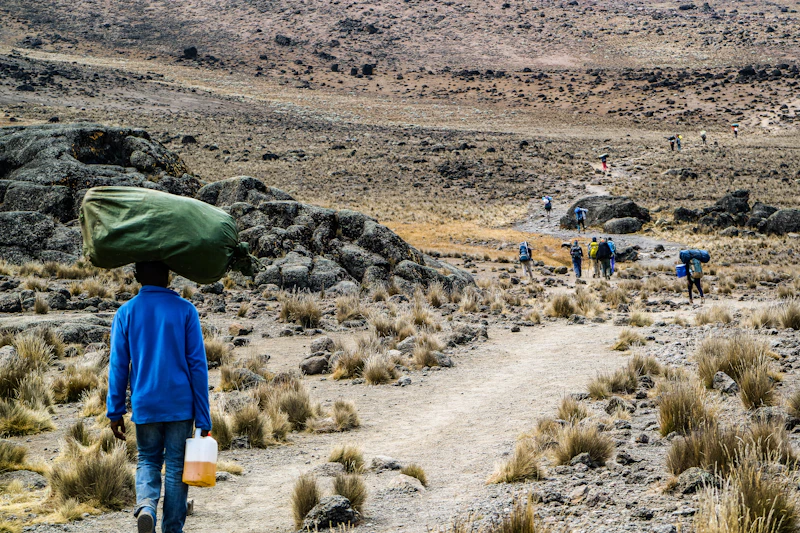
Can a complete beginner climb Kilimanjaro?
Yes — and most people who climb Kilimanjaro are first-timers who have never been at high altitude. Kilimanjaro is a long walk, not a technical climb: there are no ropes, no climbing skill, and no mountaineering experience required. What a beginner does need is the ability to walk five to seven hours a day on consecutive days, a willingness to accept cold and basic conditions, twelve to sixteen weeks of sensible preparation, and the right route. The honest part is that it is still hard, and roughly one in three climbers across all routes does not summit, almost always because of altitude rather than fitness. Choose a longer route such as the 8-day
Lemosho or 9-day
Northern Circuit, walk pole pole, and a healthy, prepared beginner has very good odds. See a doctor first if you have any health conditions.
Is Kilimanjaro dangerous?
With a reputable operator, Kilimanjaro is a safe mountain for healthy adults. The honest truth is that the safety question is really about operator quality, not the mountain itself. A good operator runs proper acclimatization, twice-daily health checks with a pulse oximeter, carries emergency oxygen and a full first-aid kit, employs certified guides trained in altitude medicine, and will descend you fast at the first warning sign. Altitude sickness is the real risk, and mild forms are common and manageable; severe forms are rare and are exactly what daily monitoring catches early. Going down quickly resolves altitude sickness reliably, and helicopter rescue exists for genuine emergencies. Cheap operators that cut these protocols are where the mountain becomes more dangerous than it should be. Choose carefully, and ask whoever you book with about their safety procedures.
How hard is Kilimanjaro really?
Honestly, it is hard — but not in the way most first-timers expect. The difficulty is not technical and it is not mainly about fitness; it is altitude and endurance. You walk five to seven hours a day on consecutive days, sleep in tents in the cold, and then face a summit day that starts around midnight and runs twelve to sixteen hours. The thin air at the top, where there is roughly half the oxygen of sea level, is what makes it a genuine challenge rather than a long hike. That said, you do not need to be an athlete. Most healthy adults can do it with proper preparation and a route with enough days to acclimatize. Nervous, well-paced first-timers regularly summit, often more reliably than overconfident climbers who go too fast.
What is the easiest Kilimanjaro route for beginners?
There is no truly easy route — every route shares the same summit and the same thin air — but the best routes for first-timers are the longer ones, because more days mean better acclimatization and higher success. For most beginners we recommend the 8-day
Lemosho, which posts around 90% success and offers gradual, scenic acclimatization, or the classic 7-day
Machame at around 85%. If summiting matters most and budget allows, the 9-day
Northern Circuit has the highest odds on the mountain at around 95%. Avoid the rushed 5-day Marangu, which summits only about half of climbers because it is too fast, and avoid
Umbwe entirely as a beginner — it is the steepest, expert-only route. Route choice matters more than fitness for whether you reach the top.
How likely am I to get altitude sickness?
Mild altitude sickness — a headache, fatigue, slight nausea or appetite loss — is common, and many climbers feel some of it. That is normal and manageable, and it does not mean you have to come down. What matters is that it stays mild, which is why guides do twice-daily health checks using a pulse oximeter and the Lake Louise Score to track your symptoms. Severe altitude sickness is rare and is exactly what that monitoring is designed to catch early. Altitude can affect anyone regardless of fitness or age, so it is not a reflection of how prepared or capable you are. The single biggest thing you can do to reduce your odds of serious altitude sickness is choose a longer route with proper acclimatization days, then walk pole pole and stay well hydrated.
What happens if I get sick on the mountain?
Your guide monitors you twice a day, so symptoms are usually caught while still mild. For mild altitude sickness, the response is often to slow down, rest, hydrate, and sometimes to stay at the same altitude rather than climbing higher. If symptoms cross the threshold from manageable to risky, the standard response is rapid, porter-assisted descent — going down fast resolves altitude sickness reliably, and that decision protects you rather than punishes you. Every reputable climb carries emergency oxygen and a comprehensive first-aid kit, and the guides are trained in altitude medicine. For genuine emergencies, established helicopter rescue services operate on Kilimanjaro. A guide who turns you around is doing their job correctly, and a good operator celebrates a safe descent as much as a summit photo. Your safety always comes before the schedule.
Is there an age limit for climbing Kilimanjaro?
The official minimum age is usually 10, though younger children are sometimes permitted with special arrangements. There is no upper age limit, and people in their sixties, seventies, and beyond have summited Kilimanjaro. Age itself is far less important than health and preparation — altitude affects the very fit and the very young as readily as anyone else, so being older is not a barrier in itself. What matters is arriving healthy, choosing a longer route, and walking at a steady pace. If you are over 60, or at any age with heart, lung, or blood-pressure conditions, see your doctor before booking to confirm Kilimanjaro is appropriate for you and to discuss altitude medication. Plenty of older first-timers summit comfortably precisely because they prepare carefully and take the days slowly.
How much does it cost to climb Kilimanjaro as a beginner?
A reputable climb typically runs from roughly $2,400 to $4,000 per person depending on the route and number of days, with longer routes costing more because they include extra days, food, and crew. It is a real investment, and we will be honest with you: very cheap climbs are usually cheap because they cut the things that keep you safe and pay porters fairly. Skimping on the operator is the wrong place to save money on this mountain. What you are paying for is certified guides, proper acclimatization days, emergency oxygen, daily health checks, and fairly treated porters. Booking direct with an Arusha-based operator like us, rather than through layers of overseas agents, keeps more of your money on the things that matter. Message us with your dates for an honest, itemised quote.
How long should I train before climbing Kilimanjaro?
For most first-timers, twelve to sixteen weeks of consistent preparation is the right window. You do not need to become an athlete — you need to build the endurance to walk five to seven hours a day on consecutive days. The most useful training is hiking on hills or stairs with a loaded daypack, building duration and pack weight gradually, plus a solid aerobic base and some leg and core strength. The most-skipped element is downhill practice, which protects your knees on the long descent. Consistency matters more than intensity: three sensible sessions a week across three months beats a frantic two-week cram. Our full
training guide has a printable week-by-week plan. And remember the honest truth — route choice and pace matter as much as fitness for whether you summit.
What if I can't make it to the top?
Then you join roughly one in three climbers across all routes who do not reach Uhuru Peak, and you are in good company. It is almost always altitude, not fitness or willpower, and turning back when your body says so is the right call rather than a failure. Your guide makes that decision with you, to protect you. Here is what we see every season: most climbers who turn around still describe the climb as one of their best experiences — the team, the scenery, the days on the mountain, watching themselves cope with something genuinely hard. Some return and summit on a second attempt with a better-acclimatizing route. Our honest advice is to book the climb, not the summit. The summit is a bonus on top of an extraordinary experience that is worth it either way.
Can I climb Kilimanjaro solo as a beginner?
You cannot climb Kilimanjaro genuinely alone — Tanzania National Parks requires every climber to go with a licensed guide and a support crew, and independent climbing is not permitted. But you can absolutely climb as a solo traveller, meaning just you with your own guide, cook, and porters, or you can join a small group departure to share the cost and the experience. For nervous first-timers, climbing with a guide team is reassuring rather than limiting: the guides handle navigation, monitor your health twice daily, set the pace, and the porters and cook carry the loads and prepare hot meals so you carry only a daypack. Many first-timers travel solo and find the team on the mountain becomes part of why they remember the climb. Tell us your preference and we will arrange a private or group climb to suit.
When should I see a doctor before booking?
See your doctor before booking if you have any heart, lung, or blood-pressure conditions, are on regular medication, are over 60, are pregnant, or have a history of severe altitude sickness on previous treks. It is also sensible to check in if you have not exercised in a while before starting a training program. Kilimanjaro takes you to 5,895 metres, where the air holds roughly half the oxygen of sea level, so it is responsible to confirm you are fit to ascend and to discuss altitude-sickness medication such as acetazolamide if it suits you. This is general guidance, not personal medical advice. Being thorough here is exactly the kind of careful preparation that makes for a successful, safe climb — taking your health seriously is a strength, not a worry.