2-Day Safari from Arusha — Three Honest Itinerary Options
A 2-day safari from Arusha is the cluster's entry-level short safari — one overnight, two substantial game-drive sessions, and a single park or a quick two-park combination. Honest framing first: this is roughly 1.5 days of safari, not 2. Day 1 starts with a 2 to 3 hour drive from Arusha to the park, lunch en route or in the park, an afternoon game drive, and overnight at a lodge or tented camp. Day 2 is an early morning game drive — the peak wildlife window — followed by brunch and the drive back to Arusha by mid-afternoon. That works out to two real game-drive sessions and roughly 6 to 8 hours of actual game viewing. Done well, it's a real safari; done with the wrong expectations, it disappoints.
The right way to plan it is to pick the itinerary that matches your priority. Most 2-day buyers choose one of three honest combinations: Tarangire only (the relaxed single-park option, famous for elephants and baobabs), Tarangire plus Lake Manyara (more variety, both close to Arusha), or Tarangire plus the Ngorongoro Crater (the most ambitious — best wildlife density, but Crater time is shorter than on a 3-day). Below: the three itinerary options side-by-side so you can pick, the three pricing tiers with honest caveats, the real day-by-day, what each park actually delivers, and how the 2-day compares to a 3-day or a day-trip. After 35 years running short safaris out of Arusha, this is the version that actually works — no oversold time math, no hidden costs.
2-Day Safari from Arusha at a Glance
- Safari time: 1 overnight, 2 game-drive sessions (~6-8 hrs game viewing)
- Three itineraries: Tarangire only / Tarangire + Manyara / Tarangire + Crater
- Pricing tiers: Budget $400-550 / Mid-range $600-850 / Luxury $1,000-1,500+
- Best park for 2 days: Tarangire (elephants, baobabs, year-round game)
- Best for: Time-constrained travellers, pre/post-Kilimanjaro, beach-and-safari combos
- Honest upgrade: 3-day adds the Crater properly + better value per day
Three 2-Day Itineraries — Pick the One That Suits
There is no artificial canonical itinerary for a 2-day from Arusha. The honest version is three different trips depending on what you want — Tarangire only (relaxed, elephants and baobabs), Tarangire plus Manyara (variety across two ecosystems), or Tarangire plus the Crater (the most ambitious, premium wildlife). They differ in pace and in what each delivers. The relaxed option spends both game drives in a single park with no transfer pressure. The variety option splits across two parks that are both close to Arusha. The Crater option puts the highest wildlife density of any 2-day within reach, at the cost of a tighter Day 2 and a longer drive home. Pick by your priority — relaxed, varied, or wildlife density — and the rest of the planning follows.
Three Honest Pricing Tiers — Budget, Mid-Range, Luxury
Here's what each tier actually buys. Unlike a fly-in safari, there's no internal flight floor — budget on an overland 2-day is a legitimate option, not a corner-cutting exercise. The tier differences are simple: the vehicle (shared versus private), the lodging quality (campsite or basic versus mid-tier lodge versus premium), and the meal and service standard. Park fees are the same regardless of tier, which is part of why the gap between budget and mid-range is real but smaller than people expect. Pick the tier against your comfort priorities, not against a fear that budget means a lesser safari — on a short overland trip from Arusha, it doesn't.
Budget 2-Day Safari
The honest budget. Shared 4×4 with up to 6 guests (window seat guaranteed), basic mobile camps or public campsites, simple meals. The full safari experience without lodge upgrades. Works because overland short safaris have no flight floor to absorb.
- Shared 4×4, up to 6 guests, window guaranteed
- Public campsites or basic budget lodges
- All park fees, meals, water
- Standard 4×4 with experienced driver-guide
- Genuinely viable for short safaris — no fly-in compromises
Mid-Range 2-Day Safari
The sweet spot for most buyers. Private or small-group 4×4 (up to 4 guests), permanent mid-tier lodges (Tarangire Sopa, Manyara Serena, Country Lodge Karatu), full meals and water. Comfortable, well-paced, the version most short-safari clients book.
- Private or small-group 4×4 (up to 4 guests)
- Mid-tier lodges (Sopa, Serena, Tloma, Kitela)
- Full meals, water, soft drinks at the lodge
- Park fees, transfers, full guide service
- The honest balance of comfort and cost
Luxury 2-Day Safari
Premium lodges (Tarangire Treetops, Gibbs Farm, Ngorongoro Sopa or Crater Lodge), a private 4×4 dedicated to your party, premium meals and amenities. The "do it once, do it right" version for short safaris.
- Premium lodges (Treetops, Gibbs Farm, Crater Lodge)
- Private 4×4, dedicated guide
- Premium meals, sundowner drinks, full lodge amenities
- All park fees and transfers
- Best lodging available in the short-safari window
Day-by-Day — What Actually Happens
This is the realistic day-by-day, standard across the three park combinations — the differences are which park and which lodge; the rhythm is the same. Day 1 is a morning departure and an afternoon game drive after the drive in. Day 2 is the early morning game drive, the peak wildlife window, then the drive back to Arusha. Geoffrey Komba, William Mwasimba, and Isaac Munuo run these routes daily, so the timings below are operational, not optimistic. The one real variation is the Crater option, which swaps the Day 2 Tarangire game drive for a pre-dawn Crater descent — noted at the foot of the itinerary.
Arusha → Park, afternoon game drive
Morning game drive, drive back to Arusha
Ready to plan your 2-day safari?
Tarangire, Manyara, Ngorongoro — What Each Delivers in a Half-Day
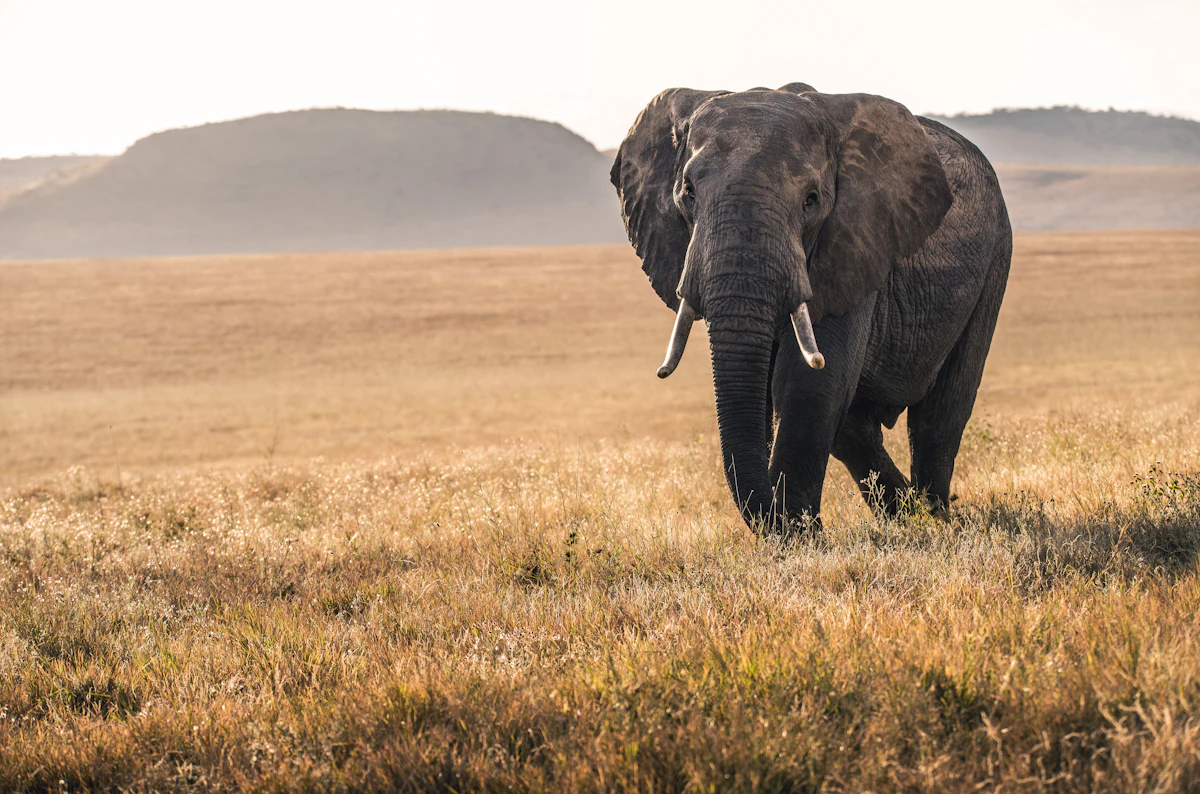
Tarangire National Park (2,850 sq km, ~2 hrs from Arusha) is the single most-booked 2-day choice. It carries the largest elephant concentration in northern Tanzania — herds of 50-plus in the dry season — and the ancient baobab trees are the park's signature. The Tarangire River draws game year-round, with good lion sightings and the occasional leopard. It's less crowded than Manyara or the Crater. Peak game viewing is June through October, when the river is the only water source and animals concentrate around it.
Lake Manyara National Park (330 sq km, ~2 hrs from Arusha) is small but high in variety. The rift-wall escarpment rises 600m above the lake, creating a dense groundwater forest at its base. The park is known — though not guaranteed — for tree-climbing lions, large baboon troops, forest elephants, and flamingos on the alkaline lake when water levels suit (best November to June). Manyara works well in a half-day precisely because it's compact: you cover a lot of ground in 3-4 hours.
Ngorongoro Crater (NCAA) is a 19 km-wide collapsed caldera, around 600m deep, with the highest wildlife density in northern Tanzania. All Big Five are present, including the reliable rhinos that are rare elsewhere. The honest 2-day reality: you get about 3 hours on the Crater floor — a pre-dawn descent, ascending by 09:30-10:00 to start the drive back to Arusha — versus around 5 hours on a 3-day. If the Crater is your main priority, the 3-day is a meaningful upgrade. Crater fees are $70.80pp NCAA plus a $295 per-vehicle Crater service fee — both included in your package, not hidden.
Where Your Money Goes on a 2-Day Safari
Most short-safari pricing pages hide the cost composition. Here's the honest version: park fees, lodging for one night, and the 4×4 with guide and meals. There's no internal flight uplift on an overland 2-day, which keeps the total lower than a fly-in of the same comfort tier. The table below shows where each dollar goes at the mid-range tier — the version most clients book — with budget and luxury ranges noted so you can see how the lodging and vehicle choices move the number. Park fees are a fixed share you can't negotiate away, which is exactly why a too-cheap quote should make you ask what's been cut.
| Cost component | Per person (mid-range) | Notes |
|---|---|---|
| Park fees (Tarangire 2 days × $50) | $100 | Plus VAT in some packages |
| NCAA + Crater service fee (Tarangire + Crater option) | $121 | $70.80 NCAA + ~$50 shared crater service fee |
| Lodging (1 night mid-range) | $200-300 | Budget $80-120; luxury $500-900+ |
| 4×4 + guide + meals for 2 days | $300-450 | Shared vehicle (budget) to private (luxury) |
| Mid-range total — Tarangire only | $600-850 | The honest sweet spot |
| Mid-range total — Tarangire + Crater | $750-1,000 | Adds Crater fees + extra transfer |
2 Days vs 3 Days vs Day-Trip — Which Is Right?
If you're still deciding how long to go, here's the honest framing across the spectrum. The 2-day is the entry-level overnight. The 3-day is the meaningful upgrade with much better value per safari hour — the version we most often recommend for short-safari buyers, especially anyone who wants the Crater done properly. Day-trips suit travellers with literally one day. Longer overland trips — the 4-day Northern Circuit, the 7-day — are the real safari for those with the time. Pick by how many parks you actually want and how much the Crater matters to you.
- 1-day safari from Arusha (read more): half-day or full-day game drive, no overnight. For travellers with literally one day, or as a Kilimanjaro layover. Limited but real safari time.
- This page — 2-day safari from Arusha: the entry-level overnight. ~1.5 days of safari, one or two parks, real but compressed.
- 3-day safari from Arusha (read more): the meaningful upgrade. Tarangire + Crater done properly, or three-park combinations. Much better value per safari hour. The version we most often recommend for short-safari buyers.
- 4-day Northern Circuit safari (read more): adds the Serengeti or a full Crater + Karatu-based pace. The shortest "real" northern circuit.
- 7-day Tanzania safari (read more): the full northern circuit done properly — Tarangire, Manyara, Serengeti, Ngorongoro. The reference safari.
- Kilimanjaro pre/post-climb safari (read more): if you're climbing Kilimanjaro, the natural combination either side of the mountain.
Best Time for a 2-Day Safari from Arusha
Wildlife seasonality matters less on a 2-day than on a 7-day — you're not chasing the migration — but it's not irrelevant. The honest framing: Tarangire is best June to October when the river concentrates game; Lake Manyara is good year-round, with flamingos best November to June; the Crater is excellent in any month. Avoid the April-May long rains if you can, when park roads get tough and game viewing is harder. The November short rains are usually manageable for a short trip and bring lower pricing and fewer vehicles. For a 2-day specifically, the dry-season months give you the most reliable sightings in the limited hours you have on the ground.
June-October (dry season peak). The best overall window for a 2-day. Tarangire's game concentrates around the river, the Crater is reliable, and lower vegetation makes spotting easier. Pricing runs above shoulder and lodges fill — book a few months ahead.
November (short rains). Usually manageable for a short trip. Afternoon storms are typical but brief, the landscape greens up, and pricing and crowds drop. Tarangire and Manyara work well; the Crater can have visibility dips in heavy afternoon cloud.
December-March. Good value with reliable Tarangire and Crater game. Manyara's flamingos are at their best in this window. February holiday-season pricing climbs for a few weeks but the wildlife is strong.
April-May (long rains). The one window we steer 2-day buyers away from at premium tier. Roads get tough, some camps close, and the Crater floor can flood. If you must travel then, treat it as a budget-tier trip and keep expectations realistic.
2-Day Safaris from Arusha — Book Direct
Our scheduled and private 2-day departures — three itinerary options across three tiers. Same-day departures are often possible for travellers arriving at Kilimanjaro International Airport, because the 4×4s are positioned at our Arusha base year-round. The placeholder cards below are populated with real availability and pricing from the tours page; the prices shown are indicative starting points. Tell us your dates and Geoffrey Komba or Isaac Munuo will confirm the right lodge and the honest cost for your party.
2-Day Tarangire Safari
The relaxed 2-day. Two long game-drive sessions among the elephant herds and baobabs, one overnight, no transfer pressure. (Placeholder pricing.)
View on tours page →2-Day Tarangire + Manyara
The most-booked 2-day. Tarangire Day 1, Lake Manyara Day 2 — two ecosystems, both close to Arusha. (Placeholder pricing.)
View on tours page →2-Day Tarangire + Ngorongoro Crater
The premium-wildlife 2-day. Tarangire Day 1, a pre-dawn Crater descent Day 2, Big Five within reach. (Placeholder pricing.)
View on tours page →- Back to the pillar: Short safaris from Arusha — half-day to 3-day guide
- The natural upgrade: 3-day safari from Arusha — the Crater done properly
- Just one day: 1-day safari from Arusha — single-park day trips
- JRO layover: Layover safari Kilimanjaro Airport — transit-window logistics
- Single-park day version: Arusha to Tarangire day trip
- Crater day version: Arusha to Ngorongoro day trip
- Manyara day version: Arusha to Lake Manyara day trip
- Weekend trip: Weekend safari from Arusha
- Kilimanjaro pre/post-climb: Post-Kilimanjaro safari
2-Day Safari from Arusha — Common Questions
Is 2 days enough for a Tanzania safari?
Two days is enough for a real safari experience, but be honest about the math — it is roughly 1.5 days of actual safari, not 2. Day 1 is a morning departure from Arusha, a 2 to 3 hour drive to the park, and an afternoon game drive. Day 2 is an early morning game drive and the drive back to Arusha by mid-afternoon. That is two substantial game-drive sessions and about 6 to 8 hours of game viewing. After 35 years running short safaris from Arusha, our honest view is that a 2-day works well for a single park done properly, or a quick two-park combination. If you want the Ngorongoro Crater done at a relaxed pace, a 3-day from Arusha is the better fit. Set expectations to one overnight and two game drives and a 2-day delivers.
What's the best park for a 2-day safari from Arusha?
Tarangire is the single most-booked 2-day choice from Arusha, and for good reason — it is about 2 hours from Arusha, carries the largest elephant concentration in the Northern Circuit, and the baobab landscape is distinctive. Game is reliable year-round with a peak June to October. For more variety, add Lake Manyara on Day 2: a compact rift-wall park with forest, seasonal flamingos, and the chance of tree-climbing lions, also about 2 hours from Arusha. If the Ngorongoro Crater and Big Five are your priority, the Tarangire + Crater option works but Crater floor time is shorter than on a 3-day. After 35 years, we send most first-timers to Tarangire + Manyara for the best variety in a 2-day, and Crater-focused buyers to the 3-day.
How much does a 2-day safari from Arusha cost?
A 2-day safari from Arusha runs across three honest tiers. Budget is $400-550pp on a shared 4×4 with public campsites or basic lodging. Mid-range is $600-850pp on a private or small-group 4×4 with mid-tier lodges like Tarangire Sopa or Country Lodge Karatu — the sweet spot most clients book. Luxury is $1,000-1,500pp+ at premium lodges like Tarangire Treetops or Gibbs Farm with a private 4×4. Pricing includes park fees, lodging for one night, the 4×4, driver-guide, and meals. The Tarangire + Crater option adds roughly $120pp for the Crater fees. Booking direct from Arusha saves 15-25% against booking platforms. There is no internal flight cost on an overland 2-day, which is why budget is a genuine option here, not a corner-cut. See Tanzania safari cost 2026 for the full breakdown.
Can I see the Big Five on a 2-day safari?
Partly, depending on which itinerary you choose. Tarangire reliably delivers elephants and buffalo, with lions present and leopards occasional, but no rhino — so three of the Big Five at best. Lake Manyara adds elephants, buffalo, and the rare chance of tree-climbing lions, still no rhino. The only 2-day option that puts all Big Five within reach is Tarangire + Ngorongoro Crater, because the Crater holds reliable rhinos alongside lions, elephants, and buffalo — the highest wildlife density in northern Tanzania. Even then, leopard is never guaranteed anywhere. After 35 years, our honest advice — if seeing the full Big Five matters to you, pick the Crater option and accept the tighter pacing, or step up to a 3-day from Arusha for a proper Crater session.
Should I do 2 days or 3 days?
It comes down to whether the Ngorongoro Crater is your priority. A 2-day from Arusha is the entry-level short safari — one overnight, two game drives, one or two parks, real but compressed. A 3-day from Arusha is the meaningful upgrade: Tarangire and the Crater done properly, or a three-park combination, with much better value per safari hour. The Crater specifically is where the difference shows — about 3 hours on the floor on a 2-day versus around 5 hours on a 3-day. After 35 years routing short safaris, we recommend the 3-day to anyone whose main goal is the Crater and the Big Five, and the 2-day to time-constrained travellers, pre or post-Kilimanjaro climbers, and buyers happy with Tarangire or a Tarangire + Manyara combination.
Can a 2-day safari include Ngorongoro Crater?
Yes — the Tarangire + Ngorongoro Crater itinerary is one of our three honest 2-day options. Day 1 is Tarangire with an afternoon game drive, then an overnight at Karatu or a Crater-rim lodge. Day 2 is a pre-dawn descent to the Crater floor, around 3 hours of game viewing, then the ascent and the drive back to Arusha, arriving later than the other options — roughly 16:00 to 18:00. The honest trade-off is Crater time: about 3 hours on a 2-day versus around 5 hours on a 3-day, because you also need to fit the long drive back to Arusha into the same day. The Crater carries a $70.80pp NCAA fee plus a $295 per-vehicle Crater service fee, both included in your package, not added later. If the Crater is your main reason for the trip, the 3-day is the better build.
What's included in a 2-day safari?
A 2-day safari from Arusha includes the 4×4 Land Cruiser with an open game-viewing roof, the driver-guide, all park entry fees for the parks on your itinerary, one night of lodge or camp accommodation, full board meals, and bottled water. Hotel or airport pickup and drop-off in Arusha are included. On the Tarangire + Crater option, the NCAA fee and the $295 Crater service fee are included as line items, not hidden. Not included: tips for your guide, drinks beyond water, and items of a personal nature. We quote park fees separately so you can see exactly where the money goes — on a 2-day they run $100 to $220pp depending on which parks you visit. Geoffrey Komba or William Mwasimba confirm every inclusion before you pay a deposit.
Can I do a 2-day safari same-day from Arusha?
Often, yes. We are an Arusha-based operator and our 4×4s are positioned at the Arusha base year-round, which means short safaris from Arusha are the home product rather than an outsourced add-on. For travellers who arrive at Kilimanjaro International Airport with limited notice — a spare two days before a flight, a gap after a Kilimanjaro climb — we can frequently arrange a same-day or next-morning departure, subject to lodge availability for that night. Tarangire-only is the easiest to turn around quickly because it is a single park with no Crater permit logistics. The Tarangire + Crater option needs a little more lead time for the Crater-rim or Karatu lodge. WhatsApp Isaac Munuo or call +255 740 666 662 with your dates and we will tell you honestly what we can confirm for tomorrow.
Is a 2-day safari good after Kilimanjaro?
Yes — a 2-day is one of the most popular post-Kilimanjaro add-ons we run. After the mountain you want a comfortable lodge, no pre-dawn starts on Day 1, plenty of food, and a vehicle rather than your legs. Tarangire-only or Tarangire + Manyara suits a tired climber best: a relaxed afternoon game drive on Day 1, a good night at a lodge, and a morning game drive before the drive back to Arusha. The Crater option works too but the pre-dawn descent on Day 2 is a hard early start that some climbers would rather skip straight after a summit. Most climbers have a one to two day window after the mountain, which a 2-day fits cleanly. See our post-Kilimanjaro safari page for the full recovery logic, or WhatsApp us your climb dates.
How early do we leave Arusha?
Day 1 departure from your Arusha hotel or from Kilimanjaro International Airport is typically 07:00 to 08:00. That gets you to Tarangire or Lake Manyara — both about 2 hours away — in time for lunch and a full afternoon game drive. For the Karatu or Crater-rim lodges the drive is closer to 3 to 3.5 hours, so we may leave at the earlier end. On Day 2 the start is earlier still: an early morning game drive from around 06:30, because the peak wildlife window is the first hours after dawn when predators are most active and the light is best. On the Tarangire + Crater option, Day 2 is a pre-dawn Crater descent. After 35 years we quote honest departure times — Arusha traffic at rush hour adds about 30 minutes, which is why the early start matters.
What should I pack for a 2-day safari?
Pack light for a 2-day — you only need one overnight bag. Bring neutral-coloured layers (mornings are cold in the open vehicle, midday is hot), a fleece or light jacket for the early Day 2 game drive, a wide-brimmed hat, sunglasses, and high-factor sunscreen. Closed shoes are fine; you spend most of the time in the vehicle. Binoculars and a camera with a zoom lens make a real difference for Tarangire's elephants and any Crater wildlife. Bring any personal medication, insect repellent, and a reusable water bottle, though we provide bottled water. Lodges supply towels and toiletries. Leave heavy luggage at your Arusha hotel or with us — there is no need to carry it on a 2-day. For a fuller list see our Tanzania safari packing list page.
When is the best time for a 2-day safari?
Seasonality matters less on a 2-day than on a 7-day because you are not following the migration, but it is not irrelevant. Tarangire is at its best June to October, when the Tarangire River becomes the main water source and game concentrates around it. Lake Manyara is good year-round, with flamingos best November to June when the lake levels suit. The Ngorongoro Crater is excellent in any month thanks to its enclosed wildlife density. Avoid the April to May long rains if you can — park roads get tough and game viewing is harder. The November short rains are usually manageable for a short trip and bring lower pricing and fewer vehicles. After 35 years, our honest steer — book a dry-season 2-day early, and treat a long-rains 2-day as a budget-tier trip. See best time to visit Tanzania safari.
Two Days, One Real Safari, the Honest Plan
Tell us your dates, itinerary preference, and tier. We'll send a proposal within 24 hours with honest pricing and the right lodge. Same-day departures possible for travellers arriving JRO.