Best Time to Visit Tanzania for Safari

The best time for a Tanzania safari is June–October (long dry season) or January–February (short dry season). June–October delivers exceptional wildlife visibility as animals concentrate around shrinking water sources and vegetation is low. January–February is calving season — the southern Serengeti near Ndutu fills with newborn wildebeest and the predator activity it brings, with fewer crowds than the main dry season. Each season offers something different; the right choice depends on your wildlife priorities, budget, and crowd tolerance.

Month-by-Month Tanzania Safari Guide


Every month in Tanzania offers something — even the green season has resident wildlife, excellent birdwatching, and Ngorongoro Crater at full capacity. Use this table to match your travel dates to conditions. All 12 months are covered with rainfall, wildlife rating, crowd level, price level, and a one-sentence highlight.

MonthRainfallWildlife RatingCrowdsPrice LevelHighlight
JanuaryModerate4 out of 5LowLowCalving season begins at Ndutu; intense predator activity, short rains ending
FebruaryLow5 out of 5LowLowWildebeest calving peak — short dry window, hot and clear, exceptional predator concentration
MarchModerate3 out of 5LowLowestLong rains begin; green and beautiful with very few tourists and lower accommodation rates
AprilHigh2 out of 5Very LowLowestLong rains peak; some dirt roads difficult, but parks are near-empty and prices are at their lowest
MayModerate3 out of 5Very LowLowestRains easing; dramatic lush landscapes, near-empty parks — best month for budget photographers
JuneLow4 out of 5MediumMediumDry season begins; animals concentrate at water, excellent visibility, before the July crowds arrive
JulyLow5 out of 5HighPeakGreat Migration river crossings begin at the Mara; peak season — book accommodation 6–12 months ahead
AugustLow5 out of 5HighPeakPeak Migration crossings at Mara River; highest demand of the year, book 6–12 months in advance
SeptemberLow5 out of 5Medium–HighHighMigration in northern Serengeti, dry and dusty, exceptional game density at water sources
OctoberLow4 out of 5MediumMediumMigration moving south through western corridor; dry season ending, still excellent game viewing
NovemberModerate3 out of 5LowLowShort rains begin; lush parks, far fewer tourists, excellent value — best overall value month
DecemberModerate3 out of 5Low–High*Medium–Peak*Short rains continue; early December is quiet and good value — Christmas week spikes in crowds and price

* December crowd and price levels vary significantly: early December is low season; 20–31 December is peak season.

Note on Tanzania safari cost: Accommodation rates in green season (November–May) typically run 20–40% lower than peak dry season rates. For a full breakdown of prices by season and tier, see our Tanzania safari cost guide.

Not sure which month works for your trip?

Tell us your travel dates and we'll match you to the right destinations and itinerary — no generic packages.

Great Migration Timing — Month-by-Month


The Great Migration is not a single event — it is a year-round circular movement of roughly 1.5 million wildebeest, 250,000 zebra, and 500,000 gazelle across Tanzania and Kenya. Each phase offers a different experience. Our guides Geoffrey Komba, William Mwasimba, and Isaac Munuo track herd movements daily and adjust routes to position clients at the right location.

Jan – Mar

Calving Season — Southern Serengeti & Ndutu

Around 500,000 calves are born in a concentrated 3-week window, typically peaking in February. The southern Serengeti plains near Ndutu become one of Africa's most dramatic wildlife spectacles — cheetah, lion, leopard, and hyena converge on the calving grounds. This is the most predictable and concentrated wildlife experience in Tanzania, and it comes with green season pricing and very few tourists. A northern Serengeti extension adds elephant, giraffe, and resident predators.

Apr – May

Northward Movement — Central Serengeti

After calving, the herds begin moving north through the central Serengeti. April and May are the long rains — some tracks in the southern and western Serengeti can become difficult to pass. The herds are dispersed and widespread. These are the lowest-price months and parks are near-empty. Experienced travellers and photographers willing to accept some road challenges will find extraordinary green landscapes and minimal competition for wildlife sightings.

Jun – Jul

Gathering at the Mara River — Northern Serengeti

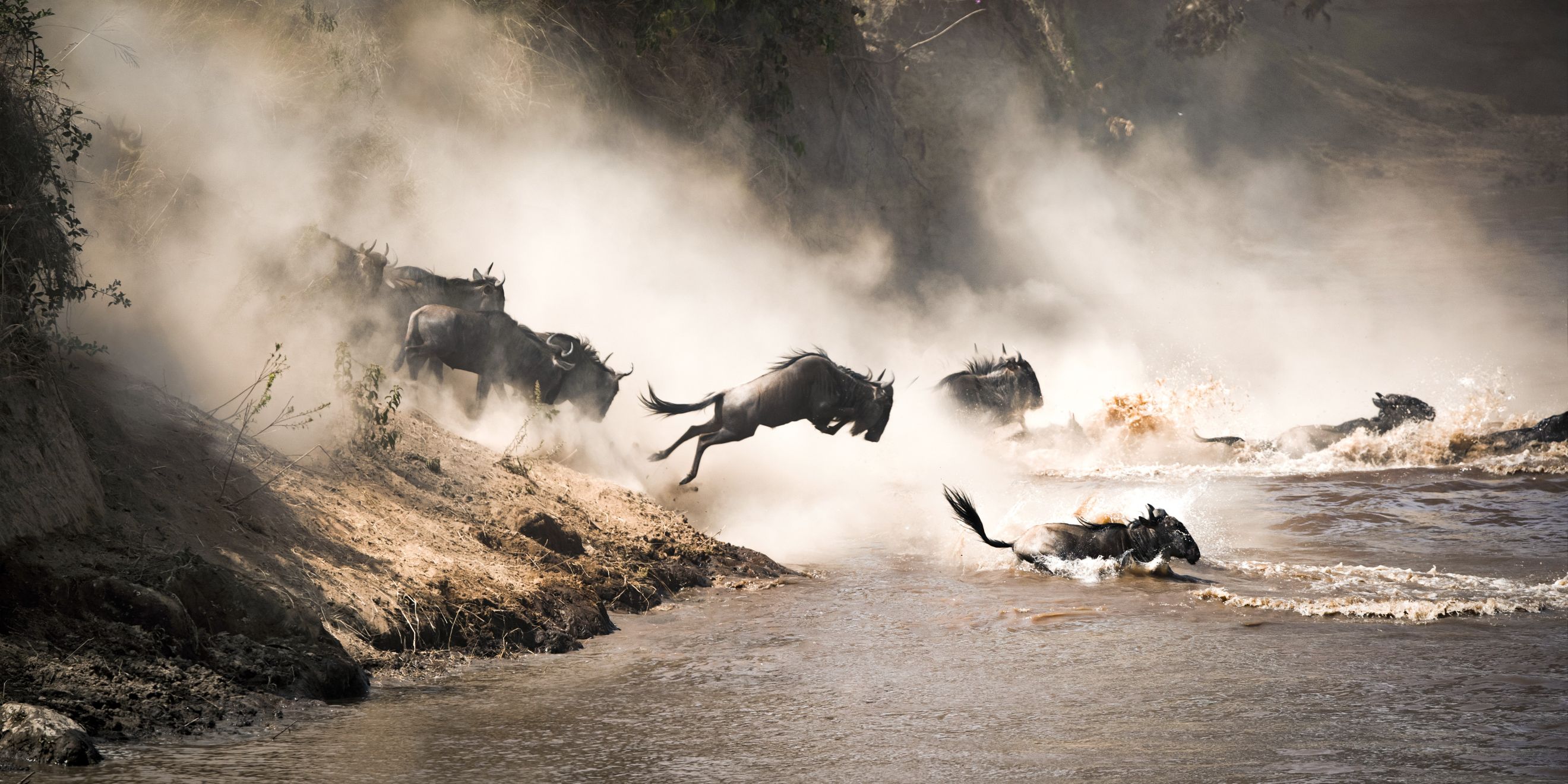
By June, the dry season is established and the herds have gathered in the western corridor and northern Serengeti. Crossings at the Grumeti River begin in June–July before the main Mara River crossings. July typically brings the first major Mara River crossings — dramatic events in which tens of thousands of wildebeest enter crocodile-filled water simultaneously. Crossings cannot be scheduled or guaranteed; our guides position vehicles near known crossing points and wait with clients for the herds to move.

Jul – Sep

Peak River Crossings — Northern Serengeti & Masai Mara

July through September is the peak of the Mara River crossings in the northern Serengeti. The herds move back and forth across the river multiple times, creating repeated crossing opportunities. This is also peak tourist season — camps in the northern Serengeti are at maximum capacity and prices are at their highest. Book 6–12 months ahead for July–September northern Serengeti accommodation. Guides Geoffrey, William, and Isaac monitor daily herd movements via a network of ranger reports to minimise wasted game drive time.

Oct – Nov

Southward Movement — Western Corridor

By October the herds begin their southward migration through the western corridor back toward the central and southern Serengeti. The dry season is ending and short rains begin in November. October remains excellent for game viewing with crowds and prices beginning to drop from peak levels. November offers the transition — lush green grass emerging, fewer tourists, good wildlife (resident animals stay year-round), and some of the best value accommodation rates of the year.

Important: River crossings are unpredictable — they depend on herd behaviour, water levels, and predator pressure. No operator can guarantee a crossing on a specific date. What we can do is read the signs correctly, position you near the most likely crossing points, and wait with patience. Our guides have done this for decades — ask them directly about current herd conditions before you book.

Best Time by Destination


Tanzania's main safari destinations each have their own seasonal strengths. Most visitors combine two or three in a single itinerary — our team can help you sequence them correctly to hit the right conditions at each stop. See the Complete Tanzania Safari Guide for full destination coverage.

Serengeti National Park

Best: Jun–Sep (Migration) · Jan–Feb (Calving)

Tanzania's flagship park offers different experiences depending on where in the ecosystem you position yourself. June–September in the northern Serengeti delivers Great Migration river crossings. January–February in the southern plains near Ndutu gives calving season and exceptional predator density. The central Seronera region is productive year-round for resident lion, leopard, cheetah, and elephant — even in the green season. Avoid entering the southern Serengeti in April–May if road conditions concern you; a fly-in safari bypasses this issue entirely.

Ngorongoro Crater

Best: Year-round · Feb for newborns · Avoid heavy April rains

The Ngorongoro Crater is Tanzania's most consistent wildlife destination — a self-contained ecosystem that holds 25,000+ animals year-round regardless of season. The crater floor floods briefly during the April rains but remains accessible most of the year. February is notable for newborn plains animals on the crater floor, attracting predators. Rhino sightings are more likely during the morning hours in the dry season when animals are at predictable water points. Ngorongoro is the strongest argument for travelling in the green season — the wildlife is always there.

Tarangire National Park

Best: Jun–Oct (elephant concentrations) · Nov–Apr (birdwatching)

Tarangire holds Africa's largest elephant concentrations during the dry season — June through October — when up to 3,000 elephants converge along the Tarangire River as outside water sources dry up. The riverbanks in August and September are among the most dramatic wildlife scenes in Africa. The green season (November–April) is the best period for birdwatching: Tarangire hosts over 550 species and becomes a magnet for migratory birds. Tarangire is often overlooked in favour of the Serengeti — a mistake, particularly for dry season visitors.

Zanzibar Beach Extension

Best: Jun–Oct · Dec–Feb · Avoid Apr–May

Most Tanzania safari itineraries end with a 3–5 day beach extension in Zanzibar. The best conditions align with the best safari conditions: June–October (long dry season) and December–February (short dry window) offer the clearest skies and calmest seas. April and May bring the long rains to Zanzibar as well — the sea can be rough and some resort areas see flooding. The west coast (Stone Town, Kendwa, Nungwi) stays calmer in the southeast trade winds; the east coast (Paje, Jambiani) is flatter in the northwest monsoon (November–March). Our team arranges the ferry or flight transfers from the mainland as part of the itinerary.

When to Go for Best Value


Tanzania has two clear pricing seasons: peak (June–October) and green/low season (November–May). The price difference is real and significant — 20–40% on accommodation across the board. But value travel is not the same as compromise. Here is an honest comparison.

Green Season — November to May

What You Gain

  • 20–40% lower accommodation rates across all tiers
  • Near-empty parks — game drives without competing vehicles
  • Lush, dramatic photographic landscapes
  • Exceptional birdwatching (550+ species in Tarangire)
  • Ngorongoro Crater remains world-class year-round
  • Calving season (Jan–Feb) rivals any peak-season event
  • Resident predators — lion, leopard, cheetah — stay year-round
  • Shorter booking lead times — more flexibility in planning
Peak Season — June to October

What Justifies the Premium

  • Great Migration river crossings (July–September)
  • Maximum wildlife visibility — low vegetation, dry terrain
  • Elephants concentrated in their thousands at Tarangire River
  • Ideal conditions for first-time visitors
  • Comfortable, predictably dry weather for game drives
  • Best conditions for Zanzibar beach extension
  • Widest availability of camp styles and locations
Honest caveat on green season: Some dirt roads in the southern and western Serengeti become genuinely difficult in April–May, particularly after heavy rain. A fly-in safari eliminates this issue entirely — light aircraft access opens during all seasons. If you are travelling in April–May and want Serengeti access without road risk, ask our team about fly-in options. This is not a deal-breaker; it is a logistical consideration.
Want to understand how season affects your total trip cost? Our Tanzania safari cost guide breaks down pricing by tier and season, with real figures from our 2026 packages. If you're exploring how to book direct and avoid aggregator markups, that guide covers the savings in detail.

Frequently Asked Questions


June–October is the best period overall — it is the long dry season, when animals concentrate around water sources and vegetation is low, giving exceptional wildlife visibility. July–September specifically delivers Great Migration river crossings at the Mara River in the northern Serengeti.

January–February is the best alternative: calving season in the southern Serengeti near Ndutu brings intense predator activity with fewer crowds than the main dry season and significantly lower prices. The right choice depends on your wildlife priorities and budget — both periods are outstanding.

Yes, with caveats. Early December (1st–15th) is generally very good — the short rains are usually light and brief, wildlife remains excellent, and parks are quieter than the July–September peak.

Christmas week (roughly 20th December through New Year) sees a significant spike in both crowds and accommodation prices — comparable to July–August peak rates. Wildlife is strong throughout December. Book early if travelling over the festive period and expect to pay peak-season rates for Christmas week travel.

April and May are the cheapest months — the long rains are at their peak, accommodation rates drop 30–40%, and parks are near-empty. This is not ideal for first-time visitors due to some road challenges in the Serengeti, but it is excellent for experienced travellers and photographers seeking dramatic green landscapes at very low cost.

November is the best value month for visitors who want good wildlife, quieter parks, and lower prices without the logistical challenges of April–May. Short rains are typically brief, wildlife is strong, and rates are 20–30% below peak. See our Tanzania safari cost guide for season-by-season pricing.

Yes. Rain in Tanzania is typically short afternoon showers — not all-day downpours. Morning game drives are usually dry and excellent. Wildlife viewing continues through both rainy seasons.

The Ngorongoro Crater is outstanding year-round regardless of season — it is the strongest argument for green season travel. The green season is when resident predators are at their most active: prey is abundant, relaxed, and predictable. Birdwatching in the green season (November–April) is exceptional, with hundreds of migratory species present that disappear entirely in the dry season.

River crossings at the Mara River in the northern Serengeti occur approximately July–September. Exact timing depends on herd movements and rainfall patterns — crossings cannot be guaranteed on any specific date. The herds are unpredictable by nature.

Our guides Geoffrey Komba, William Mwasimba, and Isaac Munuo track herd movements daily via a network of ranger reports and adjust game drive routes accordingly. For calving season, January–February in the southern Serengeti near Ndutu is more predictable and geographically concentrated.

August is dry season — temperatures are warm during the day but comfortable for game drives. Mornings and evenings in the Serengeti can be surprisingly cool (down to 10–15°C at dawn). It is peak season, so parks are at their busiest and accommodation prices are at their highest.

For August travel, book accommodation 6–12 months in advance — particularly for northern Serengeti camps near the Mara River, which fill completely well before the season. The conditions in August — dust, low vegetation, animals concentrated at water sources — are ideal for wildlife photography.

  • Dry season (June–October): Lightweight layers for cool mornings (temperatures can drop to 10–15°C at dawn), sunscreen essential, dust can be significant in August–September.
  • Green season (November–May): Light rain jacket or poncho, same lightweight clothing, mosquito repellent more important than in dry season.
  • Year-round: Neutral colours — khaki, olive, beige, tan — on game drives. Avoid bright colours, white, and black. White shows dust immediately; bright colours can disturb wildlife and attract insects.

For peak season (July–September) or Christmas travel, book 6–12 months in advance. Top camps and private concessions fill completely well before the season opens, particularly in the northern Serengeti.

For shoulder season (June, October, November), 3–6 months is generally sufficient. For green season (April–May), 2–3 months ahead is usually fine. For group departures on safari-tz.com tours, some availability exists 4–6 weeks ahead depending on season and group size. Contact our Arusha team directly to check current availability.

Plan Your Tanzania Safari — Tell Us When You Want to Travel

Our Arusha team matches your travel dates to the right destinations and itinerary. No generic packages — real advice from guides who are on the ground year-round.

+255 743 100-673  |  info@safari-tz.com  |  Contact page

WhatsApp Us
WhatsApp