What to Expect on a Tanzania Safari — Honest Sensory Reality
Most pages telling you "what to expect" on a Tanzania safari describe the schedule. We have a separate page for that — our 7-day itinerary guide. This page covers what nobody warns you about: what dust on your face for 7 days actually feels like (you stop noticing by Day 3), the radio crackle of guide-to-guide chatter during morning drives, why most clients go quiet during the Day 3 crater descent, the sleep schedule that defeats you whether you want it to or not (you'll be asleep by 9 PM), and the post-safari emotional adjustment that takes 2-3 weeks.
After 35 years of taking first-timers through the Northern Circuit, we've watched the same emotional arc play out roughly 14,000 times. The hardest part is rarely what travelers anticipate. The most rewarding part is rarely what they expected. This page is the conversation we have with nervous first-time clients in the Arusha hotel the night before departure — written down. Read once before you commit to the 7-day Northern Circuit. Read again the night before you fly. For pre-trip strategy see our how to plan Tanzania safari sub-pillar.
The Honest Experience Reality
- Dust: constant from Day 2. You stop noticing by Day 3.
- Sleep schedule: asleep by 9 PM. The early mornings defeat you.
- Vehicle hours: 4-7 hours per day average; 8 on transit days.
- Emotional peak: Day 3 crater descent or Day 4 first big sighting.
- Physical reality: 1,400m to 2,400m altitude swings — slight breathlessness possible.
- Post-safari: 2-3 weeks of "safari hangover" is normal.
What First-Timers Worry About — and What's Actually Real
Most first-time clients arrive at the Arusha hotel on Day 1 carrying anxieties they don't fully articulate. The patterns repeat. After 35 years of welcoming travelers, we've come to know the questions before they're asked. Below are the real worries — not the manufactured worries marketing brochures pretend exist, but the actual ones we hear in WhatsApp messages two weeks before departure and in evening briefings the night before the first game drive. Most are unnecessary. A few are worth taking seriously. The honest version is below.
Most of these aren't worth the worry.
The first worry is safety. Tanzania is one of Africa's safest tourism destinations. The Northern Circuit specifically operates within a tightly-managed protected-area system — TANAPA park rangers, named driver-guides, vetted lodges, established radio networks. We've had zero serious incidents in 35 years of operations. Worry less about safety than about whether your sunglasses are polarised. For a deeper safety read see our is Tanzania safe for tourists guide.
The second is fitness. You don't need to be fit. You need to be able to sit in a vehicle for 4-7 hours a day with bumpy stretches, walk 100m to your tent, and tolerate altitude changes between 1,400m and 2,400m. If you can do that, the safari is comfortable.
The third is wildlife disappointment — the fear that you'll fly to Tanzania and see nothing. Northern Circuit Big Five completion rate exceeds 85% on 7-day trips. Lion, elephant, buffalo are essentially guaranteed. Leopard 60-70% of trips. Rhino reliable in Ngorongoro Crater. The fear is unfounded; the actual outcome rarely is. For the longer breakdown see is 7 days enough for Serengeti.
The fourth is gear adequacy — am I packing the right stuff. We have an entire page for that — see our Tanzania safari packing list. Short answer: most clients pack three times what they need.
The fifth, and least articulated, is work disconnection. You'll lose reliable phone signal in Serengeti for 2-3 days. Email becomes impossible. This is the worry that turns out to be a feature, not a problem — by Day 4, almost every client describes the disconnection as one of the trip's quiet rewards. Plan for it instead of fighting it. The day-by-day operational schedule shows where the signal-dead zones fall.
The Sensory Reality of 7 Days on Northern Circuit
Marketing imagery captures the visuals. Photographs cannot capture what 7 days actually feels like — the smells, the sounds, the textures, the temperature swings, the silences. Below are the sensory realities most first-timers don't anticipate. Some are pleasant. Some are uncomfortable for a day or two before you adapt. All are part of the experience that makes safari different from any other kind of travel. After 14,000+ trips, these are the patterns we've observed clients adjust to.
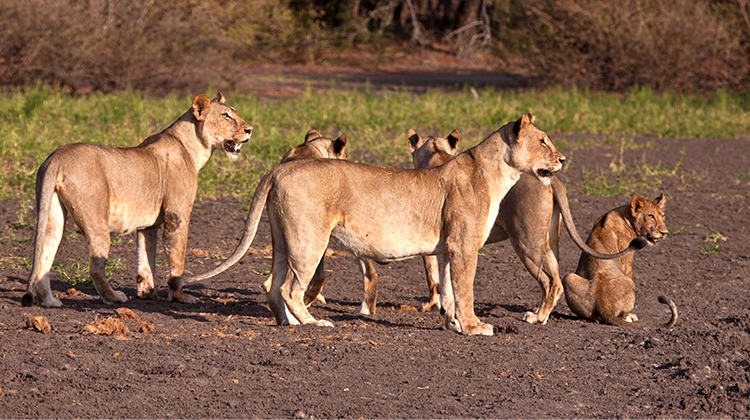
On your face. On your hands. In your hair.
Dust appears on Day 2. It comes from the unsealed roads inside Serengeti and the dry plains around Ngorongoro. By Day 3 it has reached your eyebrows, the inside of your camera bag, and the tops of your boots. By Day 5 it's in your duffel.
You stop noticing it by Day 3. Camp staff arrange wash bowls outside your tent every morning. Hot showers in the evening do most of what's needed. The dust is part of the experience — clients who've taken multiple safaris say they actually miss it for a week after returning home. The disconnection from urban surfaces becomes part of what the trip provides.
Radios crackling. Hyenas at night. The wind in canvas.
Morning game drives start in radio chatter. Driver-guides communicate sightings to each other in a constant low-volume Swahili back-and-forth. You'll hear it through your seat from 6 AM. After Day 2 it becomes part of the soundtrack rather than noise.
Camp nights are noisier than expected. Hyenas vocalise 200-400m from Serengeti camps regularly. Lions roar at distance — clients hear it most nights and rarely sleep through it the first time. Birds start at 5 AM. The wind through tent canvas is constant and surprisingly soothing. Bring earplugs only if you're a particularly light sleeper. Most clients learn to love the sounds by Day 3.
Canvas and woodsmoke. The rain before it falls.
Canvas tent walls heated by morning sun have a particular smell — warm cotton, old wood, faint dust. You'll associate it with safari for years afterward. Camp dining tents smell like woodsmoke and grilled meat by 7 PM.
In green season (March-May), the rain has a smell that arrives 30 minutes before the storm. The Maasai have a name for it. Watch for it on Day 5 in Serengeti — the herd shifts position, the air changes, then the rain comes. For more on seasonal weather patterns see our best time to visit Tanzania safari guide.
Pre-dawn purple. Equatorial midday harsh. Golden hour twice daily.
Equatorial light is different from Northern hemisphere light. Sunrise happens at 6:15 AM year-round and sunset at 6:30 PM year-round — there's no dramatic seasonal shift. What changes is the quality of the light during the day.
Pre-dawn purples and pinks appear from 5:30-6:00 AM. The harsh midday sun (10 AM-3 PM) flattens contrast and is worst for photography. Golden hour returns at 4:30 PM and lasts until sundown. Your driver-guide times game drives to capture these light windows. Photography clients shoot 80% of their best images in the 6-9 AM and 4:30-6:30 PM blocks.
8°C at the crater rim. 32°C on the plains. Same morning.
The Northern Circuit takes you between 950m (Lake Manyara) and 2,400m (Ngorongoro Crater rim). Morning temperatures at the rim are 8-12°C in dry season — genuinely cold for a vehicle that's open to the wind. By 11 AM the same day you'll be in 28°C plains heat with a pop-up roof open.
Layers matter. The fleece you pack for Day 3 will be removed by 9 AM and put back on by 5 PM. Open-vehicle wind chill exaggerates the cold — actual air temperature feels 4-5°C colder than a still environment. The temperature swing within a single day is the physical reality first-timers most consistently underestimate. Specific layering strategy lives on the packing list page.
The quiet of Ngorongoro Crater floor at 8 AM.
The sense most clients don't anticipate is the silence. The Crater floor at 8 AM, after the morning chorus of birds settles, is a particular quiet — wind, distance, occasional bird call, nothing else. No engines beyond your own. No human voices beyond your guide. Sundowners at 6 PM on a Serengeti koppie deliver a similar silence.
Most first-timers describe these silences as more striking than any sighting. We don't advertise them because they sound like nothing. After 35 years of observing client reactions, we've come to know that the quiet is one of the trip's most durable rewards. The dust fades from memory; the silence doesn't.
The 7-Day Emotional Pattern Most First-Timers Experience
After 14,000+ trips, the emotional pattern is consistent enough that we can predict it. Not every client follows it exactly, but most experience some version. The arc below is what we've observed repeatedly. Recognising where you are in it helps. The hardest emotional day is rarely Day 1. The most surprising day is rarely the one you'd guess in advance. The post-safari pattern is real and worth knowing about.
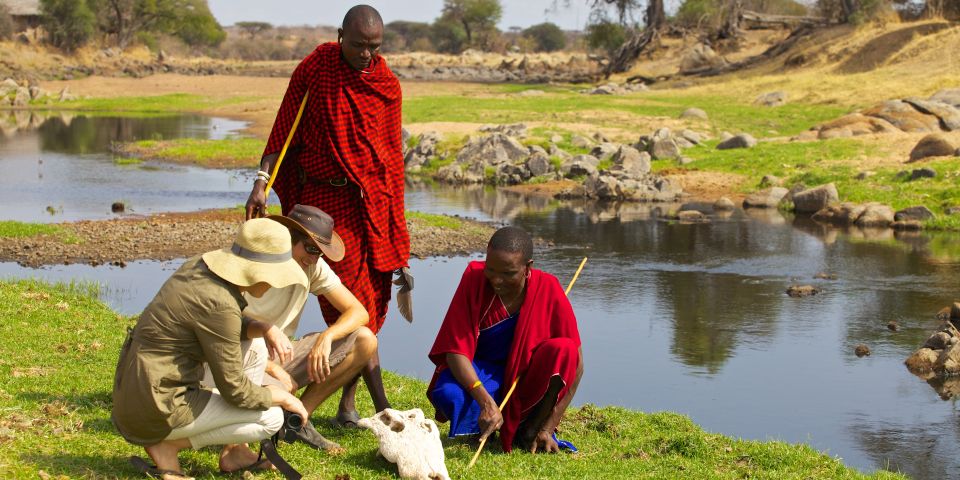
Tired and slightly disoriented.
Most clients arrive jet-lagged. The Arusha hotel feels strange. The evening briefing covers a lot quickly. Sleep is uneven. Don't expect to feel safari-magic on Day 1 — you're managing logistics and recovering from international flights. The trip hasn't really started.
First sighting changes everything.
Lake Manyara delivers your first wildlife sighting. The first elephant 30 metres from the vehicle. The first baboon troop crossing the road. Something shifts internally — most clients describe the moment they "really arrived" as a specific sighting on Day 2. The trip has started now.
Most clients go quiet during the descent.
The morning crater descent at 7 AM does something specific to people. The bowl opens up below the rim road. Within 30 minutes you've seen elephants, buffalo, lions, hyenas, sometimes rhinos in the same vista. Clients sometimes cry during this descent — we don't comment. By the time you reach the crater floor, most first-timers have understood for the first time what "safari" actually means. The full operational sequence is on the 7-day itinerary page.
Serengeti rhythm. You stop counting.
Full day Central Serengeti. The pattern of the day — pre-dawn drive, morning predator activity, brunch, afternoon drive, sundowner — settles into rhythm. You stop counting how many lions you've seen. The trip has its own internal momentum now. Most clients report feeling deeply relaxed by Day 4 evening.
I want to come back.
Day 5 is when the "I want to come back" feeling appears. Most clients have stopped checking their phones — work email feels distant. The disconnection that was supposed to be a problem has become the trip's quiet reward. Day 5 evening sundowner is when most clients tell their guide they want to extend or return.
Long drive day. Reflective.
The Serengeti-to-Tarangire transit is the longest drive day of the trip — 6-8 hours. Fatigue accumulates. Conversations in the vehicle become more reflective. Many clients describe Day 6 as the day they processed the previous days' experiences. Tarangire arrival in late afternoon — elephants at the river — re-energises.
The morning game drive feels different.
Final game drive in Tarangire. Massive elephant herds at the river. Most clients are emotional during this drive — partly the wildlife, partly the imminent departure. The drive back to Arusha becomes goodbye. By the time you board your evening flight from JRO, you'll already be planning when to come back. About 30% of our clients return within 5 years.
8 Things That Surprise First-Timers — Pleasant and Honest
After 14,000+ trips, certain client surprises repeat. Some are pleasant — small details we don't advertise because they sound unbelievable until you experience them. Some are inconvenient or uncomfortable — realities we don't hide but rarely lead with in marketing. Both kinds matter. The pleasant surprises tell you what to anticipate that brochures don't capture. The honest surprises tell you what to mentally prepare for so you're not caught off guard. Below are eight, four pleasant and four honest, drawn directly from post-trip client conversations.
How quiet the bush is at sundown
Sundowners on a koppie (rocky outcrop) at 6 PM — no human sounds, no engines, sometimes no birds. Just wind and distance. Most first-timers describe this silence as more striking than any sighting. We don't advertise it because it sounds like nothing.
How quickly you bond with your driver-guide
By Day 3, most clients refer to their driver-guide as "our Geoffrey" or "our William" — possessive in a friendly way. The relationship deepens fast because you spend 6-8 hours daily in the same vehicle with someone profoundly knowledgeable. Many clients still send Geoffrey Komba and William Mwasimba messages years later.
How good the camp food is
Mid-range and luxury safari camps run small kitchens with surprisingly skilled chefs. Three-course dinners in remote tented camps with fresh ingredients. Most clients underestimate this until Day 2 dinner.
How much you stop caring about your phone
By Day 3 most clients have given up on email. By Day 4 they've stopped checking. The disconnection becomes part of what the trip provides. Many clients describe this as the unexpected gift of the safari — not the wildlife, but the work-disconnection.
How tired you'll be at 9 PM
The 5:45 AM wake-ups, vehicle hours, and altitude swings catch up by mid-trip. Most clients are asleep by 9 PM whether they want to be or not. The "let's stay up for a nightcap" plans rarely happen after Day 2.
How bumpy the roads inside parks are
Serengeti has unsealed game-drive tracks. The "African massage" — what guides call the constant vehicle vibration — is real. Some sections are genuinely uncomfortable. Most clients adapt by Day 3 but are surprised on Day 1.
How much time is spent in the vehicle
4-7 hours daily of vehicle time. Some days 8 (transit days). Even in remarkable wildlife conditions, the cumulative vehicle hours can wear. The trade-off is the only way to access these ecosystems. Plan for it mentally.
How emotional Day 7 actually is
Most first-timers underestimate how much they'll feel on the final day. The morning game drive feels different. The drive back to Arusha is reflective. About 40% of clients describe being teary at JRO airport check-in. Plan emotional space for it.
Health and Physical Realities — Honest Calibration
You don't need to be fit for a Tanzania safari. You need to know what to expect physically so you can prepare modestly. Below are the honest physical realities — none are alarming, all are real, knowing them in advance helps. Clients who arrive with realistic expectations adjust faster than those who arrive expecting a luxury cruise. For the indicative cost framework see our Tanzania safari cost 2026 page.
| Reality | What it actually means | What to do |
|---|---|---|
| Altitude swings | 950m (Manyara) to 2,400m (Ngorongoro rim) within 24 hours. Slight breathlessness possible at the rim — rarely problematic. | Hydrate. Day 3 morning, take it slow at the rim viewpoint before descent. |
| Vehicle hours | 4-7 hours daily average. Day 6 is typically 8 hours including transit. Bumpy roads inside parks. | Stretch during stops. Move position every hour. Tylenol or ibuprofen if back pain becomes an issue. |
| Sleep schedule | Asleep by 9 PM, awake at 5:45 AM. The schedule defeats most clients by Day 2. | Don't fight it. Embrace the early bedtime. The early mornings deliver the best wildlife viewing. |
| Sun exposure | Equatorial UV at altitude. Open-vehicle exposure. Sunburn possible even in cool weather. | SPF 30+ minimum, reapplied during morning game drives. Wide-brim hat with chin strap. |
| Dust | Constant from Day 2 in Serengeti. In your hair, on your hands, on every surface. | Wet wipes for hands before meals. Hot shower in evening solves most of it. You'll stop noticing by Day 3. |
| Mosquitoes | Tanzania is a malaria zone. Mosquito presence varies by season — green season worst, dry season minimal. | Anti-malaria prophylaxis (consult doctor). DEET 20-30% repellent at dawn and dusk. Long sleeves at evening. |
| Stomach | Travelers' diarrhoea risk is moderate. Camps and lodges run high hygiene standards but adjustment to new water and foods is real. | Drink only bottled or filtered water. Eat where it's hot. Bring Imodium as backup. |
| Wind chill | Open-vehicle pre-dawn drives at 6 AM are cold. Wind chill exaggerates actual temperature. | Layer up for morning drives. Strip layers as the day warms. The fleece comes back on at sundown. |
The Post-Safari Adjustment Nobody Warns You About
The trip doesn't end at JRO airport on Day 7. After 35 years of post-trip client communication, we've come to recognise a consistent pattern of post-safari adjustment that takes 2-3 weeks to fully process. Most clients describe it as a "safari hangover" — a quiet flatness in the first weeks back home, an unexpected longing for the camp routine, occasional emotional moments triggered by photos or sounds. It's real. It's normal. It passes. Knowing about it in advance helps you plan re-entry better.
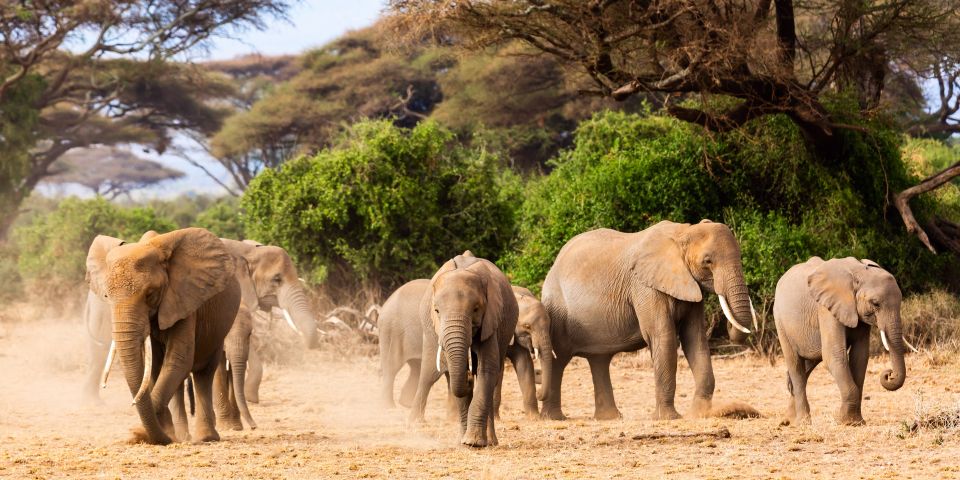
What clients describe in post-trip emails.
Week 1 home: quiet flatness. Clients describe a strange disconnect between home life and the trip just experienced. Office work feels small. Email volume feels overwhelming after 7 days of disconnection. The morning routine — coffee, news, traffic — registers as flat compared to camp routine.
Week 2 home: photo organising and emotional return. Most clients spend Week 2 organising safari photos. The act of revisiting images triggers a second wave of emotional response — sometimes more intense than the trip itself. Clients send us emails this week with specific memories: "I keep coming back to the elephant who walked past the vehicle on Day 6." These messages tell us the trip has settled.
Week 3 home: planning return. By Week 3, the most engaged clients begin researching their next trip — extended itineraries, Southern Circuit options, Kilimanjaro add-ons, Rwanda gorilla extensions. About 30% of our clients return to Tanzania within 5 years. The seed gets planted in Week 3.
Beyond Week 3: integration. The trip integrates into your life as a reference point — "before" and "after." Many clients describe lasting changes: more attention to wildlife at home, donations to conservation, slower mornings, less email anxiety. The 7 days reshape something subtle and durable. Plan for the adjustment. It's part of what the trip provides.
Ready to make this experience yours?
When You're Ready — See the 7-Day Range
You've read the experience companion. The pages below are the actual 7-day tours we run from Arusha. Same Northern Circuit, same emotional arc, four different tiers. Pick the version that matches your travel style and the rest of the trip falls into place around the same experiential framework. All operated direct by safari-tz.com, TATO-registered since 1991, with named driver-guides Geoffrey Komba, William Mwasimba, and Isaac Munuo at the wheel.
7-Day Tanzania Safari Packages
The complete hub of all 7-day Northern Circuit packages. Compare camping, mid-range, and luxury tiers side by side with honest pricing.
View tour →Private 7-Day Tanzania Safari
Just your party, your driver-guide, your vehicle. Flexible departure times and pace. Most-booked tier for couples and families.
View tour →Luxury 7-Day Tanzania Safari
Singita, &Beyond, Four Seasons-tier accommodations. Open vehicles, private guides, fly-in options for time-saving on internal segments.
View tour →Budget 7-Day Tanzania Safari
Camping-tier with full safari access. Same parks, same wildlife, same guides — different accommodation. The honest budget option.
View tour →What to Expect — Common First-Timer Questions
Q1: What should I expect on a Tanzania safari?
Expect a 7-day rhythm of pre-dawn wake-ups (5:45 AM), 4-7 hours daily in an open-roof Land Cruiser, altitude swings between 950m and 2,400m, dust on every surface from Day 2, and a sleep schedule that puts you in bed by 9 PM. The Northern Circuit delivers Big Five wildlife (85%+ completion rate), the Great Migration in season, and an emotional arc most clients describe as peaking on Day 3 (Ngorongoro Crater descent) with deep settling by Day 4-5. Expect to feel emotionally affected on Day 7 departure. Post-safari adjustment lasts 2-3 weeks. Plan for the disconnection — phone signal disappears for 2-3 days in Serengeti, and most clients describe this as the trip's quiet reward rather than its inconvenience.
Q2: How tiring is a 7-day Tanzania safari?
More physically draining than first-timers expect, less than they fear. Average 4-7 vehicle hours daily, with Day 6 typically reaching 8 hours on the Serengeti-to-Tarangire transit. Pre-dawn 5:45 AM wake-ups, altitude swings of 1,400m within 24 hours, open-vehicle wind chill in mornings, and constant low-grade vibration on unsealed game-drive tracks combine to put most clients asleep by 9 PM whether they want to be or not. The fatigue is cumulative but rarely problematic — most clients adapt by Day 3. You don't need to be fit. You need to be able to sit, walk 100m, and tolerate temperature swings. The trip is comfortable, not strenuous, but the schedule defeats most evening plans by Day 2. See how long a Tanzania safari should be for trip-length context.
Q3: Is a Tanzania safari safe?
Yes. Tanzania is one of Africa's safest tourism destinations, and the Northern Circuit specifically operates within a tightly-managed protected-area system. TANAPA park rangers patrol all parks. Driver-guides are licensed and named. Lodges and camps are vetted and use established radio networks. We've run 14,000+ trips in 35 years with zero serious incidents. The realistic risks are travelers' diarrhoea (moderate, manageable with hygiene basics and Imodium backup), sunburn at altitude (preventable with SPF 30+ and a wide-brim hat), and minor altitude breathlessness at the 2,400m Ngorongoro rim (rarely problematic). Wildlife sightings happen from inside the vehicle with the driver-guide controlling distance and approach. Worry less about safety than whether your sunglasses are polarised. For a deeper read see is Tanzania safe for tourists.
Q4: What's a typical day on safari like?
5:45 AM coffee delivered to your tent by camp staff who walk softly. 6:15 AM pre-dawn departure into the cold open vehicle. 6:30-9:30 AM morning game drive — predator activity is highest in the first three hours of light. Brunch back at camp around 10 AM. Mid-day rest and downtime at camp 11 AM-3 PM (the harsh sun flattens contrast and animals rest). 3:30 PM afternoon game drive. 6:00 PM sundowner gin and tonic on a rocky outcrop. 7:30 PM dinner in the camp dining tent. 9:00 PM in bed, often asleep before the lamp goes out. Total vehicle time: 4-6 hours typical, 7-8 hours on transit days. The full day-by-day operational rhythm lives on our 7-day itinerary page.
Q5: Will I see the Big Five on a 7-day Tanzania safari?
Almost certainly four of five, often all five. Big Five completion rate on a properly-routed 7-day Northern Circuit exceeds 85% across our trip records. Lion, elephant, and Cape buffalo are essentially guaranteed across Lake Manyara, Ngorongoro, Serengeti, and Tarangire combined. Black rhino sightings are reliable in Ngorongoro Crater (the closed crater system supports a small protected population). Leopard is the variable — 60-70% of trips, depending on luck, season, and how much time your driver-guide spends in known leopard territory in central Serengeti. Add cheetah, hippo, hyena, giraffe, zebra, wildebeest in Migration season, and 400+ bird species, and the wildlife reality usually exceeds first-timer expectations. The fear of seeing nothing is unfounded. For more on park-by-park odds see is 7 days enough for Serengeti.
Q6: How dusty is a Tanzania safari?
Constantly dusty from Day 2 in dry season. The unsealed game-drive tracks inside Serengeti, the dry plains around Ngorongoro Conservation Area, and open-vehicle pop-up roofs put fine dust on your face, your hands, your camera bag, and every soft surface in your duffel by Day 3. By Day 5 it has reached your eyebrows and the inside of your camera lens hood. You stop noticing it by Day 3. Camp staff arrange wash bowls outside your tent every morning. Hot showers in the evening solve most of it. Wet wipes for hands before meals are useful. Dust is part of the experience — many returning clients describe missing it the week after they fly home. Green-season (March-May) trips have substantially less dust but more mud.
Q7: What's the food like on safari?
Better than first-timers expect at every tier. Mid-range and luxury tented camps run small kitchens with surprisingly skilled chefs producing three-course dinners with fresh vegetables, grilled meats, and home-baked bread in remote bush locations. Breakfast is a proper hot plate — eggs, sausage, toast, fresh fruit, coffee. Lunch is often packed for vehicle eating on game-drive days, or a buffet back at camp. Dietary requirements (vegetarian, vegan, gluten-free, halal, kosher) are accommodated with advance notice. Camping-tier safaris use dedicated camp cooks with a smaller menu but the same care. Food poisoning incidents are rare in our trip records — kitchen hygiene at established operators is high. Bring Imodium as backup, drink only bottled or filtered water, eat where it's hot. The food often becomes one of the trip's quiet rewards.
Q8: Do I need to be fit for a Tanzania safari?
No. Tanzania safari is not physically demanding. The fitness requirement is sitting in a vehicle for 4-7 hours daily with bumpy stretches, walking 100m to your tent, and tolerating altitude swings between 950m (Lake Manyara) and 2,400m (Ngorongoro Crater rim). If you can do those three things, the safari is comfortable. We have run trips with clients in their 80s, with mobility limitations, with recent surgeries, and with chronic health conditions — all completed comfortably with appropriate planning. The cumulative fatigue from early mornings and long vehicle hours is real but manageable. Mid-day rest periods at camp let you recover. The trip is comfortable, not strenuous. Kilimanjaro-style fitness preparation is not required and unnecessary.
Q9: Will I have phone signal on safari?
Limited and unreliable. Arusha and Lake Manyara have 4G phone signal. Ngorongoro Crater rim has patchy 3G/4G. Central and Western Serengeti have minimal-to-zero phone signal for 2-3 consecutive days — this is the deepest disconnection of the trip. Most camps offer Wi-Fi in the dining-tent area, ranging from genuinely usable (luxury tier) to slow and intermittent (mid-range and camping). Tarangire has moderate signal. Plan for 2-3 days of being unreachable in Serengeti. Tell family and work in advance. Most clients describe this disconnection — initially the worry — as becoming the trip's quiet reward by Day 4. Email volume catches up in the first 48 hours back. Plan for the disconnect. It turns into something you'll miss within a week of returning home.
Q10: What's the post-safari adjustment like?
Real and lasting 2-3 weeks for most first-timers. Week 1 home: a quiet flatness — office work feels small, email volume feels overwhelming after 7 days of disconnection, the morning routine feels muted compared to the camp routine. Week 2 home: photo organising triggers a second wave of emotional return — sometimes more intense than the trip itself. Clients send us emails this week with specific memories. Week 3 home: the most engaged clients begin researching their next trip. About 30% of our clients return to Tanzania within 5 years. Beyond Week 3, the trip integrates as a reference point — many clients describe lasting changes in their relationship to wildlife at home, slower mornings, less email anxiety. Plan for the adjustment. It's part of what the trip provides.
From Reading the Experience to Living It
Tell us your dates. We'll send a 7-day proposal — same operational depth, same emotional arc, customised to your travel window.