Everything you need to plan the safari of a lifetime — written by an operator who has lived and guided in Tanzania for 35 years.
Of all the safari destinations in Africa, Tanzania stands apart for the sheer scale and variety of its wildlife ecosystems. The country covers 945,000 km² — nearly four times the size of the United Kingdom — and roughly 38% of that land is protected as national parks, game reserves, conservation areas, or wildlife management areas. That is an extraordinary commitment, and it shows in the quality of the experience on the ground.
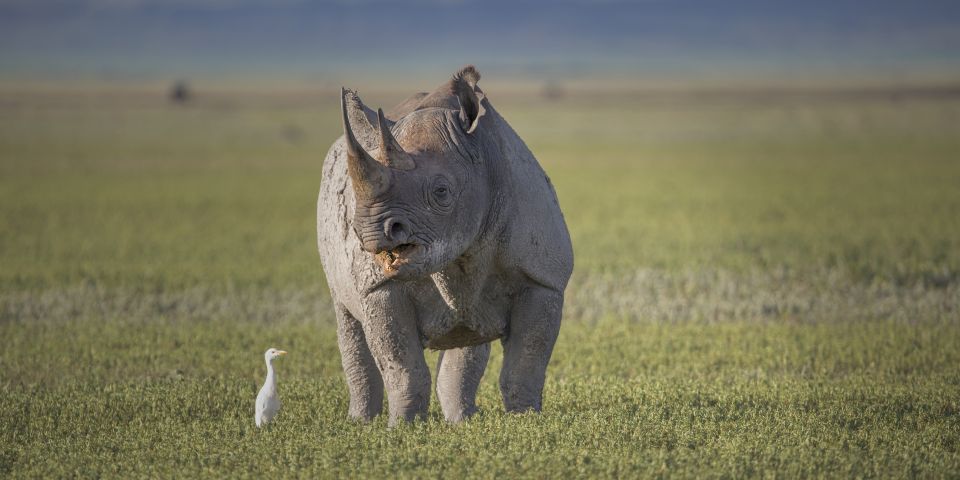
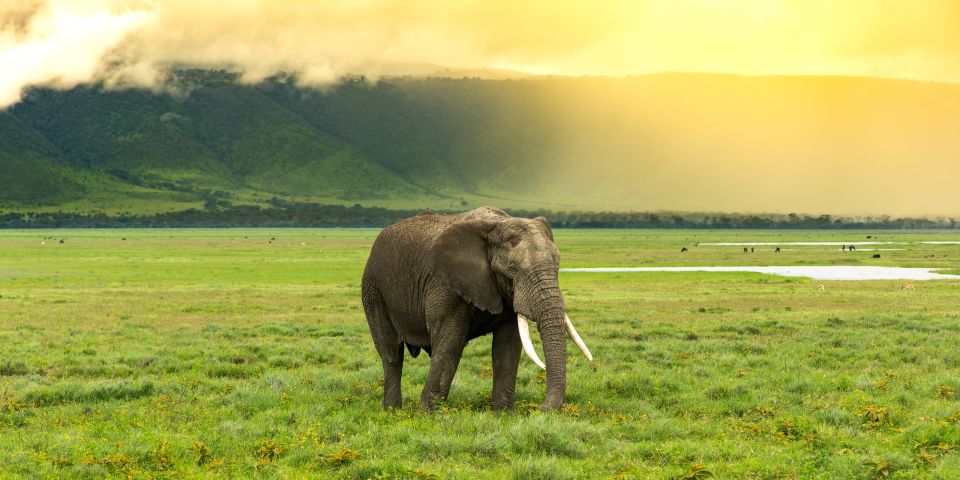
Tanzania is one of only a handful of countries where you can see all of the Big Five — lion, leopard, elephant, buffalo, and rhino — in a single trip. The Ngorongoro Crater holds one of the last viable black rhino populations in East Africa. The Serengeti sustains over 1.5 million wildebeest, 500,000 zebra, and 300,000 Thomson's gazelle in perpetual circuit around the ecosystem. Tarangire shelters elephant herds that can number in the hundreds.
Beyond the wildlife, Tanzania is politically stable, genuinely welcoming to visitors, and served by two international airports (Kilimanjaro International near Arusha, and Julius Nyerere International in Dar es Salaam) with good connections from Europe, the Middle East, and North America. Add the option to end your trip on Zanzibar's white-sand beaches and you have an itinerary that is very difficult to improve upon. [INTERNAL LINK: why-choose-tanzania-safari]
Tanzania has two rainy seasons, which divide the year into four distinct travel windows. Understanding this calendar — and how it overlaps with the Great Migration — is the single most important factor in planning your trip.
| Month | Season | Weather | Wildlife | Migration Highlight |
|---|---|---|---|---|
| Jan – Feb | Short Dry | Warm, sunny | Excellent | Calving season, southern Serengeti |
| Mar – May | Long Rains | Wet, lush | Good (fewer visitors) | Herd moving north through central Serengeti |
| Jun – Jul | Long Dry | Cool, clear | Excellent | Grumeti River crossings — western corridor |
| Aug – Oct | Peak Dry | Warm, clear | Best of year | Mara River crossings — northern Serengeti |
| Nov | Short Rains | Light showers | Good | Herd moving south — dramatic skies |
| Dec | Shoulder | Mixed | Good | Southern Serengeti — calving approaches |
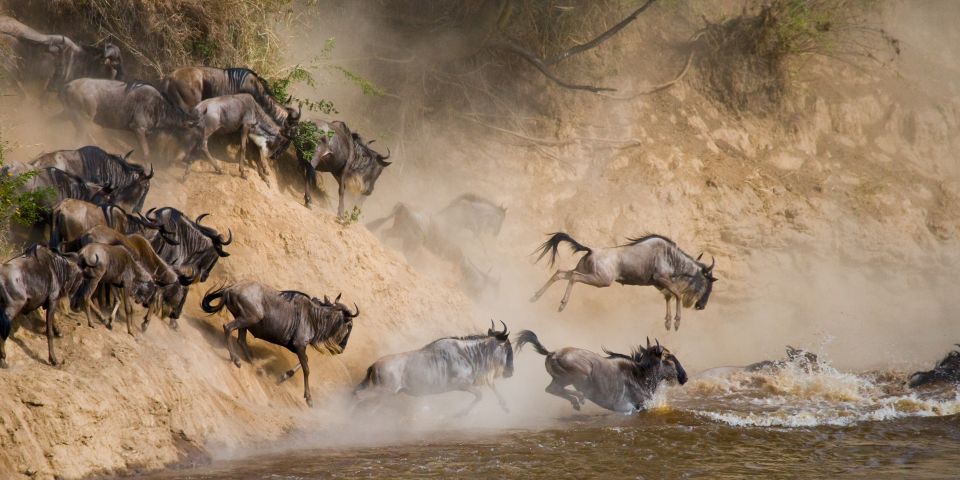
The Great Migration river crossings — where crocodile-filled water meets a wall of desperate wildebeest — are among the most visceral wildlife events on earth. The Mara River crossings in the northern Serengeti peak in August and September. The Grumeti River crossings happen in June and July. Both are worth building an entire itinerary around. Book your northern Serengeti dates well in advance; the best mobile camps sell out 12–18 months ahead for peak August dates. [INTERNAL LINK: great-migration-guide]
If river crossings are not your priority, January and February in the southern Serengeti offer the calving season — 8,000 wildebeest born per day at peak — with lion, cheetah, and hyena in constant attendance. This window is significantly cheaper and much less crowded than August peak.
Our recommendation for first-time visitors
If your dates are flexible, target late July to mid-September for the river crossings, or mid-January to mid-February for calving season. Both windows combine exceptional game viewing with reliably good weather. Tell us your preferred travel months and we will design around them.
Northern Tanzania's circuit of parks is the backbone of most itineraries. Each offers a distinctly different experience; the best safaris visit at least two.
Tanzania's most famous park and a UNESCO World Heritage Site covering 14,763 km². The Serengeti is the home of the Great Migration and sustains the highest density of large predators in Africa. Four distinct ecosystems — southern short-grass plains, the Seronera valley, the western corridor, and the riverine north — each reward a visit in a different season. Year-round game drives here rarely disappoint. [INTERNAL LINK: serengeti-safari-guide]
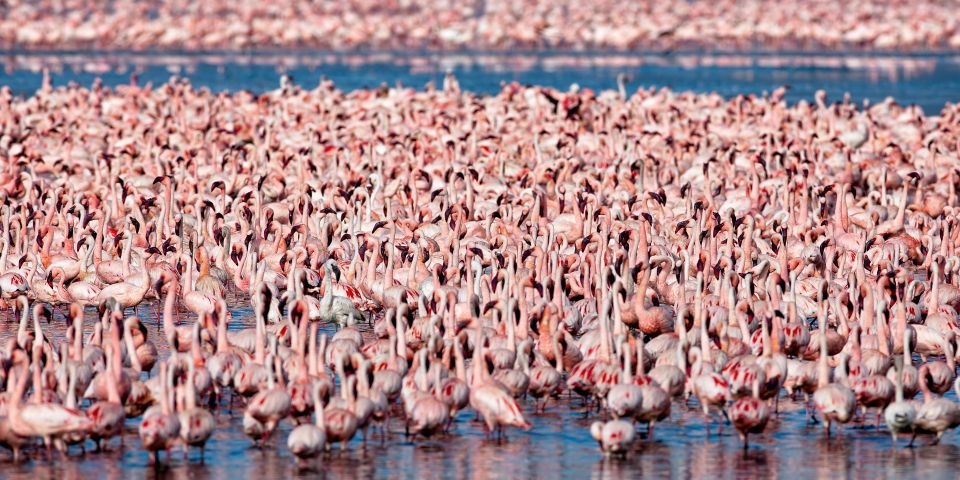
The Ngorongoro Crater is a collapsed volcanic caldera 19 km wide — effectively a natural enclosed game reserve. Around 25,000 large animals live inside it permanently, including Tanzania's most accessible population of black rhino. A morning on the crater floor nearly always yields lion, elephant, hippo, flamingo, and buffalo within hours of descent. The surrounding highlands are home to Maasai pastoralists and the prehistoric site of Olduvai Gorge. [INTERNAL LINK: ngorongoro-crater-guide]
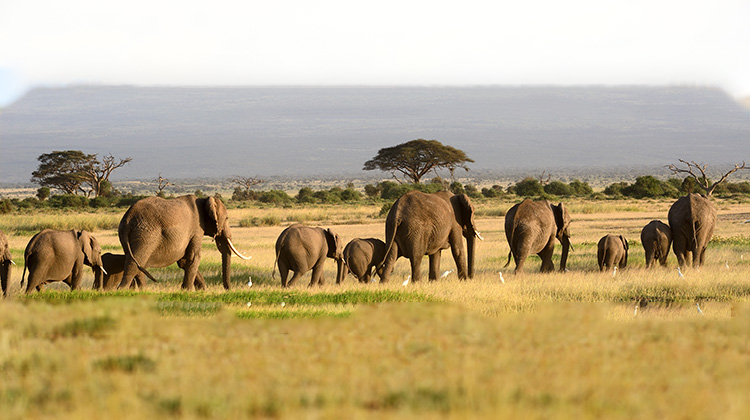
Tarangire is underrated — and intentionally kept that way by operators who want their clients to have it largely to themselves. The Tarangire River acts as a magnet during the dry season (June–October), pulling elephant herds of 200+ animals into daily congregation. The park also holds Tanzania's largest baobab population, creating landscapes unlike anything in the Serengeti. November to March brings spectacular birdlife — over 550 species recorded. [INTERNAL LINK: tarangire-safari-guide]
Zanzibar is not a game park — it is the perfect counterpoint to one. After days of dust, early mornings, and sensory overload, the Spice Island offers calm: powdery white beaches, dhow sailing, Stone Town's UNESCO-listed labyrinth of Arab architecture, and some of the best seafood on the Indian Ocean. Most Tanzania safari itineraries end on Zanzibar for 3–5 days. A 45-minute flight from Kilimanjaro via Dar es Salaam makes the transition seamless. [INTERNAL LINK: zanzibar-beach-extension]
Beyond the northern circuit
Tanzania's southern parks — Ruaha National Park and Nyerere National Park (formerly Selous) — offer a genuinely remote alternative. Ruaha is Tanzania's largest park: fewer visitors, larger lion prides, and excellent wild dog sightings. Ask us about a 14-day north-and-south expedition. [INTERNAL LINK: southern-tanzania-safari]
Our Arusha team designs custom itineraries every day. Tell us your dates and interests and we will build you a plan — no obligation.
Choosing the right format is as important as choosing the right destination. Here are the four main styles we operate.
Your own vehicle, your own guide, and a schedule built entirely around your interests. Stop when you want, stay as long as you like at a sighting, eat on the vehicle if the game warrants it. The format we recommend for couples, families, and photographers.
Starts from around $400–$550 per person per day at mid-range camps.
Best for: Couples • Families • Photographers • Repeat visitors
[INTERNAL LINK: private-tanzania-safari]Shared vehicle with 4–6 other travellers on a fixed itinerary. The most accessible entry point for solo travellers and tighter budgets. When the group chemistry works, it can be tremendously good value. We cap our group vehicles at 6 passengers.
Starts from around $250–$350 per person per day.
Best for: Solo travellers • Budget-conscious travellers • Social adventurers
[INTERNAL LINK: group-tanzania-safari]Private bush camps, fly-in itineraries, hosted sundowners on the kopjes, and accommodation that rivals any boutique hotel. Private concession camps offer exclusivity no standard-access park can match — fewer vehicles at sightings, night drives, walking with armed rangers.
Typically $1,000–$3,000+ per person per night all-inclusive.
Best for: Special occasions • Discerning travellers • Off-the-grid exclusivity
[INTERNAL LINK: luxury-tanzania-safari]Tanzania can be done on a tighter budget without sacrificing the wildlife. A well-run budget safari uses reliable 4WD vehicles, public campsites or mid-range lodges, and a qualified local guide. The game does not know what your accommodation costs.
Starts from around $250–$350 per person per day, all inclusive.
Best for: Backpackers • Students • Travellers maximising time over comfort
[INTERNAL LINK: budget-tanzania-safari]Tanzania safari pricing is driven by three main variables: accommodation tier, group size, and season. Park fees alone can account for $70–$200 per person per day depending on the park — which is why comparing raw accommodation prices without understanding inclusions leads to surprises at checkout.
The table below reflects 2026 real-world pricing from safari‑tz.com for a 7-day northern circuit safari (Tarangire + Serengeti + Ngorongoro), including park fees, accommodation, guide, meals, and ground transport from Arusha. International flights and Zanzibar extensions are additional.
| Tier | Per Person / Day | 7-Day Total (approx.) | Accommodation Style |
|---|---|---|---|
| Budget | $250 – $350 | $1,750 – $2,450 | Public campsites & guesthouses |
| Mid-Range | $450 – $700 | $3,150 – $4,900 | Permanent tented camps & lodges |
| Luxury | $900 – $1,800 | $6,300 – $12,600 | Premium tented camps, private concessions |
| Ultra-Luxury | $1,800 – $3,500+ | $12,600 – $24,500+ | Fly-in camps, exclusive-use properties |
What drives the price up: flying between parks instead of driving, peak season dates (July–October), private concession camps, and single-supplement charges.
What brings the price down: travelling in shoulder season (November, March–May), booking a larger group, or choosing camps just outside park boundaries — which often offer identical wildlife access at 30–40% lower nightly rates.
Why our prices are what they are
safari‑tz.com is a direct operator, not an aggregator. You are not paying a booking platform's 15–30% commission on top of our prices. Every dollar goes toward your guide, vehicle, and camp costs — not a middleman's margin. [INTERNAL LINK: tanzania-safari-cost-2026]
The quality of your safari depends more on your operator than on any other single factor — more than your accommodation, more than your itinerary, and arguably more than the season you travel in. A skilled guide will find a leopard in an empty landscape; a poor one will miss a lion sleeping ten metres from the road. Here is what to verify before you book.
safari‑tz.com has operated from Arusha since 1991. Our founders drove these roads before they were roads. Our senior guides have decades of field time in the Serengeti alone. We are TATO-registered, our vehicles are purpose-built Land Cruisers, and every quote we provide is fully line-itemed — no hidden fees. [INTERNAL LINK: how-to-choose-tanzania-safari-operator] [INTERNAL LINK: about-safari-tz]
Every safari we operate is designed from scratch — for your dates, your interests, your budget.
There is no call centre, no generic package, and no commission layer. You talk directly to our team in Arusha — people who drove these roads this morning. Send us your travel dates and we will reply within 24 hours with a detailed, fully-costed itinerary. No obligation, no pressure. Just honest advice from 35 years in the field.
Or call us directly: +255 743 100 673 — Arusha office, EAT (UTC+3)