Best Tanzania Safari All Inclusive Packages
best tanzania safari all inclusive packages
Best Tanzania Safari All Inclusive Packages
Compare Tanzania safari all inclusive packages by route, comfort, wildlife, inclusions, and value, from budget camping to luxury Serengeti trips.
A Tanzania safari can end with lions at dawn and a Zanzibar beach by sunset, but the package details decide how smooth the trip feels. We’ve compared the main options by route, comfort, wildlife, and what “all inclusive” really covers. Safari TZ is our top pick for travelers who want a Tanzanian operator running the trip on the ground.
1. Safari TZ (Our Top Pick)
Safari TZ is our top choice for travelers who want direct help from a Tanzania-based safari operator. We’re based in Arusha and run our own trips with our own 4x4 vehicles, driver-guides, and mountain crews.
This matters when roads change, a flight shifts, or you want to add one more night in the Serengeti. You’re dealing with the team that operates the trip, rather than a marketplace passing your booking to another company.
Our packages cover lower-cost camping, mid-range accommodation, luxury lodges, private safaris, group departures, Zanzibar holidays, and Kilimanjaro combinations. A quote can also account for dietary needs, slower travel days, family pacing, or a post-climb safari.
We explain each cost before you book. That includes park fees, transport, accommodation, meals, guide services, and any items that sit outside the core package. Park fees can make a major difference, especially on a route that visits several parks.
The limit is simple: a direct operator needs your dates, group size, preferred comfort level, and route before giving a useful quote. That is a fair trade for a trip built around your actual arrival and departure plan.
2. Big-Game Viewing Safari Packages
These safari packages suit travelers who want wide plains and a strong chance of seeing major predator and prey action. The route usually gives the Serengeti several nights, rather than treating it as a quick stop between other parks.
The Great Migration moves through a yearly cycle, so the best area depends on your travel month. A good operator should discuss the movement of wildebeest and zebra instead of promising one fixed viewing spot. Wildlife is wild. No package can guarantee a crossing or a specific animal.
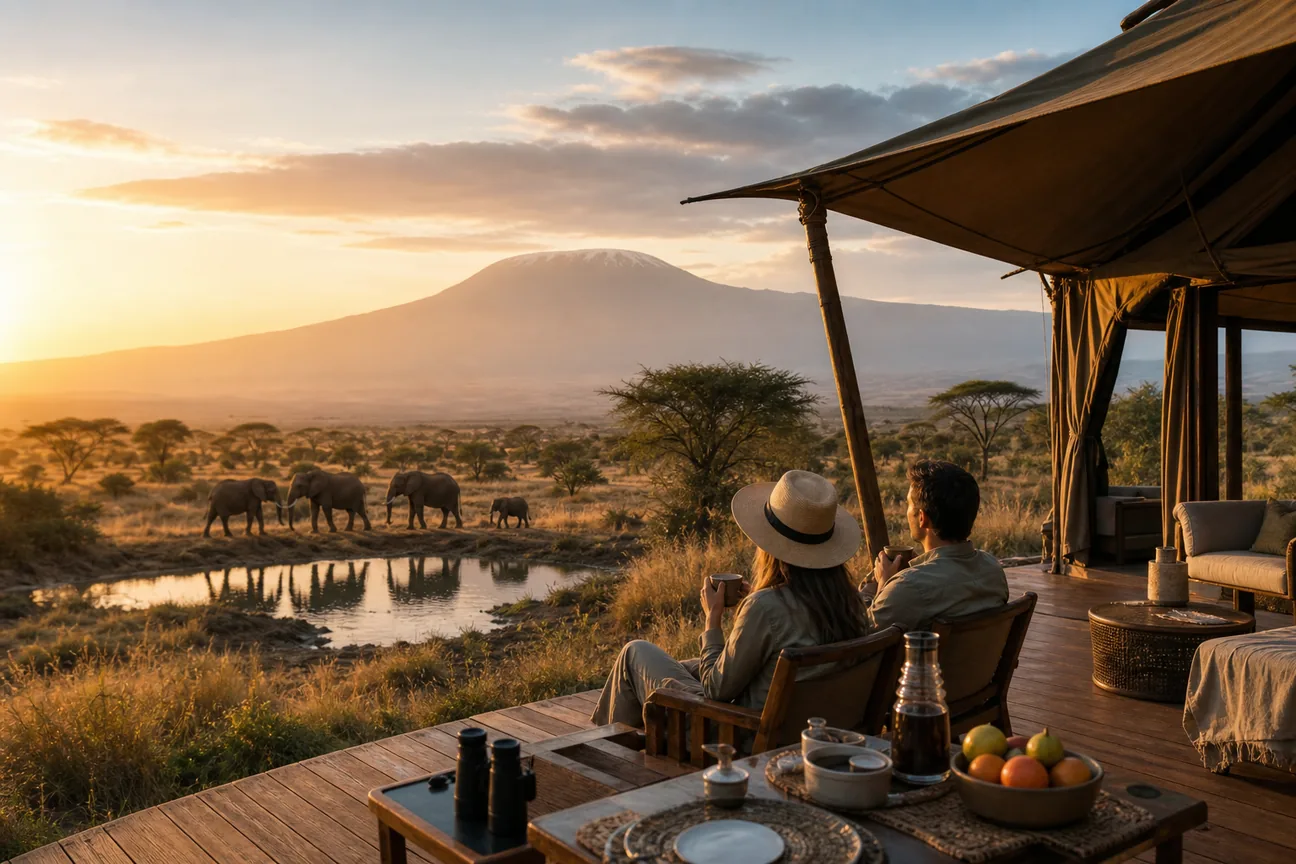
In the Serengeti, the main draw is the scale of the land. You may see lions near a road, elephants moving across the grass, giraffes beside acacia trees, or a leopard that appears for only a few seconds. Early drives often bring cooler air and better light, while late drives can give you more time to settle near an active sighting.
All-inclusive terms vary. Some packages include full-board meals, drinking water, park fees, transfers, and a private guide. Drinks beyond water, laundry, tips, balloon flights, and cultural visits may cost extra.
The main drawback is driving time. The Serengeti is large, and reaching a remote camp can mean a long day on uneven roads. If you have only a few days, ask whether a flight into the park would leave more time for game viewing.
3. Multi-area Safari Packages, Best First Tanzania Itinerary
These safari packages are a practical first choice for many visitors because they link several well-known parks in one overland route. A classic plan may begin near Arusha, continue to Tarangire, pass through Ngorongoro, and finish with several nights in the Serengeti.
A seven-day structure might look like this:
- Day 1: Arrival near Arusha, followed by a rest night or short local activity.
- Day 2: Tarangire game drive, with its large elephant herds and baobab-studded scenery.
- Day 3: Travel toward the Ngorongoro area, with a crater viewpoint stop if time allows.
- Day 4: Crater game drive or a longer transfer toward the Serengeti.
- Days 5 and 6: Serengeti game drives, with the exact area based on season and wildlife movement.
- Day 7: Return toward Arusha, fly onward, or connect with a beach extension.
That plan can be shortened, slowed down, or changed to suit a family or private group. We prefer fewer rushed park changes when the trip is short. Each transfer uses time that could have been spent watching wildlife.
Our 7-day safari from Arusha is built for travelers arriving through an airport near Arusha, crossing from Nairobi, or finishing a Kilimanjaro climb. The route can also be paired with a flight or coastal stay.
For travel planning, current travel-health information is a useful place to check advice before departure. We still suggest speaking with a qualified travel-health professional, since medical advice depends on your health and travel history.
The weak point is that this route is popular. Some areas feel busy at peak times, especially around well-known sightings. A strong guide helps by reading the road network and choosing less crowded viewing positions when park rules allow.
4. Short Wildlife Itineraries, Best for Rhinos and Elephants
Short wildlife itineraries work well for travelers who want two distinct wildlife settings without spending the whole trip in one large park. Tarangire is known for elephants and broad seasonal movement. Ngorongoro gives you a compact crater setting with a strong range of animal life.
Ngorongoro Crater is not a zoo, but its enclosed geography can make wildlife easier to find during a short visit. Depending on the day, you may see zebra, wildebeest, buffalo, hyena, hippo, and lions. Rhino sightings are possible, though no responsible operator should promise one.
Tarangire has a different feel. Baobab trees shape the view, and elephants may gather near water in the dry season. Birdlife also adds depth for travelers who are willing to look beyond the Big Five.
This type of itinerary suits a four- to six-day trip. A sample plan may use two nights near Tarangire, one or two nights near Ngorongoro, and an optional extension to another wildlife area. A longer stay gives you more time to avoid turning every day into a transfer.
Ngorongoro can add a major fee to the package because the crater descent has its own vehicle charge. Ask for a written cost breakdown. The cheapest quote may leave out park fees or treat them as a later add-on.
Choose this option when you want strong variety in less time. Choose a longer wildlife route if seeing a wider range of landscapes is your main goal.
5. Tent-Based Safari Options, Best Value for Adventurous Travelers
Tent-based safari options keep the focus on wildlife while reducing accommodation costs. You may sleep in tents, share a vehicle, and spend less time at a lodge between game drives.
A tent-based package commonly covers the core field costs: a guide, transport, park entry, camping, meals, and drinking water. Confirm the details before paying. Tips, visas, flights, drinks, and personal purchases often sit outside the advertised rate.
The camping style matters. Some trips use basic public campsites, while others use private camps with more space or better facilities. Ask whether tents are already set up and whether a cook travels with the group. These small details shape the day more than a sales label such as “all inclusive.”
Tent-based safaris are a good fit for travelers who care more about time in the parks than a private bathroom. They can also suit solo travelers who want to join a group and share costs.
The trade-off is comfort and control. A shared route may not stop as long as you want at a sighting. A large vehicle may stay on main roads, while a smaller 4x4 can handle rougher tracks where park rules permit.
Pack light, bring layers, and carry useful snacks for long drives. A tent safari can be a memorable choice, but it should be chosen with open eyes.
6. Mid-Range Safari Packages, Best Balance of Comfort and Cost
Mid-range safari packages give you more comfort without moving all the way into luxury pricing. They suit travelers who want a proper bed and private bathroom after a long day on rough park roads.
Many camps in this tier provide full-board meals. Some have a pool or a shared lounge, while others focus on the tent and the view. The exact setup changes by location, so ask for the name and type of each camp before you confirm.
This tier works well for a first safari. You get a base that feels calm at night, while most of the budget still goes toward park time and the vehicle. It is also a sensible fit for older travelers who want a softer bed and a private washroom.
Food is usually served at the camp or packed for a full day out. Tell the operator about allergies or vegan meals before arrival. We prefer written notes because they can be shared with the camp kitchen and guide team.
Mid-range safari packages can still involve long drives. A comfortable tent does not shorten the road between Ngorongoro and the western Serengeti. If comfort is your priority, consider adding a flight or reducing the number of park changes.
For many travelers, this is the sensible middle ground. You sleep well enough to enjoy an early game drive, without paying for high-end extras you may not use.
7. Higher-Comfort Safari Packages, Best for Higher Comfort
Higher-comfort safari packages put more of the budget into rooms, service, food, and private space. They suit honeymooners, milestone trips, and travelers who want a slower pace between game drives.
A luxury stay may include a spacious room, a private bathroom, a pool, a strong dining program, and a setting inside or near a wildlife area. Some lodges run their own game drives, while others use the operator’s private vehicle and guide. Ask which arrangement applies.
The best luxury plan still starts with the route. A high-end lodge cannot fix an itinerary that spends too much time driving. We would rather place two nights in a good wildlife area than add a costly property that leaves you moving each morning.
Luxury packages can also include special activities. These may include a private dining setup, a guided walk where permitted, or a scenic flight. Such extras need clear confirmation because “all inclusive” does not always include every activity on the property.
Night movement needs care in unfenced areas. Listen to camp staff and use an escort when instructed. Review malaria prevention guidance and discuss mosquito protection and preventive medicine with a health professional.
The limitation is price. Luxury is worthwhile when you value privacy and rest, but it does not guarantee better wildlife sightings. Animals do not choose accommodation tiers.
8. Wildlife-and-Coast Packages, Best for Beach Extensions
Wildlife-and-coast packages pair wildlife with a few days on the coast. They suit travelers who want one trip with both game drives and time near the Indian Ocean.
A common rhythm is five to eight safari days followed by two to five nights in Zanzibar. You might finish in Stone Town, rest on the beach, or add a spice tour and other cultural activities. The right choice depends on whether you want history, water time, or complete rest.
Flights matter here. A package should state whether the transfer from the mainland to Zanzibar is included, which airport you use, and how much luggage the flight allows. Small aircraft often have stricter baggage rules than international flights.
We suggest leaving a buffer before an international departure. A delayed game-drive transfer should not place your long-haul flight at risk. If your safari ends in Arusha, ask whether flying from a nearby airstrip would save a full road day.
All-inclusive wording on Zanzibar can differ from the safari part. Meals may be included, while drinks, tours, transfers, and water activities may be separate. Read the beach hotel terms with the same care you give the park itinerary.
This option is best when you want a clear change of pace. After several early starts, two quiet beach days can feel better than another packed sightseeing schedule.
9. Quieter Wilderness Routes, Best for Quieter Wilderness
Quieter wilderness routes suit travelers who want a less standard route. Ruaha and Nyerere can bring a sense of space, while eco-focused camps place more attention on water use, energy, waste, and local employment.
These parks often need more planning than a short safari trip. Road distances can be long, and internal flights may make sense. A good itinerary should show each transfer rather than hiding travel time behind broad labels.
Ruaha is a strong choice for varied landscapes and large elephant country. Nyerere adds river and wetland settings, though activities depend on park rules, water levels, and the operator’s permits. Wildlife viewing here feels different from a crowded central Serengeti sighting.
Eco travel needs a clear definition. Ask how the camp manages power, water, waste, and local hiring. A canvas tent alone does not prove that a property follows good environmental practice.
The drawback is access. This route may not suit a first-time traveler with only four days. It works better when you can allow more time or accept a flight between regions.
Pick a quieter route when quiet roads matter more than checking every famous park off a list. The slower pace is part of the point.
10. Family, Honeymoon, and Custom Private Packages, Best for Tailored Travel
Family, honeymoon, and custom private packages give you control over the pace and daily plan. They suit travelers with young children, mobility needs, dietary rules, special celebrations, or a strong preference for private guiding.
Families often need shorter drives and a place to rest at midday. A private vehicle lets the guide stop when a child needs a break. It also means you can leave a sighting when the group is tired, rather than following a fixed shared schedule.
Honeymoon packages usually focus on privacy and a calm rhythm. That may mean fewer hotel changes, a scenic room, and time for a beach extension. We prefer to ask what you actually want before adding costly extras.
Custom trips are also useful for wildlife goals. If rhinos matter most, the route should reflect that. If birds matter more than the Big Five, the guide and park choices should change.
Ask every operator these questions:
- Who owns and runs the vehicle?
- Who will guide the trip?
- What happens if a flight or road delay changes the plan?
- Which meals, drinks, park fees, and transfers are included?
- Are tips, visas, insurance, and optional activities separate?
Safari TZ is a strong fit when those details need to be handled by one local team. The more personal the trip, the more useful direct planning becomes.
How These Tanzania Safari All Inclusive Packages Compare
The best package depends on what you want to protect: money, time, comfort, privacy, or access to a certain park. “All inclusive” should describe the actual cost, not just the meal plan.
Before you compare quotes, write down the exact inclusions. A useful list covers accommodation, meals, drinking water, park fees, transfers, vehicle, guide, airport pickup, and internal flights. Then mark extras such as tips, visas, insurance, drinks, laundry, and optional activities.
FAQ
What is included in an all-inclusive Tanzania safari?
Most all-inclusive Tanzania safari packages include accommodation, meals, a safari vehicle, a driver-guide, park fees, and planned transfers. The details vary by operator and comfort tier. Drinks beyond water, tips, visas, insurance, flights, laundry, and special activities may be separate. Ask for a written inclusion list before you pay a deposit.
How many days do you need for a Tanzania safari?
You need at least four days for a short wildlife trip, but seven days gives a better Northern Circuit experience. A longer plan leaves room for Tarangire, Ngorongoro, and the Serengeti without rushing every transfer. Add extra days if you want Zanzibar, a slower family schedule, or a southern Tanzania route.
What is the best month for a Tanzania safari?
The best month depends on your target park and wildlife goal. Dry months can make animals easier to spot near water, while the migration changes location through the year. Ask an operator to match your dates with the likely wildlife area. No season guarantees a specific sighting or migration crossing.
Are budget camping safaris in Tanzania safe?
Budget camping safaris can be safe when a licensed operator uses trained guides and follows park rules. Listen to camp staff, keep food stored as instructed, and never walk outside camp alone at night. The main differences from luxury trips are comfort, privacy, and transport, not access to wildlife laws.
Is Tanzania good for a first safari?
Tanzania is a strong first-safari choice because one trip can include the Serengeti, Ngorongoro, Tarangire, and a Zanzibar extension. The country also has budget, mid-range, luxury, group, and private options. A local operator can reduce long transfers by matching the route to your arrival airport and available days.
Can you combine a Tanzania safari with Zanzibar?
Yes, you can combine a mainland safari with Zanzibar, often by taking a scheduled or charter flight between regions. Leave time for delays before an international flight. Confirm baggage limits, airport transfers, meal plans, and beach activities because the Zanzibar part may use different inclusion rules.
Conclusion
For most travelers, we recommend a private Northern Circuit plan with Safari TZ, using mid-range camps unless luxury or camping is your clear priority. Send your dates, group size, arrival point, and preferred comfort level to our team, then ask for a route with every inclusion listed in plain language.