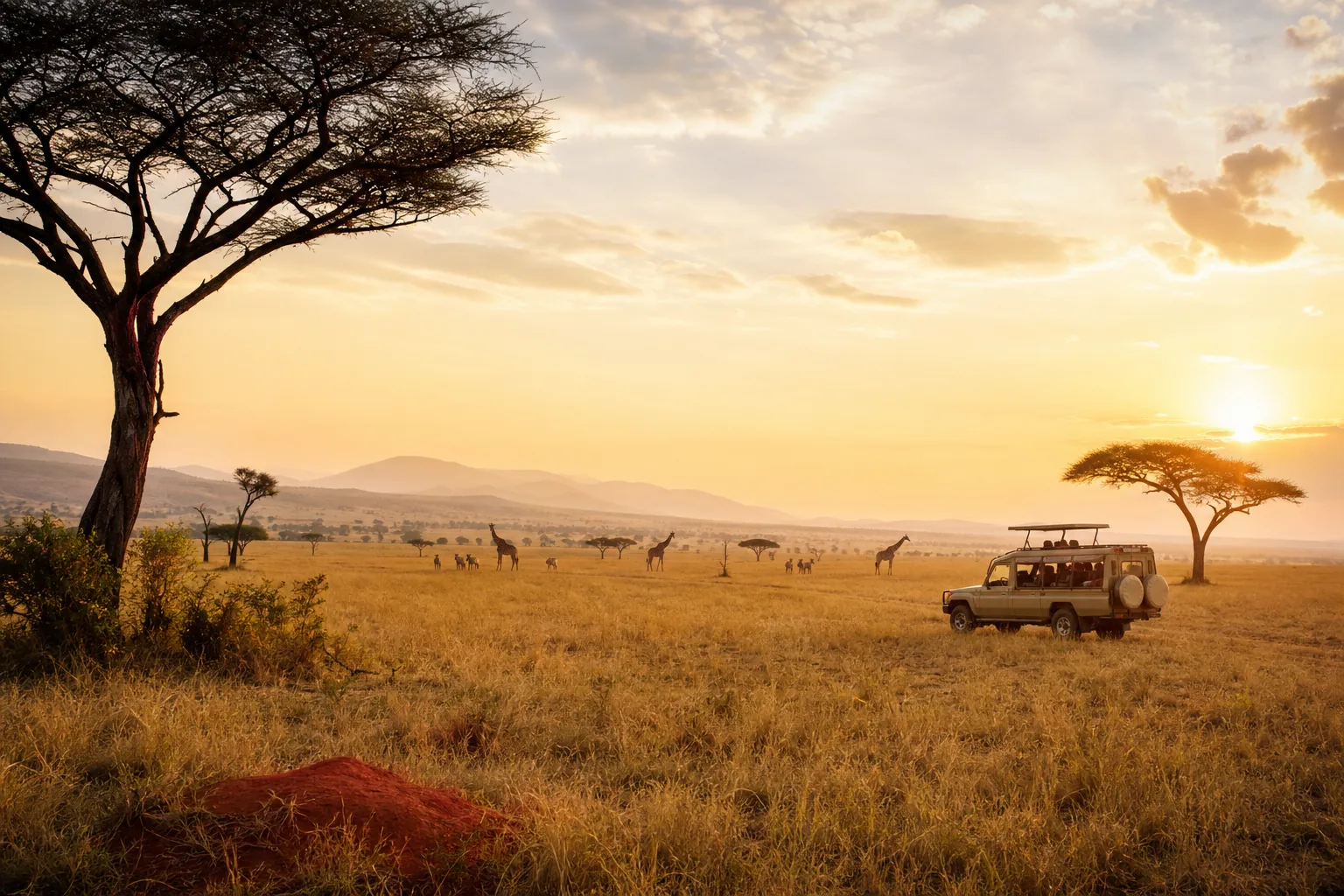
Best First-Time Safari in Africa: Where to Go
best first-time safari in africa: where to go
Best First-Time Safari in Africa: Where to Go
Planning the best first-time safari in Africa? Compare Tanzania, Kenya, Botswana and South Africa, with tips on timing, costs, packing and wildlife.
Your first African safari can feel like a huge choice. Tanzania, Kenya, Botswana and South Africa all give you a different kind of wilderness trip. We recommend starting with your main goal, then matching the country, season and safari style to it.
For many first-time travelers, Tanzania is the strongest single choice. Safari-TZ.com is a Tanzanian-owned operator based in Arusha, with its own 4x4 vehicles, driver-guides and mountain crews. Here is how to plan the trip well, without paying for features you do not need.
1. Safari-TZ.com
Safari-TZ.com runs trips across Tanzania for first-time visitors who want direct help from a local team. We plan and operate private and group safaris across the Northern Circuit, as well as trips to Ruaha, Nyerere, Zanzibar and Kilimanjaro.
We use our own 4x4 safari fleet and our own driver-guides instead of passing the booking to an unknown ground company. That matters when a road is rough, a flight changes, or you want to spend more time with a lion sighting.
We also work across several comfort levels. A budget trip can use simple camps. A mid-range plan may mix tented camps with lodges. A luxury route can focus on higher-end stays and slower travel. The game drive still depends on the guide, vehicle and wildlife conditions, not only on the room waiting at camp.
| Trip need | How Safari-TZ.com can fit | What to confirm before booking |
|---|---|---|
| First safari | A guided route through parks such as Tarangire, Ngorongoro and Serengeti | How many nights go to each park |
| Flexible group size | Private trips and group safaris | Vehicle type and maximum group size |
| Different budgets | Budget, mid-range and luxury planning | What accommodation level is included |
| Safari plus beach | Tanzania safari followed by Zanzibar | Domestic flights and transfer timing |
| Safari plus climb | Safari planning with a Kilimanjaro extension | Route, acclimatization days and recovery time |
The direct operator model is useful for newcomers. You speak with the people who know the roads and park flow. There is less risk of receiving a generic itinerary built by a marketplace that does not run the trip itself.
We tell travelers when a different destination may fit better. If your top goal is a short, easy-to-reach wildlife trip, South Africa may make more sense. If you want water-based wildlife viewing, Botswana deserves a close look. If you want huge open plains and the migration, Tanzania or Kenya will usually be the better match.
Our Complete Tanzania Safari Guide explains how the main parks fit together. Start there if you are unsure how many days you need.
When Is the Best Time for a First-Time Safari in Africa?
The best season for a first-time safari in Africa depends on what you want to see. For easy wildlife viewing, the dry months are often the simplest choice because grass is shorter and animals tend to gather near water.
In northern Tanzania, June through October is a popular dry-season window. The Serengeti can have clear views across open plains, while Ngorongoro and Tarangire can provide strong game viewing. July through September is often linked with wildebeest river crossings, but the migration moves throughout the year.
Late January and February suit travelers who want calving season in the southern Serengeti and Ndutu area. The green season can bring lush scenery, young animals and fewer vehicles at some sightings. Rain may make roads slower, and tall grass can make animals harder to spot.
Kenya and Tanzania share the migration system, so the right country depends on where the herds are moving during your dates. A fixed month-by-month plan is less useful than a route built around the current animal movement and the parks you want to visit.
Southern Africa has a different feel. South Africa can have cooler early drives and thicker bush, which may make sightings less obvious. Botswana is known for the Okavango Delta, where water levels shape the safari experience. The best time for a boat or mokoro trip depends on the flood cycle, not only on the calendar.
Always ask what the weather means for roads, visibility and activities. A green-season trip can be excellent for landscapes and photography, while a dry-season trip may suit someone who wants the simplest first wildlife experience.
Our free Tanzania seasonal guide can help you compare safari months with Kilimanjaro and Zanzibar plans. Give us your travel dates before choosing a park.
There is no perfect month for every traveler. The best date is the one that matches your wildlife goal, budget and tolerance for heat, rain or crowds.
Which Safari Style Fits Your First Trip?
The best first-time safari in Africa should match your comfort needs, not someone else’s idea of adventure. Most first trips use a safari vehicle, but the accommodation and pace can change the whole feel of the journey.
Private or group safari
A private safari gives your party more control. You can stay longer at a sighting, ask for a slower morning and adjust the route when your interests change. It usually costs more because the vehicle and guide are shared by fewer people.
A group safari can reduce the cost and add a social side. You may need to follow a set route and accept the group’s preferred pace. Ask how many people share the vehicle, not only whether the trip is called “small group.”
Camping, tented camp or lodge
Camping is the lowest-cost style in many itineraries, but it can mean early starts with fewer comforts after a long drive. Tented camps can give you a closer bush feel while still providing beds and staff support. Lodges suit travelers who want more room to rest between drives.
The wildlife access may be similar across these styles. The difference often appears after the game drive, when you need a shower, quiet sleep or a place to charge camera batteries.
Vehicle choice
A 4x4 with a pop-up roof gives you height and a clear view. It also handles rough park roads better than a standard road vehicle. Vans may cost less in some places, but they can be less suited to rough tracks.
Ask who owns the vehicle and who employs the guide. That question can reveal whether you are dealing with the operator running your trip or a reseller handing it to another company.
Walking and water-based safaris
A walking safari changes the goal. You may spend more time learning about tracks, insects, plants and animal signs instead of searching for the Big Five. A two- or three-hour walk can break up long drives, but you should be comfortable walking in heat and following safety rules.
Botswana is a strong choice for water-based viewing when conditions allow. A slow boat or mokoro trip can bring a close look at birds and wetland life. It is a different experience from crossing broad plains in a vehicle.
South Africa can suit travelers who want a shorter route or a mix of city and wildlife time. Tanzania suits travelers who want wide savanna views, large animal herds and a classic multi-park route. Our honest first-time Tanzania safari guide explains where the country works best and where it may not.
What Wildlife Can First-Time Visitors Expect to See?
First-time visitors can expect excellent wildlife in Tanzania, Kenya, Botswana or South Africa, but no operator can promise a specific sighting. Animals move freely, and the guide must work with the conditions of that day.
The Big Five usually means lion, leopard, elephant, buffalo and rhinoceros. Tanzania is especially strong for open-plains viewing. The Serengeti gives you wide sightlines and large herds. Ngorongoro Crater can concentrate many species in a smaller natural setting.
Tarangire is known for elephants and a striking baobab landscape. Lake Manyara can add a different habitat to a northern route, with woodland, lake edges and birdlife. The best route depends on your dates and how much time you have.
Rhino sightings need realistic expectations. They can be harder to find in parts of East Africa than in some southern African areas. South Africa’s thicker bush may make animals less visible at first, but tracking can add a more active part to the drive.
East Africa often gives you open grasslands and large herds. Southern Africa often gives you woodland, tracking and a more focused search. Neither style is automatically better. Think about whether you want to scan the horizon or follow signs through thicker cover.
How to improve your sightings
Tell your guide what matters most before the first drive. If you care about elephants, birds, predators or photography, say so early. A guide can then watch for the details you might miss.
Listen to your guide’s advice about distance and behavior. Do not call out every few minutes or ask the driver to move before the animal has finished a behavior. Patience often leads to better moments than rushing between sightings.
Early morning is usually best for active predators and soft light. Late afternoon can bring strong backlight and movement before sunset. Midday is a good time to rest, sort photos and recharge batteries.
For photography, a camera with a useful zoom lens helps when animals stay far from the vehicle. Binoculars are worth packing even when the animal looks close. They let you study faces, tracks and bird detail without asking the vehicle to move.
A description of Africa’s Great Migration helps explain why the event is not tied to one park or one week. The herds follow rain and fresh grass, so a guide should discuss movement rather than sell one guaranteed crossing date.
Our Serengeti safari guide gives more detail on park regions, wildlife goals and route length. Build in enough nights to let your guide wait for behavior.
The best sighting may not be the rarest animal. Watching a herd settle at a waterhole or seeing young animals follow adults can stay with you longer than a quick checklist moment.
What Should You Budget, Pack and Arrange Before Departure?
Your safari budget covers more than the daily drive. The final quote can change with park fees, accommodation, vehicle use, domestic flights, trip length and season. Safari-TZ.com does not publish one fixed starting price because routes are built around those choices.
Published examples show why prices vary. See Endless Adventures lists a premium safari at $3,057 per person, while Safari Soles Tours lists a starting price of $1,110 per person. Those figures describe different plans and should not be treated as a universal Tanzania rate.
| Budget area | What changes the cost | How to manage it |
|---|---|---|
| Park time | More nights can mean more fees and guiding days | Choose priority parks instead of rushing through many |
| Accommodation | Camping, tented camps and lodges sit at different levels | Mix comfort levels across the route |
| Vehicle | Private use costs more than sharing | Ask about group size and vehicle layout |
| Season | Demand and road conditions change by month | Compare dry and green-season dates |
| Flights | International and domestic routes add separate costs | Confirm airport transfers and internal flights |
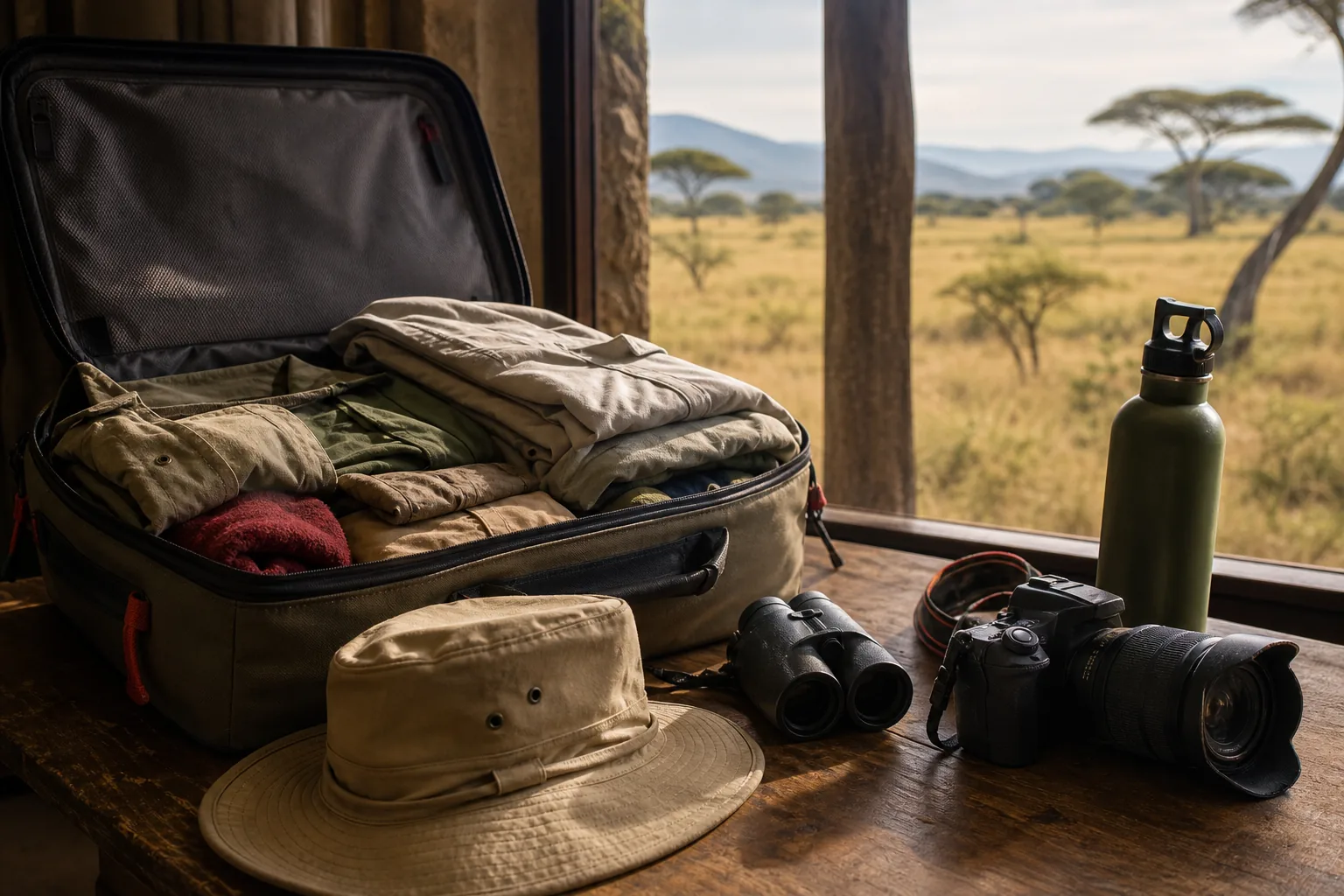
Pack for changing temperatures. Early drives can feel cold, while the middle of the day may be hot. Bring light layers, a warm fleece, a rain shell and a hat. Neutral colors are comfortable, but you do not need to buy a full new safari wardrobe.
Useful items include binoculars, sunscreen, insect repellent, a refillable water bottle and a small day bag. Add spare camera batteries, memory cards and a dust cover if photography matters to you.
- Light shirts and trousers that cover your skin
- A warm layer for dawn drives
- Closed shoes with a firm sole
- Sunglasses and sun protection
- Personal medicine in your hand luggage
- Small snacks for long drives
- Copies of passport, insurance and flight details
See your doctor or a travel clinic well before departure. Ask about malaria prevention, recommended vaccines and any condition that could affect a long drive. Travel insurance should cover medical care, trip changes and evacuation. The basic malaria overview from Wikipedia explains why prevention matters, but it does not replace medical advice.
Ask the operator what happens if a vehicle has trouble or a flight is delayed. A good pre-departure brief should cover arrival pickup, park rules, emergency contacts, luggage limits and what the package excludes.
Do not overpack. Many safari routes have limited luggage space, especially when domestic flights are involved. Soft bags are often easier to store than hard cases, but confirm the rule with your operator before you fly.
How Can You Add Culture and Adventure Beyond Game Drives?
A first safari feels more complete when you leave room for people, food and daily life outside the parks. In northern Tanzania, a cultural visit may include time with a local community, traditional dance or a discussion about work and family life.
Ask how the visit is arranged and what the community receives. A respectful visit gives you clear guidance before arrival. It also avoids treating people as a display for cameras.
Cooking activities can add a slower afternoon to a busy route. You might learn how local ingredients are used, then share a meal with your hosts. The details depend on the community and the itinerary, so ask what is included instead of assuming every safari offers the same experience.
Kilimanjaro is another major add-on, but it should not be squeezed into a rushed safari schedule. Routes such as Machame, Lemosho and Marangu have different pacing and accommodation patterns. Allow recovery time before a game drive after the climb.
Zanzibar works well after a northern safari because it gives you a change of pace. You can spend time by the sea, explore local history or simply rest after early starts. Our team can combine both parts, but the right plan depends on flight timing and how many days you have.
For a short trip, choose one add-on. A long list of extras can leave you tired and stuck in transfers. A single cultural day, walking activity or beach stay often adds more value than another rushed park.
FAQ
What is the best first-time safari in Africa?
The best first-time safari in Africa for many travelers is a Tanzania route through Tarangire, Ngorongoro and the Serengeti. It combines varied habitats with strong wildlife viewing and open landscapes. Choose Kenya for a Mara-focused trip, Botswana for wetland viewing, or South Africa for easier mixed travel and a shorter route.
Is Tanzania or Kenya better for a first safari?
Tanzania is often better for travelers who want several major parks in one classic route. Kenya can suit visitors focused on the Maasai Mara and a shorter East African plan. The right choice depends on your travel month, migration goal, budget and interest in adding Zanzibar or Kilimanjaro.
How many days do you need for a first African safari?
You need at least four or five full safari days for a useful first trip, though seven to ten days gives you a calmer route. Longer stays allow time for several parks and reduce the risk of rushing every drive. Add extra nights if you want Zanzibar, Kilimanjaro or focused wildlife photography.
What should I wear on my first safari?
Wear light layers, comfortable trousers, closed shoes and sun protection. Bring a fleece or jacket for early drives because mornings can be cold. Neutral colors are fine, but you do not need special clothing. Pack a rain shell during wetter months and confirm luggage limits before choosing a suitcase.
Is a private safari worth it for first-time travelers?
A private safari can be worth it when you want control over the pace and route. You can spend longer at a sighting or adjust the day around your interests. A group safari costs less and can work well if you accept a shared schedule. Ask about vehicle size before booking either option.
Conclusion
For most first-time travelers, we recommend a Tanzania safari with enough time for Tarangire, Ngorongoro and the Serengeti. Start by sending Safari-TZ.com your travel dates, budget range and top wildlife goal. Our Arusha team can then shape the route around the season instead of forcing you into a fixed package.