Best Ngorongoro vs Serengeti Safari Comparison
best ngorongoro vs serengeti safari comparison
Best Ngorongoro vs Serengeti Safari Comparison
Ngorongoro vs Serengeti: compare wildlife, scenery, migration, seasons and costs, then plan the right Tanzania safari with Safari-TZ.com.
Choosing between the endless plains of the Serengeti and the volcanic bowl of Ngorongoro can feel like a toss‑up. Both deliver world‑class wildlife and iconic views. Below is a short list of the top options and a quick side‑by‑side look so you can pick the right fit for your dream safari.
1. Safari‑TZ.com
Safari‑TZ is a Tanzanian‑owned operator based in Arusha that runs its own fleet of 4x4 safari vehicles and employs local driver‑guides. We’ve been on the ground since 1991, so we know the roads, the gates and the best game‑viewing spots. Our private and group tours cover the Northern Circuit, including both Serengeti and Ngorongoro, with smooth transfers that save you time and hassle.
Because we handle everything in‑house, you won’t be bounced between third‑party vendors. Your itinerary, accommodation choices and park fees are all managed by the same team that will be with you on the ground. That means fewer surprises and a clearer line of communication.
We offer routes that let you experience the Great Migration in the Serengeti and then drop into the crater for a day of Big Five spotting. Our guides can adjust the schedule on the fly if a herd is moving early or a rainstorm shifts road conditions. For travelers who want a mixed experience, we recommend a 7‑day Northern Circuit that starts in Arusha, hits the Serengeti for three days, then spends two nights in Ngorongoro before returning.
Our Serengeti National Park Safari Guide gives a deeper look at migration timing, while the Best Ngorongoro Crater Lodges page helps you choose where to stay on the crater floor. For a quick visual of wildebeest movements, grab the Great Migration Calendar. And if you want a full planning checklist, our Free Tanzania Safari Planning Guide 2026 walks you through visas, packing and health prep.
We’re not a marketplace that sells other operators’ trips. When you book with us, you’re hiring the team that will drive the 4x4, set up camp and welcome you at each park gate. That continuity often means a smoother experience, especially if you’re traveling with family or a mixed‑ability group.
2. Ngorongoro Crater — Best for Big Five Viewing and Dramatic Scenery
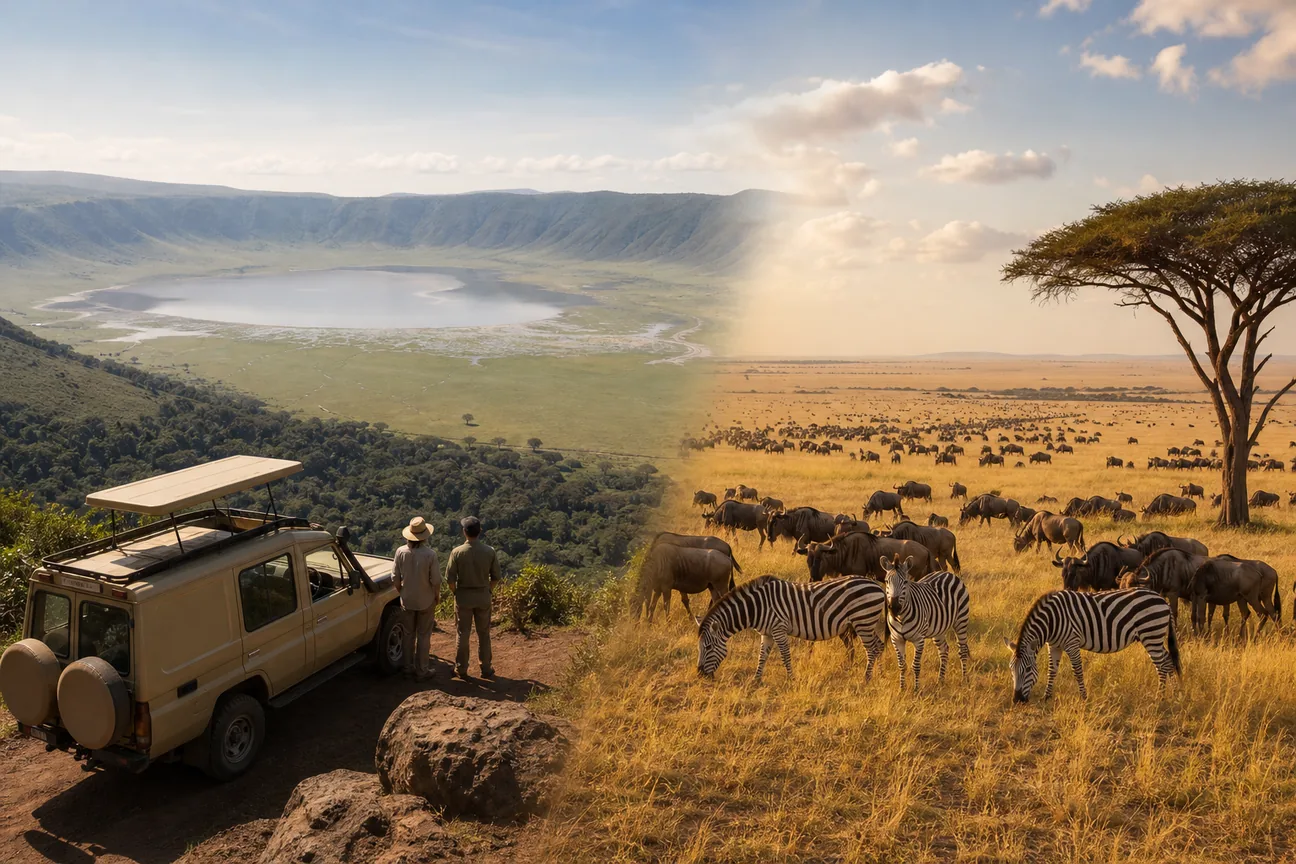
Ngorongoro sits in a massive volcanic caldera that drops 600 m to a floor teeming with wildlife. The crater’s walls create a natural amphitheater, so every game drive feels like you’re watching a live documentary.
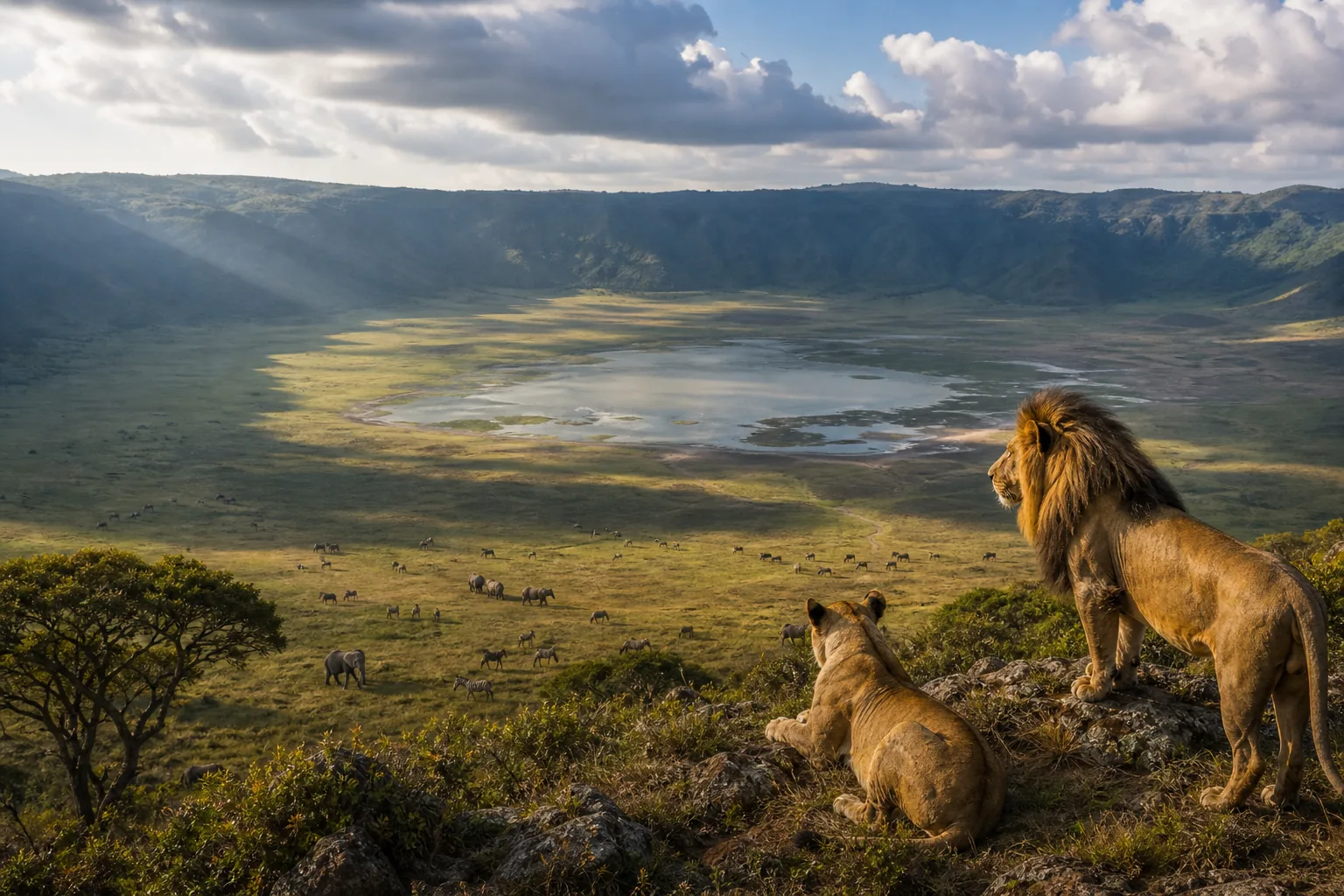
Big Five sightings are common because the predators patrol the open grasslands while the herbivores graze on the crater floor. Lions often lounge near the waterhole, and you can spot a solitary leopard perched on a tree branch. The crater’s high altitude also means cooler evenings, which can be a welcome break after a hot day on the Serengeti.
The park is about 180 km west of Arusha, a roughly three‑hour drive on paved roads. That short hop makes it easy to pair with a Serengeti leg without needing a flight. Our guides recommend spending at least a full day inside the crater to give you time for morning and evening game drives, the animals are most active during those periods.
The Ngorongoro Conservation Area crater covers 260 sq km and offers spectacular vistas that change with the light. The area also borders the Serengeti, so wildlife moves between the two parks throughout the year.
One downside is that road conditions can be rough after heavy rains, so a sturdy 4x4 is essential. Also, because the crater is a closed ecosystem, the number of animals you can see on any given day can vary. That’s why we advise a flexible schedule and a patient outlook.
When you choose Ngorongoro with Safari‑TZ, you’ll stay at lodges that sit on the rim or on the crater floor, giving you sunrise views that few other parks can match. Our lodging guide helps you pick the right style, from luxury tents to family‑friendly camps.
3. Ndutu (Southern Serengeti) — Best for Seasonal Calving and a Hybrid Experience
Ndutu lies in the southern part of the Serengeti, just north of the Selous‑Mikumi corridor. It’s famous for the calving season that peaks around February‑March, when massive herds of newborn wildebeest and zebra burst onto the plains.
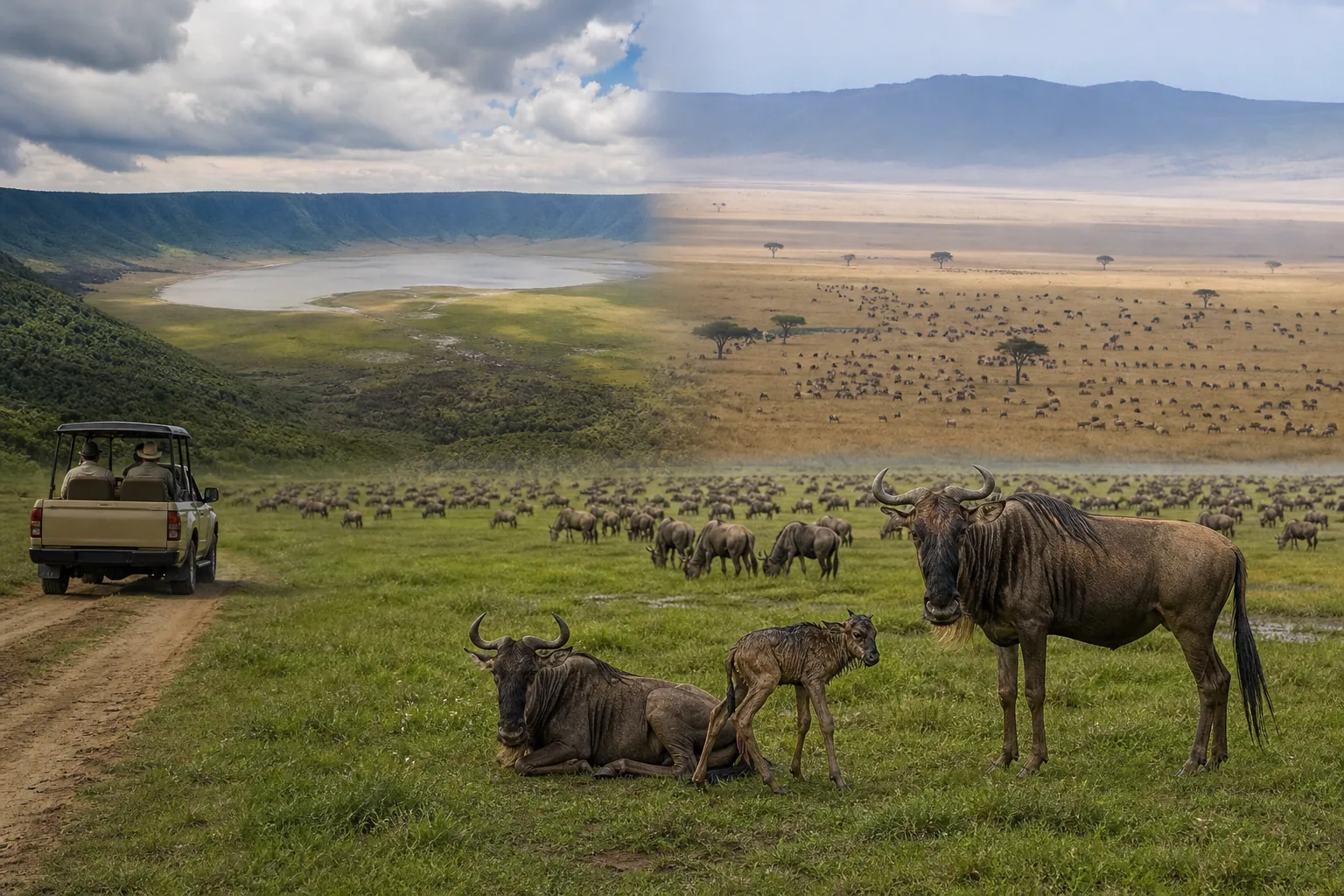
The area offers a mix of open savannah and riverine forest, so you get classic predator action plus a chance to see hippos and crocodiles along the Ndutu River. Because it’s a bit off the main tourist routes, you’ll often have more space on the road and fewer crowds at the waterhole.
Travelers who love the drama of the Great Migration but want a quieter, more intimate setting often pick Ndutu. Our guides can combine a short stint in Ndutu with a day in the crater, giving you both the calving spectacle and the dramatic crater backdrop.
Roads to Ndutu can be rough in the rainy season, so we recommend a 4x4 with high clearance. The best time to visit for calving is February to early April, but you can also see the tail end of the migration in May.
Because Ndutu sits near the Serengeti’s southern border, it’s easy to add to a Northern Circuit itinerary. Our Best National Parks in Tanzania guide outlines how to fit Ndutu into a week‑long trip without adding extra cost.
Ngorongoro vs Serengeti: Comparison Table for Your Safari
Both parks shine during the June‑October window, and the price tag is almost identical. The decision often comes down to whether you crave the drama of the migration or the intimacy of a crater landscape.
How to Choose Your Focus
- If you want the iconic Great Migration and endless plains, lean toward more days in Serengeti.
- If you crave dramatic scenery and a high chance of seeing all Big Five in one spot, allocate a full day or two to Ngorongoro.
- For a hybrid experience, split your time: three days in Serengeti, two days in Ngorongoro.
FAQ: Ngorongoro vs Serengeti
Which park has more wildlife overall?
Both parks host a high density of animals, but the Serengeti typically sees larger herds during the Great Migration, while Ngorongoro offers a concentrated mix of predators and prey in a smaller area.
Can I see the Big Five in both parks?
Yes, the Big Five roam both the Serengeti and Ngorongoro, though Ngorongoro gives a tighter setting that often makes spotting them easier in a short time.
Is one park more expensive than the other?
Daily rates are very similar, ranging from $250 to $350 per person, so cost shouldn’t be the main factor.
Do I need a 4x4 vehicle for both parks?
A sturdy 4x4 is recommended for Ngorongoro’s crater roads and for the rougher southern Serengeti routes, especially during the rainy season.
What is the best time of year for each park?
June through October offers the best wildlife viewing in both parks, with the Serengeti’s migration at its peak and Ngorongoro’s predators most active.
Conclusion
If you want the ultimate Tanzanian safari, we recommend a combined Serengeti‑Ngorongoro week with Safari‑TZ. Book your trip through our tour page and let our experienced team handle the logistics.
| Feature | Ngorongoro Crater | Serengeti National Park |
|---|---|---|
| Primary wildlife draw | Big Five in a volcanic bowl | Great Migration and predator density |
| Best season (peak wildlife) | June – October | June – October (migration peak) |
| Typical stay length | 1‑2 days inside crater | 3‑5 days across plains |
| Scenery type | Volcanic caldera, high walls | Vast savannah, acacia dotted |
| Access from Arusha | ~180 km, ~3 hr drive | ~350 km, ~6 hr drive (or short flight) |
| Average daily cost range | $250‑$350 | $250‑$350 |
Ready to put this into practice? Safari-TZ.com was built for exactly this.