Not Insurance Advice

This page is operator-experienced general information about what coverage matters for Tanzania trips. It is not insurance advice or a recommendation of any specific insurer. For personalised recommendations, consult a licensed insurance broker in your country who knows your circumstances — your age, pre-existing conditions, and trip details.

Tanzania Travel Insurance — What Coverage Actually Matters

Travel insurance for Tanzania is one of those topics where most online content is either thin generic advice or selling a specific insurer. The honest version starts with the unique Tanzania risk profile: if you're climbing Kilimanjaro, your single most important coverage check is whether the policy covers high-altitude trekking up to 5,895 metres — many standard policies exclude anything above 4,000 or 5,000 metres, which means they don't cover the most expensive Kilimanjaro scenario. If you're going on safari, the relevant coverages are emergency medical evacuation (Tanzania has limited medical infrastructure outside major cities, so serious cases often need evacuation to Nairobi or home), trip cancellation (long-haul flights to Tanzania get disrupted, and safari deposits are typically non-refundable within 60 days), and baggage cover if you're carrying expensive camera or climbing gear. If you're visiting Zanzibar, there is now a mandatory Zanzibar travel insurance requirement — approximately $44 USD per traveler, valid 92 days, obtained separately through visitzanzibar.go.tz — that exists alongside your private travel insurance and may or may not be satisfied by it (verify with both your insurer and Zanzibar authorities before relying on a single policy). Flying Doctors, which you'll see referenced for emergency air evacuation, is a service rather than insurance — your insurance pays Flying Doctors for the evacuation, or a separate Flying Doctors membership acts as a service contract.

We will not recommend specific insurers on this page because travel insurance markets differ by country and your circumstances are not generic. Below: what coverage matters in priority order, the altitude exclusion problem in detail, the Zanzibar interaction, how to evaluate a policy, and operator observations on what actually happens to clients. For personalised recommendations, talk to a licensed broker in your country. After 35 years coordinating client situations with hospitals and evacuation services from Arusha, this is the honest version we wish more travelers arrived with.

5,895 m altitude
Kilimanjaro coverage threshold many policies miss
$44 USD
Mandatory Zanzibar insurance (separate from private)
Consult a broker
This page is not insurance advice

Tanzania Travel Insurance at a Glance

  • Climbing Kilimanjaro? Verify your policy covers altitude to 5,895m — many don't
  • Critical coverage: Emergency medical evacuation, helicopter rescue, trip cancellation
  • Visiting Zanzibar? Separate $44 mandatory insurance at visitzanzibar.go.tz
  • Flying Doctors: A service, not insurance — see our Flying Doctors guide
  • Not advice: Consult a licensed broker for personalised recommendations
  • Avoid: Buying on price alone without reading the exclusions list

What Tanzania Travel Insurance Should Actually Cover

Not all coverage matters equally for Tanzania. The categories below are in priority order — what should be non-negotiable, what's strongly recommended, what's a sensible add. This is operator-observed rather than theoretical: most claims we see clients make fall into a few categories, and the most expensive scenarios — helicopter rescue, medical evacuation — cluster around Kilimanjaro and major medical events, not the things travelers worry about most. Geoffrey Komba, William Mwasimba, and Isaac Munuo, our named lead guides, make the same point after years of fielding the question: nearly every client arrives with insurance, but few have actually checked that their coverage matches the Tanzania-specific risks until something happens and the policy gets read for the first time at the worst moment. The grid is built so you can do that check now, on the ground floor, before you fly.

Critical · Kilimanjaro Especially

High-altitude trekking coverage

If you're climbing Kilimanjaro, this is non-negotiable. Many standard policies exclude trekking above 4,000m or 5,000m. Kilimanjaro's summit is 5,895m — meaning standard policies often don't cover helicopter rescue or evacuation from the most expensive scenario.

WATCH FOR: "altitude exclusion" in your policy. Search for "5,500m", "5,895m", or "Kilimanjaro" specifically.
Critical · All Tanzania Trips

Emergency medical evacuation

Tanzania has limited medical infrastructure outside Dar, Arusha, and a few centres. Serious incidents may require evacuation to Nairobi or back home. Helicopter rescue on Kilimanjaro can cost $5,000-25,000+ without insurance.

WATCH FOR: Coverage amount (often $250,000+ for serious scenarios) and whether helicopter rescue is explicitly included.
Strongly Recommended

Trip cancellation & interruption

Long-haul flights to Tanzania get disrupted. Safari deposits and Kilimanjaro climb fees are typically non-refundable within 60 days of travel. This coverage protects your investment if you can't travel for covered reasons.

WATCH FOR: Cancellation reasons covered (medical, family emergency, flight delays). Some policies cover only narrow reasons.
Strongly Recommended

Medical (non-evacuation)

Routine medical needs — minor injuries, stomach issues, sunburn requiring treatment, dental emergencies. Most Tanzania trips won't need this beyond minor care, but it's standard in any full policy.

WATCH FOR: Pre-existing condition exclusions. Declare honestly when buying — non-disclosure is the #1 claim rejection reason.
Recommended

Baggage & equipment loss

Particularly relevant for climbers carrying technical gear ($1,000s of clothing and equipment) and photographers carrying expensive cameras. Standard policies typically cap baggage at $1,000-2,000 per person.

WATCH FOR: Per-item caps and specialist equipment riders for cameras or climbing gear.
Recommended

Personal liability

Protection if you accidentally injure someone or damage property during your trip. Standard in most full policies; worth verifying it's actually included rather than assuming.

WATCH FOR: Coverage amount (typically $1M+) and whether it's bundled or an optional add-on.

Read the exclusions, not just the headline list

This list is what matters most, not a complete inventory of what policies contain. Read your policy exclusions list before buying — the exclusions tell you what's NOT covered, which is often more important than the headline coverage list. A policy can advertise "medical evacuation" on the cover and exclude the altitude where you'll actually need it three pages in.

For personalised recommendations on which insurer suits your situation, consult a licensed broker in your country. We observe what happens to clients on the ground; the broker handles the policy-specific advice.

The Altitude Exclusion — Why Standard Travel Insurance Doesn't Cover Kilimanjaro

This is the single most expensive insurance trap on Tanzania trips, and it catches people who did nothing obviously wrong. The pattern is familiar: a traveler buys a reasonable-looking standard policy alongside their flight, flies to Tanzania, climbs Kilimanjaro, and only discovers at the point of crisis that the policy excluded their altitude. The exclusion isn't hidden in bad faith — it's a standard clause in standard policies, because most holiday insurance is written for people lying on a beach, not standing at 5,895 metres. The cutoffs that appear most often are 4,000m and 5,000m, both well below Kilimanjaro's summit. Specialist adventure travel policies exist precisely to fill this gap, which is why the right policy for a beach holiday is the wrong policy for a mountain. The good news is that this is entirely checkable in advance, in about two minutes, before you've committed a cent to the climb.

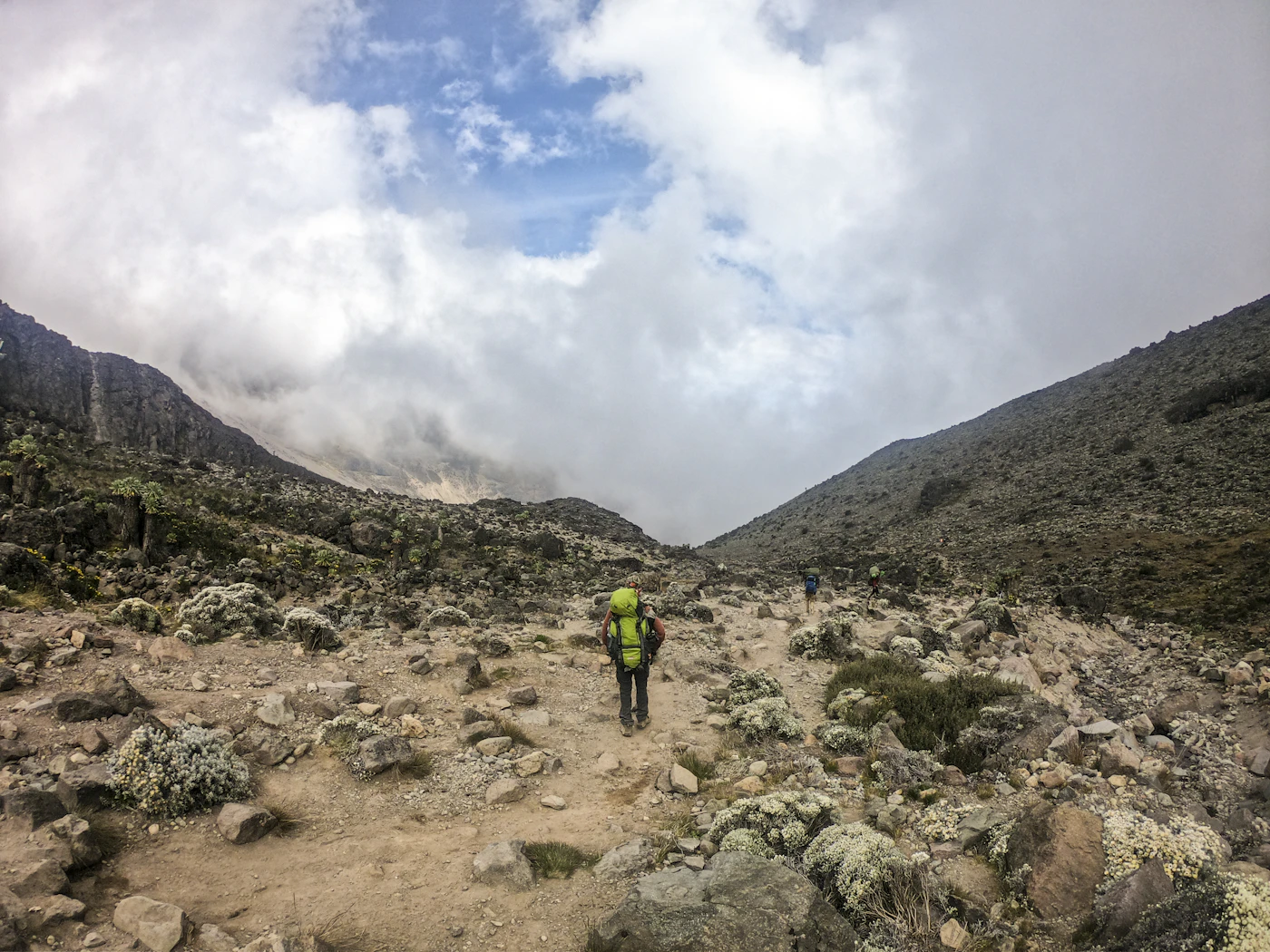
Kilimanjaro summit at 5,895m — many standard policies don't cover this altitude
Kilimanjaro Insurance — Read Before You Fly

The Altitude Exclusion Problem

Most standard travel insurance policies — the kind you buy alongside your flight or with your credit card — exclude trekking above 4,000m or sometimes 5,000m. Kilimanjaro's summit is 5,895m. That means a standard policy may not cover the most expensive Kilimanjaro scenario: helicopter rescue or medical evacuation from above the cutoff.

Why this matters operationally: ground-assisted descent — your guides walking you down with porter support — is included in your climb's emergency rescue fee. What's NOT typically included, and what insurance is meant to cover, is helicopter evacuation, hospital admission, repatriation to your home country, and continuing medical treatment. A standard policy with an altitude exclusion leaves you exposed to exactly those bills.

The named guides — Geoffrey Komba, William Mwasimba, and Isaac Munuo — have flagged client situations where the insurance check happens at the worst possible moment, halfway up the mountain rather than at the kitchen table. We strongly recommend that every Kilimanjaro climber verify altitude coverage before booking the climb, not after arriving in Arusha.

The honest test: Open your policy document. Search the exclusions list for "altitude". If you see a cutoff under 5,895m without an explicit Kilimanjaro exception, your policy does not cover Kilimanjaro evacuation. Specialist adventure travel insurers (a broad category, not a specific brand) and some annual multi-trip policies cover up to 6,000m or specifically mention Kilimanjaro. Talk to a licensed broker who handles adventure travel if the wording is ambiguous.
For the climb itself — route selection, training, and what acclimatization actually means for your success and your risk — see our Kilimanjaro climbing routes, Kilimanjaro for beginners, and Kilimanjaro training guide pages. The training guide specifically addresses how acclimatization affects both your summit chances and the likelihood you'll ever need the evacuation coverage discussed here.

Trip planned and insured? Let's finalise the details.

Once your insurance is sorted, send us your dates and what you want to see — safari, Kilimanjaro, Zanzibar, or a combination. We'll send a proposal within 24 hours built around your dates, and flag any insurance-specific considerations for your itinerary.

The Mandatory Zanzibar Travel Insurance — How It Interacts with Private Cover

This one catches Zanzibar-bound travelers off guard, so it gets its own section. Our Tanzania visa guide flagged the requirement exists; here we go deeper on how it interacts with the private travel insurance you may already hold. The short version is that they are two different things, both potentially required, and assuming one covers the other is how people get delayed at arrival.

What it is: a mandatory Zanzibar travel insurance for all international visitors arriving in Zanzibar, introduced as a recent policy. It applies whether you fly directly into Zanzibar or arrive by ferry from Dar es Salaam, and it is checked at Zanzibar entry points — the airport and the Stone Town ferry terminal. The cost is approximately $44 USD per traveler, valid 92 days, purchased through the official Zanzibar portal. What it covers is basic medical and emergency services within Zanzibar — a limited scope compared with a full private travel insurance policy, and not a substitute for one.

The interaction question travelers ask most: does my private travel insurance satisfy the requirement? Some private insurers state their policies meet or exceed the mandatory Zanzibar minimum and therefore satisfy it; others don't, and acceptance at the entry point is not automatic. Verify carefully with both your insurer and the Zanzibar authorities before relying on a single policy. If you can't get clear confirmation from both sides, assume you need both — at around $44 the mandatory cover is inexpensive relative to being turned back or delayed. Buy it pre-flight through the portal rather than scrambling at arrival.

Official Zanzibar Portal

Zanzibar Travel Insurance Portal

https://visitzanzibar.go.tz

This is the only government portal for the mandatory Zanzibar travel insurance. Purchase before flying. The .go.tz extension confirms it's Zanzibar government infrastructure.

The mandatory insurance does NOT replace comprehensive private travel insurance. It's a separate requirement with a limited coverage scope — basic medical and emergency services within Zanzibar. It does not cover Kilimanjaro altitude, mainland safari evacuation, or trip cancellation. Treat it as an entry requirement, not as your trip's insurance.

Flag it during booking for any Zanzibar-inclusive trip

For trips that include Zanzibar — beach extensions after safari, Zanzibar fly-in safaris, beach-only stays — flag this requirement at the planning stage so it isn't a surprise at the airport. See Tanzania safari from Zanzibar and the Zanzibar safari and beach combo for the trips this affects most. We mention it to every Zanzibar-bound client at the proposal stage — it's the most common surprise our beach-combo travelers run into.

Flying Doctors — A Service, Not Insurance

This is the confusion worth clearing up before anything else, because the two get used interchangeably and they are not the same thing. Flying Doctors — AMREF Flying Doctors and similar operators — provides emergency air evacuation in East Africa. It is a service that physically performs the evacuation: an air ambulance flies to a remote location and brings a patient to a hospital. Insurance is what pays for that service, or you pay out of pocket and claim it back. One does the flying; the other covers the cost.

The detail worth knowing: Flying Doctors is operated by AMREF, the African Medical and Research Foundation, based in Nairobi, with coverage across East Africa. They run the actual air-ambulance evacuations from remote locations — national parks, Kilimanjaro, and the bush — to hospitals equipped to handle the case. There are two ways to be covered. The first is through your travel insurance: your insurer pre-authorises the evacuation, Flying Doctors performs it, and the insurer pays. The second is a separate Flying Doctors tourist membership — around $30 USD for roughly two weeks of tourist coverage — which acts as a service contract guaranteeing evacuation within their coverage area regardless of your insurance status. Most reputable Kilimanjaro and safari operators include Flying Doctors coverage as part of the trip; verify it with your operator at booking. We include Flying Doctors coverage for safari-tz.com clients as part of standard inclusions.

The honest framing: they work together

Flying Doctors and your private travel insurance work together. Flying Doctors does the evacuation; insurance covers the cost. If you have both, you're covered both physically and financially. If you have only insurance, verify your insurer has a working relationship with East African evacuation services — Flying Doctors handles most of the region. If you have only a Flying Doctors membership, you're covered for the evacuation flight but not for the subsequent hospital bills, which is why it complements insurance rather than replacing it.

For the full picture, see the dedicated page. For a deep dive on Flying Doctors — coverage area, how a claim or call-out actually works, and membership versus operator-included coverage — see our dedicated Flying Doctors Tanzania guide. This section explains the service-versus-insurance distinction; that page covers the service itself in full.

How to Evaluate a Travel Insurance Policy for Tanzania

The practical part. Don't read the marketing page — read the actual policy document, usually called the Policy Wording or the Schedule of Cover, which is where the exclusions and limits actually live. Most of what matters is in plain language if you know what to look for, and the seven questions below are the ones that decide whether a policy is right for a Tanzania trip. Run them in order; the first one is where most Kilimanjaro climbers find the gap, and it's the cheapest mistake to catch early.

7 Questions to Ask Before Buying

1
Does it cover Kilimanjaro altitude?

Search the policy for "altitude". If the cutoff is below 5,895m without a Kilimanjaro exception, look elsewhere or add a specialist rider. This is the most common gap and the most expensive to discover late.

2
Does it cover emergency medical evacuation?

Check the coverage amount ($250,000+ is typical for serious scenarios), and confirm helicopter rescue is explicitly covered — not just "medical evacuation" in general terms.

3
What are the trip cancellation reasons?

Some policies cover only "medical emergencies"; others cover flight delays, family events, and work issues. Match the breadth of covered reasons to your circumstances.

4
How are pre-existing conditions treated?

Declare honestly. The #1 reason claims are rejected is non-disclosure of pre-existing conditions — silence doesn't protect you, it voids the claim.

5
What's the baggage cap and per-item limit?

Standard caps are $1,000-2,000 per person. If you're carrying expensive cameras or climbing gear, you may need a specialist rider to cover a single high-value item.

6
Does it cover the Zanzibar mandatory insurance?

Verify with BOTH your insurer and the Zanzibar authorities at visitzanzibar.go.tz. Some private insurance meets the requirement; others don't. If unverified, assume you need both.

7
Does it have East African evacuation network access?

Flying Doctors covers most evacuations in the region. Verify your insurer has a working relationship with East African evacuation services so a call-out isn't delayed by paperwork.

Then take it to a broker

After answering these seven questions, take the policy document to a licensed insurance broker in your country and ask them to confirm your interpretation. We are not insurance brokers — we observe what happens to clients on the ground in Tanzania. A licensed broker handles the policy-specific advice we can't and shouldn't give. The two roles are complementary: we tell you which risks are real here; the broker tells you which policy covers them for you.

Operator-Observed Insurance Situations — What Actually Happens

The honest, non-sensational version of what we've actually seen happen to clients in 35 years. Most Tanzania trips have zero insurance interaction — the policy is bought, the trip runs, and nobody thinks about it again. The situations that do occur cluster around a few predictable categories, and they're worth knowing precisely because the proportions are nothing like the order travelers worry about them in.

The most common claim by a wide margin, well over 90% of what we see, is trip cancellation from flight delays and cancellations. Tanzania-bound flights from Europe and the Americas occasionally get disrupted, and clients claim back non-refundable safari deposits or rescheduling costs. It's routine and well-handled by most policies that include cancellation cover. The second most common, somewhere around 5-8%, is minor medical — stomach issues, sunburn requiring treatment, minor falls, the occasional dental emergency. These are usually treated locally in Arusha, which has good private facilities, and claimed back later without drama.

Less common but real, in the low single-digit percentages, are Kilimanjaro altitude descents. The large majority are ground-assisted — porter-supported descent, no helicopter needed — and handled by the climb's emergency rescue fee rather than insurance. The cases that require helicopter evacuation are rarer but far more expensive, and that is exactly where the altitude exclusion discussed above stops being abstract. Rarer still are serious vehicle accidents; Tanzania's safari fleet runs mostly on decent, paved transit roads, and incidents are uncommon but not zero. And animal-related incidents — the thing first-timers ask about most — are almost never a factor. The standard practice of staying in the vehicle and listening to your guide keeps risk minimal, walking safaris carry an armed ranger escort, and serious animal incidents on a properly conducted safari are vanishingly rare.

Operator-observed insurance situations — what actually happens on the ground in Tanzania

The honest version of how insurance is supposed to work

Most Tanzania trips have zero insurance interaction. The minority that do mostly involve flight disruption and minor medical. The rare expensive cases — Kilimanjaro helicopter rescue, serious medical evacuation — are the reason you buy insurance, even though you'll almost certainly never use it. That's how insurance is supposed to work: you pay a modest premium against a small chance of a very large bill. The mistake isn't buying cover you won't use; it's buying cover that excludes the one scenario you bought it for.

Insurance Sorted? Plan Your Tanzania Trip

Insurance verified, or in progress — now the trip itself. As an Arusha operator since 1991, TATO-registered, we run the safari and the mountain under one team, which is exactly why we coordinate directly with local hospitals and evacuation services when a client needs help. Here's where to go next, and the Travel Guides that take the planning further.

Book Direct · Arusha Operator Since 1991

Plan your trip with the team that coordinates with hospitals and evacuation services when needed.

Keep planning with our Travel Guides:

Tanzania Travel Insurance — Common Questions

Do I need travel insurance for Tanzania?
Travel insurance is not a visa-style legal entry requirement for mainland Tanzania, but in practice you should treat it as essential, and most reputable safari and Kilimanjaro operators require proof of cover before a climb. Tanzania has limited medical infrastructure outside Arusha, Dar es Salaam, and a few centres, so a serious incident may need evacuation to Nairobi or home — that is expensive without insurance. If you are climbing Kilimanjaro, cover that includes high-altitude trekking and helicopter rescue matters most. If you are visiting Zanzibar, note there is a separate mandatory Zanzibar travel insurance requirement that exists alongside private cover. We are not insurance brokers, so for what suits your age, health, and trip, consult a licensed insurance broker in your country. Our role is to tell you, from 35 years on the ground in Arusha, what scenarios actually occur and what coverage addresses them.
Does standard travel insurance cover Kilimanjaro?
Often not, and this is the single most important check for any climber. Many standard policies — the kind bundled with a flight or credit card — exclude trekking above 4,000m or 5,000m. Kilimanjaro's summit is 5,895m, which means a standard policy may not cover the most expensive scenario: helicopter rescue or medical evacuation from above the cutoff. The honest test is to open the policy document, search the exclusions list for the word "altitude", and confirm it either covers up to 5,895m or names Kilimanjaro specifically. Specialist adventure travel insurers (a broad category, not a brand recommendation) and some annual multi-trip policies cover this; standard holiday or cruise insurance frequently does not. Verify altitude cover before booking the climb, not after arriving in Arusha. For policy-specific confirmation, take the wording to a licensed broker who handles adventure travel. See our Kilimanjaro climbing routes for the climb detail.
What is the altitude exclusion problem?
It is the gap between what climbers assume their policy covers and what it actually covers. Most standard travel insurance policies contain an altitude exclusion — a clause stating they do not cover trekking above a stated height, commonly 4,000m or 5,000m. Kilimanjaro tops out at 5,895m, so a climber on a standard policy can be unknowingly uncovered for the exact event insurance is meant for: an altitude-related emergency requiring helicopter evacuation, hospital admission, and repatriation. Ground-assisted descent with porters is included in your climb's emergency rescue fee, but helicopter evacuation and the medical bills that follow are not — that is the insurer's territory, and only if the altitude is covered. The fix is simple: read the exclusions list before buying, look for an altitude cutoff, and choose a policy that explicitly covers 5,895m or names Kilimanjaro. A licensed broker can confirm the wording for your situation.
What's the difference between Flying Doctors and travel insurance?
Flying Doctors is a service, not insurance. AMREF Flying Doctors and similar operators physically perform air-ambulance evacuation from remote locations — parks, the mountain, the bush — flying you to a hospital. Travel insurance is what pays for that evacuation and the subsequent medical care, or you pay out of pocket and claim it back. The two work together: Flying Doctors does the flight, insurance covers the cost. There is also a separate Flying Doctors tourist membership, around $30 USD for roughly two weeks, that acts as a service contract guaranteeing evacuation within their coverage area regardless of insurance status — but it covers the evacuation, not hospital bills afterward. Most reputable safari and Kilimanjaro operators, ourselves included, build Flying Doctors coverage into the trip; verify it with your operator at booking. For the full detail, see our dedicated Flying Doctors Tanzania page.
What is the mandatory Zanzibar travel insurance?
As of a recent policy change, all international visitors arriving in Zanzibar must obtain mandatory Zanzibar travel insurance, separate from the Tanzania visa and separate from any private travel insurance you hold. It costs approximately $44 USD per traveller and is valid for 92 days. It is purchased through the official Zanzibar portal at visitzanzibar.go.tz, and you should buy it before flying rather than at the arrival point. It applies whether you fly directly into Zanzibar or arrive by ferry from Dar es Salaam, and it is checked at Zanzibar entry points. Its coverage scope is basic medical and emergency services within Zanzibar — limited compared with a full private travel insurance policy. It does not replace comprehensive private cover; it sits alongside it. For the requirement itself, the source is visitzanzibar.go.tz; for what private cover should include, read the rest of this guide and consult a licensed broker.
Does my private insurance satisfy the Zanzibar requirement?
Possibly, but do not assume it. Some private travel insurers state their policies meet or exceed the Zanzibar mandatory minimum and therefore satisfy the requirement; others do not, and acceptance at the Zanzibar entry point is not automatic. The honest approach is to verify with both your insurer and the Zanzibar authorities through visitzanzibar.go.tz before you rely on a single policy. If you cannot get clear confirmation from both sides, assume you need both — the mandatory Zanzibar insurance at around $44 USD is inexpensive relative to the risk of being turned away or delayed on arrival. We flag this to every Zanzibar-bound client at the proposal stage because it is the most common surprise our beach-combo travellers run into. This is exactly the kind of policy-specific question a licensed broker in your country can confirm for your individual cover.
How much does Tanzania travel insurance typically cost?
There is no single figure, and any page that quotes one is guessing. Premiums depend on your age, country of residence, trip length, total trip cost, pre-existing conditions, and the activities you add — high-altitude Kilimanjaro cover costs more than a standard beach policy. A specialist adventure policy covering Kilimanjaro to 5,895m sits well above a basic holiday policy because it carries the helicopter-rescue and high-altitude-evacuation risk. Rather than chase a number, focus on whether the policy actually covers your Tanzania-specific risks — altitude, evacuation, trip cancellation — because an inadequate cheap policy is worse value than an adequate one. Note separately the mandatory Zanzibar travel insurance at approximately $44 USD per traveller, which is a fixed government requirement, not a private premium. For a quote matched to your circumstances, a licensed insurance broker in your country is the right source; we cannot price individual policies.
What's the most important coverage for safari?
Emergency medical evacuation and trip cancellation, in that order of consequence. Tanzania's safari regions are remote, and serious medical incidents may require evacuation to Nairobi or repatriation home — the kind of cost that runs into six figures without cover, so look for emergency medical evacuation in the policy and confirm the order of magnitude is high (often $250,000+ for serious scenarios). Trip cancellation matters because long-haul flights to Tanzania get disrupted and safari deposits are typically non-refundable within 60 days of departure, so it protects a real financial exposure. Beyond those two, baggage and equipment cover is worth having if you carry expensive cameras. Animal-related incidents, the thing travellers worry about most, are vanishingly rare on a properly conducted safari. For which policy fits your circumstances, consult a licensed broker; our job is to tell you which risks are real on the ground.
What's the most important coverage for Kilimanjaro?
High-altitude trekking cover to 5,895m, without question. This is the coverage that standard policies most often exclude and the one that addresses the most expensive Kilimanjaro scenario — helicopter rescue and medical evacuation from altitude. Confirm two things in the policy wording: that the altitude exclusion does not cut off below the summit height, and that helicopter rescue is explicitly named rather than implied under a general medical-evacuation clause. Ground-assisted descent with porters is covered by your climb's emergency rescue fee; the helicopter and the hospital are the insurer's job. After that, trip cancellation and emergency medical evacuation matter as they do for any Tanzania trip. The named guides on our team have seen the altitude check happen at the worst possible moment, so verify cover before booking the climb. A licensed broker who handles adventure travel can confirm your specific policy covers Kilimanjaro. See also our Kilimanjaro training guide.
Are pre-existing conditions covered?
Sometimes, but only if you declare them honestly when buying the policy. Non-disclosure of pre-existing conditions is the single most common reason travel insurance claims are rejected — an insurer that finds an undeclared condition contributed to a claim can decline the whole thing. Many policies will cover declared conditions, sometimes with an additional premium or a medical screening; some will exclude specific conditions while covering everything else. The wrong move is to stay silent hoping it never comes up, because that is exactly the situation that voids cover when you most need it. Declare everything, read what the policy says it will and will not cover for your declared conditions, and keep the documentation. This is firmly a question for a licensed insurance broker in your country who can assess your medical history against specific policies — it is not something we can advise on as a tour operator.
Can I buy insurance after I've already booked?
Yes, you can usually buy travel insurance at any point before departure, but earlier is better for one specific reason: trip cancellation cover only protects you for events that occur after you buy the policy. If you buy insurance the week before flying and then need to cancel for a covered reason, the cover applies; but if something cancellable happens between booking and buying, you missed the window. Buying cover close to the time you pay your first non-refundable deposit is the cleaner approach, since safari deposits and Kilimanjaro climb fees are often non-refundable within 60 days. The other coverages — medical, evacuation, baggage — apply from your policy start date regardless of when you bought relative to booking. If you have already booked and not yet insured, sort it now rather than at the airport. A licensed broker can confirm the cancellation start date on any policy you are considering.
Should I buy travel insurance through my credit card or separately?
Credit-card travel insurance can be genuinely useful, but for Tanzania the critical question is the same as for any policy: does it cover your specific risks? Card-included cover is often a standard holiday policy, which means it frequently carries an altitude exclusion that rules out Kilimanjaro above 4,000m or 5,000m, and the medical-evacuation limits may be lower than a dedicated policy. For a beach-and-safari trip with no climb, card cover may be adequate — read the wording and check the evacuation limit and cancellation terms. For Kilimanjaro, card cover usually falls short on altitude, and a specialist adventure policy is the safer route. Do not assume the card cover is sufficient because it exists; read the policy document and check the exclusions. As always, a licensed insurance broker in your country is the right person to compare your card cover against a standalone policy for your circumstances.
Coverage Understood — Now Plan the Trip

Once your insurance is sorted, send us your dates and what you want to see. We'll send a proposal within 24 hours built around your trip — and flag any insurance-specific considerations for your itinerary. 35-year Arusha operator.

Or email info@safari-tz.com · Call +255 740 666 662

WhatsApp